
Last updated: August 20, 2026
China’s non-profit and social-organisation landscape is substantial and diverse. It includes domestic social organisations such as social groups, foundations and social service organisations, as well as overseas non-governmental organisations operating under a separate regulatory framework.
For Executive Search, this means that leadership requirements can differ significantly from those found in traditional commercial companies. Senior executives may need to balance mission delivery, governance, stakeholder relationships, financial sustainability and regulatory compliance while attracting and retaining teams motivated by both professional development and social impact.
Key Figures at a Glance
| Data point | Finding | Source |
|---|---|---|
| Registered social organisations in China, end 2024 | Approximately 872,000 | Ministry of Civil Affairs data via China Charity Alliance |
| Employment supported by social organisations, end 2024 | 11.338 million people | Ministry of Civil Affairs data via China Charity Alliance |
| Social-organisation donation income, 2024 | RMB 129.79 billion | Ministry of Civil Affairs data via China Charity Alliance |
| New overseas NGO representative offices registered in China, 2025 | 62, a five-year high | Xinhua Finance, based on Ministry of Public Security records |
1. The Non-Profit Leadership Talent Pool in China
The challenge for Executive Search companies is not simply finding people who have worked in the non-profit sector. Organisations need executives who understand the mission while also being capable of managing people, finances, governance, partnerships and measurable organisational outcomes.
With approximately 872,000 social organisations employing 11.338 million people in China at the end of 2024, it is inaccurate to describe the overall sector talent pool as simply small. The pool becomes narrower at senior level when the mandate requires several specialised capabilities simultaneously.
Internal organisational analysis
Before identifying candidates, Executive Search companies should understand the organisation’s structure, governance, strategic priorities and existing leadership team. The objective is not to copy the profile of a previous executive, but to determine which leadership capabilities the organisation requires for its next stage.
Clear roles and responsibilities
Non-profit leadership roles should be defined in terms of measurable responsibilities. An Executive Director may need to manage programme impact, government or institutional relationships, fundraising strategy, governance, operations and international reporting. Clarifying these responsibilities makes it easier to distinguish essential experience from desirable background.
Broader candidate mapping
Relevant candidates may sit in foundations, educational institutions, social organisations, public-interest organisations, international NGOs or adjacent sectors. For some mandates, Chinese professionals with experience in international organisations or diaspora executives returning after careers abroad can also provide valuable combinations of local knowledge and international governance experience.
2. Employer Brand and Mission in China’s Non-Profit Sector
An organisation’s reputation matters when attracting senior leadership, but employer brand in the non-profit sector is not simply a marketing exercise. Candidates need to understand the mission, governance model, decision-making environment, financial resources and the degree of authority they will have to deliver change.
China’s social organisations reported RMB 129.79 billion in donation income in 2024. This figure demonstrates the financial scale involved across the sector, but funding models differ significantly between organisations. Executive candidates should therefore receive a clear explanation of where resources originate, how funding decisions are made and what constraints affect programme delivery.
For senior candidates, the value proposition may combine compensation with mission, professional impact, governance responsibility, development opportunities and the ability to influence a cause they consider meaningful. Executive Search firms need to communicate those elements accurately rather than assuming that mission alone will compensate for an unattractive leadership mandate.
3. Retention and Succession Planning in Non-Profit Organisations
Leadership turnover can be particularly disruptive in organisations where institutional knowledge, stakeholder relationships and mission credibility have been built over many years. For that reason, the strongest response is not simply to accelerate recruitment after a departure.
Succession planning can help organisations identify potential internal leaders, clarify development needs and understand where external recruitment may eventually be necessary. Executive assessment can also distinguish between a strong operational performer and an executive who is genuinely ready to assume broader organisational responsibility.
Retention strategies should consider compensation and benefits, but also leadership development, organisational purpose, realistic workloads, professional autonomy, governance quality and opportunities for progression. The relative importance of each factor will depend on the organisation and the executive.
4. Digitalisation and Non-Profit Leadership in China
Digitalisation is no longer primarily a response to COVID-19. Technology now affects fundraising outside applicable restricted contexts, stakeholder communication, programme delivery, data management, remote collaboration, impact measurement and organisational efficiency.
This does not mean that every Executive Director needs to be a technology specialist. Senior leaders do, however, need enough digital judgement to determine where technology can improve programme delivery, which data should be collected, what governance is required and where digital tools risk weakening the personal relationships on which many non-profit organisations depend.
Executive Search should therefore assess evidence of digital adaptation rather than simply asking whether candidates have previously managed remote teams or used particular platforms.
5. International Non-Profit Hiring and Regulation in China
International hiring adds another layer of complexity because overseas NGOs operating in mainland China are subject to a specific legal framework. The Law on the Administration of Activities of Overseas Nongovernmental Organizations in the Mainland of China has been in force since January 1, 2017.
An overseas NGO carrying out continuing activities may register a representative office, subject to the required approval and registration process. An overseas NGO without a representative office may conduct temporary activities through an eligible Chinese partner and the required filing process. The law also provides that overseas NGOs and their representative offices may not solicit donations in mainland China.
This regulatory structure has direct implications for Executive Search. A Country Director, Chief Representative, Finance Director or Programme Director may need expertise that extends beyond programme leadership to institutional relationships, reporting, financial controls and regulatory compliance.
What Executive Search Should Assess in Non-Profit Leaders in China
- Genuine alignment with the organisation’s mission and beneficiaries.
- Governance and board-management capability.
- Financial discipline and understanding of the organisation’s funding model.
- Regulatory understanding appropriate to the organisation’s legal structure.
- Stakeholder and institutional relationship management.
- Ability to lead and retain mission-driven teams.
- Digital and data judgement.
- Cross-cultural communication for international organisations.
- Succession planning and development of internal talent.
“In China, the executive search for education and non-profit leadership is not a database exercise.”
Fernando de Zavala, Partner, Zavala Civitas
This perspective reflects Zavala Civitas’s broader work in Education and Non-Profit Executive Search in China, where candidate mapping may need to combine executives currently operating within China with internationally experienced Chinese and diaspora talent.
Zavala Civitas Executive Search Methodology for Non-Profit Organisations in China
For non-profit mandates in China, Zavala Civitas begins by defining the organisation’s mission, governance structure, regulatory context and critical success factors. This allows the search to separate capabilities that are essential from experience that may be transferable from adjacent sectors.
Candidate mapping can extend across social organisations, foundations, educational institutions, international NGOs and relevant adjacent organisations. Where the mandate requires international governance experience, the search can also consider Chinese executives and academics who have developed careers abroad.
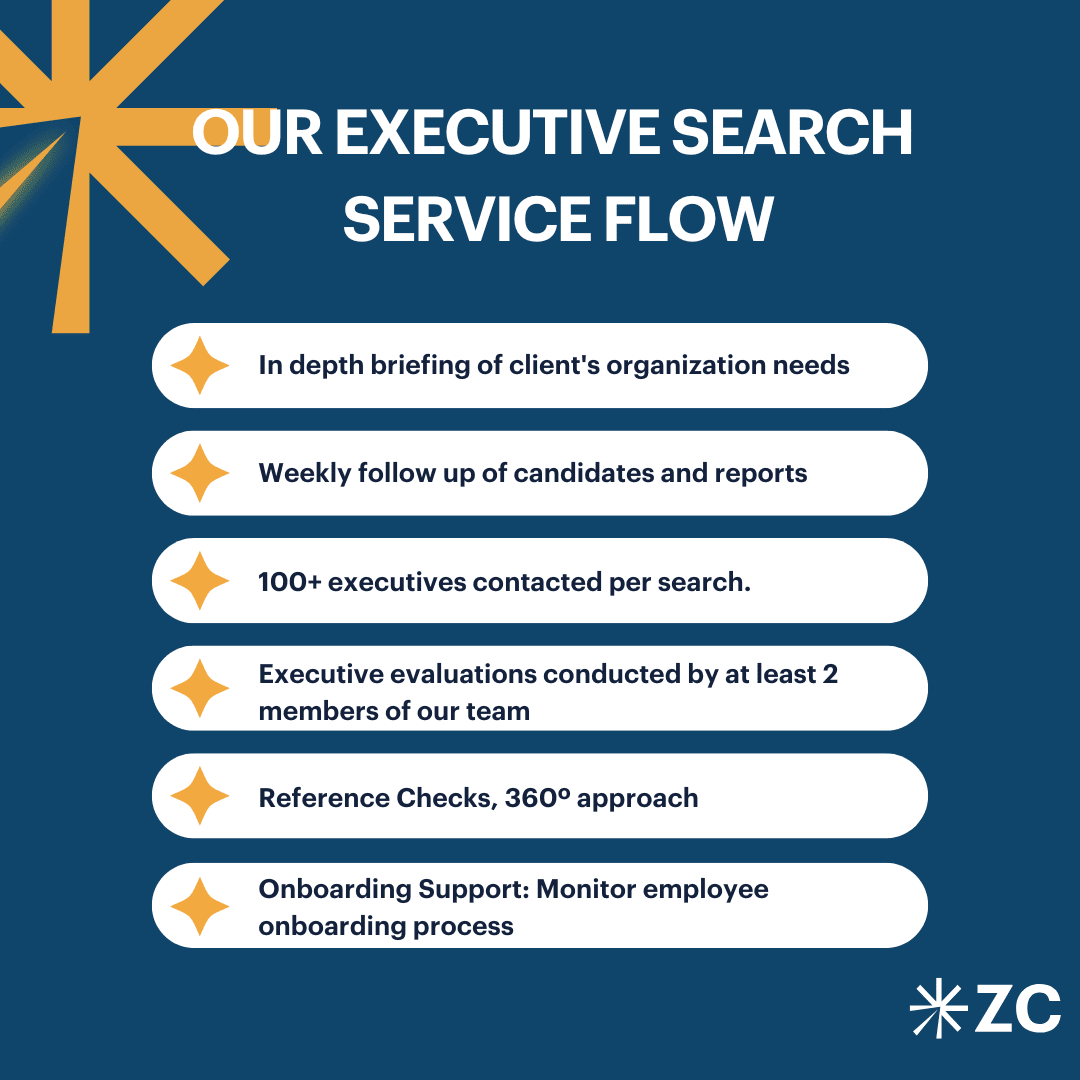
Our Executive Search methodology includes an in-depth client briefing, detailed market mapping, direct contact with more than 100 executives per search, assessment by at least two consultants, 360-degree reference checks and onboarding follow-up during the first six months after appointment.
Frequently Asked Questions: Non-Profit Executive Search in China
Looking for mission-driven leadership in China?
Zavala Civitas helps education, non-profit and social-impact organisations identify senior leaders who combine mission alignment, governance capability, regulatory understanding and cross-cultural leadership. 92% executive search closing rate.
Executive Search → Education & Nonprofit → Contact Us →