
Executive Development and Assessment in Portugal for Senior talent

In Portugal, the market is relatively small, executive mobility is limited, and reputations travel quickly. Many companies already have solid senior leaders in place.It’s not about whether these leaders are competent. The question is how to assist them in improving performance as they take on greater roles. 

Most people have an area that they can improve on, and with the right programs that can be developed. These programs are commonly being incorporated and implemented in organizations because they have the ability to show the areas in which an executive can improve before choosing to lose that employee and hire someone new.  

The main purpose of the assessments is to see what level of support is needed to help leaders be more effective and at what level of seniority the support is needed. They look at how a leader thinks and where decision-making becomes difficult for them. They examine personal motivation and obstacles, which enables individuals to overcome growth barriers.  

The boundaries of senior level experience 

A common pitfall in leadership choices is the tendency to place too much weight on experience. In Portugal, many senior executives have comparably aligned career trajectories. They have frequently been in the same industries, in the same kinds of organizations, and even within overlapping networks. This can create the illusion of depth, even when exposure is limited. 

According to McKinsey research on leadership effectiveness, past experience alone is a weak predictor of future performance in complex or changing roles. What matters more is judgment, learning agility, and the ability to adapt when context shifts.  

Executive assessment helps distinguish between repeated experience and genuine leadership capability.  

Executive Development and Assessment in Portugal: What companies actually assess today  

Assessment at senior level has evolved well beyond competency checklists.  

In Portugal, effective executive assessment tends to focus on a smaller number of practical questions:  

  • How does this leader make decisions under pressure?  
  • How do they handle ambiguity and limited information?  
  • Can they influence peers and stakeholders without relying on hierarchy?  
  • Are they equipped to grow with the role over time?  

Harvard Business Review states that senior leaders more frequently derail because of behavioral blind spots and decision making patterns rather than due to technical gaps. This is especially pertinent in the markets where leaders tend to stay in the role for extended durations.  

Development as a retention tool  

Retention is one of the least discussed leadership risks in Portugal.  

According to Eurostat labor mobility data, while overall executive mobility remains lower than in larger European economies, internationally exposed senior leaders are increasingly open to opportunities abroad when they feel professionally stalled.  

For many organizations, executive development has become a way to:  

  • signal long-term commitment  
  • offer progression without immediate role changes  
  • reduce the perceived career ceiling in a small market  

Well-designed development programs help senior leaders see a future inside the organization, rather than outside it.  

Internal succession versus external benchmarking  

Portugal’s leadership market forces companies to think carefully about succession.  

Promoting internally feels safer and faster, but it carries risk if readiness is assumed rather than assessed. External hiring can bring perspective, but also creates integration and retention challenges.  

According to BCG research on leadership transitions, organizations that combine internal assessment with external benchmarking make more robust succession decisions than those that rely on instinct or tenure.  

In practice, executive assessment allows companies to decide whether development, role redesign, or external search is the most sensible path.  

Common mistakes companies make:  

Several patterns appear repeatedly in senior leadership decisions:  

  • Using generic assessment tools designed for larger markets  
  • Treating development as training rather than behavioral change  
  • Separating assessment from real business challenges  
  • Delaying assessment until performance issues become visible  

According to INSEAD research on executive development, development efforts are most effective when they are closely tied to the leader’s actual mandate and organizational context.  

Executive Development and Assessment in Portugal: When assessment becomes a strategic lever  

Executive assessment tends to deliver the most value during moments of change.  

These include:  

  • leadership succession planning  
  • private equity entry or exit  
  • founder transitions  
  • regional or international expansion  
  • governance restructuring  

According to Gartner research on leadership risk, organizations that assess leadership readiness before major transitions significantly reduce disruption and early executive turnover.  

In Portugal, where leadership changes tend to have long-term impact, this proactive approach is particularly relevant.  

Executive Development and Assessment in Portugal: A long-term perspective  

These tools are not about fixing weaknesses. It is about ensuring that senior leaders can continue to perform as roles evolve.  

In small leadership markets, the cost of getting this wrong is high. Executive Development and Assessment in Portugal has therefore become less about potential and more about sustained effectiveness over time.
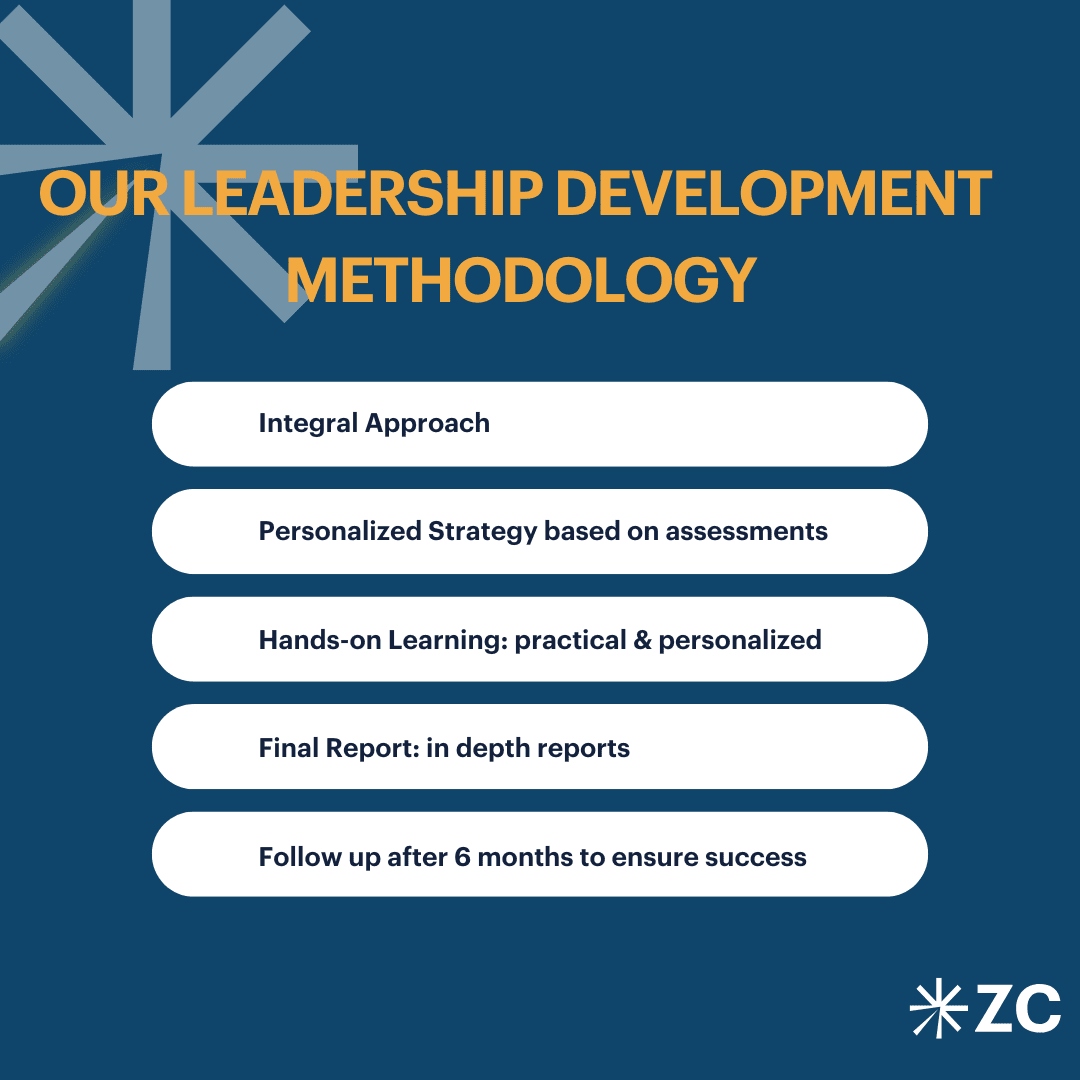
Zavala civitaas methodology to assess executives and develop them in Portugal

Click here to get in contact with us.

Executive Search in Mexico: Leading Sectors Shaping Demand 

Over the last few years, Mexico swiftly garnered international investment, earning it the title of one of the fastest-growing countries in capturing global foreign direct investments.   This scenario creates new talent opportunities.  Most Executive Search firms in Mexico have modified their approach from simply filling highest roles in an organization to competing for the extremely limited pool of qualified executive talent for all roles in all sectors.  The demand isn’t even  It is very much concentrated.  Where Demand is Actually Growing  Mexico’s hiring executive pressure is unequal across all sectors. Some sectors are faster and are pulling talent from other sectors. Manufacturing is the clearest example.  With nearshoring, Mexico is becoming a strategically important center for the supply chain for North America. This is due to the fact that international companies are relocating and/or expanding their operations in Mexico. This is supported by McKinsey & Company.  The growth of a business is dependent on its leadership. Companies are in need of quickly scalable plant directors, operations managers, and supply chain executives. Such profiles are deficit.  Executive Search Energy and Infrastructure: Complexity at Scale  There is the highest demand for executive talent within the energy and infrastructure sectors.  Major projects and regulatory complexities, as well as lengthy investments, require leaders who are comfortable with uncertainty in all the essential domains, not just the technical. This includes stakeholder

Read More

Executive Search in Spain: Talent Gaps and Leadership Trends 

The Spanish talent market is perceived to be mature and easy to operate in. This makes some sense from afar. There is a solid network of business centers, a developing international business presence, and a considerable pool of experienced talent.  Problems arise when businesses attempt to recruit senior executives.  In Spain, executive search is shifting from talent arbitrage to understanding the true gaps and the reasons behind their expansion.  Where the Talent Gaps Are Actually Emerging  Spain may appear to have many senior professionals, but the issues here are more complex.  The problem is not the experience, but the type of experience that is most required by the different companies.  As per McKinsey & Company, the nature of change of senior leadership roles in Europe is at a much quicker pace than the nature of change in the senior leadership roles in the talent pool. Executives are required who are able to be strategic, also have the ability to execute, and be the change agent.  That blend is still too little. This is especially the case in Spain in the industries that are shifting the fastest—energy transition, infrastructure, and technology. There are many executives who have strong functional experience, but far fewer who have held positions to manage large, complex transformations, or to operate internationally in complex situations.  This results in the mismatch between the hopes of the companies and the actual situation in the labor market.  The Shift from Stability to Transformation Leadership  For many years, leadership in Spain emphasized operational stability and incremental change.  This is not enough anymore.  At present, companies expect executives to manage change and uncertainty, and lead in multiple dimensions simultaneously, including at the same time digital transformation, new business models, and the increased need for operational efficiency. 

Read More

Executive Search in the United States: Private Equity and Portfolio Leadership  

According to McKinsey’s Global Private Markets Review the United States remains the largest private equity market globally. It accounts for nearly half of global PE deal value.    Unlike traditional recruiting, Executive Search in the U.S. private equity-backed environments is much more complex.  In PE platforms, leadership is directly tied to value creation, EBITDA expansion,

Read More

Related posts

Leadership in the Middle East: Why Fit Matters More Than Origin 

As companies in the Middle East scale and institutionalize, the long-standing debate around local versus international leadership in the Middle East is largely outdated. The real issue today is alignment: whether the leadership profile fits the business challenge the organization is facing.  Too often, leadership appointments are driven by assumptions: that international executives

Read More

The Role of Compliance Officers in Strategic Decision-Making

Over the past decade, the role of compliance functions within organizations has progressed significantly. Traditionally, compliance was responsible primarily for ensuring the company’s compliance with regulation, particularly that Relations to bribery and corruption.  They developed codes of conduct, supplier due diligence process and the like and were responsible for ensuring compliance with these by employees of

Read More

Executive Search in Mexico: Leading Sectors Shaping Demand 

Over the last few years, Mexico swiftly garnered international investment, earning it the title of one of the fastest-growing countries in capturing global foreign direct investments.   This scenario creates new talent opportunities.  Most Executive Search firms in Mexico have modified their approach from simply filling highest roles in an organization to competing for the extremely limited pool of qualified executive talent for all roles in all sectors.  The demand isn’t even  It is very much concentrated.  Where Demand is Actually Growing  Mexico’s hiring executive pressure is unequal across all sectors. Some sectors are faster and are pulling talent from other sectors. Manufacturing is the clearest example.  With nearshoring, Mexico is becoming a strategically important center for the supply chain for North America. This is due to the fact that international companies are relocating and/or expanding their operations in Mexico. This is supported by McKinsey & Company.  The growth of a business is dependent on its leadership. Companies are in need of quickly scalable plant directors, operations managers, and supply chain executives. Such profiles are deficit.  Executive Search Energy and Infrastructure: Complexity at Scale  There is the highest demand for executive talent within the energy and infrastructure sectors.  Major projects and regulatory complexities, as well as lengthy investments, require leaders who are comfortable with uncertainty in all the essential domains, not just the technical. This includes stakeholder

Read More

Executive Search in Spain: Talent Gaps and Leadership Trends 

The Spanish talent market is perceived to be mature and easy to operate in. This makes some sense from afar. There is a solid network of business centers, a developing international business presence, and a considerable pool of experienced talent.  Problems arise when businesses attempt to recruit senior executives.  In Spain, executive search is shifting from talent arbitrage to understanding the true gaps and the reasons behind their expansion.  Where the Talent Gaps Are Actually Emerging  Spain may appear to have many senior professionals, but the issues here are more complex.  The problem is not the experience, but the type of experience that is most required by the different companies.  As per McKinsey & Company, the nature of change of senior leadership roles in Europe is at a much quicker pace than the nature of change in the senior leadership roles in the talent pool. Executives are required who are able to be strategic, also have the ability to execute, and be the change agent.  That blend is still too little. This is especially the case in Spain in the industries that are shifting the fastest—energy transition, infrastructure, and technology. There are many executives who have strong functional experience, but far fewer who have held positions to manage large, complex transformations, or to operate internationally in complex situations.  This results in the mismatch between the hopes of the companies and the actual situation in the labor market.  The Shift from Stability to Transformation Leadership  For many years, leadership in Spain emphasized operational stability and incremental change.  This is not enough anymore.  At present, companies expect executives to manage change and uncertainty, and lead in multiple dimensions simultaneously, including at the same time digital transformation, new business models, and the increased need for operational efficiency. 

Read More

Executive Search in China: The Complexity of Hiring Executives

China is one of those markets where opportunities are easy to find but the right leaders are not.  many international firms, executive recruitment in China becomes challenging for one simple reason: the market does not act as they expect. What works for Europe or the US, tends to break down here.  Recruiting

Read More

Executive Search in the United States: Private Equity and Portfolio Leadership  

According to McKinsey’s Global Private Markets Review the United States remains the largest private equity market globally. It accounts for nearly half of global PE deal value.    Unlike traditional recruiting, Executive Search in the U.S. private equity-backed environments is much more complex.  In PE platforms, leadership is directly tied to value creation, EBITDA expansion,

Read More