Last updated: August 20, 2026
Brazil remains one of the world’s major automotive manufacturing markets and one of the most strategically important vehicle markets in Latin America.
The sector has moved well beyond the post-pandemic recovery narrative that shaped the original version of this article. Production and domestic registrations increased again in 2025, exports accelerated and electrified vehicles gained market share considerably faster than the broader light-vehicle market.
At the same time, new manufacturers are localising production, established OEMs are investing in new platforms and Brazil’s industrial policy is placing greater emphasis on energy efficiency, decarbonisation, recycling and technological development.
For Executive Search, this means automotive experience alone is becoming a less precise selection criterion. Organisations increasingly need leaders who have already managed the type of industrial, technology or commercial transformation they now face.
Executive Search in Brazil’s Automotive Industry: A Market Returning to Scale
Brazilian vehicle production reached 2.644 million units in 2025, compared with approximately 2.554 million in the previous year.
Vehicle registrations reached approximately 2.69 million units, while exports rose to 528,827 vehicles, 32.1% above 2024.
These figures demonstrate both domestic scale and continued integration into regional and international automotive supply chains.
Key Figures at a Glance
| Brazil Automotive Indicator | Latest Data | Source | Executive Search Implication |
|---|---|---|---|
| Vehicle production | 2.644m units in 2025 | ANFAVEA | Industrial-scale leadership remains critical across manufacturing, operations, engineering and supply chain. |
| Vehicle registrations | Approx. 2.69m in 2025 | ANFAVEA | The domestic market remains large enough to require differentiated product, distribution and commercial strategies. |
| Vehicle exports | 528,827, +32.1% | ANFAVEA | Executives increasingly need to connect Brazilian operations with regional production and export strategies. |
| Electrified light-vehicle sales | 223,912, +26% | ABVE | Electrification is changing product, engineering, manufacturing, infrastructure and commercial leadership requirements. |
Electrification Is Changing Brazil’s Automotive Leadership Market
Electrified vehicles are still a minority of Brazil’s overall light-vehicle market, but their growth is substantially faster.
ABVE recorded 223,912 electrified light vehicles sold in 2025, an increase of 26%.
Electrified vehicles represented 9% of domestic light-vehicle sales for the year, rising to 13% in December.
More significantly from an industrial perspective, 2025 also marked the beginning of local production of battery-electric and plug-in hybrid vehicles by new manufacturing operations in Brazil.
This creates leadership needs that extend beyond conventional automotive manufacturing.
Companies may increasingly require executives who understand batteries, power electronics, software integration, charging ecosystems, new supplier structures, energy efficiency and the economics of introducing different powertrains into existing production networks.
New Automotive Entrants Are Increasing Competitive Pressure in Brazil
Brazil’s automotive competitive landscape is also changing as international manufacturers expand local operations and new brands enter the market.
ANFAVEA reported that 498,000 imported vehicles were sold in Brazil in 2025, an increase of 6.6%.
Vehicles originating from China represented 37.6% of imported-vehicle sales.
At the same time, several manufacturers are increasing Brazilian production rather than relying exclusively on imports.
This creates a leadership challenge for both established OEMs and new entrants. Incumbents need to respond to new price, technology and product propositions, while entrants need executives capable of building local manufacturing, dealer networks, supplier relationships, brands and organisations.
Brazil’s MOVER Programme Is Linking Automotive Investment with Decarbonisation
Public policy is another important component of Brazil’s automotive transition.
The Brazilian government’s MOVER programme is designed to encourage technological development, energy efficiency, recycling and automotive decarbonisation.
The programme provides for R$3.9 billion in financial credits in 2026, within a programme expected to provide more than R$19 billion across its implementation period.
The programme makes decarbonisation an operational and investment issue rather than a sustainability initiative isolated from the core automotive business.
For senior executives, this increases the importance of connecting engineering, manufacturing, product strategy, capital allocation and environmental performance.
Brazil’s Automotive Investment Cycle Requires Transformation Leaders
The current automotive investment cycle is also creating significant organisational change.
Brazil’s Ministry of Development, Industry, Commerce and Services reported in late 2025 that announced investment associated with the automotive industry had reached approximately R$140 billion among vehicle manufacturers and a further R$50 billion in the auto-parts sector.
Investment does not automatically translate into competitive capability.
Companies still need executives capable of converting new factories, engineering resources, platforms and technologies into efficient industrial operations and commercially successful products.
This creates demand across General Management, Operations, Engineering, Supply Chain, R&D, Manufacturing, Commercial and Finance leadership.
What Executive Search Should Assess in Brazil’s Automotive Leaders
Industrial Transformation
Candidates should demonstrate whether they have personally redesigned manufacturing systems, launched production capacity, improved productivity or integrated new technologies into an established operation.
Electrification and Technology Judgement
Senior executives do not need to be battery engineers, but they increasingly need enough understanding of electrification, software and powertrain economics to make informed product and investment decisions.
Localisation and Supplier Development
For new entrants and expanding OEMs, relevant leadership experience can include localisation of suppliers, development of manufacturing ecosystems and balancing imported technology with domestic production requirements.
Commercial and Dealer-Network Strategy
A successful automotive strategy also requires distribution, pricing, after-sales, brand development and dealer economics. This is particularly relevant for manufacturers entering Brazil or repositioning their portfolio.
Supply Chain Resilience
Executives should demonstrate how they have handled supplier disruption, cost pressure, localisation decisions and the trade-offs between efficiency, inventory and resilience.
International Stakeholder Management
Brazilian automotive operations often form part of regional or global production structures. Executives may need to compete for investment, explain local economics to headquarters and coordinate decisions across multiple countries.
New Entrants and Established OEMs Need Different Executive Profiles
The ideal executive profile depends heavily on the organisation’s starting point.
A new manufacturer entering Brazil may require executives capable of building functions from zero, establishing regulatory and government relationships, developing a dealer network, recruiting a local management team and localising manufacturing.
An established OEM may instead need leaders capable of transforming legacy plants, improving cost structures, accelerating electrification or defending market share against new competitors.
A supplier may require a different profile again, particularly when technology content and OEM sourcing strategies are changing.
Executive Search should therefore avoid treating “automotive experience” as a single category.
The Automotive Candidate Market Should Extend Beyond Direct Competitors
Some automotive leadership mandates require deep sector experience, particularly where product, regulation or manufacturing processes are highly specific.
Other transformations can justify a wider candidate universe.
Executives from advanced manufacturing, batteries, industrial technology, electronics, energy or complex consumer businesses may bring capabilities that are increasingly relevant to the automotive industry’s evolution.
The relevant question is whether the sector knowledge is essential to the mandate or whether the company would gain more from an executive who has already solved the underlying transformation problem elsewhere.
Executive Talent Development Matters as Automotive Skills Change
Not every emerging capability needs to be acquired externally.
Companies can use external market benchmarking to determine whether an internal successor is competitive with available leadership outside the organisation.
Where internal executives already possess the sector knowledge but lack experience in a particular transformation, Executive Assessment and Leadership Development can help determine whether the gap can be developed rather than requiring an external appointment.
How Zavala Civitas Approaches Automotive Executive Search in Brazil
Zavala Civitas has operated across Latin America for decades, including Brazil, supporting international organisations with senior leadership searches and market expansion.
The search begins by defining the industrial and commercial transformation the incoming executive is expected to deliver.
Questions can include:
- Is the company entering Brazil or transforming an established business?
- Does the mandate involve electrification, manufacturing localisation or a new platform?
- Does the organisation need to build or transform its supplier ecosystem?
- How important are dealer-network and commercial capabilities?
- Does the executive need experience working with international headquarters?
- Which technology or sustainability requirements will shape the next investment cycle?
- What did each candidate personally own in their previous transformations?
The candidate market can then be mapped across direct automotive competitors and relevant adjacent industries.
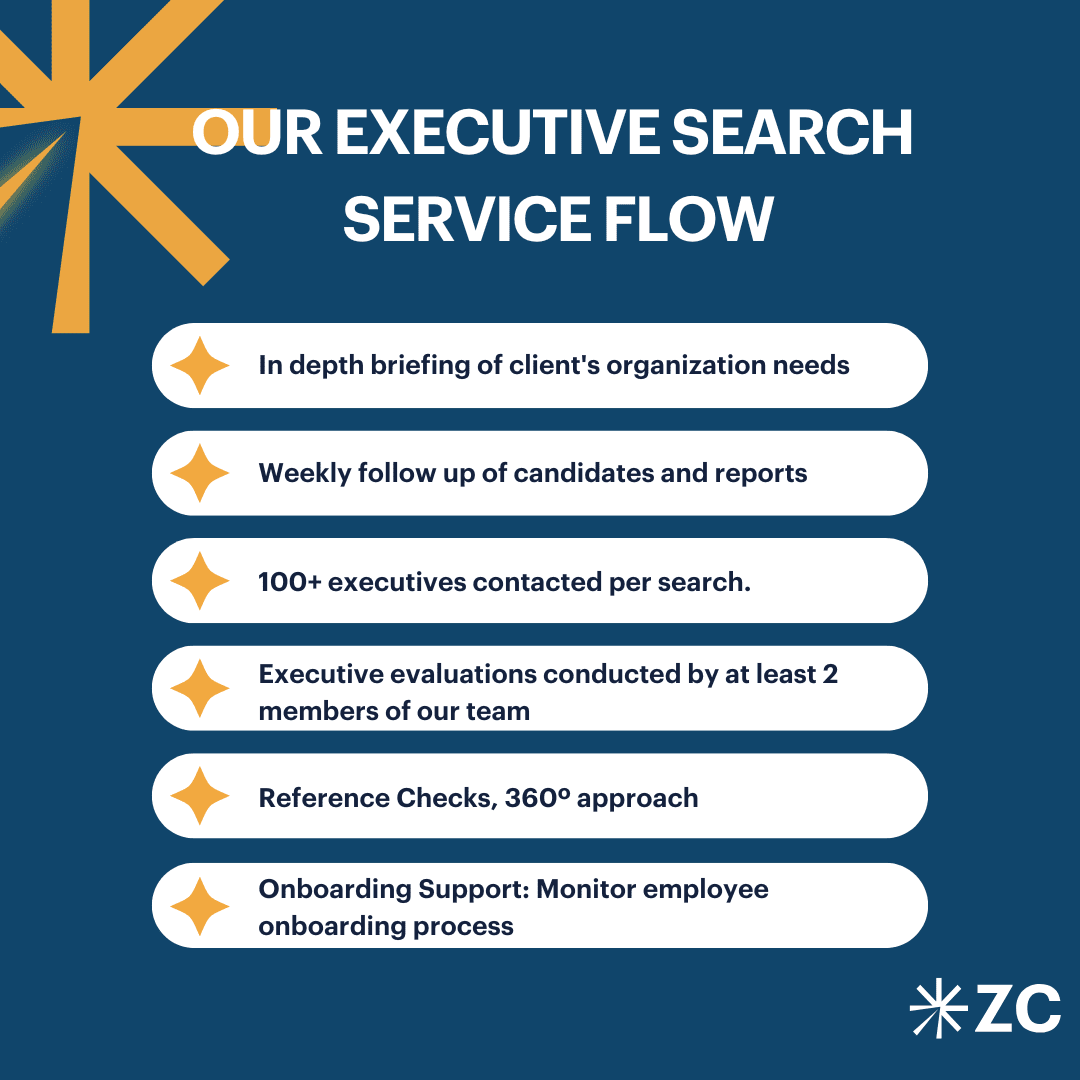
Zavala Civitas’ Executive Search methodology combines market mapping, direct candidate identification, structured assessment and reference validation.
Our Industrial Executive Search practice supports senior leadership mandates across manufacturing, automotive and complex industrial businesses.
For additional Brazil context, see why multinationals struggle to hire executives in Brazil.
Frequently Asked Questions: Automotive Executive Search in Brazil
Automotive experience matters. Proven industrial transformation matters more.
Zavala Civitas supports automotive and industrial organisations in identifying executives capable of leading localisation, electrification and operational transformation in Brazil.
Executive Search → Industrial Sector → Contact Us →