
Executive Search in Brazil: Talent Challenges in the Professional Services Sector 

Key Takeaway: Brazil’s professional services sector employed 13.4 million workers in 2021 — growing 7.8% in a single year. Yet Brazilian companies spend 1,500 hours annually on tax compliance (vs. 175 in the U.S.) and the country ranks 124th out of 190 in ease of doing business (World Bank). In a sector defined by human capital, the leadership profiles that can navigate regulatory complexity AND drive digital transformation simultaneously are the scarcest and most consequential executive search challenge in Brazilian professional services today.

Last updated: August 13, 2026

Brazil’s professional services sector — encompassing consulting, legal, accounting, and IT services — is a cornerstone of the country’s economy. In 2021, employment in the sector reached a record 13.4 million workers, reflecting 7.8% growth year-on-year and demonstrating steady growth and resilience. As the sector accelerates through digital transformation and regulatory change, the demand for executive leadership that can manage both dimensions simultaneously has made executive search indispensable.

Key Figures at a Glance

Data point Finding Source
Annual tax compliance hours in Brazil (vs. U.S.) 1,500 hours — vs. 175 hours in the U.S. PwC / World Bank
Brazil ease of doing business ranking 124th / 190 countries World Bank
Tech professionals entering Brazil’s job market annually Only 53,000 — far below market demand Brazil technology labour market data
Brazilian companies investing in ESG/sustainability consulting 74% — creating demand for ESG-literate professional services leadership Brazil sustainability consulting market analysis, 2024

Key Challenges in Brazil’s Professional Services Sector

1. Economic Volatility and Business Uncertainty

Brazil’s economy has experienced fluctuations due to political uncertainties, high inflation rates, and global financial instability. In 2023, Brazil’s GDP growth slowed to 2.1%, a decline from the 5% growth in 2021. Professional services firms need strategic leaders who can manage uncertainty, control costs, and sustain client relationships through a changing market — executives who have navigated Brazil’s specific cycle of contraction and recovery before and know how to read the macro signals before the client revenue effect becomes visible.

2. Complex Regulatory and Tax Environment

Brazil ranks 124th out of 190 countries in ease of doing business (World Bank). The country’s tax system is among the most complex in the world, with over 90 different types of taxes and an annual compliance time of 1,500 hours — compared to just 175 hours in the U.S. (PwC). Regulatory complexities increase the need for specialised legal and financial leadership: executive search firms help identify regulatory experts who understand local compliance requirements and can guide businesses through this complexity without treating it as a constraint that prevents growth.

3. Talent Shortage

There is a shortage of professionals with specialised expertise in key areas such as IT, finance, and digital transformation. Brazil’s universities produce thousands of graduates annually, but only 53,000 tech professionals enter the job market each year — far below the demand. Companies in this sector are struggling to attract and retain leaders with strong digital and analytical skills. As firms undergo digital transformation, there is urgent demand for executives with AI, cybersecurity, and data analytics expertise — fields where Brazil still lags behind global competitors in the executive leadership layer.

The 1,500 hours of annual tax compliance burden in Brazil is not primarily an accounting problem — it is an executive leadership problem. The professional services firm whose Managing Partner or CEO can accurately predict the quarterly compliance cost, sequence the payment obligations to optimise working capital, and identify the regulatory changes before they affect client relationships is operating with a governance advantage that the firm whose leadership treats tax compliance as an accounting department function is not. In a sector where billing realisation and cash conversion cycles are already compressed, the executive who integrates tax management into strategic planning rather than treating it as a separate administrative function is generating a competitive advantage that is both real and underappreciated in executive search briefings.

Why Partner with an Executive Search Firm?

1. Strategic talent acquisition: With a tight labour market, companies need access to global talent pools to fill leadership gaps. Executive search firms source top professionals worldwide — including internationally located Brazilian executives who bring global professional services experience combined with the local regulatory and cultural fluency the Brazilian market specifically requires.

2. Expertise in compliance and regulatory hiring: Identifying top legal and financial professionals who can navigate Brazil’s complex business landscape — not merely familiar with the regulations, but experienced in using regulatory fluency as a client relationship and competitive positioning tool.

3. Leadership for digital transformation: As technology reshapes the sector, firms need leaders with experience in AI, blockchain, and cybersecurity. Executive search firms identify forward-thinking executives who can spearhead innovation and growth — assessing whether their digital capability is operational or aspirational, practitioner or observer.

4. Promoting diversity and inclusion: The sector has seen increasing emphasis on diversity and inclusion in leadership. Companies are looking for more gender-balanced and multicultural leadership teams to foster innovation and global market competitiveness — which requires active search beyond the personal networks that systematically undersample diverse profiles.
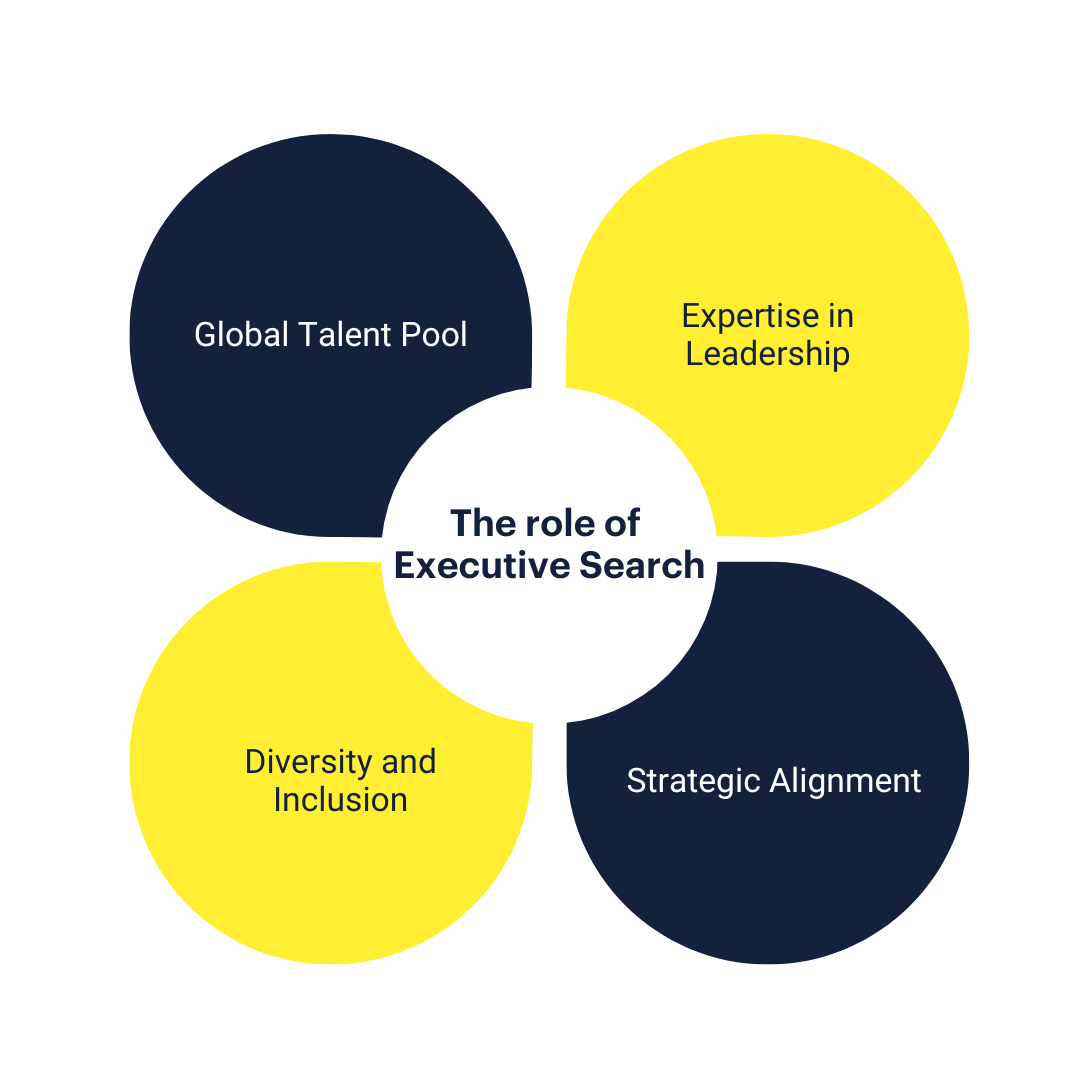
Executive search for professional services in Brazil — Zavala Civitas

Statistical Insights: Professional Services in Brazil

  • Brazil’s IT sector generated approximately $16.47 billion in 2024, expected to grow at 7.2% CAGR through 2030 — creating sustained demand for technology governance leadership that bridges IT expertise and executive accountability.
  • Legal and consulting firms are seeing increased demand for ESG expertise, with 74% of Brazilian companies investing in sustainability consulting — opening a specific executive leadership demand for professionals who can translate ESG frameworks into measurable client deliverables.
  • Brazil’s tax compliance complexity — 1,500 hours annually versus 175 in the U.S. — creates a permanent competitive disadvantage for firms whose leadership does not treat regulatory fluency as a strategic capability rather than an administrative function.
The 74% of Brazilian companies investing in sustainability consulting represents the most consequential new revenue stream in the professional services sector in a decade — and the most underserved by the current executive talent pool. Delivering ESG consulting in Brazil requires executives who can navigate the intersection of CSRD-influenced client expectations from multinational buyers, the BNDES and development finance ESG reporting requirements for capital access, and the genuine operational sustainability improvements that Brazilian companies need to make to satisfy their international trading partners. That intersection is not covered by either a traditional consulting background or a pure sustainability background. Executive search that finds the profile that bridges all three is the search that captures the 74% opportunity before competitors do.

Brazil’s professional services sector is at a crucial turning point — poised for growth but facing significant talent challenges. Economic uncertainty, regulatory complexity, and digital transformation require firms to secure visionary leaders who can drive innovation and stability. Executive search firms play an indispensable role: by identifying leaders with the right mix of experience, agility, and technical expertise, they help companies in Brazil thrive despite the challenges.

Click here to get in contact with us.

Frequently Asked Questions: Executive Search in Brazil’s Professional Services Sector

Why is Brazil’s 1,500-hour tax compliance burden an executive leadership problem rather than just an accounting problem?
Because the firm whose Managing Partner can accurately predict quarterly compliance costs, sequence payment obligations to optimise working capital, and identify regulatory changes before they affect client relationships is operating with a governance advantage the firm treating compliance as an accounting function is not. In a sector where billing realisation and cash conversion cycles are already compressed, regulatory fluency integrated into strategic planning generates a competitive advantage that is real and underappreciated in most executive search briefings.
What is the specific executive leadership profile the 74% ESG consulting demand in Brazil requires?
An executive who can navigate the intersection of CSRD-influenced client expectations from multinational buyers, BNDES and development finance ESG reporting requirements for capital access, and genuine operational sustainability improvements for Brazilian companies needing to satisfy international trading partners. That intersection is not covered by either a traditional consulting or a pure sustainability background. It requires active executive search to surface the bridge profile.
Why does the shortfall of only 53,000 tech professionals annually in Brazil specifically affect professional services leadership?
Because consulting and IT services firms compete for those 53,000 profiles against every technology-adopting sector in the economy simultaneously — and lose to financial services and technology companies that can offer higher compensation and clearer technology career paths. The professional services firm that can attract tech-capable executives must either access international talent pools or make an unusual case for why the professional services environment offers better career development than the technology sector. Executive search that constructs and delivers that case is producing something standard recruitment cannot.
How does economic cycle management specifically affect executive search in Brazilian professional services?
Because professional services revenue is directly correlated with client investment cycles — when Brazil’s macro environment contracts, client discretionary spending on consulting, legal advisory, and IT projects contracts first. The executive who has navigated that contraction cycle before — who knows how to protect key client relationships, manage utilisation rates, and identify the counter-cyclical service lines that grow when the economy slows — is the executive who positions the firm to recover faster when the macro environment recovers. That experience is identifiable in assessment and should be a primary search criterion.
How does Zavala Civitas approach executive search in Brazil’s professional services sector?
Through sector-specific talent mapping that assesses regulatory fluency as a strategic rather than administrative competency, digital transformation operational experience, ESG consulting delivery capability, and economic cycle management experience simultaneously. We access both domestic Brazilian professional services executives and internationally located Brazilians bringing global consulting and IT sector best practices. From our São Paulo office, with a 92% closing rate across completed executive search mandates.

Finding executive leadership for Brazil’s professional services sector?

Zavala Civitas provides sector-specific executive search for consulting, legal, accounting, and IT services firms in Brazil. 92% closing rate.

Executive Search →
Legal & Professional Services →
Contact Us →

Executive Search China: Industrial Sector

Key Takeaway: Beijing has launched a nationwide “anti-involution” (反内卷) campaign to address destructive price wars and overcapacity across multiple industrial sectors at once, not just renewables. Electrical machinery and equipment, communications equipment, and medical products all show 29% to 34% of firms losing money in 2024-25. Goldman Sachs estimates Chinese

Read More

Executive Search in Italy for Industrial

Key Takeaway: Turin’s automotive cluster invested roughly €2.8 billion in electrification between 2024 and 2026. Over the same period, regional automotive employment fell by more than 3,200 positions. Fewer than 20% of local engineering graduates hold the specific battery, power electronics, and embedded software skills employers are actually hiring for.

Read More

Executive Search in Portugal for Financial Services

Key Takeaway: French banking group BPCE is investing €6.4 billion to acquire Novo Banco and building a 20,000 square metre campus in Lisbon, alongside a 2,500-strong tech hub already operating in Porto. This single deal is creating demand for highly specialised roles in risk analytics, structured finance, and digital-asset compliance

Read More

Related posts

Trabajo en remoto en los despachos de abogados

Autora: Beatriz Baker Araujo Senior Advisor, Zavala Civitas El debate sobre el trabajo presencial y remoto en los despachos de abogados lleva años activo, pero no ha madurado. Las posiciones se han endurecido desde 2020, y las conversaciones suelen discurrir entre dos polos: socios que invocan la cultura, el mentoring

Read More

Executive Search China: Industrial Sector

Key Takeaway: Beijing has launched a nationwide “anti-involution” (反内卷) campaign to address destructive price wars and overcapacity across multiple industrial sectors at once, not just renewables. Electrical machinery and equipment, communications equipment, and medical products all show 29% to 34% of firms losing money in 2024-25. Goldman Sachs estimates Chinese

Read More
Financial services building in Germany

Executive Search in Brazil for Financial Services

Key Takeaway: The White House targeted Brazil’s Pix payment system in April 2026, calling it a barrier to US payment companies. Brazil’s Central Bank fired back, defending Pix as a matter of payments sovereignty. At the same time, the collapse of Banco Master, the largest banking fraud in Brazilian history,

Read More
law leaders working

Executive Search in Mexico for Legal and Professional Services

Key Takeaway: Mexico’s 2024 judicial reform introduced popular election of judges and magistrates, with implementation beginning in 2025. This has accelerated a shift toward arbitration as the preferred dispute-resolution method in commercial contracts, as companies seek predictability an elected judiciary cannot yet guarantee. Combined with nearshoring-driven M&A activity and the

Read More

Executive Search in Italy for Industrial

Key Takeaway: Turin’s automotive cluster invested roughly €2.8 billion in electrification between 2024 and 2026. Over the same period, regional automotive employment fell by more than 3,200 positions. Fewer than 20% of local engineering graduates hold the specific battery, power electronics, and embedded software skills employers are actually hiring for.

Read More

Executive Search in Portugal for Financial Services

Key Takeaway: French banking group BPCE is investing €6.4 billion to acquire Novo Banco and building a 20,000 square metre campus in Lisbon, alongside a 2,500-strong tech hub already operating in Porto. This single deal is creating demand for highly specialised roles in risk analytics, structured finance, and digital-asset compliance

Read More