
Labor shortages persist as the primary challenge for Canadian businesses. Approximately one million job vacancies nationally contribute to the struggle to access high-quality talent. To address this, companies are turning to executive search partners for assistance in securing top leaders.
Know the peculiarities of finding the right talent in the Canadian Market:
- Regional Focus: Executive search in Canada is regionally tailored. Cities like Calgary, Vancouver, and Montreal specialize in distinct industries. Toronto, the largest city, is a major financial services search market.
- Industry Expertise Valued: In Canadian executive search, a strong emphasis is placed on industry expertise. Clients expect search partners to grasp local nuances, cultural differences, and market dynamics alongside industry knowledge.
- Bilingual Requirement: Executive search in Canada often requires bilingualism, notably for high-profile government and national institution roles. With over 20 percent speaking French as a first language, this is a significant factor in placements, especially in Quebec where it rises to 77 percent.
- Immigration’s Impact: Clients value the quality of candidates attracted to Canada due to its commitment to acceptance, diversity, and inclusion.
- Client Sophistication: Canadian clients are becoming more sophisticated, seeking comprehensive executive search services. Beyond candidate lists, they now demand services such as market intelligence, mapping, and psychometric assessments.
- Talent Mobility Challenges: Canada faces talent mobility challenges, both internally and externally. Relocating executives across the country or recruiting to expensive cities like Toronto and Vancouver is hindered by high living costs.
Organizations are actively investing in critical executive-level hires to prepare for market changes and position themselves for future growth.
This competition has led to an upward trend in compensation bands, with candidates prioritizing roles that offer a flexible work-life balance.
Recruiters highlight the challenge of more job openings than available prospects, emphasizing that while compensation is crucial, factors such as positive culture, sustainability, career development, and flexibility in remote work arrangements are increasingly significant.
This trend is expected to persist into 2026, emphasizing the importance of an innovative talent acquisition strategy.
Other trends in executive search in Canada:
- Focus on Diversity, Equity, and Inclusion: This emphasis aligns with the understanding that a diverse workforce fosters innovation and enhances overall business outcomes.
- Strategic Talent Agenda: Organizations are seeking executives with strategic and innovative capabilities for their talent agenda. The focus is on technology, environmental sustainability, governance, risk and compliance, and other skills to navigate this business landscape.
- Private Equity Influence: Private equity firms are adjusting their investment strategies to include low-mid market companies, leading to increased demand for executive-level talent across various industries.
- Strategic HR and Leadership Talent Demand: Organizations are placing a higher value on strategic HR talent. There is ongoing demand for leadership expertise in digital transformation, customer experience, cybersecurity, and cultural change.
The current executive search climate in Canada presents both challenges and opportunities. Companies seek leaders capable of navigating economic and cultural changes brought about by the pandemic. Executive search firms play a crucial role in helping organizations find the talent necessary for success.
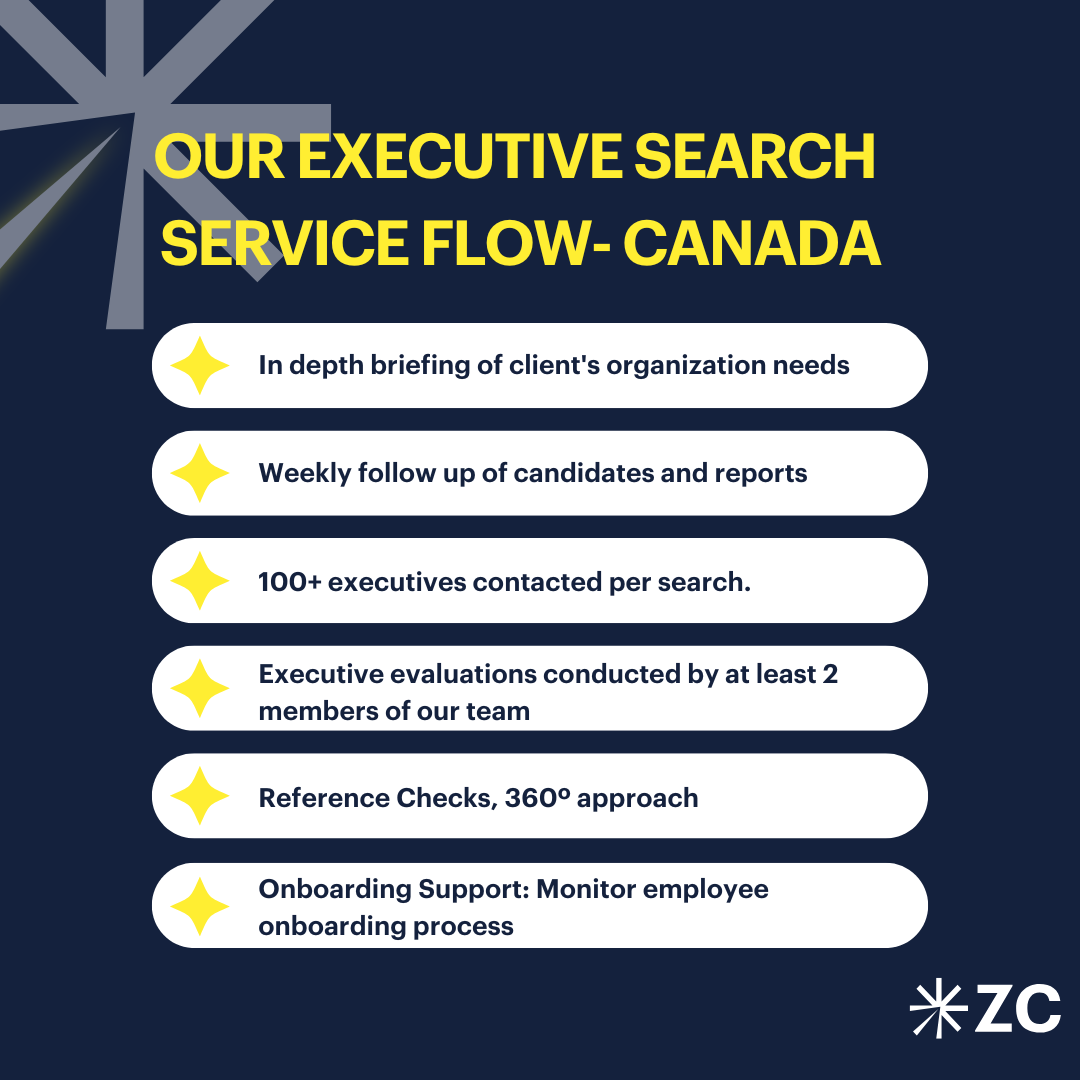
Learn more about our service flow and methodology.
Contact our Canada Office.