
Project management is the application of processes, methods, skills, knowledge and experience to achieve specific project objectives according to the project acceptance criteria within agreed parameters including final deliverables that are constrained to a finite timescale and budget. As an executive search company, we have discovered that these skills are often and, in our opinion, well justify requirements in numerous executive search projects.
A key factor that distinguishes project management from just ‘management’ is that it has this final deliverable and a finite timespan, unlike management which is an ongoing process. Because of this, a project professional needs a wide range of skills; often technical skills, and certainly people management skills and good business awareness.
Although executives do not need to be specialists in this matter, some of these skills are desirable for leadership roles.
According to a survey by Monday.com, only 43% of companies reported that they “most of the time” or “always” complete their projects within the established budget.
In an executive search process, companies usually value this set of abilities because helps executives gain a bird’s eye view of the project that team members might otherwise miss. Helping them in keeping track of the project and ensuring its timely completion.
Companies whose executive leaders build strong project practices enjoy a whole host of benefits. Compared to companies without mature value-delivery processes, they’re more likely to meet their project goals (77% vs. 56%), stay within budget (67% vs. 46%), and deliver on time (63% vs. 39%), and less likely to suffer scope creep (30% vs. 47%) or outright project failure (11% vs. 21%).
Key Project Management Competencies we look for as an executive search firm:
- Strategic Alignment: An executive must ensure that projects are strategically aligned with the overarching organizational goals.
- Effective Communication: Clear and concise communication fosters collaboration, manages expectations, and resolves conflicts.
- Risk Management: Identifying, assessing, and mitigating risks is critical for successful project execution.
- Resource Allocation: An executive needs to allocate resources efficiently, considering time, budget, and personnel constraints.
- Stakeholder Engagement: Building strong relationships with stakeholders enhances project support and success.
- Adaptability: People in executive roles should be prepared to adapt strategies to changing circumstances to ensure project success.
- Problem-Solving Skills: Quick and effective decision-making is essential for overcoming project challenges.
The CPO (Chief Project Officer) role
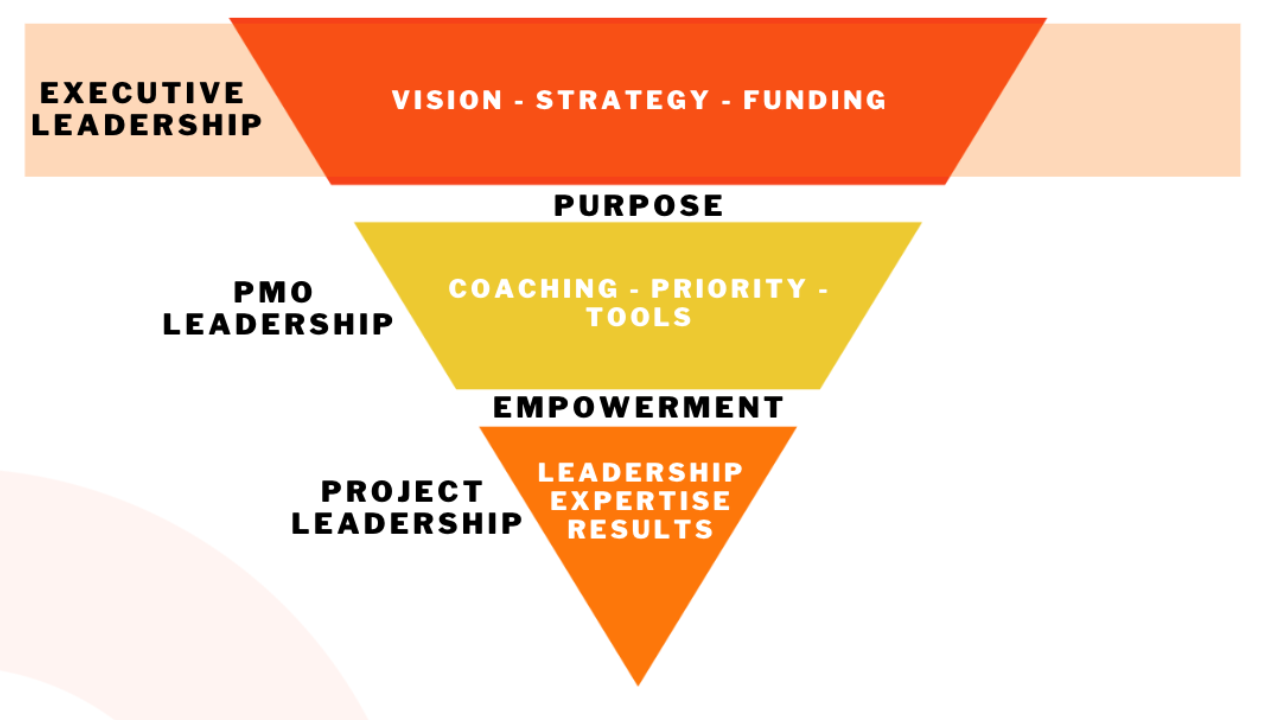
CEOs and executives often struggle with the lack of clarity and ownership in the project space. Combined with the exponential growth in projects this obscurity leads to silo thinking, project overload, demotivation, projects not delivered, and a massive amount of resources wasted and value lost. This has led companies to not only value these skills but to create an executive role specifically for it.
The chief project officer goes far beyond the direct sponsorship of individual projects. These executives must push their organization toward:
- Adopting a project-driven structure
- Foster a collaborative and empowering culture that reaches across silos.
- Collaborate with HR to ensure that project-management competencies are developed throughout the organization.
The Chief Project Officer plays a crucial role in:
- clarifying accountability in projects
- establishing a project governance committee to break silos
- working together more closely as one organization.
The CPO has many responsibilities
Optimization of resource allocation.
Ineffective resource allocation leads to organizations launching more projects than they can carry out, overwhelming employees and harming their performance and engagement. The CPO will ensure that projects are not launched until the right resources have been selected and people have been freed up from some of their ongoing responsibilities.
Modernizing organization and project management practices.
An essential last area for the Chief Project Officer to champion is to create a more agile and project-driven organization that will help to deliver projects more successfully. In partnership with learning and development teams, the CPO, ensures that the organization develops the right capabilities to deliver diverse projects. Executives should Foster a friendly environment for it and including in it as part of the company culture. They should not only learn these skills but serve as executive sponsors in project management teams, setting forth solutions to the many problems and challenges they face in this role, including managing disagreements, delegating authority, and accelerating projects.
“The role of the CEO in simple terms is to project manage the company, to be the project manager for the company.”
—Pulkit Agrawal, Co-founder & CEO at Chameleon.
Click here to learn about our executive search process or contact us directly.