Executive Search | Industrial | China
Key Takeaway
China produces close to 30% of the world’s manufacturing output (World Bank). In addition, manufacturing generates around a quarter of its GDP (NBS). Its strongest subsectors include automotive, electronics and electrical equipment, and machinery. In 2024, for example, China produced about 31 million vehicles, and more than 40% were new energy vehicles (CAAM). However, each subsector needs a different kind of leader, and most industrial searches in China don’t screen for that difference. Meanwhile, three shifts are rewriting what industrial leaders must deliver. These are automation at unprecedented scale, fierce price competition and Chinese manufacturers building plants abroad.
Data current as of October 2026.
Globally, industry accounts for about 26% of GDP (World Bank, 2024). In China, industrial activity is concentrated in the Yangtze River Delta, the Pearl River Delta, Chengdu-Chongqing and fast-growing hubs such as Hefei. As a result, plants there need leaders who can do four things at once. First, they must run highly automated factories on thin margins. Second, they need to move at the speed of domestic competitors. In addition, they have to manage export controls and supply chain risk. Finally, they must keep the trust of a global head office.
Why Executive Search Matters for Industrial Companies in China
Executive search for the industrial sector in China is a retained, research-led process for hiring senior industrial leaders. Typical roles include general managers, plant directors and operations directors. In practice, it covers automotive, electronics, machinery, chemicals, batteries and other manufacturing. Locally, it is usually called 猎头 (lietou), literally “headhunting”.
Today, however, three forces are changing the brief.
Automation and upgrading
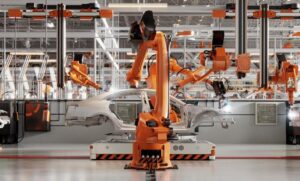
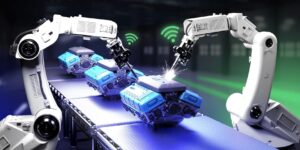
China installs more than half of the world’s new industrial robots each year (International Federation of Robotics). Moreover, Beijing’s push for “new quality productive forces” puts advanced manufacturing at the centre of policy. That priority runs through the 15th Five-Year Plan, which covers 2026 to 2030. As a result, plant leaders must manage technology as much as people.
Price competition
Overcapacity and price wars in sectors such as electric vehicles and solar have squeezed margins. Consequently, leaders must cut cost without slowing product cycles.
Localisation and going global
Foreign companies are handing more authority to local China leadership. At the same time, Chinese manufacturers are building plants in Europe, Latin America and Southeast Asia. They, in turn, need leaders who can run those plants.
Strategy only pays off through the people running the plants. In fact, two factories with the same robots can perform very differently depending on who leads them.
The Industrial Sector in China in Numbers: What the Data Shows
Labour market: The labour market looks contradictory. On the one hand, China produced a record of more than 12 million university graduates in 2025 (Ministry of Education), and youth unemployment remains high (NBS). On the other hand, companies struggle to fill senior industrial roles.
Leadership pool: Consider leaders who have run a smart factory, delivered at “China speed” and reported credibly to a foreign board. Such leaders are almost always employed. Moreover, domestic champions court them frequently. For example, the real pool for a plant director in Suzhou or Hefei with that profile is a few dozen people.
Foreign investment: Foreign investment adds pressure. In 2024, actual use of foreign capital fell sharply (MOFCOM). As a result, multinationals that stay are asking fewer leaders to deliver more. In addition, fewer expatriate assignments mean the China general manager is now usually a local executive with global experience. That pool is thin.
Skills: The pool is shrinking too. For instance, the World Economic Forum’s Future of Jobs Report 2025 notes that employers expect “39% of key skills required in the job market to change by 2030”. Indeed, few manufacturing systems are changing faster than China’s.
This is the core problem industrial exec search solves in China. In short, it finds leaders who are not looking and gives them a credible reason to listen.
Executive Search for Industrial Leadership Profiles in China
Hardest industrial leadership roles to fill in China
| Role | Main driver | Scarce capability |
|---|---|---|
| General Manager China | Localisation of leadership | Running a China business with real decision power while keeping a global head office’s trust |
| Plant Director | Automation and price pressure | Running a smart factory at low cost without slowing product cycles |
| Supply Chain Director | Export controls and “China plus one” | Managing parallel supply chains inside and outside China |
| Digital Manufacturing / Automation Director | Robots and AI | Scaling automation across sites and turning data into OEE gains |
| Government Affairs and Compliance Director | Export controls and data laws | Navigating national and local regulation while protecting the business |
| Overseas Plant Director (Chinese manufacturers) | Global expansion | Running a Chinese-owned plant in Europe or Latin America and bridging two management cultures |
| R&D and Localisation Director | Fast product cycles | Developing products for Chinese customers at domestic competitors’ speed |
Government Relations Are Often Underestimated
In executive search for plant roles, companies most often underestimate relationships with local government and regulators. Development zones, local officials and the plant’s trade union branch all shape permits, incentives and labour relations. Underneath, each of these rests on compliance with the Labour Contract Law and social insurance rules. As a result, a plant director from abroad can be an excellent engineer and still struggle to build those relationships.
Head Office Alignment Is the Second Blind Spot
Decisions in China often need to be made faster than global approval cycles allow. Therefore, a China leader who cannot win that authority from head office will struggle. Equally, a leader who uses it without bringing head office along will not last.
How Executive Search for Industrial Leaders in China Works
A good industrial search follows a clear process. In addition, it plans for the practical details of the move.
How We Run the Search
Our Plant-to-Board method assesses every candidate on the shop floor and in front of a board. It runs in five stages:
- Defining the company’s situation: localisation, expansion, turnaround or overseas launch.
- Mapping the market in China and among Chinese executives working abroad.
- Confidential approaches to candidates.
- A structured assessment built on head office alignment, government relations and cost-pressure scenarios.
- In-depth referencing.
In our experience, the assessment is the stage of an exec search that most often changes the final ranking. Overall, most searches take 12 to 20 weeks from brief to signed offer.
Plan Around Chinese Timing
A well-run exec search for a senior industrial role also plans around Chinese timing. For example, the Labour Contract Law requires 30 days’ written notice from employees. In addition, senior executives may be bound by non-compete clauses of up to two years. Many candidates also wait for their year-end bonus, usually paid before Chinese New Year. As a result, a realistic start date is three to five months after the search begins.
Why the Right Hire Matters
Jim Collins described the principle in Good to Great: great companies “first got the right people on the bus, the wrong people off the bus, and the right people in the right seats”. In Chinese industry, therefore, a failed general manager hire can be costly. For example, it can cost a year of market share that is very hard to win back.
How to Choose a Search Firm
Not every exec search firm is equipped for industrial mandates in China. Before appointing one, therefore, ask three questions:
- Has it recently filled comparable roles in China?
- Can it reach Chinese executives abroad and international executives with China experience?
- How does it assess head office alignment and government relations beyond interviews?
Zavala Civitas has run executive search mandates since 1971, with offices in Madrid, Shanghai, Toronto and São Paulo. This guide was written by Fernando de Zavala, Partner at Zavala Civitas, who established the firm’s Shanghai office.
Read more about our industrial sector executive search practice. Alternatively, if you are planning an industrial exec search in China, contact our team for a confidential conversation.

About the author Fernando de Zavala
Partner | Zavala Civitas
Fernando de Zavala is a Partner at Zavala Civitas. Over a career of around 30 years, he has spent about seven years in Asia-Pacific. During that time, he established the firm’s Shanghai office. Earlier, he founded IntuuChina, an award-winning placement firm in China. Today, he leads executive search and leadership advisory mandates across Spain, Portugal, Italy and Germany.
Executive Search for Industrial Roles in China: Frequently Asked Questions
What is executive search for the industrial sector in China?
It is a retained, research-led process for hiring senior leaders such as general managers, plant directors and operations directors across automotive, electronics, machinery, chemicals and other industrial companies in China. In particular, it focuses on approaching qualified candidates who are not actively looking for a new role.
What is the difference between executive search and recruitment?
Recruitment usually fills roles by advertising and screening applicants. By contrast, executive search is retained for senior positions: the firm maps the whole market, approaches candidates directly and confidentially, and assesses them in depth before presenting a shortlist.
How are automation, price competition and global expansion changing industrial hiring in China?
They are adding new requirements to senior industrial roles. On top of cost, quality and safety targets, leaders now need to run highly automated plants on thin margins and keep pace with domestic competitors. In addition, leaders at Chinese manufacturers must build and run plants abroad.
Which industrial roles are hardest to fill in China?
The hardest roles combine operations and alignment. For example, they include China general managers with real authority and head office trust, plant directors who can run smart factories at low cost, supply chain leaders managing parallel supply chains, and overseas plant directors for Chinese manufacturers.
How long does an industrial executive search take in China?
Most searches take 12 to 20 weeks from brief to signed offer. However, employees give 30 days’ notice under the Labour Contract Law, and many senior candidates wait for their year-end bonus before Chinese New Year. As a result, the new leader usually starts three to five months after the search begins.
Methodology and Citations
Zavala Civitas combines market mapping with structured assessment through its Plant-to-Board method. This assessment covers plant leadership, head office alignment and government relations. In addition, the analysis draws on public data from the NBS, CAAM, MOFCOM, the Ministry of Education and the International Federation of Robotics. It also uses the World Bank and the World Economic Forum’s Future of Jobs Report 2025.
- World Bank. Manufacturing value added and Industry (including construction), value added (% of GDP).
- National Bureau of Statistics of China. National accounts and labour force data.
- China Association of Automobile Manufacturers (CAAM). Annual production and sales data.
- Ministry of Commerce (MOFCOM). Foreign investment statistics.
- Ministry of Education. Graduate statistics.
- International Federation of Robotics. World Robotics report.
- World Economic Forum. (2025). The Future of Jobs Report 2025.
- Collins, J. First Who, Then What.