Germany’s industrial sector is at a crossroads, globally recognized as manufacturing excellence and an engineering powerhouse. This will eventually reshape sectors that operate through automation and digital transformations due to its global economic challenges. The transformation in firms through finding executives who can guide the companies through these shifts is a role that executive search firms play. They understand it is about identifying those leaders who are capable of driving their corporations to a successful future despite the complex changes they face.
Current Landscape in Germany’s Industrial and Automation Sector
This industry is fundamental to the German economy which relies on industrial manufacturing and automation. The nations’ economics critically depends on this high-tech engineering field. However, it also faces serious problems:
- Technological Advancements: Rapid advancements in technology such as AI, IoT, and robotics are changing the benchmark of efficiency and productivity.
- Economic Fluctuations: In recent times there has been market fluctuation due to disruptions in global supply chains as well as uncertainties economically speaking.
- Sustainability Regulations: Companies have strict environmental regulations enforced on them increasingly hence needing them to think more sustainably
Insights and Statistics for the German Sector
Expanded Sector Contribution:
- Global Ranking: Because of its increased investment in research and development for the automation industry, Germany usually ranks among the top five countries globally in terms of manufacturing competitiveness.
- Export Powerhouse: This among the other exporting nations makes Germany’s automation sector one of Europe’s biggest exporters. In this regard, it accounts for approximately 7.5% of total EU machinery and equipment exports.
- Innovation Leadership: For example, each year, more patents are filed by Germany on automation technology than any other European country, thereby underscoring its position as a technological innovation leader within the industrial sector.
Expanded Employment Trends:
- Skilled Workforce: With technical or university degrees held by over 60% of workers, German industrial labor is highly skilled due to high academic standards and specialization that characterize this field.
- Aging Workforce: Strategic succession plans need to be developed because many skilled professionals are close to retiring age in this department.
- Gender Disparity: Thus, only about 20% of the workforce in this area comprises women. Nonetheless, it is a very low figure compared with all other sectors implying an opportunity for diversity and inclusion programs
Expanded Investment in Technology:
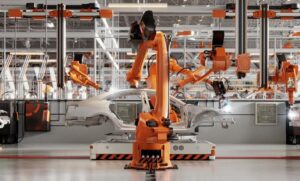
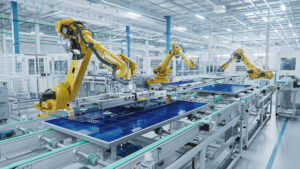
- Robotics Adoption: The number of robots per 10,000 employees in German companies is well above the global average at 346, outpacing the rest of Europe significantly too.
- Sustainability Investments: Furthermore, there has been an increasing trend towards investments into sustainable green technologies within this sector driven partly by Germany’s ambitious national targets for lowering carbon emissions and improving energy efficiency.
- Cybersecurity Investments: As companies shift towards digitizing their production processes, cyber security investments have soared in order to secure sensitive information while also protecting operational technology from hackers.
Challenges for the Automation and Industrial sector in Germany:

- Skill Gap: High-tech skills required for operating or innovating with new robotic systems are scarce
- Regulatory Compliance: Navigating Germany’s stringent environmental laws demands knowledge
- International Competition: There has been rapid advancement by global competitors that also require innovation and efficiency in maintaining competitiveness.
Opportunities for the Automation and Industrial sector in Germany:
- Digital Transformation: Industrial processes going digital can be taken advantage of by leading the way.
- Green Manufacturing: These leaders can pioneer manufacturing practices that set industry standards.
- Global Market Expansion: German enterprises is aggressively expanding into emerging economies with strong leadership.
The Role of Executive Search
Executive search firms play a critical role in finding leaders who are not only tech-savvy but also fit well within the company’s strategic vision. They include:
- Close the Skill Gap: By engaging executives suitable for such high-tech environments, they manage to fill this gap.
- Ensure Cultural Fit: Making sure that whoever becomes CEO fits into the existing corporate culture eases transitions and enhances leadership effectiveness.
- Global Talent Pool: A worldwide network is accessed to source top talent who bring fresh perspectives to local problems.
Strategic Leadership for the Future
The strategic importance of skilled leadership cannot be overemphasized as Germany’s industrial and automation sector continues to evolve. Executive search companies are strategic partners rather than mere recruiters as they place visionary leaders capable of steering industries through complex challenges and harnessing new prospects.
The future of Germany’s industrial sector will depend on how well it can innovate and adopt new technologies. In the process, executive search firms play an important role in finding leaders who can deal with these problems of today and are also forward thinkers to drive the success of tomorrow. Such leaders form the basis for Germany’s global industrial giant status and economic welfare.