
Executive Search in Canada’s Professional Services: Leading Through Change

Key Takeaway: Over 60% of Canadian professional services firms identify leadership talent shortage as a major concern (Deloitte, 2023) — with particular shortfalls in digital transformation, cybersecurity, and sustainability leadership. More than 70% of Canadian professional services firms are simultaneously investing in digital transformation (PwC Canada). The executives who can manage that dual mandate — leading the transformation while delivering the client work that funds it — are the sector’s scarcest and most consequential leadership appointments.

Last updated: August 13, 2026

Canada’s professional services sector — covering law, consulting, finance, and IT advisory — is facing significant change, driven by technological advancement, new regulatory demands, and shifting client expectations. In cities like Toronto, Montreal, and Vancouver, professional services are central to the economy. In this environment, finding the right leadership is more critical than ever. Executive search firms play a key role in identifying the leaders who can guide this sector through the transformation it is simultaneously undergoing and delivering.

Key Figures at a Glance

Data point Finding Source
Canadian professional services firms citing talent shortage as a major concern 60%+ — especially in digital transformation, cybersecurity, and sustainability Deloitte Canada, 2023
Canadian professional services firms investing in digital transformation 70%+ PwC Canada
Key economic context Rising interest rates and inflation compressing client budgets — requiring efficiency-and-growth leadership simultaneously Bank of Canada / Statistics Canada
Key opportunity driver Remote work enabling global expansion — creating demand for cross-cultural leadership alongside domestic professional services expertise Canadian professional services market analysis

The Current State of Canada’s Professional Services Market

Professional services in Canada are central to the economy of its major cities. The sector’s growth, fuelled by digital transformation and sustainability requirements, also brings its share of challenges — talent shortages, economic uncertainty driven by interest rate increases, and tightening regulatory requirements around data privacy and ESG standards. The dual mandate — transform while delivering — is creating leadership demands the sector cannot meet through organic development of existing talent at the pace the market requires.

The simultaneous occurrence of 60%+ talent shortage and 70%+ digital transformation investment in Canada’s professional services sector is not a coincidence — it is a structural tension. The firms investing most aggressively in digital transformation are creating the most severe talent shortages at the senior level, because digital transformation requires executives who understand both the technology and the client delivery model that the transformation is supposed to improve. The technology executive who cannot manage professional services client relationships will implement a transformation that improves internal metrics without improving client experience. The professional services executive who cannot genuinely assess technology proposals will approve transformations that create operational complexity without proportional benefit. The executive who can manage both dimensions simultaneously is the one that 60% of Canadian professional services firms cannot find — and the one that executive search with genuine sector knowledge can identify.

Challenges in the Professional Services Sector

  • Talent gaps: Over 60% of Canadian professional services firms see talent shortage as a major concern — particularly in digital transformation, cybersecurity, and sustainability leadership. Finding experts in these areas who also have the professional services client relationship management capability that makes the firm’s revenue defensible is the specific challenge that generic executive search cannot reliably solve.
  • Economic instability: Rising interest rates and inflation are compressing client budgets and pushing companies to become more efficient. In this climate, firms need leaders who can balance growth investment with financial management — who can identify which service lines to protect and which to scale during a client budget contraction cycle.
  • Regulatory demands: Tighter regulations around data privacy and ESG standards are adding pressure at every level. Professional services firms need leaders skilled in compliance and risk management who can simultaneously manage the regulatory change as an internal governance requirement and as a client advisory opportunity.

Opportunities for Growth

  • Embracing digital change: AI and cloud computing are reshaping how professional services are delivered. 70%+ of Canadian professional services firms are investing in digital transformation (PwC Canada). Leaders who genuinely understand these tools and can translate the investment into a client service improvement that the market will pay for — not just an internal efficiency improvement that the firm absorbs — will create competitive advantage that compounds over time.
  • Focusing on sustainability: ESG and sustainability are becoming mandatory priorities. Leadership with a strong ESG background is now critical for maintaining client relationships with organisations that apply ESG criteria to their professional services supplier selection decisions.
  • Global expansion and remote work: Remote work is enabling companies to expand globally. To lead teams across regions, companies need leaders with a global mindset and cross-cultural management skills — the specific combination that Canadian professional services firms have underinvested in developing domestically and must now access through executive search.
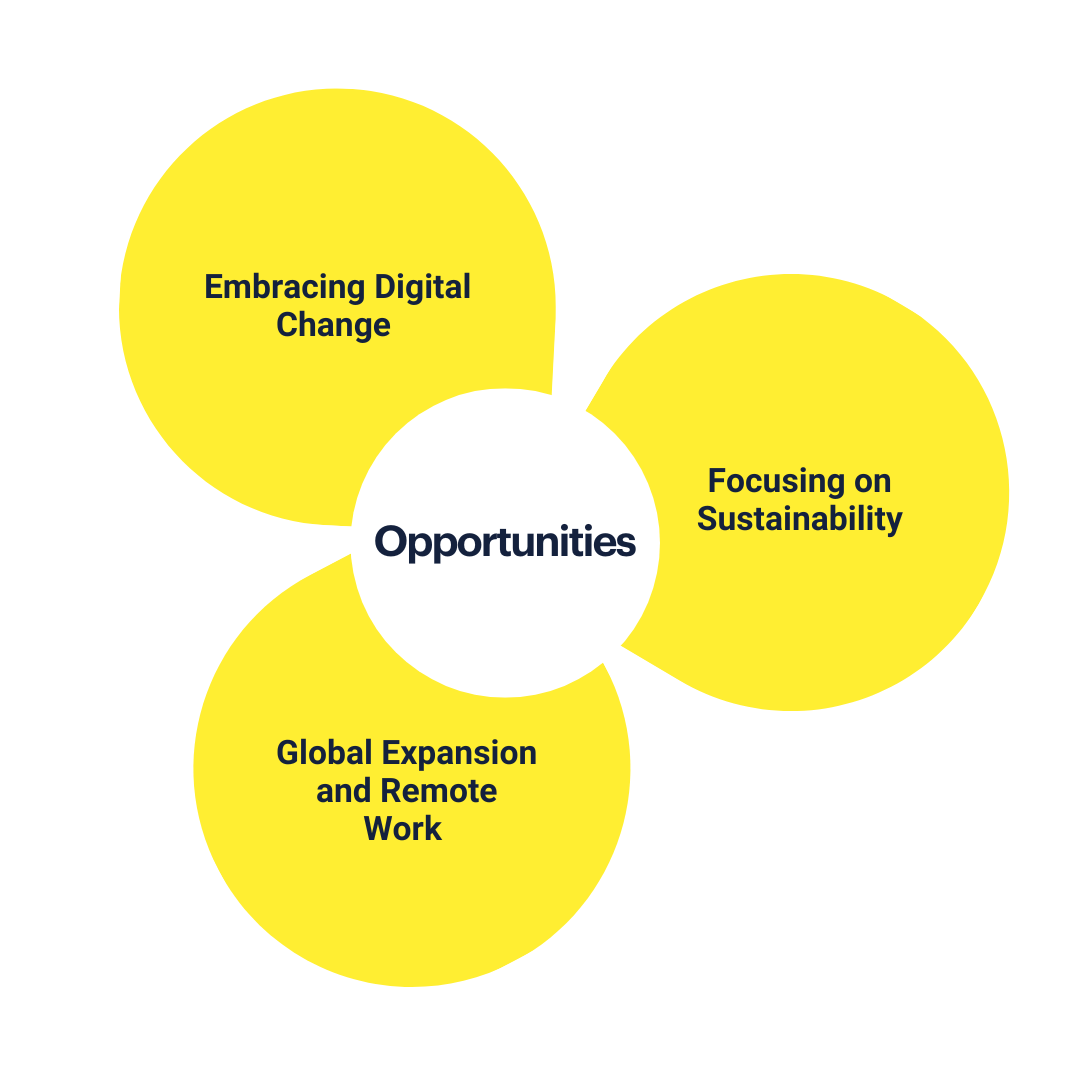
Opportunities for executive search in Canada's professional services sector — Zavala Civitas

How Executive Search Firms Help

  • Specialised knowledge: Executive search firms with genuine professional services sector knowledge understand the specific capability combination each mandate requires — and can distinguish the executive who genuinely has it from the one whose CV suggests it.
  • Economic resilience: In challenging economic conditions, firms need leaders who can manage costs and operations efficiently while maintaining the investment in talent and service capability that makes recovery possible. Executive search identifies that specific financial management alongside professional services leadership capability.
  • Cultural fit: Beyond qualifications, finding leaders who fit a firm’s culture and align with its long-term goals through rigorous assessment — not just credential screening — is the capability that differentiates executive search from standard recruitment in a sector where partner culture coherence is the primary driver of client retention.

Canada’s professional services sector is at a turning point — facing talent shortages, economic pressures, and regulatory challenges, while simultaneously leading the digital transformation and sustainability advisory that its clients are demanding. The right leadership can guide companies through both dimensions simultaneously. Executive search firms play a key role in finding those leaders.

Click here to get in contact with us.

Frequently Asked Questions: Executive Search in Canada’s Professional Services

Why is the simultaneous occurrence of 60%+ talent shortage and 70%+ digital transformation investment a structural tension rather than a coincidence?
Because the firms investing most aggressively in digital transformation are creating the most severe talent shortages at the senior level — since digital transformation requires executives who understand both the technology and the client delivery model. The technology executive who cannot manage professional services client relationships will implement a transformation that improves internal metrics without improving client experience. The professional services executive who cannot genuinely assess technology proposals will approve transformations that create complexity without proportional benefit. The executive who manages both is the one 60% of firms cannot find.
How does economic instability in Canada specifically change the leadership capability the professional services sector most needs?
By making the ability to sequence investment and cost decisions correctly the primary leadership differentiator. The professional services leader who cuts indiscriminately during a client budget contraction destroys the talent capability that enables recovery when the cycle turns. The one who protects the right investments, scales back the wrong ones, and maintains the client relationships that provide revenue continuity through the contraction is the leader the economic instability cycle selects for. Identifying that sequencing judgment in assessment is the specific executive search capability the current Canadian professional services market demands.
Why does the regulatory compliance leadership demand in Canadian professional services specifically require both internal governance and client advisory capability?
Because the regulatory change that creates an internal compliance challenge — PIPEDA amendments, CPPA data privacy requirements, ESG reporting mandates — simultaneously creates a client advisory mandate for the same professional services firm. The regulatory affairs leader who manages the internal compliance programme but cannot package the same expertise as a client service offering is delivering half the value that the regulatory change creates. The one who can govern both dimensions simultaneously turns a cost into a revenue opportunity.
What specific cultural fit challenge makes executive search in Canadian professional services different from other sectors?
Because partner culture coherence is the primary driver of client retention in professional services — not brand, not service portfolio, not pricing. The executive who disrupts the partner culture through management style, compensation philosophy, or strategic direction changes that partners did not collectively endorse will trigger the partner departure that triggers the client departure. Executive search assessing cultural alignment with the specific partner culture of the firm — not just generic professional services culture — produces significantly better long-term retention outcomes in Canadian professional services appointments.
How does Zavala Civitas approach executive search in Canada’s professional services sector?
Through sector-specific talent mapping assessing the digital transformation and client delivery dual capability, economic cycle investment sequencing judgment, regulatory advisory commercialisation alongside compliance governance, and partner culture alignment — not just credential assessment. We access both domestic Canadian professional services executives and internationally located Canadians who have built these combined capabilities in international professional services environments. From our Toronto office, with a 92% closing rate.

Finding executive leadership for Canada’s professional services sector?

Zavala Civitas provides sector-specific executive search for Canadian consulting, legal, accounting, and advisory firms. 92% closing rate.

Executive Search →
Legal & Professional Services →
Contact Us →

Executive Search China: Industrial Sector

Key Takeaway: Beijing has launched a nationwide “anti-involution” (反内卷) campaign to address destructive price wars and overcapacity across multiple industrial sectors at once, not just renewables. Electrical machinery and equipment, communications equipment, and medical products all show 29% to 34% of firms losing money in 2024-25. Goldman Sachs estimates Chinese

Read More

Executive Search in Italy for Industrial

Key Takeaway: Turin’s automotive cluster invested roughly €2.8 billion in electrification between 2024 and 2026. Over the same period, regional automotive employment fell by more than 3,200 positions. Fewer than 20% of local engineering graduates hold the specific battery, power electronics, and embedded software skills employers are actually hiring for.

Read More

Executive Search in Portugal for Financial Services

Key Takeaway: French banking group BPCE is investing €6.4 billion to acquire Novo Banco and building a 20,000 square metre campus in Lisbon, alongside a 2,500-strong tech hub already operating in Porto. This single deal is creating demand for highly specialised roles in risk analytics, structured finance, and digital-asset compliance

Read More

Related posts

Trabajo en remoto en los despachos de abogados

Autora: Beatriz Baker Araujo Senior Advisor, Zavala Civitas El debate sobre el trabajo presencial y remoto en los despachos de abogados lleva años activo, pero no ha madurado. Las posiciones se han endurecido desde 2020, y las conversaciones suelen discurrir entre dos polos: socios que invocan la cultura, el mentoring

Read More

Executive Search China: Industrial Sector

Key Takeaway: Beijing has launched a nationwide “anti-involution” (反内卷) campaign to address destructive price wars and overcapacity across multiple industrial sectors at once, not just renewables. Electrical machinery and equipment, communications equipment, and medical products all show 29% to 34% of firms losing money in 2024-25. Goldman Sachs estimates Chinese

Read More
Financial services building in Germany

Executive Search in Brazil for Financial Services

Key Takeaway: The White House targeted Brazil’s Pix payment system in April 2026, calling it a barrier to US payment companies. Brazil’s Central Bank fired back, defending Pix as a matter of payments sovereignty. At the same time, the collapse of Banco Master, the largest banking fraud in Brazilian history,

Read More
law leaders working

Executive Search in Mexico for Legal and Professional Services

Key Takeaway: Mexico’s 2024 judicial reform introduced popular election of judges and magistrates, with implementation beginning in 2025. This has accelerated a shift toward arbitration as the preferred dispute-resolution method in commercial contracts, as companies seek predictability an elected judiciary cannot yet guarantee. Combined with nearshoring-driven M&A activity and the

Read More

Executive Search in Italy for Industrial

Key Takeaway: Turin’s automotive cluster invested roughly €2.8 billion in electrification between 2024 and 2026. Over the same period, regional automotive employment fell by more than 3,200 positions. Fewer than 20% of local engineering graduates hold the specific battery, power electronics, and embedded software skills employers are actually hiring for.

Read More

Executive Search in Portugal for Financial Services

Key Takeaway: French banking group BPCE is investing €6.4 billion to acquire Novo Banco and building a 20,000 square metre campus in Lisbon, alongside a 2,500-strong tech hub already operating in Porto. This single deal is creating demand for highly specialised roles in risk analytics, structured finance, and digital-asset compliance

Read More