Key Takeaway: Portugal has over 2,700 multinational companies operating locally, a startup ecosystem of 5,091 companies generating salaries 81% above the national average, and €1.8 billion in VC investment in 2025. Yet the supply of executives who combine genuine local credibility with international leadership experience remains structurally limited. That gap is the defining executive search challenge in Portugal today.
Last updated: August 13, 2026
Portugal’s economy has remained one of Europe’s most resilient in recent years, supported by foreign investment, digitalisation, and an expanding technology ecosystem in Lisbon and Porto. Unemployment has dropped to historic lows, yet the supply of internationally experienced executives remains limited.
As multinational operations grow and local companies expand abroad, the need for leaders who can combine strategic sophistication with cultural authenticity is rising fast. This shifting environment is transforming how executive search operates in the country — from a network-based market centred on long-term loyalty, to one increasingly defined by cross-border competition for senior talent.
A Market Built on Trust and Continuity
Executive search in Portugal operates within a culture that values discretion, personal relationships, and long-term commitment. Most Portuguese companies — particularly in industry, infrastructure, and family-owned groups — favour leadership stability over constant turnover. This has created solid management teams, but also slower renewal at the senior level.
As the economy becomes more integrated with global markets, this model is being tested. Organisations are now seeking executives who combine Portuguese reliability with international perspective — able to manage cross-border operations and drive innovation while preserving local culture.
Portugal’s strength in executive talent — loyalty, institutional knowledge, relationship depth — is also its constraint. The same executives who are most trusted within the ecosystem are often those least exposed to the international management practices that multinationals and scale-ups now require. With over 2,700 multinationals operating in Portugal and a startup ecosystem of 5,091 companies, the demand for executives who are both locally credible and globally fluent is growing faster than the supply of people who have built both dimensions simultaneously.
The New Demand: Global Mindset, Local Understanding
The competition for internationally experienced executives has increased, especially in Lisbon and Porto. Multinationals operating in Portugal face challenges attracting local talent comfortable in multicultural environments, while Portuguese firms often look abroad — to Spain, France, or Brazil — to fill critical leadership roles.
This growing hybrid landscape requires executive search firms to balance cultural fit with global standards. The “right” candidate is no longer just technically qualified, but also adaptive, bilingual, and culturally fluent.
A Transition Toward Modern Governance
Another key shift is happening in governance. Many family-owned businesses are starting to professionalise their boards and succession processes. This transition opens opportunities for external executives who bring fresh perspectives and international best practices, yet can navigate Portugal’s collaborative and consensus-driven management style.
The governance professionalisation of Portuguese family businesses creates a specific executive profile need that did not exist ten years ago: a CEO or General Manager who can introduce institutional governance — KPI frameworks, board reporting, structured decision-making — without triggering the defensive reactions that this kind of change typically generates in ownership structures with strong founding family culture. That is a different challenge from managing an already-professional corporate environment. It requires political sensitivity, cultural intelligence, and patience alongside the governance expertise. In Portugal, that combination is rare — and it is increasingly what PE investors and international acquirers specifically ask for.
The Opportunity Ahead — Executive Search in Portugal
Portugal may not be a large market, but it offers an attractive combination of stability, talent loyalty, and openness to transformation. As investment in technology, renewable energy, and tourism continues to expand, the demand for modern, globally oriented executives will keep rising.
For executive search partners, success in Portugal means understanding both sides of the equation: the heritage of stability that defines Portuguese leadership, and the ambition for global competitiveness that will shape its next chapter.
About Zavala Civitas Executive Search
Zavala Civitas supports organisations in Portugal and across Europe in identifying and developing leaders who bridge local insight with global vision. Our cross-border expertise enables clients to navigate cultural nuances and attract executives who drive sustainable growth. Click here to contact us.
Frequently Asked Questions: Executive Search in Portugal — Local vs. Global
What makes the “local vs. global” tension in Portugal’s executive market different from other small European markets?
Because Portugal’s talent strength — loyalty, institutional knowledge, relationship depth — is simultaneously its constraint. The executives most trusted within the local ecosystem are frequently those least exposed to the international management practices that multinationals and scale-ups now require. That is not a skills gap; it is a career trajectory gap. Closing it requires either developing existing talent internationally or bringing international executives who can earn local credibility — both of which take longer than the hiring urgency allows.
Why do Portuguese companies look to Spain, France, or Brazil to fill senior leadership roles?
Because the domestic pool of executives with international management experience is structurally limited. When the combination of language compatibility and international background is required — particularly for regional management roles or multinational subsidiary leadership — companies extend the search to markets where Portuguese-fluent executives with that background exist in greater volume. Brazil, in particular, offers a large pool of Portuguese-speaking executives with international corporate exposure that Portugal cannot replicate domestically.
What specific executive profile does Portugal’s governance professionalisation demand?
One that combines institutional governance fluency — KPI frameworks, board reporting, structured decision-making — with the political sensitivity and cultural intelligence to introduce those practices without triggering defensive reactions from founding family structures. That combination is rare because it sits at the intersection of governance competency and change management skill — and both must be exercised simultaneously in an environment where the power dynamics are not yet fully resolved.
Why is talent loyalty in Portugal both an asset and a retention risk?
Because the same loyalty that gives Portuguese organisations stable, institutionally committed leadership also makes those organisations vulnerable when the loyalty is broken. Executives who have built 10–15-year careers within one organisation and then find their development stalled or their role diminished do not leave gradually — they disengage quietly first and then leave at a moment that is structurally inconvenient for the organisation. The loyalty culture makes this pattern less visible until it is already a problem.
How does Zavala Civitas approach executive search in Portugal’s local vs. global leadership context?
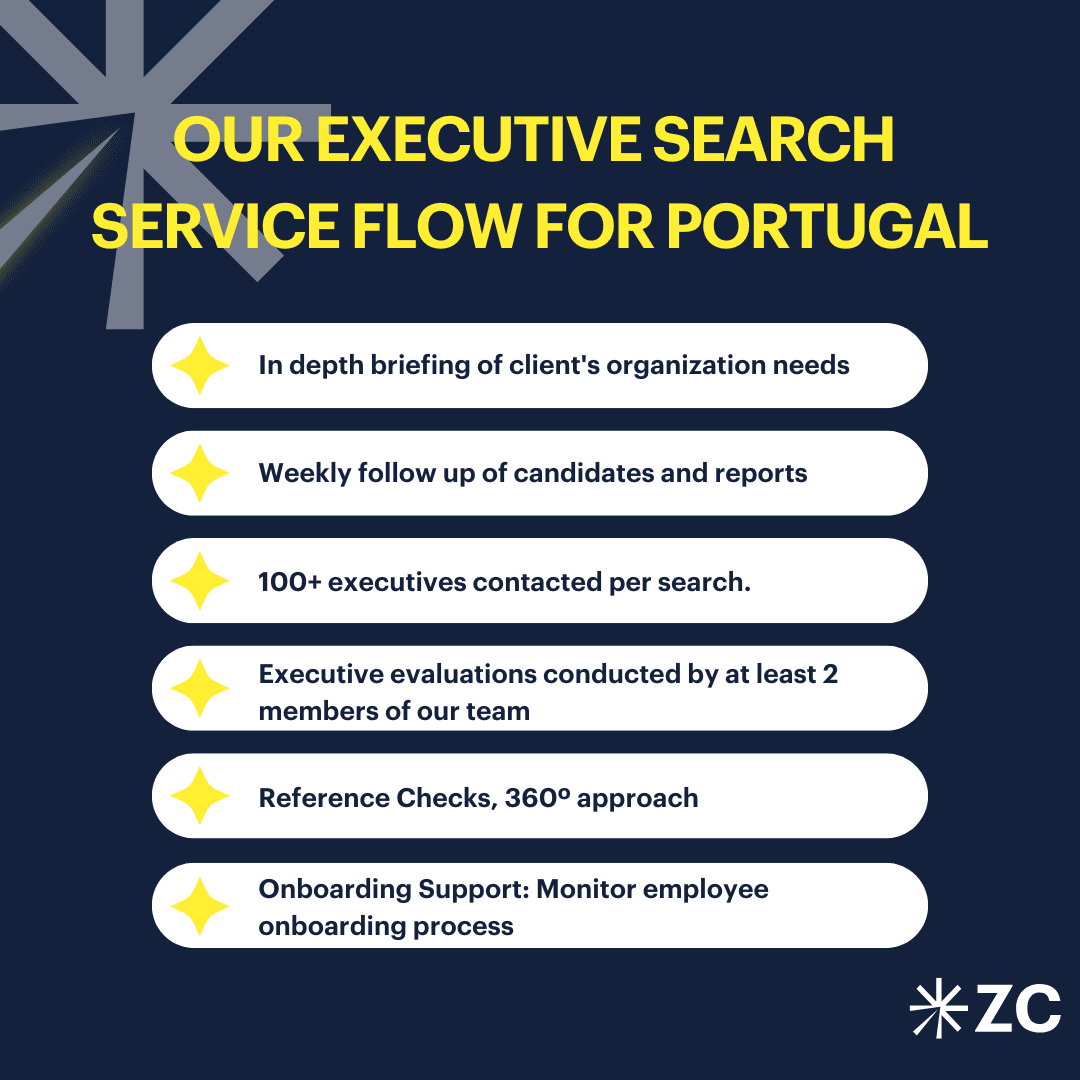
By mapping both the domestic Portuguese pool and international candidates from Spain, Brazil, and broader Europe who have the cultural fluency to operate effectively in Portugal’s relationship-driven market. We assess local credibility alongside international experience, evaluate governance maturity and cultural adaptability simultaneously, and extend the service to include onboarding support through the first year — the period most critical for international executives building local trust. With a 92% closing rate across completed mandates.
Building leadership that bridges local depth and global ambition in Portugal?
Zavala Civitas supports Portuguese organisations and multinationals in Portugal with executive search and leadership advisory. 92% closing rate.
Executive Search →
Leadership Assessment →
Contact Us →