Executive Search in United States: The Evolution of the CEO Role in Tech 

In the continually transforming global market, Executive Search in US is an imperative corporate model for finding leaders who can not only lead organizations through disruption – but thrive in it. In tech – the change has been exceptionally stark as the profile of the CEO has evolved significantly from simply being an operational and financial leader to now being considered a visionary who can balance innovation with ethics, manage a global workforce, and lead long-term digital transformation. 

Why Executive Search in United States Matters for Tech Leadership 

The US is the largest technology market worldwide, accounting for 35% of the global tech space, and home to over 585,000 technology companies (CompTIA; 2024). This tech landscape is both promoting further innovation while also producing increased competition for talent in leadership roles. 

According to the US Bureau of Labor Statistics, total management roles (which include executive roles), is projected to grow at 8% by 2032, creating a multitude of new positions. In the tech environment, the demand for management, particularly in leadership roles, will require deeper and broader engagement towards the requirement of skills in AI, cloud, and cybersecurity. The attention required on skill deficiencies demonstrates why talent acquisition for executives in the US is critical – because specialized firms have access to hidden talent pools and, more often, other candidates with the right combination of the skills needed to be successful in the position. 

The Evolution of the CEO Role in Tech 

  • From Operations to Visionary Strategy
    Traditionally, CEOs were primarily focused on stabilizing operations and growing shareholder value. But today, the best tech CEOs are now forward thinkers that focus on long term strategies that recognize and plan for evolving market disruptions, understand which technologies are on the rise, and inspire innovation across the company. 
  • Technology Expertise as a Core Competency
    A 2025 Gartner Study indicated that when identifying new CEOs for their companies, 72% of U.S. boards valued digital acumen as a critical criterion – that is because technical fluency is no longer just a differentiator, it is now a requirement to ensure that leaders can think strategically about how to leverage and translate complex technologies into tangible business strategies that provide measurable impact. 
  • The Role of the CEO as Growth-Driven yet, Ethically Smart and Compliant
    Technology has prompted the acceleration of artificial intelligence, data privacy and increased regulatory scrutiny, this means that CEOs are expected to lead ethically and purposely. Today, they must also ensure that technology innovation aligns with compliance, responsible use, and shared societal values. Ethical leadership is now a core consideration for a tech leader. 
  • Leading Hybrid and Global Workforces
    Since 60% of U.S. tech workforces are hybrid or remote (Gallup 2024), CEOs must now design and lead culture for their organizations. Their success depends on how well they can invite and respond to collaboration, inclusivity and productivity across borders. This is the newest and most significant way to differentiate themselves as successful leaders. 

How Executive Search in United States Shapes the New CEO Profile 

Executive search firms bring strategic value to organizations by: 

  • Identifying leaders that have not only the business acumen but the technical mind-set. 
  • Providing deep market mapping to search for candidates who may not at first appear in the traditional networks. 
  • Running confidential, structured processes that protect the business’ and all leaders’ identity. 
  • Reading cultural fit assessment that will help the business understand how to improve success for confrontational leadership spaces. 
  • Succession planning for high-growth or publicly traded technology company in terms of new executive appointments. 

All of these actions to ensure the company can secure leaders that are ready to face today’s challenges and ultimately, willing to prepare for tomorrow. 

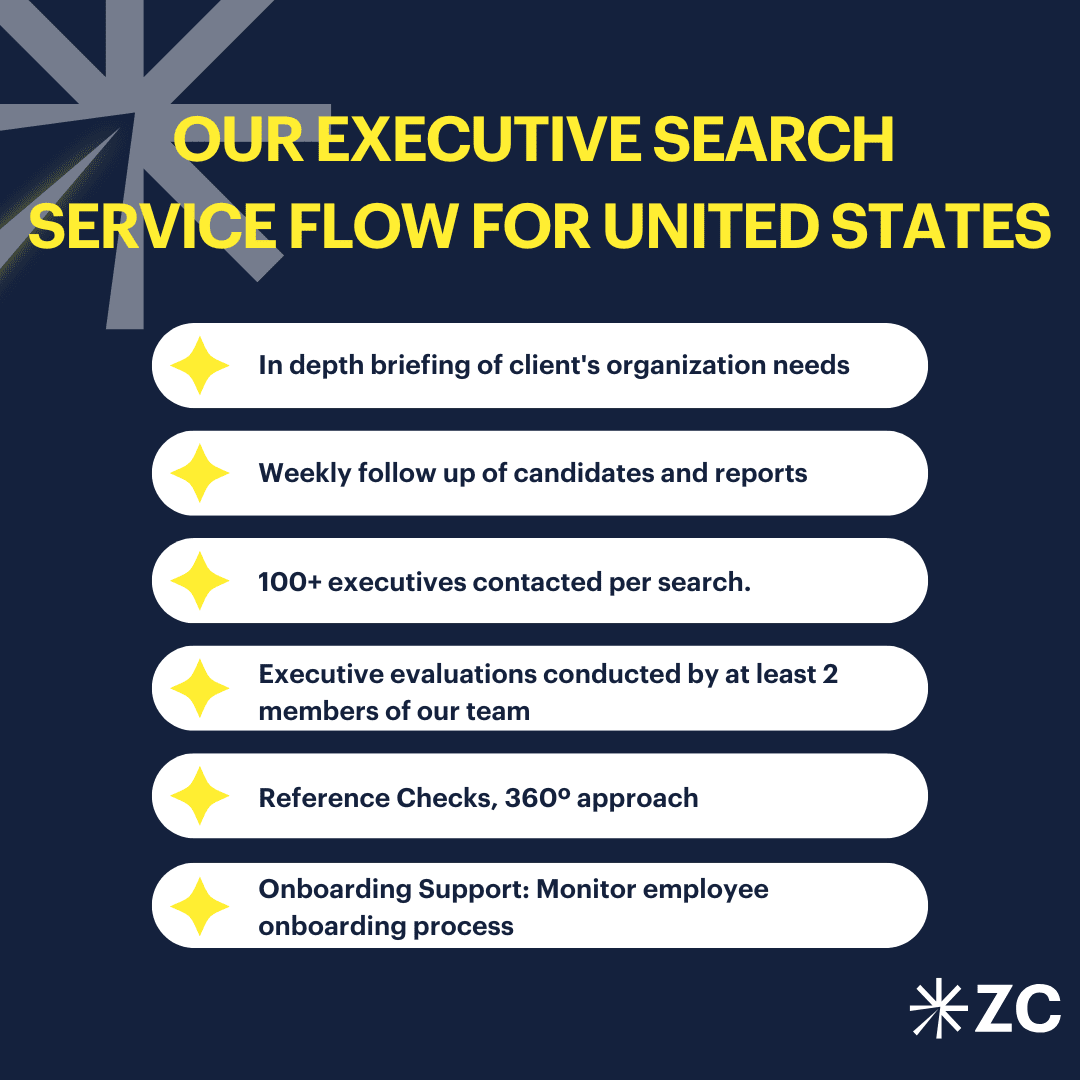
Learn about our executive search service flow for the united states

Conclusion: Redefining Leadership in U.S. Technology 

The evolution of the CEO role reflects the evolution of the technology industry itself. CEOs now lead new innovation creation, ethical protectors and cultivation of global teams. This evolution of the CEO role is representative of why executive search united states has never been more essential to tech industry organizations. 

For organizations that want to secure meaningful leadership capability, partnering with an experienced executive search firm will ensure that wherever you may look to secure the best leaders in your business, the decisions of their leaders will lean towards resilience, growth and competitive advantage in the digital age. 

If you are looking for custom solutions, please feel free to learn more about our executive search process, or you can contact us directly to discuss how we can support in engaging the best leaders for your future. 

Executive Search in Mexico: Leading Sectors Shaping Demand 

Over the last few years, Mexico swiftly garnered international investment, earning it the title of one of the fastest-growing countries in capturing global foreign direct investments.   This scenario creates new talent opportunities.  Most Executive Search firms in Mexico have modified their approach from simply filling highest roles in an organization to competing for the extremely limited pool of qualified executive talent for all roles in all sectors.  The demand isn’t even  It is very much concentrated.  Where Demand is Actually Growing  Mexico’s hiring executive pressure is unequal across all sectors. Some sectors are faster and are pulling talent from other sectors. Manufacturing is the clearest example.  With nearshoring, Mexico is becoming a strategically important center for the supply chain for North America. This is due to the fact that international companies are relocating and/or expanding their operations in Mexico. This is supported by McKinsey & Company.  The growth of a business is dependent on its leadership. Companies are in need of quickly scalable plant directors, operations managers, and supply chain executives. Such profiles are deficit.  Executive Search Energy and Infrastructure: Complexity at Scale  There is the highest demand for executive talent within the energy and infrastructure sectors.  Major projects and regulatory complexities, as well as lengthy investments, require leaders who are comfortable with uncertainty in all the essential domains, not just the technical. This includes stakeholder

Read More

Executive Search in Spain: Talent Gaps and Leadership Trends 

The Spanish talent market is perceived to be mature and easy to operate in. This makes some sense from afar. There is a solid network of business centers, a developing international business presence, and a considerable pool of experienced talent.  Problems arise when businesses attempt to recruit senior executives.  In Spain, executive search is shifting from talent arbitrage to understanding the true gaps and the reasons behind their expansion.  Where the Talent Gaps Are Actually Emerging  Spain may appear to have many senior professionals, but the issues here are more complex.  The problem is not the experience, but the type of experience that is most required by the different companies.  As per McKinsey & Company, the nature of change of senior leadership roles in Europe is at a much quicker pace than the nature of change in the senior leadership roles in the talent pool. Executives are required who are able to be strategic, also have the ability to execute, and be the change agent.  That blend is still too little. This is especially the case in Spain in the industries that are shifting the fastest—energy transition, infrastructure, and technology. There are many executives who have strong functional experience, but far fewer who have held positions to manage large, complex transformations, or to operate internationally in complex situations.  This results in the mismatch between the hopes of the companies and the actual situation in the labor market.  The Shift from Stability to Transformation Leadership  For many years, leadership in Spain emphasized operational stability and incremental change.  This is not enough anymore.  At present, companies expect executives to manage change and uncertainty, and lead in multiple dimensions simultaneously, including at the same time digital transformation, new business models, and the increased need for operational efficiency. 

Read More

Executive Search in the United States: Private Equity and Portfolio Leadership  

According to McKinsey’s Global Private Markets Review the United States remains the largest private equity market globally. It accounts for nearly half of global PE deal value.    Unlike traditional recruiting, Executive Search in the U.S. private equity-backed environments is much more complex.  In PE platforms, leadership is directly tied to value creation, EBITDA expansion,

Read More

Related posts

Leadership in the Middle East: Why Fit Matters More Than Origin 

As companies in the Middle East scale and institutionalize, the long-standing debate around local versus international leadership in the Middle East is largely outdated. The real issue today is alignment: whether the leadership profile fits the business challenge the organization is facing.  Too often, leadership appointments are driven by assumptions: that international executives

Read More

The Role of Compliance Officers in Strategic Decision-Making

Over the past decade, the role of compliance functions within organizations has progressed significantly. Traditionally, compliance was responsible primarily for ensuring the company’s compliance with regulation, particularly that Relations to bribery and corruption.  They developed codes of conduct, supplier due diligence process and the like and were responsible for ensuring compliance with these by employees of

Read More

Executive Search in Mexico: Leading Sectors Shaping Demand 

Over the last few years, Mexico swiftly garnered international investment, earning it the title of one of the fastest-growing countries in capturing global foreign direct investments.   This scenario creates new talent opportunities.  Most Executive Search firms in Mexico have modified their approach from simply filling highest roles in an organization to competing for the extremely limited pool of qualified executive talent for all roles in all sectors.  The demand isn’t even  It is very much concentrated.  Where Demand is Actually Growing  Mexico’s hiring executive pressure is unequal across all sectors. Some sectors are faster and are pulling talent from other sectors. Manufacturing is the clearest example.  With nearshoring, Mexico is becoming a strategically important center for the supply chain for North America. This is due to the fact that international companies are relocating and/or expanding their operations in Mexico. This is supported by McKinsey & Company.  The growth of a business is dependent on its leadership. Companies are in need of quickly scalable plant directors, operations managers, and supply chain executives. Such profiles are deficit.  Executive Search Energy and Infrastructure: Complexity at Scale  There is the highest demand for executive talent within the energy and infrastructure sectors.  Major projects and regulatory complexities, as well as lengthy investments, require leaders who are comfortable with uncertainty in all the essential domains, not just the technical. This includes stakeholder

Read More

Executive Search in Spain: Talent Gaps and Leadership Trends 

The Spanish talent market is perceived to be mature and easy to operate in. This makes some sense from afar. There is a solid network of business centers, a developing international business presence, and a considerable pool of experienced talent.  Problems arise when businesses attempt to recruit senior executives.  In Spain, executive search is shifting from talent arbitrage to understanding the true gaps and the reasons behind their expansion.  Where the Talent Gaps Are Actually Emerging  Spain may appear to have many senior professionals, but the issues here are more complex.  The problem is not the experience, but the type of experience that is most required by the different companies.  As per McKinsey & Company, the nature of change of senior leadership roles in Europe is at a much quicker pace than the nature of change in the senior leadership roles in the talent pool. Executives are required who are able to be strategic, also have the ability to execute, and be the change agent.  That blend is still too little. This is especially the case in Spain in the industries that are shifting the fastest—energy transition, infrastructure, and technology. There are many executives who have strong functional experience, but far fewer who have held positions to manage large, complex transformations, or to operate internationally in complex situations.  This results in the mismatch between the hopes of the companies and the actual situation in the labor market.  The Shift from Stability to Transformation Leadership  For many years, leadership in Spain emphasized operational stability and incremental change.  This is not enough anymore.  At present, companies expect executives to manage change and uncertainty, and lead in multiple dimensions simultaneously, including at the same time digital transformation, new business models, and the increased need for operational efficiency. 

Read More

Executive Search in China: The Complexity of Hiring Executives

China is one of those markets where opportunities are easy to find but the right leaders are not.  many international firms, executive recruitment in China becomes challenging for one simple reason: the market does not act as they expect. What works for Europe or the US, tends to break down here.  Recruiting

Read More

Executive Search in the United States: Private Equity and Portfolio Leadership  

According to McKinsey’s Global Private Markets Review the United States remains the largest private equity market globally. It accounts for nearly half of global PE deal value.    Unlike traditional recruiting, Executive Search in the U.S. private equity-backed environments is much more complex.  In PE platforms, leadership is directly tied to value creation, EBITDA expansion,

Read More