
Last updated: August 20, 2026
China’s life sciences sector has continued to evolve as pharmaceutical innovation, biotechnology, medical devices and healthcare demand become increasingly important. Rather than relying on older market-size forecasts, current regulatory and demographic data show a sector shaped by faster innovation pathways, an ageing population and increasingly sophisticated domestic and international competition.
Demand for experienced leadership grows as these businesses become more complex. A CEO or Country Head may need to understand China’s regulatory framework while leading scientific, commercial, medical, market-access and operational teams. The candidate pool narrows further when the position also requires international experience and the ability to work effectively between Chinese operations and a global headquarters.
Executive Search in China’s Life Sciences Sector
Executive search in China’s life sciences sector is particularly relevant for roles where a company cannot rely on technical credentials or general management experience alone. Leadership mandates can involve pharmaceutical innovation, biotechnology, medical devices, healthcare services, regulatory affairs, market access, manufacturing and commercial expansion.
The search process should therefore begin by defining which parts of the value chain the executive will actually lead. The profile required for a biotech CEO taking products through clinical development can differ substantially from the profile required for the China General Manager of a multinational medical-device company or the CEO of a commercial healthcare platform.
Key Figures at a Glance
| Data point | Finding | Source |
|---|---|---|
| First-in-class innovative drugs approved in China, 2024 | 48, highest level in five years | National Medical Products Administration |
| Innovative medical-device approvals milestone | 300th innovative device approved by February 2025 | National Medical Products Administration |
| Review timeline for eligible innovative-drug clinical trials | 30 working days | National Medical Products Administration |
| Population aged 60+ in China, end 2025 | 323.38 million, 23.0% of population | National Bureau of Statistics of China |
What Current Life Sciences Data Means for Executive Search in China
Executive search firms can also provide market intelligence beyond candidate identification. A structured search can reveal how competitors organise regulatory affairs, market access, medical affairs, commercial leadership and research functions, while also helping a company benchmark the backgrounds available in the external executive market.
Talent Retention, Succession Planning and Leadership Development
Executive search can form part of a broader talent strategy rather than being used only when a vacancy appears. Life sciences organisations may also need to assess internal successors, understand retention risk among critical technical and commercial leaders and build development plans for executives whose responsibilities are expanding.
This is particularly relevant when companies move from one stage of development to another. A leadership team that successfully manages early research may need additional regulatory and commercial capability as products move towards approval. Similarly, a multinational expanding in China may need stronger local decision-making authority as the operation grows.
Who Is the Ideal CEO for a Life Sciences Company in China?
There is no single ideal CEO profile for China’s life sciences sector. The strongest candidate depends on the company’s development stage, product portfolio, ownership structure and strategic priorities.
A CEO generally needs sufficient understanding of the industry and regulatory environment to make informed strategic decisions. However, a PhD or MD should not automatically be treated as a requirement for every mandate. Scientific credentials may be highly relevant for biotech, R&D-heavy or medically complex businesses, while other companies may place greater weight on commercialisation, market access, manufacturing, international management or operational transformation.
Scientific and regulatory judgement
- Ability to understand the scientific and clinical logic behind the company’s portfolio.
- Knowledge of China’s regulatory environment and approval pathways.
- Ability to work effectively with regulatory, medical and R&D leaders.
- Judgement about which innovation programmes should receive additional resources.
Commercial and market-access capability
- Ability to convert scientific innovation into sustainable commercial outcomes.
- Understanding of market access, reimbursement and stakeholder engagement.
- Experience building commercial organisations and go-to-market strategies.
- Financial judgement and capital-allocation capability.
Leadership and cross-border management
- Ability to lead highly specialised scientific and commercial teams.
- Strong communication with regulators, investors, partners and employees.
- Cross-cultural leadership between Chinese operations and global headquarters.
- Ability to make decisions under scientific and regulatory uncertainty.
- Succession planning and development of future leadership talent.
Regulatory Change Is Reshaping Life Sciences Leadership in China
China has continued to reform the regulatory environment for innovative medicines and medical devices. The National Medical Products Administration has introduced measures intended to improve review efficiency, support innovative products and strengthen whole-lifecycle regulation.
The 2025 regulatory reform framework aims to create a regulatory system better suited to pharmaceutical innovation by 2027 and specifically supports areas including innovative drugs, rare-disease treatments, cell and gene therapies, medical robots, brain-computer interfaces and advanced imaging technologies.
For CEOs, regulatory capability therefore means more than compliance. Leaders need to understand how regulatory changes affect clinical timelines, product prioritisation, market-entry decisions and the organisation’s investment strategy.
What Skills Should Executive Search Assess in a Life Sciences CEO in China?
The ideal CEO for a life sciences company in China should combine leadership capability with enough industry understanding to challenge specialists and make informed strategic decisions. The precise mix depends on the company’s business model.
- Strategic judgement and portfolio prioritisation.
- Regulatory and market-access understanding.
- Commercialisation of scientific innovation.
- Leadership of multidisciplinary teams.
- Financial and capital-allocation discipline.
- Stakeholder management with regulators, investors and partners.
- International and cross-cultural leadership.
- Ability to scale an organisation through different development stages.
- Succession planning and leadership development.
In general, China’s life sciences sector benefits from leaders who can connect science with strategy rather than treating them as separate disciplines. Executive search should assess what the candidate has actually delivered across innovation, regulation, commercialisation and organisational growth rather than relying only on previous titles or academic credentials.
To sum up, Executive Search is a useful tool for businesses in China’s life sciences industry when identifying senior leadership and developing broader talent plans. Companies can benefit from structured market mapping, direct access to relevant executives, candidate assessment and professional support throughout the hiring process.
Click here to get in contact with us or learn more about our services.
Zavala Civitas Executive Search Methodology for Life Sciences in China
For life sciences mandates, Zavala Civitas begins by defining the company’s business context, regulatory environment, leadership mandate and critical success factors. The market is then mapped across direct competitors and relevant adjacent organisations rather than limiting the search to candidates with an identical previous title.
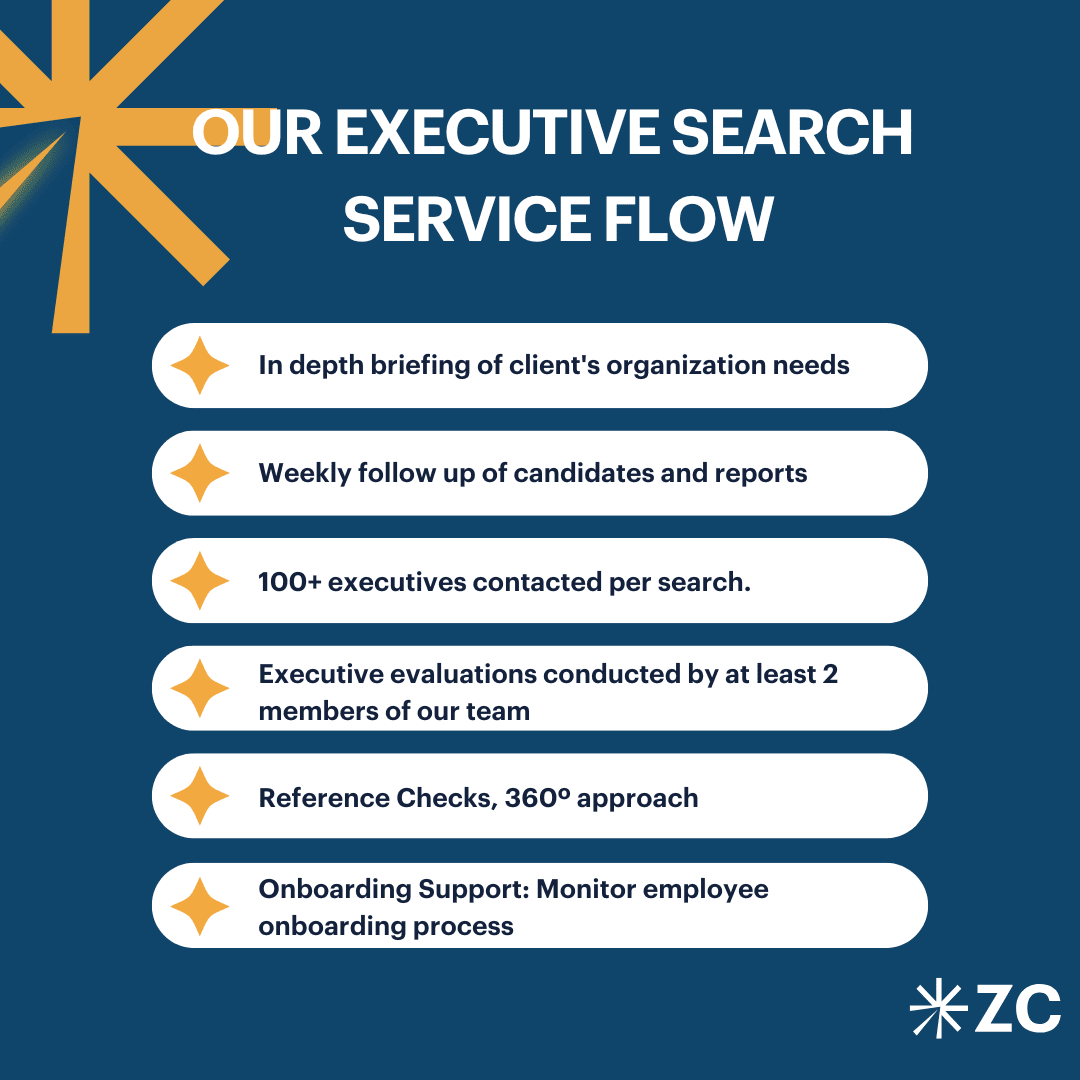
Our Executive Search methodology includes direct contact with more than 100 executives per search, assessment by at least two consultants, quantitative and qualitative evaluation, 360-degree reference checks and follow-up during the first six months after appointment.
Frequently Asked Questions: Life Sciences Executive Search in China
Looking for Life Sciences leadership in China?
Zavala Civitas helps pharmaceutical, biotechnology, medical-device and healthcare organisations identify senior leaders capable of combining regulatory judgement, scientific understanding and commercial execution. 92% closing rate.
Executive Search → Life Sciences → Contact Us →