
The priorities facing HR leaders in Spain have changed significantly since the immediate post-pandemic period. Remote and hybrid work have become established operating models, artificial intelligence is moving rapidly into business processes, and organizations are increasingly focused on developing, retaining and redeploying the talent they already have.
For HR and Executive Search leaders, the challenge in 2026 is therefore no longer simply adapting to a new way of working. It is building organizations capable of managing continuous change while maintaining leadership capability, culture and access to critical talent.
Executive Search and HR Priorities in Spain
The Spanish workplace has moved beyond many of the temporary adjustments associated with the pandemic. Hybrid work has stabilised, digital adoption is accelerating and employers are increasingly reconsidering how leadership roles, career paths and organizational structures should evolve.
According to Spain’s National Statistics Institute, 37.4% of companies with 10 or more employees allowed teleworking in the first quarter of 2025. Among companies with 250 or more employees, that figure reached 78%.
Source: Instituto Nacional de Estadística, Survey on ICT Use in Enterprises 2024–Q1 2025.
For HR leaders, this means priorities such as culture, manager effectiveness and employee development now need to work across both physical and hybrid environments rather than being treated as temporary responses to remote work.
1. Leader and Manager Development
Managers continue to operate under increasing expectations. They are expected to deliver results while leading hybrid teams, implementing new technologies, developing talent, communicating organizational change and maintaining employee engagement.
HR leaders should therefore reassess what good management looks like in the current organization rather than simply adding more responsibilities to existing roles.
Leadership development can include clearer expectations, structured feedback, assessment of strengths and development areas, coaching and practical development linked directly to business responsibilities.
For senior leaders, Executive Assessment and Leadership Development can help organizations determine which capabilities already exist internally and where more targeted development is required.
2. Organizational Culture in a Hybrid Environment
Organizational culture remains a priority, but the challenge has evolved. Companies are no longer experimenting with remote work at scale for the first time. Instead, many organizations now need to determine how culture operates when employees have different levels of flexibility, office presence and interaction with leadership.
Hybrid work does not automatically weaken culture, but it can make informal communication, knowledge transfer and alignment less consistent if organizations rely only on physical proximity to create them.
HR leaders should therefore clarify the behaviours, decision-making processes and communication practices that define the organization’s culture regardless of where employees are working.
When misalignment becomes structural rather than individual, Organizational Consulting can help companies examine communication, organizational structure and the relationship between business strategy and the way teams actually operate.
3. HR Technology and Responsible AI
Artificial intelligence is no longer simply an emerging HR technology. Its adoption across Spanish companies is accelerating.
In the first quarter of 2025, 21.1% of Spanish companies with 10 or more employees used artificial intelligence technologies, an increase of 8.7 percentage points compared with the previous year.
Source: Instituto Nacional de Estadística, Survey on ICT Use in Enterprises 2024–Q1 2025.
For HR functions, the question is therefore moving from whether AI should be explored to how it should be governed and where human judgment needs to remain central.
This is particularly important in recruitment and talent management. Under the EU AI Act, certain AI systems used to analyse and filter job applications, evaluate candidates, support promotion or termination decisions, allocate tasks or monitor employee performance fall within the employment-related high-risk categories.
Under the current implementation timetable, the high-risk requirements applying to employment-related systems are due to apply from 2 December 2027. HR leaders therefore have a clear preparation period in which to understand which tools are being used, how decisions are made and where human oversight, documentation and governance will be required.
Sources: European Commission AI Act Service Desk, Annex III and European Commission, Guidelines for High-Risk AI Systems.
Responsible adoption should therefore consider governance, data quality, workforce readiness, bias, privacy, explainability and the extent to which technology materially influences employment decisions.
4. Change Management
Organizations continue to face a high volume of change, but the sources of that change are broader than they were several years ago. AI implementation, restructuring, cost pressures, new working models, international expansion and changing skill requirements may all affect employees at the same time.
For HR leaders, change management therefore needs to be integrated into transformation planning rather than addressed only after employee resistance or fatigue appears.
The World Economic Forum identifies skills gaps, regulatory frameworks and resistance to change and organizational culture among the barriers Spanish employers see when transforming their businesses.
Source: World Economic Forum, Future of Jobs Report 2025 – Spain.
This makes leadership behaviour particularly important. Employees need to understand not only what is changing, but why the change is taking place, what is expected from them and how decisions will affect their roles.
5. Career Management and Internal Mobility
Traditional career paths are becoming less linear as organizations change their structures and the skills required for different positions.
Internal mobility allows companies to respond to this change by identifying employees who can move into new responsibilities rather than automatically looking outside the organization whenever a capability gap appears.
This has also become an important talent-attraction and retention priority in Spain. The World Economic Forum reports that 77% of employers surveyed in Spain plan to enhance progression and promotion processes to increase their attractiveness as employers.
Source: World Economic Forum, Future of Jobs Report 2025 – Spain.
For HR leaders, this requires better visibility of internal capabilities, clearer development pathways and realistic assessment of whether the organization already has talent capable of taking on a critical role.
Where the required leadership capability does not exist internally, a specialised Executive Search process can extend the talent map beyond active applicants and identify executives whose experience corresponds to the business mandate.
What These HR Priorities Mean for Executive Search in Spain
The relationship between HR strategy and Executive Search is becoming increasingly close.
Before deciding to recruit externally, companies need to understand whether the challenge is genuinely a lack of talent, a development issue, a structural problem or a mismatch between the organization’s strategy and its existing leadership model.
An organization may need Executive Search when the required capabilities do not exist internally. In another situation, Executive Assessment and Development may reveal that an existing leader can take on greater responsibility with targeted support. In cases where responsibilities, structures or communication are unclear, Organizational Consulting may address the underlying issue without replacing the executive team.
Zavala Civitas Executive Search Spain
Zavala Civitas supports companies in Spain through Executive Search, Executive Assessment & Development and Organizational Consulting.
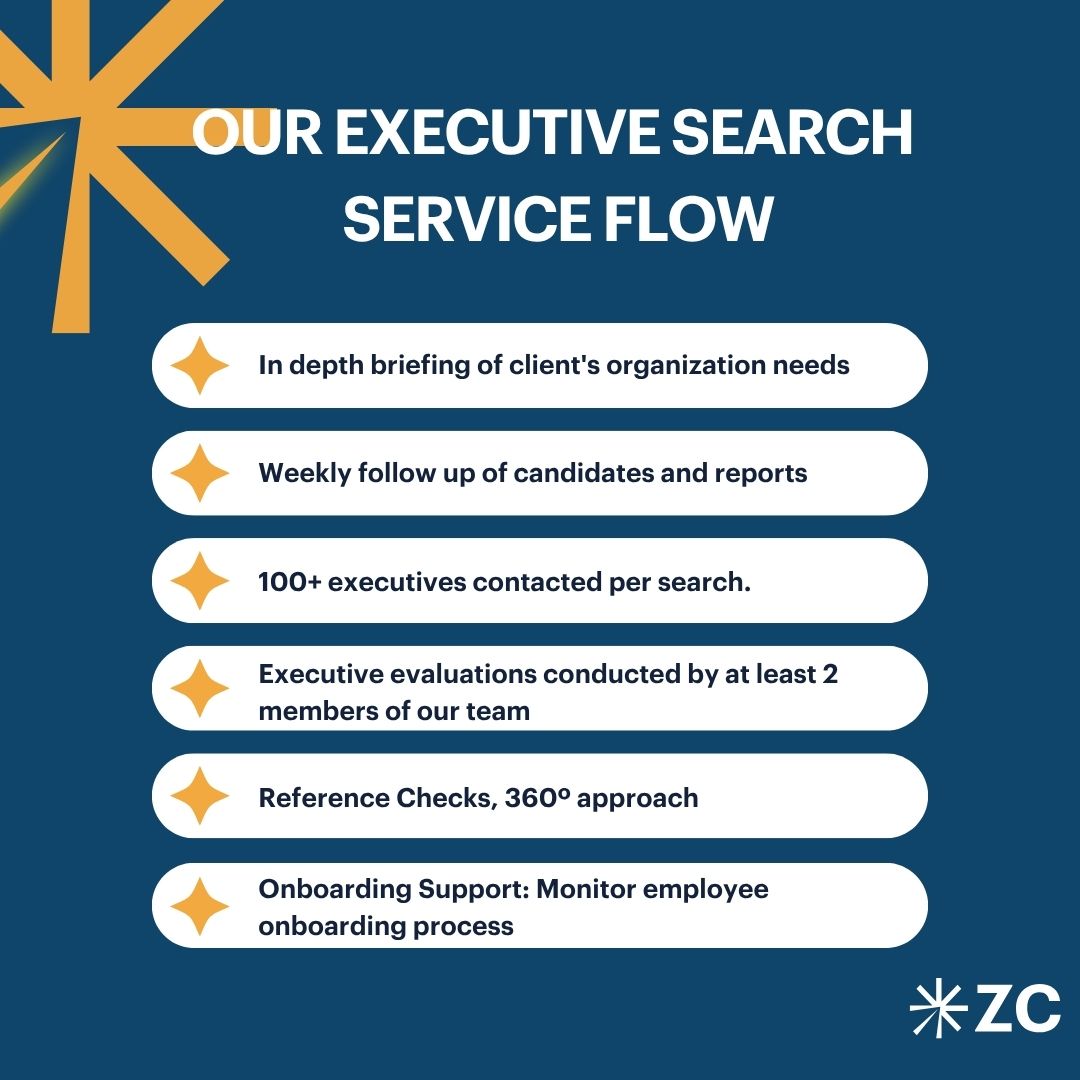
Our Executive Search methodology begins with an in-depth briefing to understand the client’s organization and critical success factors before mapping and directly approaching the relevant executive market.
The process includes direct contact with more than 100 candidates per search, interviews conducted by at least two consultants, quantitative and qualitative evaluation, 360º reference checks and follow-up during the executive’s adaptation period.
Frequently Asked Questions About HR Priorities in Spain
What are the main HR priorities in Spain in 2026?
Key priorities include leader and manager development, maintaining organizational culture across hybrid environments, responsible adoption of AI and HR technology, change management and stronger career progression and internal mobility.
How is AI changing HR in Spain?
AI adoption among Spanish businesses is increasing rapidly. For HR, this creates opportunities to improve processes but also requires stronger governance, particularly when AI influences recruitment, candidate evaluation, employee performance or other employment decisions.
Is hybrid work still an HR priority in Spain?
Yes, although the priority has shifted from introducing remote work to managing it effectively. In early 2025, 37.4% of Spanish companies with 10 or more employees allowed teleworking, rising to 78% among companies with 250 or more employees.
Why is internal mobility important for HR leaders?
Internal mobility helps organizations respond to changing skill requirements while providing employees with visible development opportunities. The World Economic Forum reports that 77% of employers surveyed in Spain plan to strengthen progression and promotion processes.
When should a company use Executive Search rather than develop internal talent?
Executive Search is most relevant when the leadership capability required by the business is not available internally or when the company needs an external benchmark of the market. Executive Assessment can help determine whether existing leaders have the potential to assume the role with development, while Organizational Consulting can address structural problems that recruitment alone would not solve.
Learn more about our Executive Search methodology, explore our Executive Assessment and Leadership Development services or contact us to discuss your organization’s leadership priorities.