
An executive search firm overview: Hiring for Technology and Telecomm in China

Key Takeaway: Technology, Media and Telecommunications leadership in China is being reshaped by artificial intelligence, cloud services, data infrastructure and increasingly software-led business models. China had 1.125 billion internet users at the end of 2025, while emerging telecom services such as cloud computing, big data, mobile IoT and data centres generated RMB 450.8 billion. Executive search in the TMT sector therefore increasingly requires leaders who can connect technology investment with commercial growth, organisational transformation and measurable business outcomes.

Last updated: August 20, 2026

Technology, Media and Telecommunications (TMT) is an industry grouping that includes companies operating across telecommunications, software, digital platforms, media, cloud infrastructure, data and emerging technologies. Many of these businesses depend heavily on research and development, intellectual property and the ability to commercialise technological innovation.

China has one of the world’s largest digital markets. By the end of 2025, the country had 1.125 billion internet users and an internet penetration rate of 80.1%. China also had 1.204 billion 5G mobile subscribers and 4.84 million 5G base stations.

China’s earlier industrial policies, including the Made in China 2025 programme, helped accelerate investment in advanced technology and manufacturing. By 2026, the competitive environment has evolved further as artificial intelligence, cloud computing, data infrastructure and intelligent devices become increasingly integrated into mainstream business strategy.

Executive Search for the TMT Industry in China

The leadership challenge for TMT companies in China has also changed since the pandemic period. Companies are no longer primarily managing lockdown disruption and emergency changes in consumer behaviour. The current challenge is how to convert technological capability into sustainable revenue while competing for executives who understand AI, software, data, cybersecurity, product strategy and complex digital ecosystems.

Key Figures at a Glance

Data point Finding Source
Internet users in China, 2025 1.125 billion, 80.1% penetration National Bureau of Statistics of China
Telecommunications business revenue, 2025 RMB 1.75 trillion, +0.7% YoY Ministry of Industry and Information Technology
Cloud, big data, mobile IoT and data-centre revenue, 2025 RMB 450.8 billion, +4.7% YoY Ministry of Industry and Information Technology
China core AI industry, 2025 More than RMB 1.2 trillion and 6,200+ companies MIIT / State Council

What Current TMT Data Means for Executive Search in China

Public data interpretation: China’s telecommunications industry generated RMB 1.75 trillion in revenue in 2025, but total revenue increased by only 0.7%. By comparison, emerging services including cloud computing, big data, mobile IoT and data centres grew by 4.7% and already accounted for 25.7% of telecom revenue. The leadership implication is that future growth increasingly depends on expanding beyond traditional connectivity. Executive search should therefore assess whether senior leaders can commercialise new technologies and services rather than simply manage established telecommunications infrastructure.

One of the biggest challenges for TMT companies is to identify and retain qualified human capital. Competition is particularly strong for executives with experience spanning technology and business, because leadership roles increasingly require understanding of several domains rather than deep expertise in only one technical function.

Companies may need executives capable of managing engineering, product, data, cybersecurity or technology teams while also understanding revenue models, customers, financial priorities and organisational transformation. This makes role definition particularly important before beginning an executive search.

TMT Industry Transformation in China: AI, Software and Data

Technology, Media and Telecommunications companies remain important drivers of economic and organisational change. The difference in 2026 is that AI is moving from a specialist technology function into product development, operations, customer service, software and strategic decision-making.

China’s software and information technology services industry generated RMB 15.4831 trillion in revenue in 2025, an increase of 13.2%. At the same time, the country’s core AI industry exceeded RMB 1.2 trillion. For TMT leadership teams, these figures reinforce a shift from infrastructure-led growth towards software, intelligent services and technology-enabled business models. Senior executives increasingly need to understand not only how technology works, but how it creates economic value.

Leadership Skills for TMT Executives in China

Technology and innovation capabilities

  • Strategic understanding of artificial intelligence and data.
  • Ability to evaluate emerging technologies and investment priorities.
  • Product and software business-model understanding.
  • Cybersecurity and technology-risk awareness.
  • Ability to translate R&D into commercially scalable products and services.

Business and organisational leadership

  • Commercial and financial judgement.
  • Cross-functional leadership across technology and business teams.
  • Ability to attract and retain specialised talent.
  • Transformation and change-management experience.
  • International and cross-cultural stakeholder management.
  • Ability to operate at the speed required by rapidly changing technology markets.
Zavala Civitas Insight: In TMT executive search, job titles can hide significant differences in leadership experience. A CTO who has managed telecommunications infrastructure, a CTO who has built a software platform and a CTO who has led an AI transformation may hold the same title but offer very different capabilities. Before mapping candidates, the search should define the company’s technology model, commercial priorities and transformation stage so that executives are assessed against the actual mandate rather than against title equivalence.

Finding TMT Leaders in China’s Competitive Technology Market

We at Zavala Civitas Executive Search and Organizational Consulting have had the chance to collaborate closely with leaders in the technology sector and have witnessed their progress and growth, both within their own organisations and while leading transformation initiatives.
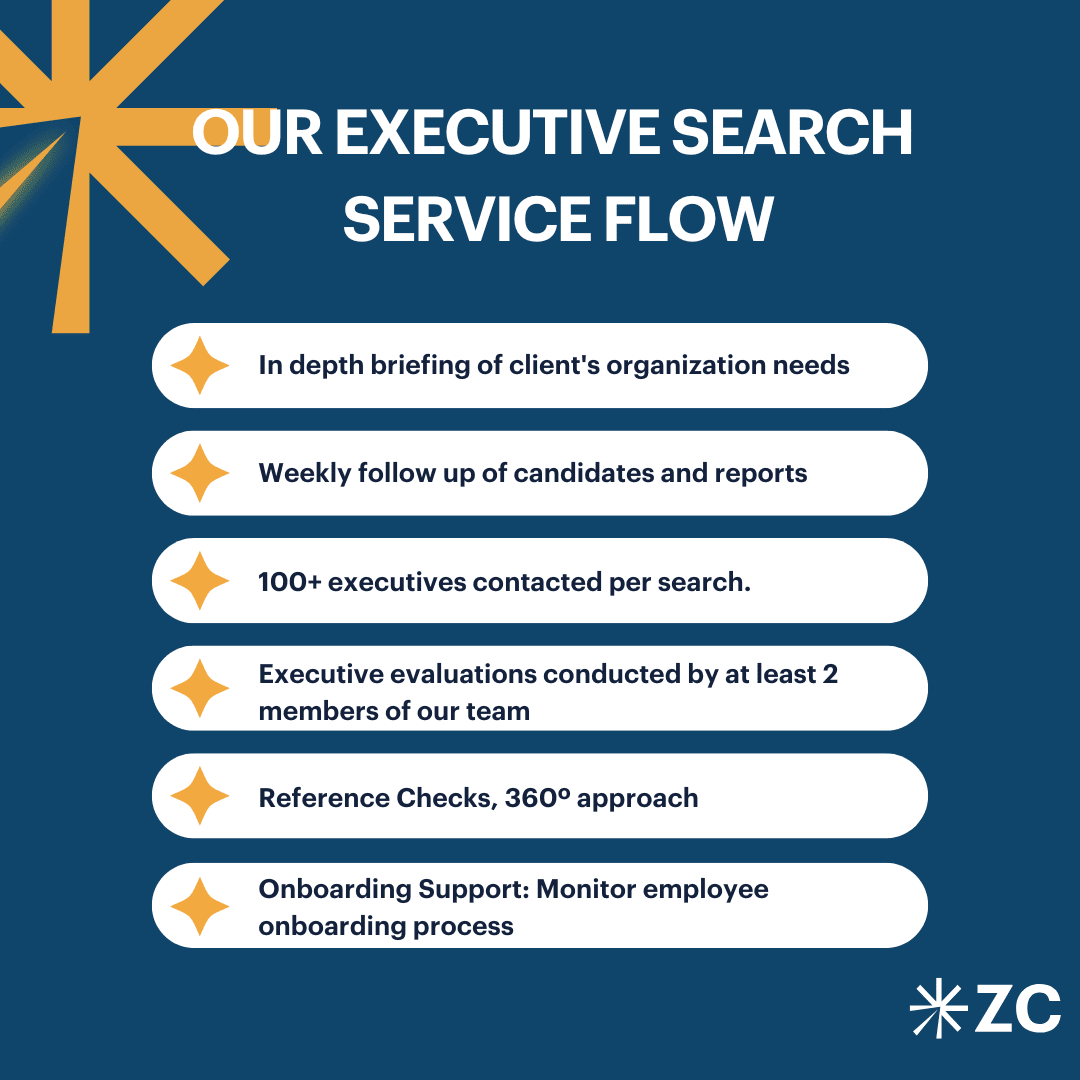
Zavala Civitas executive search methodology for TMT in China

Zavala Civitas Executive Search Methodology for TMT in China

TMT development is important for both present and future business models. Because leadership requirements can change rapidly in this sector, the executive search process should begin with a detailed definition of the role, transformation mandate and critical success factors.

Zavala Civitas combines an in-depth client briefing with detailed market mapping and direct executive outreach. Our Executive Search methodology includes direct contact with more than 100 executives per search, candidate assessment by at least two consultants, 360-degree reference checks and onboarding follow-up during the first six months after appointment.

Frequently Asked Questions: TMT Executive Search in China

How large is China’s digital and telecommunications market?
China had 1.125 billion internet users at the end of 2025, representing 80.1% internet penetration. Telecommunications business revenue reached RMB 1.75 trillion, while emerging services including cloud computing, big data, mobile IoT and data centres generated RMB 450.8 billion.
How is AI changing executive search in China’s TMT sector?
China’s core AI industry exceeded RMB 1.2 trillion in 2025 and included more than 6,200 companies. As AI becomes integrated into products, software, operations and customer services, companies increasingly need executives who can connect AI investment with commercial outcomes, organisational capabilities and technology governance.
What capabilities should companies assess when hiring TMT executives in China?
Relevant capabilities can include technology strategy, AI and data understanding, cybersecurity awareness, product development, commercial judgement, financial management, talent leadership and transformation experience. The exact combination should be defined by the company’s business model and strategic mandate.
Why is job title alone insufficient when assessing technology executives?
The same executive title can represent very different responsibilities across telecommunications, software, media, platforms and AI companies. Companies should therefore assess the scale, technology environment, commercial model and transformation mandate that an executive has previously led rather than treating title equivalence as evidence of fit.
What is Zavala Civitas’s methodology for TMT executive search in China?
Zavala Civitas begins with an in-depth briefing to define the role, organisation, critical success factors and target market. The firm then performs detailed market mapping and directly contacts more than 100 executives per search. Candidates are assessed by at least two consultants, finalists undergo 360-degree reference checks and Zavala Civitas follows the onboarding process during the first six months. The firm has a 92% executive search closing rate.

Building technology leadership in China?

Zavala Civitas helps technology, media and telecommunications companies identify senior leaders capable of connecting innovation, commercial strategy and organisational transformation. 92% closing rate.

Executive Search → Technology, Media & Telecom → Contact Us →

Executive Search China: Industrial Sector

Key Takeaway: Beijing has launched a nationwide “anti-involution” (反内卷) campaign to address destructive price wars and overcapacity across multiple industrial sectors at once, not just renewables. Electrical machinery and equipment, communications equipment, and medical products all show 29% to 34% of firms losing money in 2024-25. Goldman Sachs estimates Chinese

Read More

Executive Search in Italy for Industrial

Key Takeaway: Turin’s automotive cluster invested roughly €2.8 billion in electrification between 2024 and 2026. Over the same period, regional automotive employment fell by more than 3,200 positions. Fewer than 20% of local engineering graduates hold the specific battery, power electronics, and embedded software skills employers are actually hiring for.

Read More

Executive Search in Portugal for Financial Services

Key Takeaway: French banking group BPCE is investing €6.4 billion to acquire Novo Banco and building a 20,000 square metre campus in Lisbon, alongside a 2,500-strong tech hub already operating in Porto. This single deal is creating demand for highly specialised roles in risk analytics, structured finance, and digital-asset compliance

Read More

Related posts

Trabajo en remoto en los despachos de abogados

Autora: Beatriz Baker Araujo Senior Advisor, Zavala Civitas El debate sobre el trabajo presencial y remoto en los despachos de abogados lleva años activo, pero no ha madurado. Las posiciones se han endurecido desde 2020, y las conversaciones suelen discurrir entre dos polos: socios que invocan la cultura, el mentoring

Read More

Executive Search China: Industrial Sector

Key Takeaway: Beijing has launched a nationwide “anti-involution” (反内卷) campaign to address destructive price wars and overcapacity across multiple industrial sectors at once, not just renewables. Electrical machinery and equipment, communications equipment, and medical products all show 29% to 34% of firms losing money in 2024-25. Goldman Sachs estimates Chinese

Read More
Financial services building in Germany

Executive Search in Brazil for Financial Services

Key Takeaway: The White House targeted Brazil’s Pix payment system in April 2026, calling it a barrier to US payment companies. Brazil’s Central Bank fired back, defending Pix as a matter of payments sovereignty. At the same time, the collapse of Banco Master, the largest banking fraud in Brazilian history,

Read More
law leaders working

Executive Search in Mexico for Legal and Professional Services

Key Takeaway: Mexico’s 2024 judicial reform introduced popular election of judges and magistrates, with implementation beginning in 2025. This has accelerated a shift toward arbitration as the preferred dispute-resolution method in commercial contracts, as companies seek predictability an elected judiciary cannot yet guarantee. Combined with nearshoring-driven M&A activity and the

Read More

Executive Search in Italy for Industrial

Key Takeaway: Turin’s automotive cluster invested roughly €2.8 billion in electrification between 2024 and 2026. Over the same period, regional automotive employment fell by more than 3,200 positions. Fewer than 20% of local engineering graduates hold the specific battery, power electronics, and embedded software skills employers are actually hiring for.

Read More

Executive Search in Portugal for Financial Services

Key Takeaway: French banking group BPCE is investing €6.4 billion to acquire Novo Banco and building a 20,000 square metre campus in Lisbon, alongside a 2,500-strong tech hub already operating in Porto. This single deal is creating demand for highly specialised roles in risk analytics, structured finance, and digital-asset compliance

Read More