China’s automotive industry is no longer defined only by production scale. Electrification, intelligent vehicles, software, global expansion and increasingly sophisticated regulation are changing both the competitive environment and the executives companies need to lead through it.
In 2025, China produced 34.53 million vehicles and sold 34.4 million, setting new records and remaining the world’s largest automotive market for the seventeenth consecutive year. New-energy vehicle production and sales exceeded 16 million units, while NEVs represented more than half of domestic new-vehicle sales.
Source: China Association of Automobile Manufacturers, 2025 Automotive Industry Results, January 2026.
| China Automotive Trend | Leadership Implication |
|---|---|
| 34.4 million vehicles sold in 2025 | Scale requires leaders capable of managing complex operations, portfolios and supply chains. |
| 16m+ NEVs produced and sold | Electrification is now a mainstream leadership requirement rather than a niche capability. |
| 7m+ automotive exports | International expansion increases demand for executives with cross-border operations, regulatory and commercial experience. |
| ~70% assisted-driving penetration in 2026 | Software, AI, safety and regulatory capabilities are becoming increasingly relevant to automotive leadership. |
Sources: China Association of Automobile Manufacturers, 2026 and Ministry of Industry and Information Technology, 2026.
The Scale of China’s Automotive Industry Is Still Increasing
China’s automotive industry reached another record year in 2025. According to the China Association of Automobile Manufacturers, production reached 34.531 million vehicles and sales reached 34.4 million.
The scale of the industry matters for Executive Search because large automotive businesses require leadership across increasingly interconnected functions: manufacturing, engineering, procurement, supply chain, software, product, commercial operations and international markets.
However, scale alone does not explain current talent requirements. The more important change is the transformation taking place inside the vehicle itself and across the automotive operating model.
Trend 1: Electrification Is Now the Core Market, Not an Adjacent Segment
China’s new-energy vehicle sector has moved from rapid growth into mainstream scale.
CAAM reports that NEV production and sales both exceeded 16 million units in 2025, while the category accounted for more than half of domestic new-vehicle sales.
Source: China Association of Automobile Manufacturers, 2025 Automotive Industry Results.
This changes how companies should define automotive leadership experience. For many positions, traditional internal-combustion vehicle experience alone may no longer be sufficient.
Depending on the mandate, Executive Search may need to evaluate experience in battery systems, electric powertrains, energy management, charging ecosystems, advanced electronics or the transformation of manufacturing and supply chains around new vehicle architectures.
Trend 2: Intelligent Vehicles Are Changing the Executive Skill Set
The transformation of China’s automotive sector is increasingly moving from electrification toward intelligence and connectivity.
China’s Ministry of Industry and Information Technology reported that in 2026 approximately 70% of new passenger vehicles were equipped with combined driving-assistance functions, while vehicles offering navigation-assisted driving capabilities had exceeded 30% penetration.
Source: Ministry of Industry and Information Technology, Intelligent Connected Vehicle Safety Standard, 2026.
The leadership implication goes beyond hiring more software engineers. Automotive companies increasingly need senior executives capable of managing businesses where hardware, software, AI, electronics and data are becoming interconnected.
Potential mandates can therefore require experience in:
- Software-defined vehicle architectures.
- Advanced driver-assistance systems.
- Artificial intelligence and data-driven product development.
- Automotive electronics and semiconductor ecosystems.
- OTA software updates.
- Cybersecurity and vehicle data.
- Cross-functional integration between engineering, product and technology teams.
Trend 3: Regulation Is Becoming Part of Technology Leadership
As vehicles become more software-driven and automated, product regulation increasingly intersects with engineering strategy.
China strengthened requirements governing intelligent-connected vehicle market access, recalls and over-the-air software updates in 2025. In 2026, authorities also published mandatory national safety standards covering combined driving-assistance systems and automated-driving systems.
Sources: Ministry of Industry and Information Technology, Intelligent Connected Vehicle Regulation, 2025; MIIT, Driving-Assistance Safety Standard, 2026; and MIIT, Automated-Driving Safety Standard, 2026.
For Executive Search, this means technology leadership cannot be evaluated exclusively through innovation speed. Candidates may also need evidence that they can manage product safety, regulatory requirements, engineering governance and the commercial implications of increasingly controlled technology deployment.
Trend 4: Global Expansion Is Changing Leadership Requirements
Chinese automotive companies are increasingly operating beyond the domestic market.
CAAM reports that automotive exports exceeded 7 million vehicles in 2025, with new-energy vehicle exports reaching 2.615 million.
Source: China Association of Automobile Manufacturers, 2026.
The Ministry of Industry and Information Technology has also identified international trade, investment and an orderly overseas industrial footprint as priorities for the automotive sector.
Source: Ministry of Industry and Information Technology, 2026 NEV Industry Priorities.
As companies move from exporting vehicles to establishing deeper international operations, leadership needs can expand beyond export sales.
Relevant Executive Search mandates may require experience with:
- International market entry.
- Regional manufacturing or assembly operations.
- Distributor and dealer networks.
- Local regulatory and homologation requirements.
- Cross-border supply chains.
- International brand positioning.
- Leading multicultural teams.
- Working between China headquarters and overseas subsidiaries.
This creates a particularly demanding candidate profile: an executive may need strong China automotive knowledge while simultaneously understanding how to operate in markets with different consumer behaviour, regulation and governance expectations.
Trend 5: Intense Competition Raises the Value of Operational Discipline
Innovation is only one side of China’s automotive transformation. The industry has also faced intense price competition.
In May 2025, China’s Ministry of Industry and Information Technology publicly warned that disorderly automotive price competition was affecting normal production and operations and could undermine continued R&D investment, product quality and sustainable industry development.
Source: Ministry of Industry and Information Technology, Automotive Industry Competition, 2025.
For leadership teams, this increases the importance of executives who can manage cost and execution without damaging product quality, innovation capability or long-term positioning.
Executive Search for automotive companies should therefore examine not only growth achieved under a candidate, but also the economics and operational discipline behind that growth.
Trend 6: Automotive Digital Transformation Extends Beyond the Vehicle
Digital transformation is also changing how automotive companies design, manufacture and manage their operations.
At the end of 2025, China’s Ministry of Industry and Information Technology and three other government bodies issued an Automotive Industry Digital Transformation Implementation Plan focused on intelligent manufacturing, data utilization, AI applications and digital coordination across industrial and supply chains.
This creates leadership requirements beyond vehicle technology itself. Operations, manufacturing, supply-chain and general-management executives increasingly need to understand how data, automation and AI affect productivity, decision-making and organizational design.
What Executive Search Should Assess in China’s Automotive Leaders
The automotive transformation makes broad criteria such as “15 years of automotive experience” increasingly insufficient.
Depending on the mandate, a more useful Executive Search assessment may examine:
- Transformation ownership: What material change did the executive personally lead?
- Technology fluency: Can the candidate make decisions involving software, AI, electronics or electrification without needing to be the technical specialist?
- Operational execution: Has the executive scaled manufacturing or operations while controlling quality, cost and delivery?
- International capability: Can the candidate operate between China and global markets?
- Regulatory judgment: Has the executive worked successfully in safety-critical or heavily regulated environments?
- Supply-chain leadership: Can they manage critical suppliers, technology dependencies and industrial complexity?
- Talent development: Have they built leadership and technical capability rather than relying only on external hiring?
Why Executive Search Is Relevant in China’s Automotive Industry
Executive Search becomes particularly relevant when the required leadership profile combines capabilities that are distributed across different parts of the automotive ecosystem.
For example, the strongest candidate for a transformation mandate may not sit in the same competitor set as the strongest candidate for international expansion, battery technology, digital product or manufacturing excellence.
A research-led search can therefore map:
- Traditional OEMs.
- NEV manufacturers.
- Tier 1 and technology suppliers.
- Battery and energy companies.
- Automotive semiconductor and electronics businesses.
- Software and intelligent-mobility companies.
- Relevant adjacent manufacturing sectors.
- Chinese automotive executives currently working internationally.
The objective is to define the candidate universe around the business problem rather than assuming every automotive search should begin and end with direct competitors.
How Zavala Civitas Approaches Automotive Executive Search in China
Zavala Civitas operates its APAC head office in Shanghai and conducts senior and C-suite Executive Search assignments across China and the wider region.
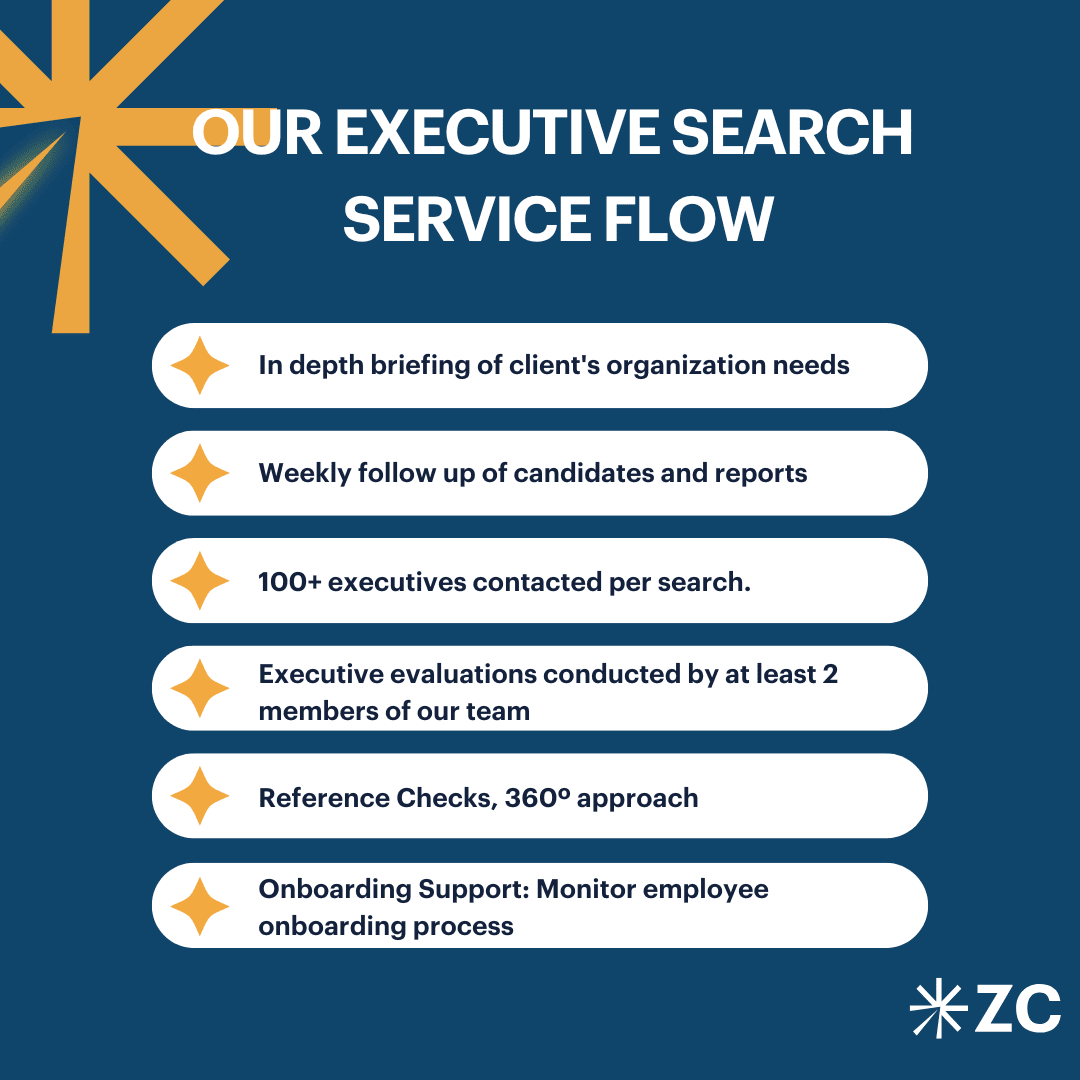
Our Executive Search methodology begins by understanding the client’s organization, business environment and critical success factors before defining the relevant candidate market.
The process includes:
- In-depth briefing and definition of responsibilities and critical success factors.
- Target-company research and market mapping.
- Direct contact with more than 100 executives per search.
- Regular candidate and market reporting.
- Candidate interviews conducted by at least two members of the team.
- Quantitative and qualitative executive evaluation.
- 360º professional reference checks.
- Support throughout appointment and executive integration.
For automotive mandates, the market map can extend across OEMs, suppliers, automotive technology companies and adjacent sectors depending on the leadership challenge being solved.
Source: Zavala Civitas Executive Search Methodology.
Frequently Asked Questions About Executive Search in China’s Automotive Industry
How large is China’s automotive market?
China produced approximately 34.53 million vehicles and sold 34.4 million in 2025, setting new records and remaining the world’s largest automotive market for the seventeenth consecutive year.
What automotive leadership capabilities are becoming more important in China?
Depending on the role, increasingly relevant capabilities include electrification, intelligent vehicles, software and AI, digital manufacturing, supply-chain transformation, regulatory judgment and international market experience.
Why is international experience becoming important for Chinese automotive executives?
China exported more than 7 million vehicles in 2025, and automotive companies are increasingly expanding through international trade and investment. Senior leaders may therefore need experience managing foreign markets, regulatory environments, international teams and cross-border operations.
Is there a shortage of automotive executives in China?
There is no single authoritative statistic demonstrating a general shortage of automotive executives across China. The more relevant challenge is that transformation can narrow the candidate pool for roles requiring specific combinations of automotive, technology, international and leadership experience.
How is intelligent driving affecting automotive Executive Search?
Intelligent driving increases the importance of software, AI, data, electronics, cybersecurity and regulatory capabilities. Senior executives may not need to be technical specialists themselves, but they increasingly need enough technology fluency to lead organizations in which software and vehicle engineering are deeply integrated.
How does Zavala Civitas conduct automotive Executive Search in China?
Zavala Civitas defines the mandate and critical success factors before mapping the relevant market. Its process includes direct contact with more than 100 executives per search, interviews by at least two team members, quantitative and qualitative assessment, 360º professional reference checks and support during executive integration.
Learn more about Executive Search in China, review our Executive Search methodology or contact us to discuss an automotive leadership requirement.