Brazil is one of Latin America’s most strategic leadership markets and also one of the most complex. Companies expanding or consolidating operations in the country quickly realize that hiring in Brazil is less about accessing talent and more about navigating regulation, culture, governance, and market volatility.
This article outlines how Executive search in Brazil works at senior levels, what typically goes wrong, and how companies can de-risk leadership decisions in a demanding environment.
Executive Search in Brazil: Why the market requires a different approach
Brazil combines scale with complexity. According to the World Bank, Brazil remains the largest economy in Latin America, but its business environment is shaped by regulatory intensity, regional disparities, and frequent macroeconomic shifts.
From an executive hiring perspective, three structural elements stand out:
- Regulatory and labor complexity
According to Chambers Global Practice Guides – Employment Brazil, the Brazilian labor framework (CLT) imposes specific obligations on employers that directly affect senior contracts, incentives, and termination risk.
- Data protection and privacy in hiring
According to the Brazilian Federal Government, the LGPD (Lei Geral de Proteção de Dados) applies to employment and recruitment activities, including executive search processes, particularly when candidate data is processed or transferred internationally.
- Economic volatility and leadership risk
According to Reuters, inflation expectations, currency fluctuations, and sector cycles continue to influence corporate decision-making and investment planning in Brazil—raising the cost of leadership misalignment.
Defining the role beyond a job description
One of the most common mistakes in executive hiring is translating global job descriptions directly into the Brazilian context.
Effective hiring starts with a business mandate, not a list of requirements:
- What must the executive deliver in the first 12–18 months?
- How much autonomy does the local leadership role truly have?
- Which decisions remain at HQ level—and which must be local?
- What stakeholder tensions (regulatory, union, family ownership, government-facing) are already present?
According to McKinsey research on decision-making, leadership success at senior levels correlates more strongly with judgment under uncertainty than with past experience alone—particularly in volatile markets.
Leadership traits that consistently perform
While technical competence is assumed at senior levels, executive success in Brazil tends to correlate with specific behavioral traits.
According to Harvard Business Review research on high-context cultures, Brazil rewards leaders who are able to:
- Build trust through relationships, not hierarchy
- Navigate informal influence networks
- Balance structure with flexibility
- Communicate nuance in negotiation and conflict situations
In hiring processes, overemphasizing international brand names without assessing these behaviors often leads to poor long-term outcomes.
Local executives vs expats
Choosing between local and expatriate leadership is a strategic decision, not a default one.
When local talent tend to outperform
- High regulatory exposure
- Strong dependence on local customer or partner relationships
- Need for rapid market execution
When expatriates may add value
- Post-merger integration or transformation mandates
- Strong HQ-driven operating models
- Cross-market or global standardization initiatives
According to BCG’s research on leadership effectiveness, cross-border executives succeed primarily when cultural adaptability and local empowerment are explicitly assessed—not assumed.
Compliance, privacy, and risk exposure
Employment risk at senior levels
According to Chambers Global, executive employment disputes in Brazil often arise from misaligned contract structures, incentive plans, or termination clauses—particularly in multinational environments.
This makes early legal alignment a core part of talent hiring, not a post-offer formality.
Data protection and executive search
According to the Brazilian Data Protection Authority (ANPD), recruitment and executive profiling activities fall under LGPD obligations, including transparency, lawful purpose, and data minimization.
For companies running international searches, this has direct implications for:
- Candidate data sharing
- Assessment tools
- Interview documentation
- Long-term data storage
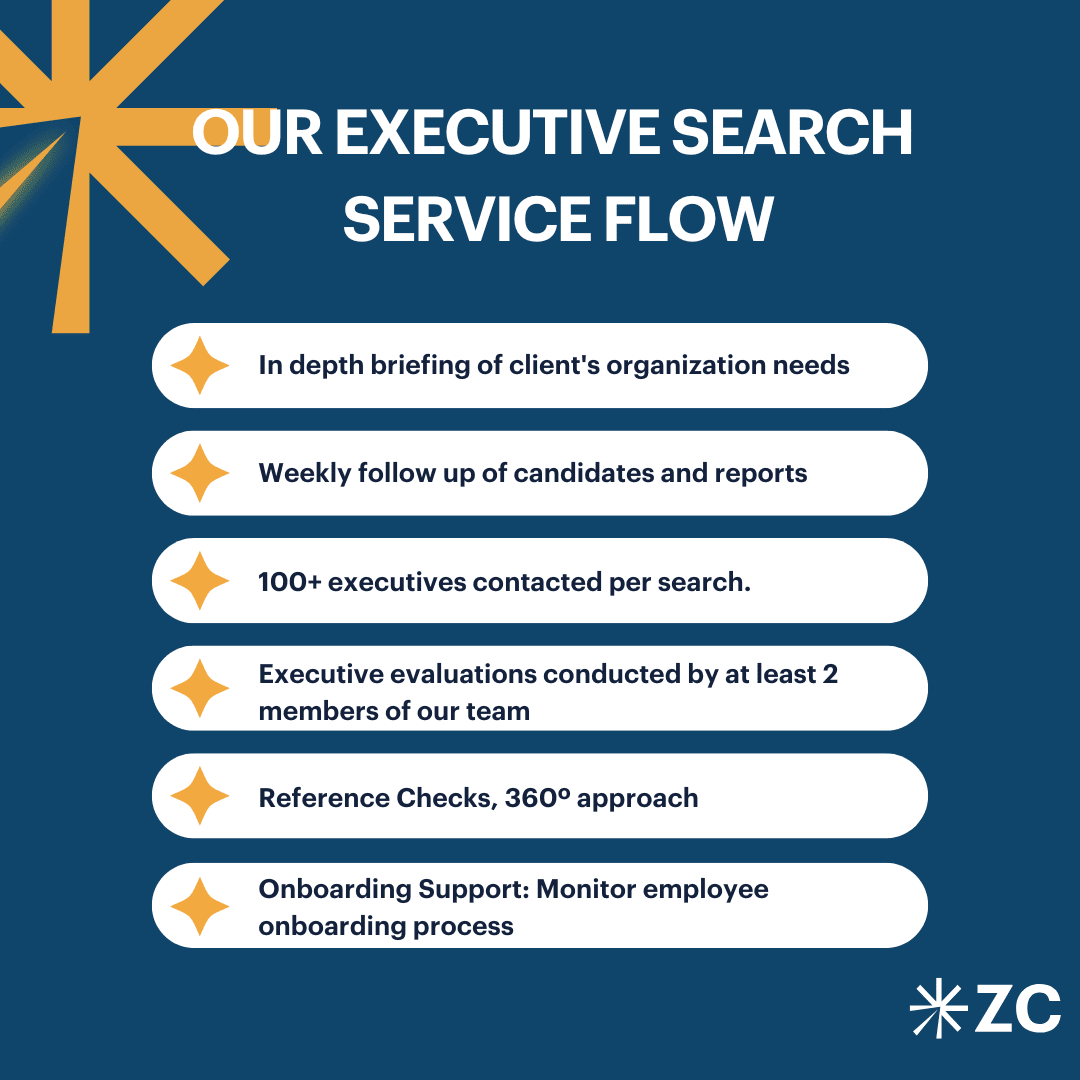
What a robust search process looks like
A complete hiring process in Brazil typically includes:
- Market mapping grounded in talent intelligence, not visibility
According to industry research by Korn Ferry, the most successful executive hires come from non-obvious competitor and adjacent-sector pools.
- Structured interviews focused on judgment and context
According to McKinsey, decision quality—not experience length—is the strongest predictor of executive effectiveness in uncertain environments.
- Assessment and referencing tied to outcomes
References should validate how candidates handled comparable levels of complexity, governance pressure, and ambiguity.
- Offer design aligned with risk and mandate
According to WTW’s global executive compensation outlook, governance scrutiny and cost pressures are reshaping pay structures, especially in emerging markets.
Onboarding as a value lever
Executive ROI in Brazil is often won—or lost—after the contract is signed.
According to Gartner research on executive onboarding, poorly structured onboarding increases failure risk within the first 6–9 months, particularly in cross-border leadership roles.
Effective onboarding in Brazil should include:
- Explicit decision rights
- Stakeholder alignment
- Clear governance cadence
- Early credibility-building milestones
Executive Search in Brazil: When executive search is essential
According to industry benchmarks in executive recruitment, executive search becomes critical when:
- The role is business-critical or confidential
- Market visibility is limited
- Failure costs exceed the investment in search
- Cultural and governance fit are decisive
In Brazil, these conditions apply to most senior leadership roles.
For companies planning senior leadership hires in Brazil, a structured executive search approach can significantly reduce risk and improve long-term outcomes. Click here and learn about our executive search service or here to contact with us.