
How the right Executive Search partner can help you hire executives with a cultural fit in China

Key Takeaway: Cultural fit in China should not mean hiring executives who simply resemble the existing leadership team. It means assessing whether a candidate can operate effectively within the organisation’s values, decision-making model and working environment while navigating the specific commercial and stakeholder context of China. This matters particularly for multinational organisations, where executives may need to bridge different approaches to authority, time horizons, communication and market execution between China operations and global headquarters.

Last updated: August 13, 2026

When hiring someone, is very important for he or she to be aligned with the culture of the company, this is called cultural fit and is essential for any company to retain talent, especially in high executive roles. When hiring for China, managing to find a cultural fit is harder for foreign companies. That is why an Executive Search partner is recommended, not only because of the time it saves but also because of their knowledge of the market and the effectiveness of the process.

In this article we will go through how an executive search firm can help companies hire the perfect candidate in China, ensuring the cultural fit, and the dangers of not doing it right.

Key Figures at a Glance

Data point Finding Source
Chinese Mainland CEO time dedicated to medium-term priorities 49% PwC 29th Global CEO Survey
Chinese Mainland CEO time dedicated to long-term priorities 28% PwC 29th Global CEO Survey
New foreign-invested enterprises established in China, 2021 to June 2025 229,000 State Council of the PRC / Ministry of Commerce
Average annual wage of middle and senior management in foreign-invested enterprises, 2025 RMB 437,539 National Bureau of Statistics of China

What does cultural fit mean for China?

When we talk about cultural fit, this can be misunderstood, so let’s set to what do executive search firms understand by cultural fit.

Cultural fit means the candidate’s alignment with the companies’ values, vision, and mission. It also includes work preferences such as the placement or the way of working.

We must be very careful when hiring for cultural fit and to confuse cultural fitting with likes or similarities of the background of the person who is hiring. That’s where the executive search firms play such an important role by presenting candidates that truly match the company’s values and eliminating all sorts of possible biases related to intuitive decisions. Strategic decisions about whom to hire can also be made with the right executive search partner.

And specifically, in China, deciding whether to hire local o foreign talent.

Cultural fit should be assessed as organisational compatibility, not demographic similarity. In China, this includes how an executive makes decisions, manages hierarchy, communicates with headquarters, develops local teams and balances global corporate standards with local market requirements. The objective of executive search is therefore not to find a candidate who behaves identically to existing leaders, but one who can operate effectively across both organisational and market contexts.

Some of the parameters that may define the culture of the company are:

  • Independence – Control. The organization stresses employee empowerment or has a manager with a leadership style that relies on command and control.
  • Flexibility – Formality. The organization requires rigid work shift coverage or allows employees to have flexible hours or telecommute.
  • Competitiveness – Collaboration: This encourages competition between employees to achieve higher results or collaboration as something integral to daily operations.

Now that we are clear about what we mean by cultural fit, let’s find out according to our experience as an Executive Search Firm how an executive search partner can help you hire with cultural fit.

Your executive search partner in China will help you to adjust to the differences between the western and Chinese companies so they can find a candidate that has no problem adapting to the company.

In China, the Chairman’s way of setting goals is more aggressive

In China, it is common that the chairman sets difficult goals to achieve and, for western companies, this might seem like the wrong approach. However, it seems like this is a very effective strategy for today’s fast-changing world and it looks a lot like the OKR philosophy of Google.

Workers strategically change work very often in China.

It is common for Chinese people to be promoted very early on in their careers and they usually change jobs approximately every year and a half. This is possible because there is a new job position opening every year, which eventually makes it harder to retain talent. That is the reason why Chinese companies indulge in over-compensation over the value that having the right talent can provide.

In China, Chairmen give market share a huge importance

It is hard for many Western companies to understand why so many Chinese companies are willing to take such big risks in the share market, at the expense of losing it all, instead of focusing on the traditional value-creation that gives business stability. The most likely answer to this behavior is that a long-term game can be played in such a competitive market like the Chinese. If they don’t, there is a high risk of becoming irrelevant.

At least by doing it companies in China have a real chance of survival.

Leadership time horizons provide a measurable example of why assumptions about management culture should be tested rather than generalised. In PwC’s 2026 CEO Survey, Chinese Mainland CEOs reported spending 49% of their time on medium-term priorities and 28% on long-term priorities, while CEOs globally devote a much larger share of their time to issues with horizons of less than one year. An executive moving between Western headquarters and a China leadership role may therefore need to reconcile materially different planning and decision-making rhythms.

Zavala Civitas Executive Search China

We have walked alongside our clients supporting them in matters ranging from Executive Search to broader Organizational or Alignment Consulting. We are ready to be your experienced Organizational partner in China & East Asia. We are ready to tackle new challenges and risks with your firm. Click here to get in contact with us .
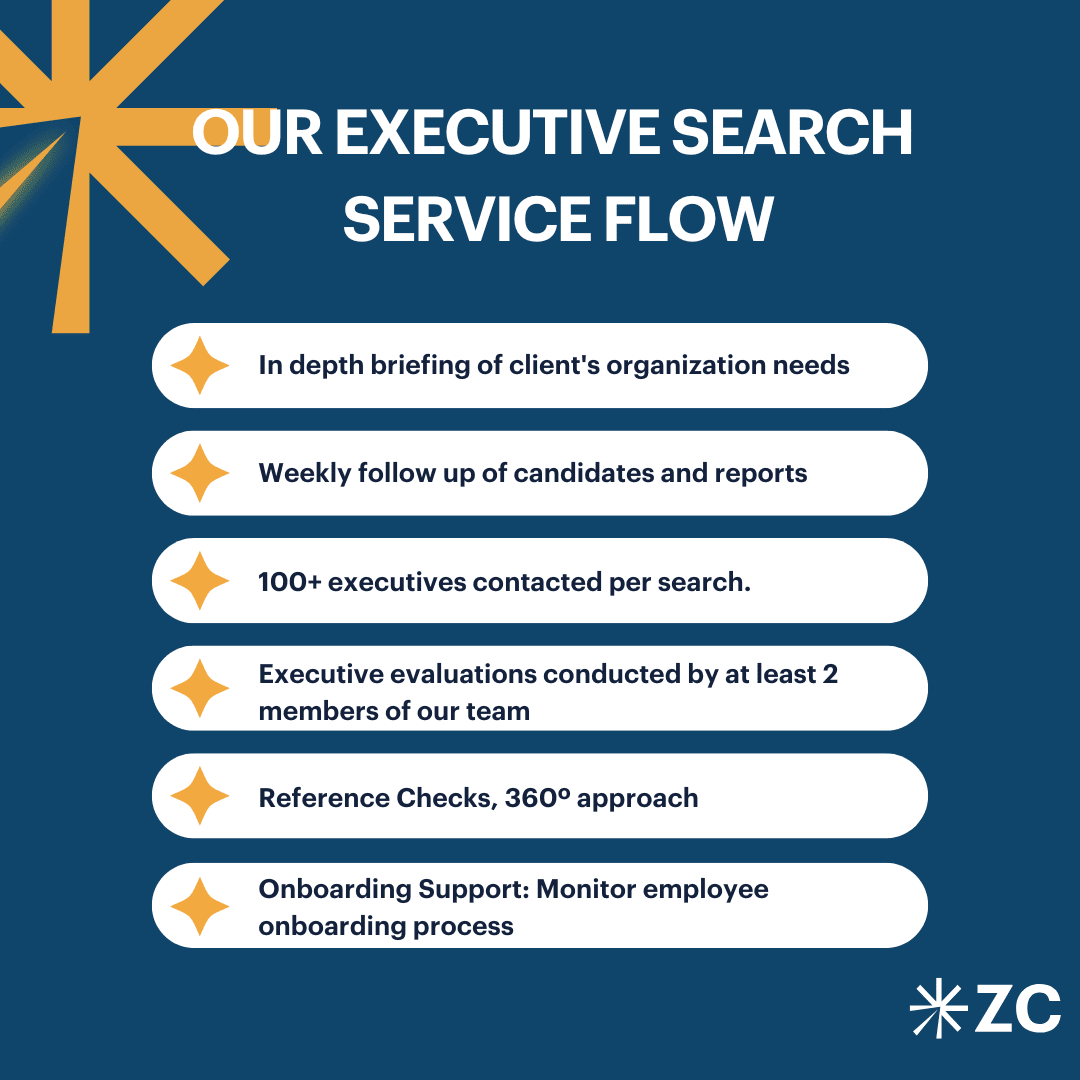
Zavala Civitas executive search methodology for China country

Frequently Asked Questions: Cultural Fit and Executive Search in China

What does cultural fit mean in executive search in China?
Cultural fit means alignment between an executive and the organisation’s values, leadership expectations, decision-making model and ways of working. In China, it can also include the executive’s ability to navigate local stakeholder relationships, communicate across cultures and translate global corporate objectives into the local business environment.
Does cultural fit mean hiring someone similar to the existing leadership team?
No. Cultural fit should not be confused with similarity in nationality, background, personality or personal preferences. A structured executive search process should define the behaviours and leadership capabilities required by the organisation and assess candidates against those criteria, reducing the influence of intuitive similarity bias.
Why is cultural fit especially complex for multinational companies in China?
China executives can operate between two organisational environments simultaneously: the local market and international headquarters. They may need to explain China-specific commercial realities to global leadership while applying corporate governance, values and strategic objectives locally. This makes cross-cultural communication and organisational translation important executive capabilities.
Should a company hire a local or international executive for its China operation?
There is no universal answer. A local executive may provide deeper market networks, stakeholder understanding and cultural fluency, while an internationally experienced executive may bring stronger familiarity with global headquarters and multinational governance. Executive search should assess the actual mandate and determine which combination of local knowledge, international experience and organisational fit the role requires.
How does Zavala Civitas assess cultural fit in executive search in China?
Zavala Civitas begins with an in-depth understanding of the client’s organisation and leadership requirements, followed by talent mapping, direct executive outreach, structured candidate assessment and reference checking. Candidate evaluations involve at least two members of the team, helping assess both capability and organisational alignment. Zavala Civitas has a 92% executive search closing rate.

Hiring leadership that can succeed in China?

Zavala Civitas helps organisations identify executives who combine leadership capability, China market understanding and organisational fit. 92% closing rate.

Executive Search → Cultural Fit in China → Contact Us →

Executive Search China: Industrial Sector

Key Takeaway: Beijing has launched a nationwide “anti-involution” (反内卷) campaign to address destructive price wars and overcapacity across multiple industrial sectors at once, not just renewables. Electrical machinery and equipment, communications equipment, and medical products all show 29% to 34% of firms losing money in 2024-25. Goldman Sachs estimates Chinese

Read More

Executive Search in Italy for Industrial

Key Takeaway: Turin’s automotive cluster invested roughly €2.8 billion in electrification between 2024 and 2026. Over the same period, regional automotive employment fell by more than 3,200 positions. Fewer than 20% of local engineering graduates hold the specific battery, power electronics, and embedded software skills employers are actually hiring for.

Read More

Executive Search in Portugal for Financial Services

Key Takeaway: French banking group BPCE is investing €6.4 billion to acquire Novo Banco and building a 20,000 square metre campus in Lisbon, alongside a 2,500-strong tech hub already operating in Porto. This single deal is creating demand for highly specialised roles in risk analytics, structured finance, and digital-asset compliance

Read More

Related posts

Trabajo en remoto en los despachos de abogados

Autora: Beatriz Baker Araujo Senior Advisor, Zavala Civitas El debate sobre el trabajo presencial y remoto en los despachos de abogados lleva años activo, pero no ha madurado. Las posiciones se han endurecido desde 2020, y las conversaciones suelen discurrir entre dos polos: socios que invocan la cultura, el mentoring

Read More

Executive Search China: Industrial Sector

Key Takeaway: Beijing has launched a nationwide “anti-involution” (反内卷) campaign to address destructive price wars and overcapacity across multiple industrial sectors at once, not just renewables. Electrical machinery and equipment, communications equipment, and medical products all show 29% to 34% of firms losing money in 2024-25. Goldman Sachs estimates Chinese

Read More
Financial services building in Germany

Executive Search in Brazil for Financial Services

Key Takeaway: The White House targeted Brazil’s Pix payment system in April 2026, calling it a barrier to US payment companies. Brazil’s Central Bank fired back, defending Pix as a matter of payments sovereignty. At the same time, the collapse of Banco Master, the largest banking fraud in Brazilian history,

Read More
law leaders working

Executive Search in Mexico for Legal and Professional Services

Key Takeaway: Mexico’s 2024 judicial reform introduced popular election of judges and magistrates, with implementation beginning in 2025. This has accelerated a shift toward arbitration as the preferred dispute-resolution method in commercial contracts, as companies seek predictability an elected judiciary cannot yet guarantee. Combined with nearshoring-driven M&A activity and the

Read More

Executive Search in Italy for Industrial

Key Takeaway: Turin’s automotive cluster invested roughly €2.8 billion in electrification between 2024 and 2026. Over the same period, regional automotive employment fell by more than 3,200 positions. Fewer than 20% of local engineering graduates hold the specific battery, power electronics, and embedded software skills employers are actually hiring for.

Read More

Executive Search in Portugal for Financial Services

Key Takeaway: French banking group BPCE is investing €6.4 billion to acquire Novo Banco and building a 20,000 square metre campus in Lisbon, alongside a 2,500-strong tech hub already operating in Porto. This single deal is creating demand for highly specialised roles in risk analytics, structured finance, and digital-asset compliance

Read More