
Last updated: August 20, 2026
Germany remains one of Europe’s most important financial centres, with Frankfurt acting as a major hub for banking, regulation, capital markets and European financial institutions.
However, the leadership environment has changed significantly since the original version of this article was published.
German financial institutions are operating through continued banking consolidation, digitalisation, cyber risk, regulatory change and new payment infrastructure. At the same time, supervisors are placing greater emphasis on governance, IT resilience, climate and environmental risk, and the implications of artificial intelligence.
For Executive Search, this changes the candidate brief. Financial-sector experience remains important, but organisations increasingly need evidence that an executive has personally managed comparable transformation, risk and governance challenges.
Executive Search in Germany’s Financial Services Sector: A Market in Transformation
Germany’s banking market continues to consolidate.
The Deutsche Bundesbank reported that the number of German credit institutions fell by 39 institutions during 2025 to 1,329.
The domestic branch network also declined to 16,799 branches, a reduction of 6%. Bundesbank links the continued decline partly to digitalisation, cost pressure and changing customer behaviour.
Yet consolidation should not be confused with diminishing financial scale. Bundesbank statistics show that reporting German banks had a combined balance-sheet total of approximately €11.75 trillion in February 2026.
Key Figures at a Glance
| Germany Financial Services Indicator | Latest Data | Source | Leadership Implication |
|---|---|---|---|
| Credit institutions at end-2025 | 1,329, down 39 | Deutsche Bundesbank | Consolidation increases the relevance of integration, operating-model and transformation experience. |
| Domestic banking branches | 16,799, -6% | Deutsche Bundesbank | Digitalisation and cost pressure require leaders who can redesign distribution and service models. |
| Balance-sheet total of reporting German banks, February 2026 | Approx. €11.75tn | Deutsche Bundesbank | The sector remains financially substantial even while institutional and physical networks consolidate. |
| Payment service providers selected for the digital euro pilot | 36 across the euro area, including 5 German providers | European Central Bank / Bundesbank | Payments leadership increasingly requires the ability to operate across regulatory, technology and infrastructure change. |
DORA Has Raised the Leadership Bar for Digital Resilience in Germany
Technology risk is no longer an issue that senior financial executives can delegate entirely to IT.
The EU’s Digital Operational Resilience Act, DORA, has applied directly to covered financial entities in Germany since 17 January 2025.
DORA creates requirements across ICT risk management, reporting of major technology-related incidents, digital operational resilience testing and third-party ICT risk.
This has implications beyond CTO and CIO appointments.
CEOs, CROs, COOs and other senior executives increasingly need enough technology and governance understanding to challenge outsourcing arrangements, cloud concentration, resilience investments and incident-response frameworks.
Cyber Risk and Third-Party Technology Have Become Board-Level Issues
BaFin and the Bundesbank describe cyberattack risk as persistently high and highlight growing dependence on external IT and cloud providers.
Their 2026 supervisory priorities include identifying cyber and IT risk, reviewing concentrations among third-party providers and assessing DORA implementation.
For Executive Search, the relevant experience is not simply whether a candidate worked in a digitally sophisticated bank.
A stronger assessment investigates whether the executive personally made decisions around technology resilience, outsourcing, investment, incident response or business continuity and how they balanced operational efficiency with risk.
Germany’s Financial Supervisors Are Focusing More Closely on Governance
Governance is another explicit supervisory priority.
BaFin and the Bundesbank state that weaknesses in business organisation and governance can lead institutions to misjudge risks or make poor decisions.
Their national programme for 2026 places increased attention on the qualifications of top management and supervisory bodies, alongside data quality and reporting.
This strengthens the case for assessing financial-services executives beyond technical competence.
A candidate may understand credit, insurance or markets extremely well but still lack experience influencing boards, challenging business decisions or operating inside a highly scrutinised governance structure.
The Digital Euro Is Moving from Concept Towards Operational Testing
Payments are another area where financial-services leadership requirements are evolving.
In July 2026, the European Central Bank selected 36 payment service providers to participate in the digital euro pilot.
Five of the selected providers are German: PAYONE, RS2 Financial Services, Deutsche Bank, DZ BANK and Landesbank Hessen-Thüringen.
The pilot is scheduled to begin in the second half of 2027 and run for 12 months.
The Eurosystem is preparing for a possible issuance of the digital euro in 2029, subject to the necessary legislative framework and future decisions.
For banks, fintechs and payments companies, this creates leadership questions involving product strategy, technology architecture, customer experience, regulatory coordination and the economics of payment infrastructure.
AI Is Becoming a Financial Services Governance Question
Artificial intelligence is increasingly relevant across credit processes, fraud detection, customer service, productivity, risk analytics and internal operations.
German supervisors now explicitly include the analysis of AI and digital innovation within their medium-term supervisory priorities through 2028.
This creates an important distinction in senior hiring.
Exposure to AI is not the same as responsibility for an AI transformation. Executive Search should establish whether the candidate personally approved investment, defined governance, challenged model risk, redesigned processes or measured whether AI produced the expected business outcome.
Sustainable Finance Is Increasingly a Risk-Management Issue
Sustainability should also be assessed more precisely than simply asking whether a candidate has ESG experience.
BaFin and Bundesbank’s supervisory programme through 2028 focuses on whether banks incorporate climate and environmental risks into business strategy, governance, risk-management frameworks and credit processes.
This makes sustainability relevant to CROs, CFOs, credit leaders and CEOs, not only sustainability functions.
The useful Executive Search question is therefore not whether an executive has discussed ESG, but whether they have translated environmental or transition risks into actual financial, credit or capital-allocation decisions.
What Executive Search Should Assess in Germany’s Financial Services Leaders
Regulatory Judgement
Candidates should understand how regulation affects strategy, operating models and risk without treating compliance as a separate technical exercise.
Financial and Risk Discipline
Depending on the mandate, relevant evidence may include credit-risk management, capital allocation, profitability improvement, balance-sheet management, insurance risk or resilience through volatile markets.
Digital Operational Resilience
Senior leaders increasingly need to understand cyber, outsourcing, cloud dependency and DORA sufficiently to make informed business and investment decisions.
Technology and AI Governance
Executives should demonstrate how they have evaluated technology investments, managed associated risks and converted digital initiatives into measurable operational or commercial outcomes.
Transformation Experience
Germany’s continued banking consolidation means experience with integration, restructuring, operating-model redesign or cost transformation can be particularly relevant.
European and International Stakeholder Management
Executives may need to operate simultaneously across German regulatory expectations, European frameworks, international shareholders and global group structures.
The Candidate Market Should Extend Beyond Direct Banking Competitors
Germany’s financial-services ecosystem includes commercial banks, savings banks, cooperative banks, insurers, asset managers, fintech companies, payments providers and specialist financial institutions.
A narrow competitor-only strategy can therefore exclude relevant candidates.
A bank seeking stronger digital payments leadership may find highly relevant executives within payments or fintech businesses. An insurer undergoing major technology transformation may find useful talent in another regulated financial institution where the executive has already managed similar operational change.
Market mapping should follow the transformation and regulatory requirements of the mandate rather than the employer label alone.
Executive Search in Germany Requires Local Market Access and International Reach
Germany’s financial-services leadership market combines highly local institutional knowledge with European and international mobility.
Zavala Civitas strengthened its local German presence through the integration with Civitas Germany, bringing established Executive Search partners in Munich and Hamburg into the wider international organisation.
Among them, Christian Keyser, Partner in Germany, specialises particularly in CFO and senior finance appointments and brings direct knowledge of the German finance leadership market.
This local perspective can be combined with cross-border mapping when the strongest candidate sits elsewhere in Europe or within an international financial group.
How Zavala Civitas Approaches Financial Services Executive Search in Germany
The search begins by defining the strategic and regulatory mandate rather than simply producing a list of competing institutions.
The organisation should clarify:
- Which financial or organisational transformation must the executive lead?
- What regulatory perimeter is relevant to the role?
- Does the mandate involve consolidation, restructuring, growth or digitalisation?
- How significant are DORA, cyber or technology risks?
- Does the executive need experience with AI, payments or digital products?
- Which German, European and international stakeholders must the candidate influence?
- Which aspects of the candidate’s previous results were personally owned?
The relevant candidate market can then be mapped across direct competitors, adjacent financial institutions and related sectors.
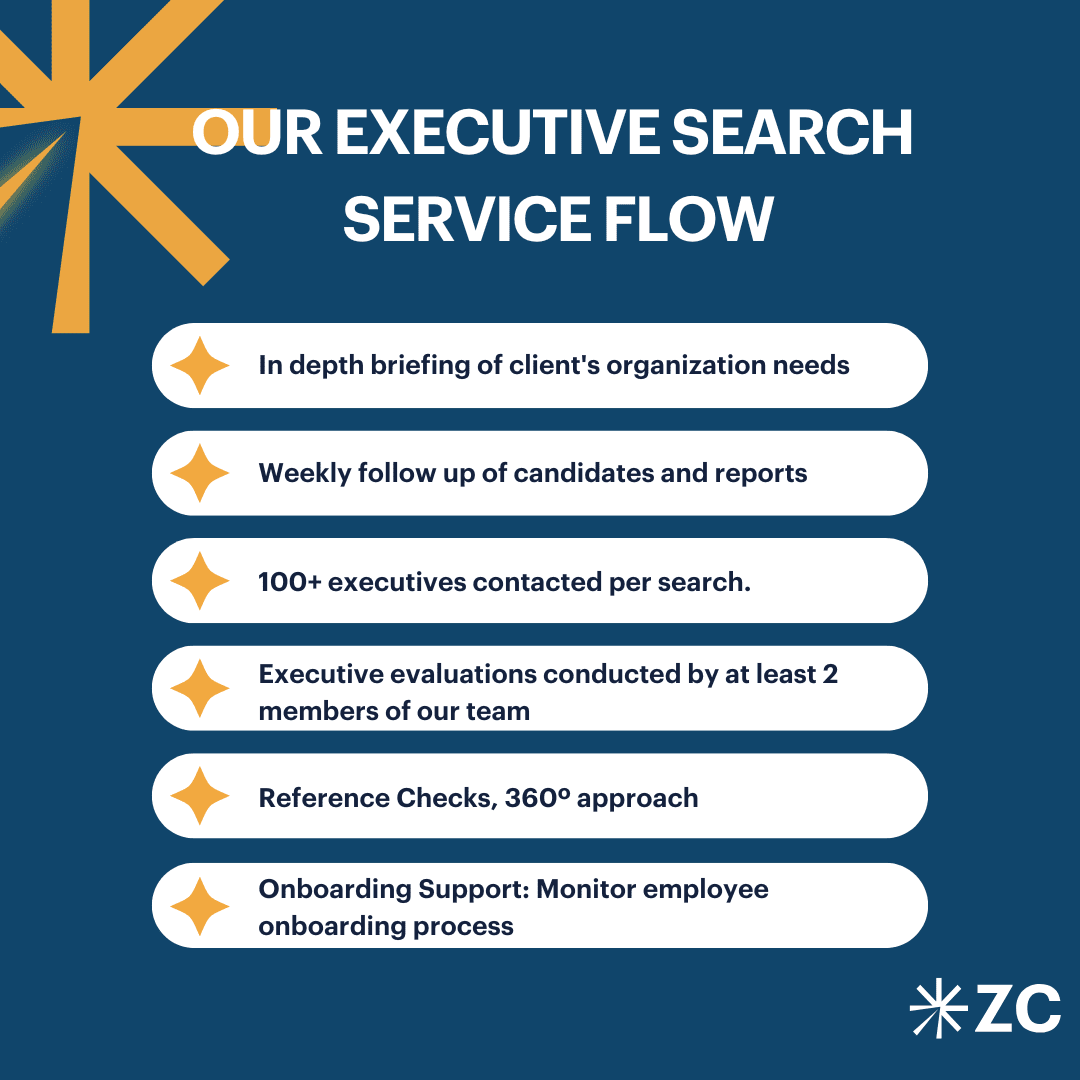
Zavala Civitas’ Executive Search methodology combines market mapping, direct candidate identification, structured assessment and reference validation to understand whether candidates have personally managed comparable leadership challenges.
Our Financial Services Executive Search practice supports appointments across banking, insurance and related financial businesses.
Frequently Asked Questions: Financial Services Executive Search in Germany
Financial-sector experience matters. Proven transformation ownership matters more.
Zavala Civitas supports financial institutions in Germany in identifying executives capable of combining financial performance, regulation, digital resilience and strategic transformation.
Executive Search → Financial Services → Contact Us →