Over the past few years, Mexico has moved to the center of many global expansion strategies. Nearshoring has accelerated investment decisions, operational scale, and organizational complexity across the country. As a result, leadership hiring has shifted from being opportunistic to becoming a critical risk factor.
In this environment, Executive Search in Mexico is increasingly focused on finding executives who can handle pressure, operate across borders, and make sound decisions in fast-changing conditions.
How nearshoring is changing leadership needs
Nearshoring has reshaped the type of executives companies look for in Mexico.
According to the World Bank, Mexico has strengthened its role as a manufacturing and export platform for North America, supported by its proximity to the US and existing industrial base. This has translated into sustained demand for senior leadership in operations, supply chain, engineering, and general management.
According to Reuters, recent foreign direct investment has been concentrated in sectors such as automotive, electronics, industrial manufacturing, logistics, and energy-related infrastructure. These sectors require leaders who can scale operations quickly while maintaining cost discipline and operational stability.
The consequence is clear. Leadership demand is no longer driven by market entry alone, but by execution at speed.
The tension between speed and decision quality
One of the most common challenges in executive hiring today is the pressure to move fast.
Nearshoring timelines are often aggressive. Plants need to open, teams need to grow, and production targets are set early. In this context, companies are tempted to prioritize availability over suitability.
According to McKinsey research on executive decision-making, leadership effectiveness in complex environments depends more on judgment than on experience alone. In Mexico, where operational stakes are high and mistakes are costly, poor decisions made under time pressure tend to surface quickly.
Executive Search in Mexico increasingly plays the role of slowing the process down just enough to avoid expensive mis-hires.
Executive Search in Mexico: What leadership profiles are most in demand
The nearshoring cycle has shifted demand toward a specific set of executive profiles.
Companies are actively seeking leaders who combine operational depth with cross-border exposure. Typical examples include plant directors with P&L responsibility, COOs with experience scaling facilities, and country managers used to reporting into US or global headquarters.
According to industry analysis from the Association of Executive Search and Leadership Consultants, markets undergoing rapid industrial expansion tend to favor executives who have managed complexity before, even if their background is not perfectly linear.
In Mexico, adaptability and practical problem-solving often outweigh polished corporate trajectories.
Executive Search in Mexico: Local executives and international profiles
Mexico offers a strong base of experienced local executives, particularly in manufacturing and industrial operations. At the same time, many leadership roles sit at the intersection of local execution and international governance.
Local executives tend to perform best when roles require deep knowledge of labor dynamics, supplier ecosystems, and regional operations. International profiles often add value in roles with strong cross-border coordination, global reporting lines, or transformation mandates.
According to BCG leadership research, international executives are most effective when they are assessed on their ability to operate locally, not just on prior regional exposure. In Mexico, leadership effectiveness depends heavily on credibility with local teams.
Governance, labor context, and leadership risk
Mexico’s labor framework is relatively stable compared to other emerging markets, but leadership risk should not be underestimated.
According to OECD labor market analysis, industrial growth environments increase pressure on senior management to balance productivity, workforce stability, and compliance. Executives without experience in labor-intensive settings often underestimate the operational and reputational impact of workforce decisions.
This makes careful assessment particularly important for senior roles with large headcount responsibility.
Why assessment matters more than ever
In a fast-moving environment, resumes alone are not reliable predictors of performance.
According to Harvard Business Review, executives promoted or hired during periods of rapid expansion face a higher risk of derailment if assessment focuses only on past success rather than decision-making style and stress tolerance.
In Mexico, effective executive search processes place strong emphasis on:
- how candidates make decisions under pressure
- how they handle operational setbacks
- how they balance headquarters expectations with local realities
This reduces the risk of short tenures and leadership churn.
Retention risks in a competitive market
Nearshoring has intensified competition for experienced leaders.
According to Eurostat and regional mobility data, executives with cross-border operational experience are increasingly mobile across North America and Latin America. This creates upward pressure on compensation and increases poaching risk.
For companies, this means retention needs to be addressed early. Clear mandates, realistic expectations, and credible career paths play a major role in leadership stability.
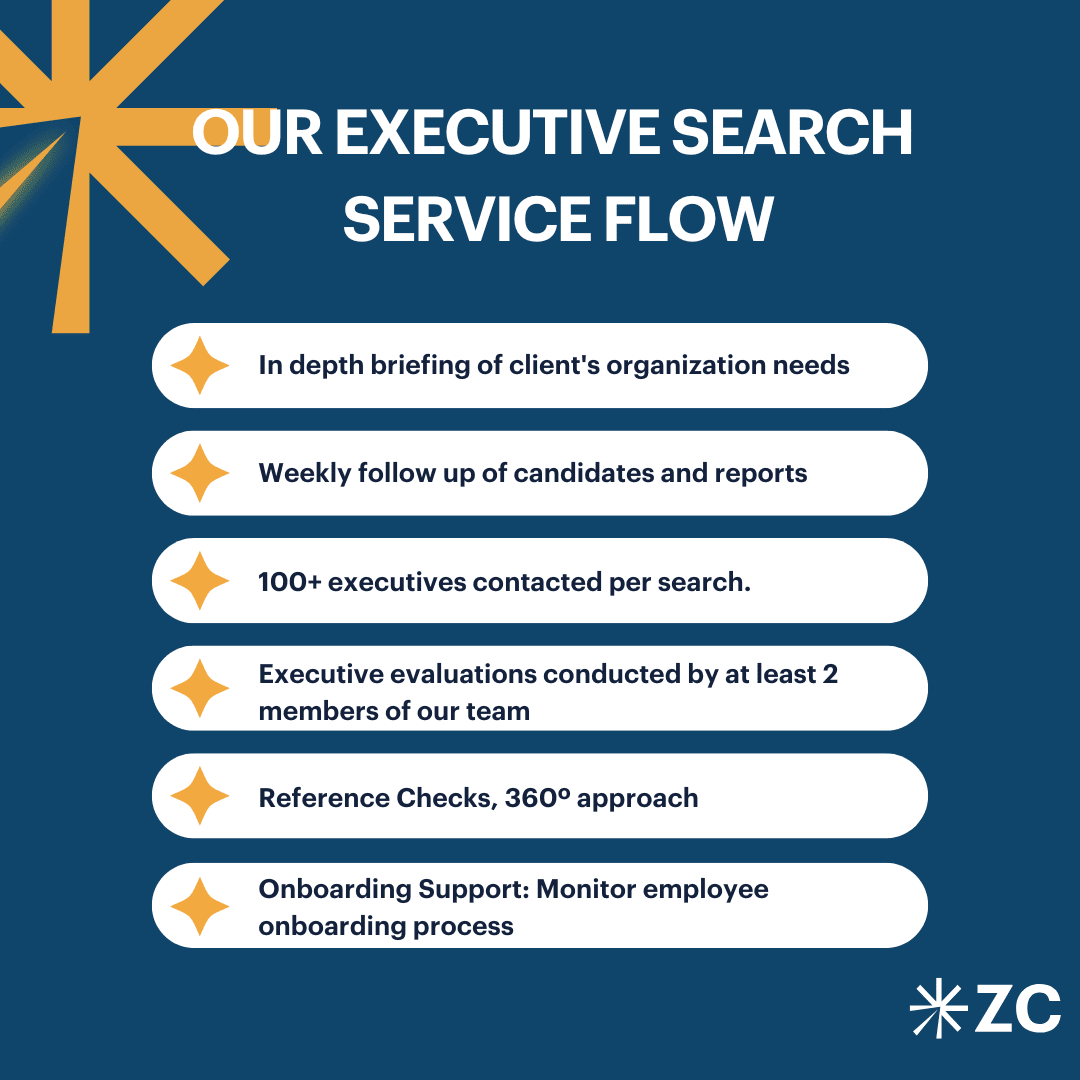
Executive Search in Mexico increasingly extends beyond hiring to include onboarding and early-stage retention support.
When executive search becomes essential
According to global executive recruitment benchmarks, executive search is most effective when:
- leadership roles are operationally critical
- failure costs are high
- the market is moving faster than internal hiring processes
- confidentiality and assessment quality matter
Mexico currently meets all of these conditions. As nearshoring accelerates in Mexico, securing the right senior leadership becomes critical to sustaining operational scale and long-term performance. Click here to get in contact with us.