Executive Search in Portugal Infrastructure & Energy   

The energy and infrastructure sectors of Portugal are changing, fuelled by new investments on sustainable projects and renewable energy vision targets. To thrive in establishing greater energy self-sufficiency while offering infrastructure innovations in leadership is key. In this paper we will talk about the current landscape of the sector as well as the opportunities and challenges.

Current Landscape of Portugal’s Infrastructure and Energy Sectors

Portugal has emerged as a leader in renewable energy within Europe. In 2024, the country achieved a milestone by sourcing 71% of its electricity from renewable sources, significantly reducing its carbon emissions to levels not seen since 1990.

This progress is the result of consistent policies and renewable energy auctions initiated in 2005, leading to the closure of coal-fired power plants in 2021.

The source of the country’s energy is varied, consisting of a mix of hydroelectricity, wind power, and solar. Regarding Portugal, by the year 2023, capacities of 8.8 GW hydroelectric has been installed, 13.3 GW onshore wind, and 3.1 GW of solar power, which in total adds up to 87% of the installed capacity of the country.

Challenges in Executive Search for Infrastructure and Energy

  • Technological Advancements and Integration: To meet the swift deployment of digital smart grids, storage systems, and related utilities, there is an escalating requirement for leaders who comprehend how to make use of emerging technologies as well as monitor their integration into the system.
  • Regulatory Compliance and Policy Navigation: Navigating complex regulatory frameworks and aligning with national and European Union policies on sustainability requires executives with a deep understanding of legal landscapes and policy implications.
  • Sustainability and Environmental Stewardship: As Portugal aims for carbon neutrality by 2045, leaders must prioritize sustainable practices, balancing economic growth with environmental responsibilities.
  • Investment and Financial Management: Securing funding for large-scale infrastructure projects and managing financial risks demand executives with strong financial acumen and experience in large capital projects.
  • Stakeholder Engagement and Community Relations: Having a consensus among different groups of people such as government authorities, business investors, and community members requires leaders who are good at communicating and negotiating.


Opportunities for Executive Search Firms

Executive search firms can address these challenges by:

  • Leveraging Specialized Networks: Tapping into global and local networks to identify candidates with the requisite technical expertise and leadership capabilities.
  • Conducting Comprehensive Assessments: Evaluating candidates’ strategic vision, adaptability, and alignment with organizational goals to ensure a strong fit.
  • Promoting Diversity and Inclusion: Advocating for leadership that reflects diverse perspectives, fostering innovation and inclusive growth.
  • Providing Market Insights: Offering clients valuable information on industry trends, compensation benchmarks, and leadership strategies to inform decision-making.

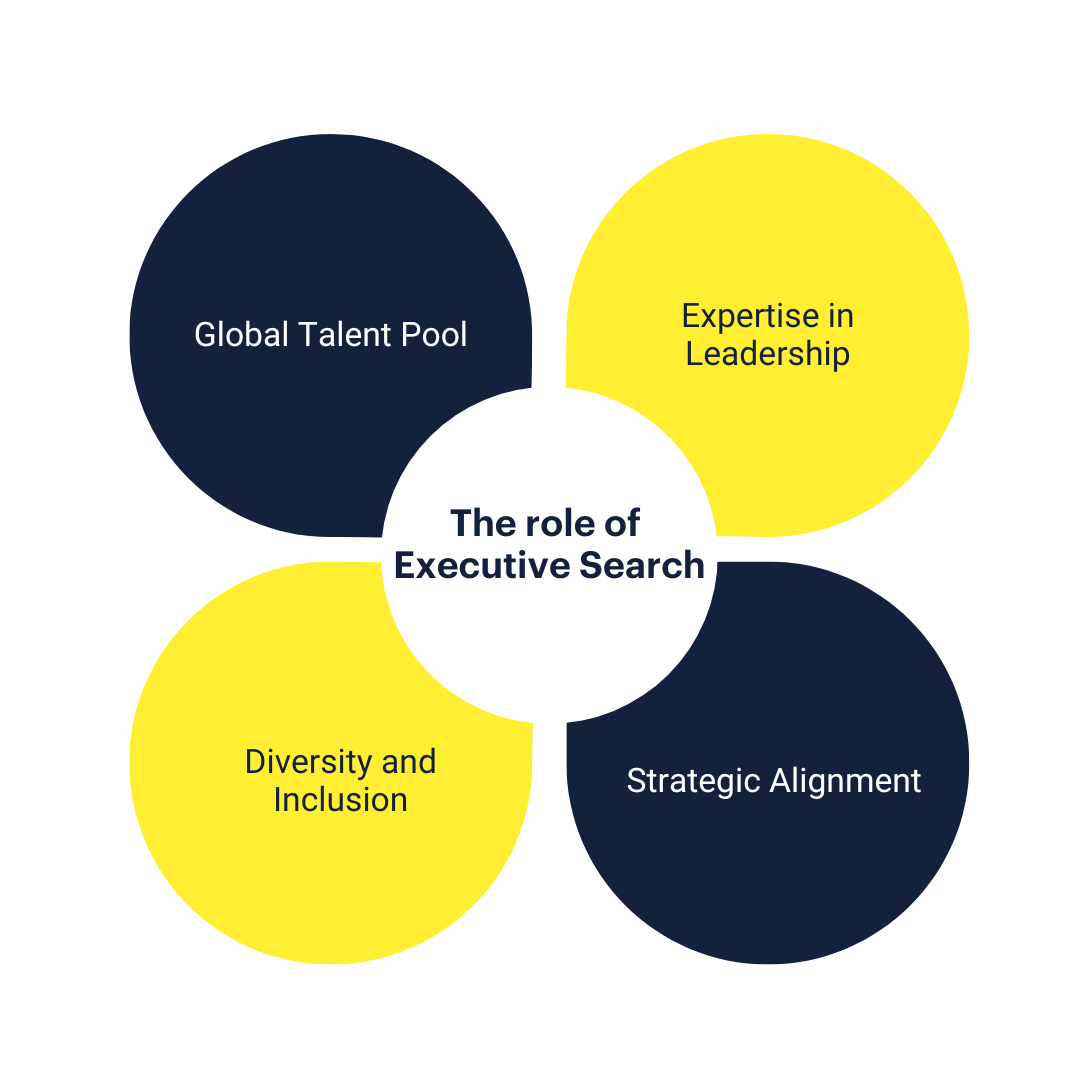
The role of executive Search in Portugal

Statistical Insights on the Portuguese region

  • In 2024, Portugal reduced its reliance on fossil fuels to just 10% of total electricity generation, positioning it as a leader in clean energy in Western Europe.
  • The country plans to achieve 85% of its electricity mix from renewable energy sources by 2030, necessitating substantial investments in onshore and offshore wind and the integration of green hydrogen.


Portugal’s commitment to renewable energy and infrastructure modernization presents both challenges and opportunities. The rapid pace of technological advancement and the complexity of regulatory environments underscore the need for visionary leaders who can navigate these dynamics effectively.

Executive search firms are instrumental in identifying such leaders, ensuring that organizations are equipped to drive sustainable growth and innovation in this transformative era.

If you are in need of finding qualified leaders in the sector contact with us clicking here.

Executive Search in Mexico: Leading Sectors Shaping Demand 

Over the last few years, Mexico swiftly garnered international investment, earning it the title of one of the fastest-growing countries in capturing global foreign direct investments.   This scenario creates new talent opportunities.  Most Executive Search firms in Mexico have modified their approach from simply filling highest roles in an organization to competing for the extremely limited pool of qualified executive talent for all roles in all sectors.  The demand isn’t even  It is very much concentrated.  Where Demand is Actually Growing  Mexico’s hiring executive pressure is unequal across all sectors. Some sectors are faster and are pulling talent from other sectors. Manufacturing is the clearest example.  With nearshoring, Mexico is becoming a strategically important center for the supply chain for North America. This is due to the fact that international companies are relocating and/or expanding their operations in Mexico. This is supported by McKinsey & Company.  The growth of a business is dependent on its leadership. Companies are in need of quickly scalable plant directors, operations managers, and supply chain executives. Such profiles are deficit.  Executive Search Energy and Infrastructure: Complexity at Scale  There is the highest demand for executive talent within the energy and infrastructure sectors.  Major projects and regulatory complexities, as well as lengthy investments, require leaders who are comfortable with uncertainty in all the essential domains, not just the technical. This includes stakeholder

Read More

Executive Search in Spain: Talent Gaps and Leadership Trends 

The Spanish talent market is perceived to be mature and easy to operate in. This makes some sense from afar. There is a solid network of business centers, a developing international business presence, and a considerable pool of experienced talent.  Problems arise when businesses attempt to recruit senior executives.  In Spain, executive search is shifting from talent arbitrage to understanding the true gaps and the reasons behind their expansion.  Where the Talent Gaps Are Actually Emerging  Spain may appear to have many senior professionals, but the issues here are more complex.  The problem is not the experience, but the type of experience that is most required by the different companies.  As per McKinsey & Company, the nature of change of senior leadership roles in Europe is at a much quicker pace than the nature of change in the senior leadership roles in the talent pool. Executives are required who are able to be strategic, also have the ability to execute, and be the change agent.  That blend is still too little. This is especially the case in Spain in the industries that are shifting the fastest—energy transition, infrastructure, and technology. There are many executives who have strong functional experience, but far fewer who have held positions to manage large, complex transformations, or to operate internationally in complex situations.  This results in the mismatch between the hopes of the companies and the actual situation in the labor market.  The Shift from Stability to Transformation Leadership  For many years, leadership in Spain emphasized operational stability and incremental change.  This is not enough anymore.  At present, companies expect executives to manage change and uncertainty, and lead in multiple dimensions simultaneously, including at the same time digital transformation, new business models, and the increased need for operational efficiency. 

Read More

Executive Search in the United States: Private Equity and Portfolio Leadership  

According to McKinsey’s Global Private Markets Review the United States remains the largest private equity market globally. It accounts for nearly half of global PE deal value.    Unlike traditional recruiting, Executive Search in the U.S. private equity-backed environments is much more complex.  In PE platforms, leadership is directly tied to value creation, EBITDA expansion,

Read More

Related posts

Leadership in the Middle East: Why Fit Matters More Than Origin 

As companies in the Middle East scale and institutionalize, the long-standing debate around local versus international leadership in the Middle East is largely outdated. The real issue today is alignment: whether the leadership profile fits the business challenge the organization is facing.  Too often, leadership appointments are driven by assumptions: that international executives

Read More

The Role of Compliance Officers in Strategic Decision-Making

Over the past decade, the role of compliance functions within organizations has progressed significantly. Traditionally, compliance was responsible primarily for ensuring the company’s compliance with regulation, particularly that Relations to bribery and corruption.  They developed codes of conduct, supplier due diligence process and the like and were responsible for ensuring compliance with these by employees of

Read More

Executive Search in Mexico: Leading Sectors Shaping Demand 

Over the last few years, Mexico swiftly garnered international investment, earning it the title of one of the fastest-growing countries in capturing global foreign direct investments.   This scenario creates new talent opportunities.  Most Executive Search firms in Mexico have modified their approach from simply filling highest roles in an organization to competing for the extremely limited pool of qualified executive talent for all roles in all sectors.  The demand isn’t even  It is very much concentrated.  Where Demand is Actually Growing  Mexico’s hiring executive pressure is unequal across all sectors. Some sectors are faster and are pulling talent from other sectors. Manufacturing is the clearest example.  With nearshoring, Mexico is becoming a strategically important center for the supply chain for North America. This is due to the fact that international companies are relocating and/or expanding their operations in Mexico. This is supported by McKinsey & Company.  The growth of a business is dependent on its leadership. Companies are in need of quickly scalable plant directors, operations managers, and supply chain executives. Such profiles are deficit.  Executive Search Energy and Infrastructure: Complexity at Scale  There is the highest demand for executive talent within the energy and infrastructure sectors.  Major projects and regulatory complexities, as well as lengthy investments, require leaders who are comfortable with uncertainty in all the essential domains, not just the technical. This includes stakeholder

Read More

Executive Search in Spain: Talent Gaps and Leadership Trends 

The Spanish talent market is perceived to be mature and easy to operate in. This makes some sense from afar. There is a solid network of business centers, a developing international business presence, and a considerable pool of experienced talent.  Problems arise when businesses attempt to recruit senior executives.  In Spain, executive search is shifting from talent arbitrage to understanding the true gaps and the reasons behind their expansion.  Where the Talent Gaps Are Actually Emerging  Spain may appear to have many senior professionals, but the issues here are more complex.  The problem is not the experience, but the type of experience that is most required by the different companies.  As per McKinsey & Company, the nature of change of senior leadership roles in Europe is at a much quicker pace than the nature of change in the senior leadership roles in the talent pool. Executives are required who are able to be strategic, also have the ability to execute, and be the change agent.  That blend is still too little. This is especially the case in Spain in the industries that are shifting the fastest—energy transition, infrastructure, and technology. There are many executives who have strong functional experience, but far fewer who have held positions to manage large, complex transformations, or to operate internationally in complex situations.  This results in the mismatch between the hopes of the companies and the actual situation in the labor market.  The Shift from Stability to Transformation Leadership  For many years, leadership in Spain emphasized operational stability and incremental change.  This is not enough anymore.  At present, companies expect executives to manage change and uncertainty, and lead in multiple dimensions simultaneously, including at the same time digital transformation, new business models, and the increased need for operational efficiency. 

Read More

Executive Search in China: The Complexity of Hiring Executives

China is one of those markets where opportunities are easy to find but the right leaders are not.  many international firms, executive recruitment in China becomes challenging for one simple reason: the market does not act as they expect. What works for Europe or the US, tends to break down here.  Recruiting

Read More

Executive Search in the United States: Private Equity and Portfolio Leadership  

According to McKinsey’s Global Private Markets Review the United States remains the largest private equity market globally. It accounts for nearly half of global PE deal value.    Unlike traditional recruiting, Executive Search in the U.S. private equity-backed environments is much more complex.  In PE platforms, leadership is directly tied to value creation, EBITDA expansion,

Read More