Portugal has become an increasingly attractive location for international businesses. While stability, talent quality, and quality of life are strong advantages, the senior talent pool is small, highly visible, and intensely competitive.
Because of this hiring in Portugal is about strategy. It involves managing scarcity, confidentiality, and long-term sustainability of leadership in an unforgiving marketplace where mistakes travel fast.
Executive Search in Portugal: Why small markets change the rules
How small markets disrupt the norm Portugal has no shortage of qualified professionals, it has a concentration problem. The OECD outlines the country’s problem as a relatively thin layer of senior professionals with international managerial experience. The same individuals recur across numerous shortlists, domains, and recruitment cycles. It is a thin layer.
For companies, this creates three structural challenges:
- High overlap of leadership profiles
- Limited confidentiality during hiring processes
- Faster market fatigue around appointments
In this context, hiring in Portugal is not about finding talent. It is about accessing the right talent without destabilizing the market.
Executive Search in Portugal: Talent visibility and the risk of recycled leadership
In larger European markets, executive mobility is absorbed naturally. In Portugal, it is noticed.
According to Harvard Business Review, in small or tightly networked markets, talent reputation travels faster than formal track records. Informal perception can outweigh objective performance, both positively and negatively.
This has direct consequences:
- Overexposed executives struggle to reset their professional narrative
- Confidential replacements become harder to protect
- Poor senior hires damage employer reputation more quickly
A robust hiring process in in the country must therefore prioritize discretion, sequencing, and narrative control, not just candidate identification.
Executive Search in Portugal: Why confidentiality becomes a competitive advantage
Confidentiality is not a hygiene factor in Portugal. It is a true differentiator.
According to research from the Association of Executive Search and Leadership Consultants (AESC), smaller markets experience higher information leakage during senior hiring processes, particularly when companies rely on informal networks or visible referrals.
This is where executive search firms add disproportionate value:
- Off-market and discreet outreach
- Controlled communication with candidates
- Shortlists designed to minimize exposure
- Neutral positioning toward executives already engaged elsewhere
In the country, confidentiality often determines whether a company attracts top-tier leadership or only candidates already active in the market.
Defining leadership roles under talent constraints
A frequent mistake in Portugal is importing role definitions from larger markets without adaptation.
Effective hiring in Portugal requires reframing the brief around:
- Genuine decision scope rather than inflated titles
- Realistic growth and influence expectations
- Long-term career viability in a small ecosystem
According to McKinsey research on leadership effectiveness, role ambiguity significantly increases executive failure risk. This risk is amplified in small markets where lateral opportunities are limited.
When the market is small, misalignment lasts longer.
Executive Search in Portugal: Leadership profiles that tend to succeed
Portugal consistently rewards executives with a specific combination of traits:
- Strong operational judgment
- Relationship-driven influence
- Long-term orientation rather than short-term visibility
- Comfort operating with limited hierarchy and resources
According to INSEAD research on leadership in mid-sized economies, executives who succeed in smaller markets typically show higher adaptability and stakeholder sensitivity than peers in larger, more structured environments.
This explains why technically perfect profiles sometimes underperform, while less obvious candidates deliver stronger results.
Executive Search in Portugal: Local executives vs international profiles
Portugal does not require localization for regulatory survival, but it does require cultural calibration.
Local executives tend to add the most value when:
- The business depends on domestic stakeholder ecosystems
- The environment is regulated or semi-public
- Institutional memory and continuity matter
International profiles tend to succeed when:
- The role serves as a European or regional hub
- The mandate involves transformation or professionalization
- The company operates under private equity or post-acquisition conditions
According to BCG leadership research, international executives perform best when evaluated on adaptability and influence, not just geographic exposure.
In Portugal, international experience without local anchoring often results in faster turnover.
Retention as the hidden risk
Hiring is only half of the challenge.
According to Eurostat labor mobility data, senior Portuguese executives are increasingly mobile across Southern Europe, driven by salary compression and limited vertical progression opportunities within the local market.
This creates a structural retention challenge:
- International poaching of top performers
- Early disengagement after initial integration
- Shortened leadership tenures
Executive Search in Portugal must therefore integrate retention thinking from the beginning, including mandate design, onboarding, and incentive alignment.
Executive Search in Portugal: What an effective search process looks like
In small talent markets, process discipline becomes more important, not less.
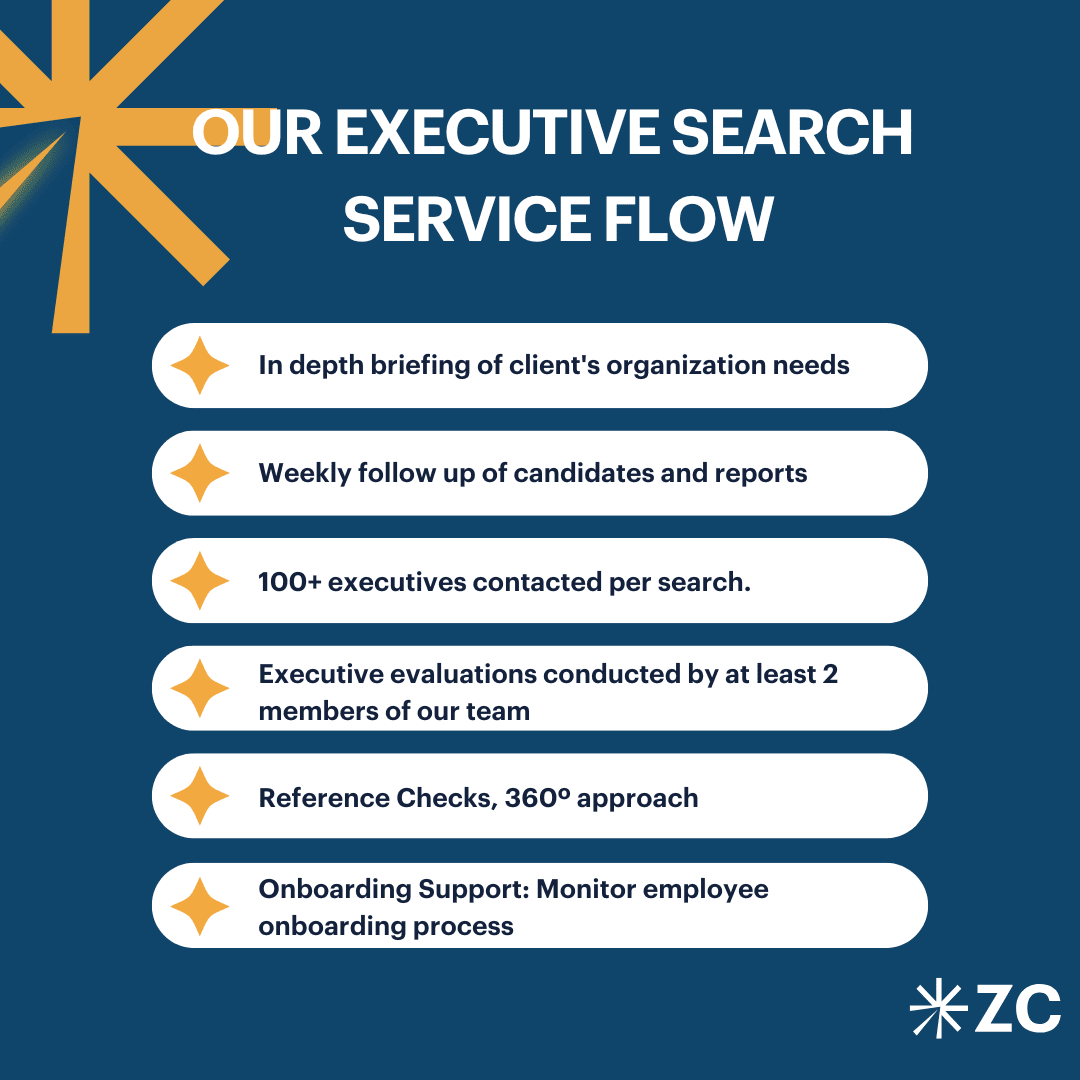
A high-quality executive search process typically includes:
- Deep market mapping beyond visible candidates
- Structured assessment focused on judgment and long-term fit
- Outcome-based referencing
- Offer design aligned with credibility and sustainability
- Onboarding support during the first year
According to Gartner research on onboarding, executive failure risk peaks between months six and nine. This is precisely when executives in small markets reassess opportunity cost.
When executive search is essential
According to global executive recruitment benchmarks, executive search becomes indispensable when:
- The senior talent pool is narrow
- Confidentiality is critical
- Leadership failure carries reputational consequences
- Retention risk is structurally high
Portugal meets all of these conditions.
In small leadership markets like Portugal, competing for senior talent requires more than visibility. A structured executive search approach helps companies secure leaders with long-term impact. Click here to get in contact with us.