Key Takeaway: Canada’s logistics and supply chain sector is valued at over $66 billion annually — encompassing transportation, warehousing, inventory control, and domestic and international movement of goods. Canada’s geographic positioning as a USMCA trade hub between the United States and global markets makes logistics leadership a direct driver of national economic competitiveness. The executives who can combine strategic supply chain forecasting, AI and IoT technology governance, sustainability programme implementation, and the cross-cultural leadership that Canada’s diverse logistics workforce requires are the sector’s most consequential appointments.
Last updated: August 13, 2026
Canada, known for its vast landscapes and diverse natural resources, plays a pivotal role in the global logistics and supply chain sector. This sector is valued at over $66 billion per year and is essential to Canada’s economic wellbeing — encompassing transportation, warehousing, inventory control, order fulfilment, and domestic and international movement of goods. In this environment, executive search is how organisations identify the leaders needed to navigate this sector’s complexity and scale its competitive advantage.
Key Figures at a Glance
| Data point |
Finding |
Source |
| Canada logistics & supply chain sector annual value |
$66 billion+ |
Statistics Canada / Supply Chain Canada |
| Key export sectors driving logistics demand |
Crude oil, natural gas, timber, automobiles |
Statistics Canada / Natural Resources Canada |
| Canada’s strategic logistics position |
Long coastline + adjacency to USA = USMCA’s primary logistics contact point |
USTR / USMCA trade data |
| Key technology adoption driver |
AI, IoT, and blockchain — executive familiarity required for operational optimisation |
Supply Chain Canada sector analysis |
Why Logistics and Supply Chain Are Important in Canada
The logistics and supply chain industry is central to Canada’s economy — relying on major exports including crude oil, natural gas, timber, and automobile products. On the import side, Canada imports machinery, electronics, and consumer goods — maintaining a steady balance with global trading partners. The country’s geographic location is strategic: it has a long coastline and is adjacent to the United States, serving as an important logistics hub for USMCA trade flows and a gateway between North America and global markets.
Canada’s $66 billion logistics and supply chain sector sits at the intersection of two structural demands that are creating the sector’s most significant executive leadership requirements. The first is the US-Canada bilateral trade relationship — Canada’s largest trading partner — which requires logistics executives who can manage the customs, regulatory, and operational complexity of USMCA trade flows at a scale and pace that the bilateral relationship’s volume demands. The second is the multi-modal complexity of Canada’s logistics geography: ocean shipping through the Port of Vancouver and Port of Montreal, rail freight across Trans-Canada distances, and road transport across the US-Canada border — each with different regulatory frameworks, operator relationships, and operational dynamics. The logistics executive who has only managed one mode or one trade relationship lacks the multi-modal, bilateral complexity management capability that Canada’s logistics sector most requires at the senior level.
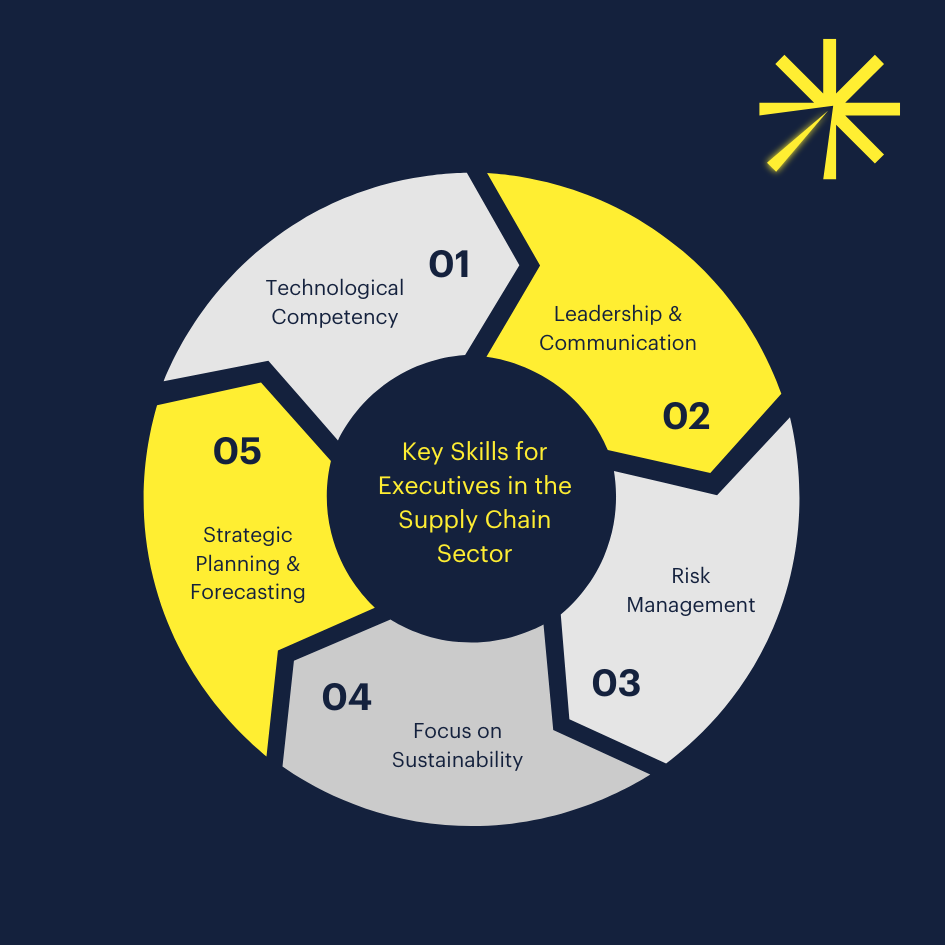
Key Skills for Executives in the Sector
- Strategic planning and forecasting: Executives must anticipate market trends and align supply chain operations with broad organisational goals — particularly in a sector where US-Canada trade policy changes and commodity price volatility can shift the demand environment rapidly.
- Technological competency: Executive familiarity with advanced supply chain solutions — AI, IoT, and blockchain — is required for operational optimisation and increased efficiency. The executive who can evaluate which technology investments create genuine competitive differentiation and which create operational complexity without proportional benefit is the one who governs the technology budget effectively.
- Leadership and communication: Managing large, geographically dispersed teams across Canada’s logistics geography requires leadership that can maintain operational alignment across locations and time zones that make centralised management genuinely difficult.
- Risk management: Supply chain resilience — identifying disruption risks before they occur and developing contingency plans that maintain service continuity — is a primary executive capability in a sector where a single point-of-failure disruption can cascade across the US-Canada trade flow in ways that are difficult and expensive to unwind.
- Sustainability focus: Incorporating sustainability concerns into supplier decisions and logistics operations — responding to the regulatory and client requirements that are making green logistics a competitive necessity in Canada’s supply chain sector.
The Role of Executive Search Services in Canada
In logistics and supply chain — a competitive industry — finding the right executive is the difference between competitive advantage and operational underperformance. Executive search firms with genuine sector knowledge identify and recruit professionals who have the required skills and qualifications to lead effectively — accessing both domestic Canadian logistics executives and internationally located professionals who have built the multi-modal and bilateral trade management capability the sector requires.
Canada’s logistics and supply chain future seems promising with the right leadership in place. For any business operating in this space, leveraging on executive search firms may make all the difference when it comes to securing future leaders who will navigate through challenges and take advantage of available prospects.
Click here to get in contact with us.
Frequently Asked Questions: Executive Search in Canada’s Supply Chain and Logistics
Why does the multi-modal complexity of Canada’s logistics geography create a specific executive search requirement that sector experience alone doesn’t address?
Because ocean shipping through Vancouver and Montreal, rail freight across Trans-Canada distances, and road transport across the US-Canada border each operate under different regulatory frameworks, operator relationships, and operational dynamics. The logistics executive who has only managed one mode or one trade relationship lacks the multi-modal, bilateral complexity management capability that Canada’s logistics sector most requires at the senior level — and that executive search must explicitly assess against each mode and trade relationship type, not just “logistics experience” generically.
How does the US-Canada bilateral trade relationship specifically affect supply chain executive leadership requirements in Canada?
By creating a customs, regulatory, and operational complexity at the border that requires executives who understand both Canada’s import and export regulatory frameworks and the US CBP and FDA requirements that affect inbound and outbound goods respectively. The supply chain executive who manages Canadian operations without that bilateral regulatory literacy will systematically underestimate the compliance costs and lead time variability that US-Canada border logistics creates — particularly when regulatory changes like USMCA rule-of-origin requirements affect the company’s supply chain configuration.
What specific supply chain resilience capability does Canada’s logistics sector require from executive search?
The ability to design and maintain supply chain redundancy that specifically addresses Canada’s geographic concentration risk — the risk that a single disruption at a major port (Vancouver, Montreal), a major rail corridor (Trans-Canada, CN, CP), or a key US-Canada border crossing can cascade across the supply chain in ways that are expensive and slow to unwind. The logistics executive who has designed genuine redundancy into a Canadian supply chain — not just documented contingency plans that haven’t been operationally tested — is performing the specific risk management capability that the concentration risk requires.
How does sustainability integration in Canadian logistics create a competitive requirement rather than just a compliance obligation?
Because major Canadian exporters — including automotive, consumer goods, and natural resource companies — are applying sustainability criteria to their logistics supplier selection decisions under their own ESG reporting commitments. The logistics company that can offer genuinely carbon-reduced transport options, supply chain traceability for sustainability reporting, and packaging waste reduction alongside the service level and cost performance that clients require is competing for contracts that the logistics company without those capabilities cannot reach. Green logistics capability is becoming a market access requirement, not just a cost of compliance.
How does Zavala Civitas approach executive search in Canada’s supply chain and logistics sector?
Through sector-specific talent mapping assessing multi-modal Canadian logistics operations management, US-Canada bilateral trade regulatory fluency, supply chain resilience design capability, AI and IoT technology governance alongside operational depth, and green logistics implementation. We access both domestic Canadian logistics executives and internationally located Canadians with equivalent supply chain complexity management experience. From our Toronto office, with a 92% closing rate.