
Strategic Executive Search in Mexico’s Logistics and Supply Chain Sectors

Key Takeaway: Mexico is strategically positioned to bridge South and North America with access to both the Atlantic and Pacific Oceans — making it a central hub for global trade in automotive manufacturing, electronics, and agriculture. The USMCA trade agreement has reinforced Mexico’s role as the critical logistics link in North America’s supply chain. Infrastructure constraints, security considerations, and political instability create specific operational challenges that the executives who succeed in Mexico’s logistics sector have learned to manage as integral to their operational model — not exceptional obstacles to route around. Finding those executives through strategic executive search is how organisations capitalise on Mexico’s logistics opportunity.

Last updated: August 13, 2026

Mexico, a major player in North America’s logistics and supply chain industry, is strategically located to bridge the gap between South and North America. Its strategic positioning — concerning international trade in automotive manufacturing, electronics, and agriculture — has made it a central point for global trade. As demand for professionals capable of navigating this multi-faceted environment continues to rise, executive search is how organisations identify the leaders who can unlock Mexico’s logistics potential.

Key Figures at a Glance

Mexico logistics context factor Executive leadership implication
Strategic geographic position Bridge between South and North America — Atlantic and Pacific Ocean access creates unique multi-modal logistics hub opportunity
USMCA trade framework USMCA rule-of-origin compliance capability is a core executive search assessment dimension for Mexico logistics
Infrastructure constraint Logistics executives must design network redundancy and multi-modal flexibility to manage infrastructure gap risk
Security and political environment Security-integrated route planning and government relationship management are core — not supplementary — leadership competencies

The Crucial Role of Executive Search

Getting the right leadership in Mexico’s logistics and supply chain is fundamental. It is vital that organisations engage executive search agencies specialising in these fields — firms that not only understand the intricacies of the Mexican market but also the global aspects impacting supply chains. These firms can identify individuals who have the necessary skills as well as the innovative thinking required to compete effectively in this complex environment.

The most consequential misunderstanding in executive search for Mexico’s logistics sector is the assumption that a highly capable logistics executive from the US, Europe, or Asia will transfer their capability directly into Mexico’s operational environment without a significant contextual adaptation period. Mexico’s logistics environment is not simply a lower-cost, lower-infrastructure version of the US logistics environment. It is a fundamentally different operating context — with security considerations that are integrated into daily route planning decisions, government relationship management that operates through different protocols than US or European public agency relationships, USMCA compliance complexity that applies to specific product categories with rules that the executive from a different trade region has not developed, and infrastructure gaps that require network design from a redundancy and flexibility perspective rather than from an efficiency optimisation perspective. The executive who has operated in Mexico’s logistics environment and built the specific competency set that the environment requires is a qualitatively different profile from the executive who is capable in logistics generally. Executive search must explicitly make that distinction.

Challenges and Opportunities in Mexico’s Supply Chain

Amongst the issues that affect Mexican supply chains: weak infrastructure, security considerations, and political instability that can impede smooth flow of goods across borders. However, these challenges offer opportunities for executives who can adapt their operations using technological advancements coupled with strategic thinking — lowering costs while enhancing efficiency and building the supply chain resilience that Mexico’s specific risk profile requires.

Essential Skills for Supply Chain Executives

  • Strategic planning and adaptability: Long-term direction-setting amidst fluctuating trade laws and changing market dynamics — specifically the ability to adapt logistics network configuration rapidly as USMCA rule-of-origin changes, trade policy shifts, and security environment changes affect route and carrier viability.
  • Technological savvy: Incorporating new technologies — advanced analytics, IoT, blockchain — to enhance transparency and improve operational efficiency, while evaluating which technology investments are viable given Mexico’s specific connectivity and infrastructure context.
  • Operational excellence: Knowledge of lean management approaches and ability to effectively supervise large-scale logistics — with the specific adaptation for Mexico’s operational context that requires building more redundancy into the operational model than the equivalent US-context logistics operation would require.
  • Cross-cultural leadership: Ability to manage and lead teams from different nationalities and cultural backgrounds — particularly relevant in the nearshoring context where Mexican logistics operations serve international manufacturing companies with different corporate governance, reporting, and performance standard expectations.
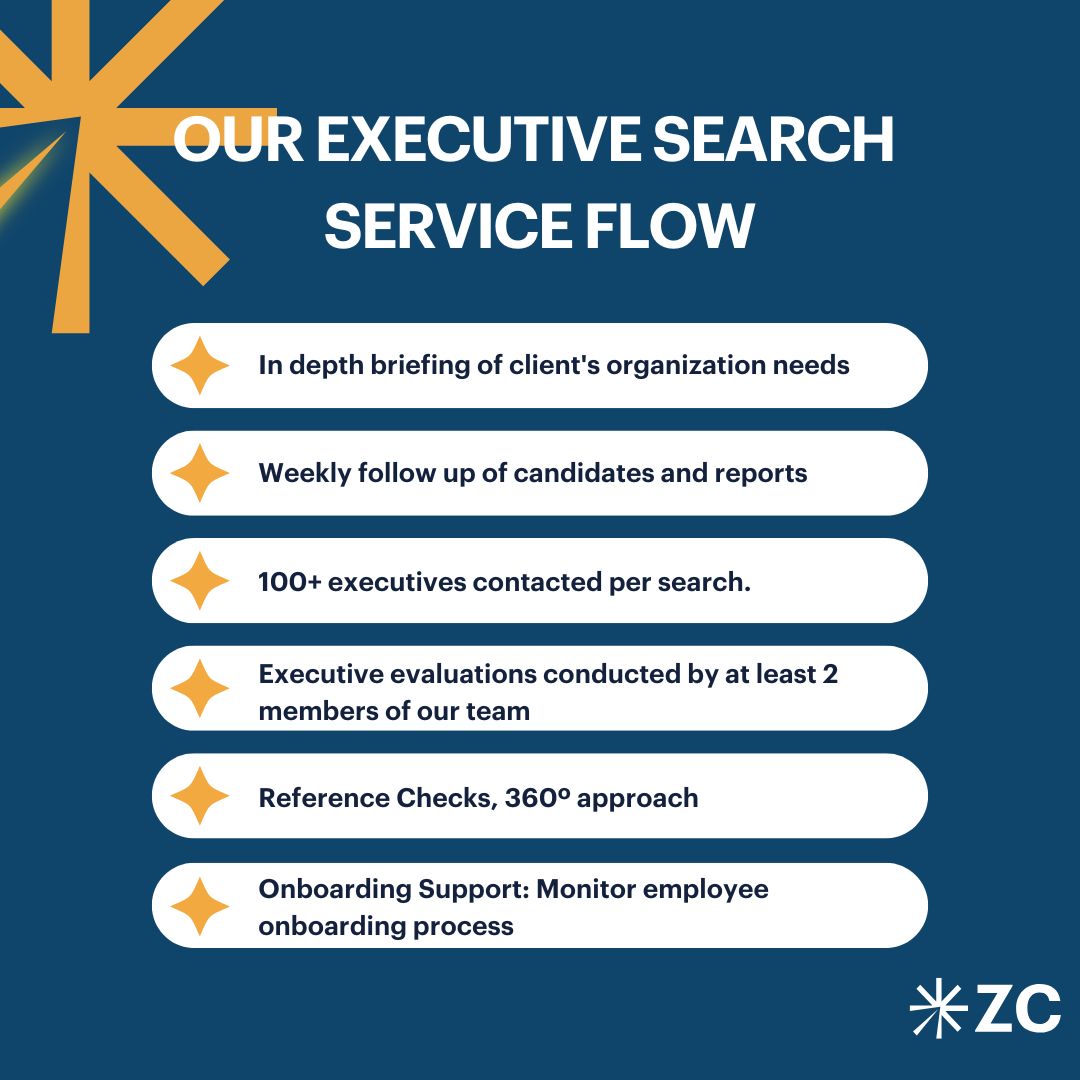
Executive search approach for Mexico's logistics and supply chain sectors — Zavala Civitas

By focusing on strategic executive search, firms in Mexico may turn supply chain challenges into stepping stones towards global advancement and success — setting standards for operational excellence in these vital areas. Click here to get in contact with us for executive search solutions.

Frequently Asked Questions: Executive Search in Mexico’s Logistics and Supply Chain

Why is a highly capable logistics executive from the US, Europe, or Asia not automatically the right candidate for Mexico’s logistics sector?
Because Mexico’s logistics environment is not simply a lower-cost version of the US environment — it is a fundamentally different operating context. Security considerations integrated into daily route planning decisions, government relationship management through different protocols, USMCA compliance complexity for specific product categories, and infrastructure gaps requiring network design from a redundancy and flexibility perspective rather than efficiency optimisation — all require specific contextual competency that only Mexico-specific logistics operational experience develops. Executive search must explicitly distinguish Mexico-experienced from generally capable logistics profiles.
How does Mexico’s nearshoring growth specifically change executive search requirements in Mexico’s logistics sector?
Because nearshoring creates new logistics leadership demand in industrial park logistics, intermodal distribution hub management, and customs and compliance operations serving international manufacturing companies — companies with US, German, Japanese, and South Korean parent governance frameworks that require bilingual and bicultural leadership, reporting in international corporate formats, and compliance with international manufacturing standards alongside Mexican regulatory requirements. The logistics executive who has only managed domestic Mexican distribution lacks the international corporate governance and reporting capability that nearshoring’s client base systematically requires.
What specific technology integration capability does Mexico’s logistics environment require from executive search — given the infrastructure context?
The ability to evaluate and deploy logistics technology investments that create operational improvement within Mexico’s specific infrastructure constraints — rather than deploying technology designed for the US or European logistics context where connectivity, road network quality, and carrier reliability baselines are materially different. The logistics executive who deploys real-time tracking technology in a Mexico context must also design the contingency protocols for when the technology fails to connect in areas where connectivity is unreliable — which the equivalent US-context deployment does not require at the same frequency.
How does Mexico’s geographic position as an Atlantic and Pacific gateway create executive search requirements beyond US-Mexico border management?
Because Mexico’s gateway position enables supply chain configurations that source from Asia via the Pacific ports, manufacture in Mexico, and export to the US and Europe via Atlantic and land border routes simultaneously. The logistics executive who can design and manage multi-origin, multi-destination supply chains that leverage Mexico’s full geographic position — not just its US-Mexico border function — is creating competitive supply chain configurations that the executives who manage Mexico logistics primarily as a US-border-crossing function cannot achieve.
How does Zavala Civitas approach executive search in Mexico’s logistics and supply chain sectors?
Through sector-specific talent mapping that explicitly distinguishes Mexico-experienced from generally capable logistics profiles — assessing USMCA rule-of-origin compliance capability, security-integrated operational management, international corporate reporting alongside Mexican regulatory compliance, multi-origin gateway supply chain design, and nearshoring industrial park logistics network management. We access both domestic Mexican logistics executives and internationally located Mexican professionals who have built equivalent supply chain complexity management experience. From our Mexico City office, with a 92% closing rate.

Finding executive leadership for Mexico’s logistics sector?

Zavala Civitas provides Mexico-specific executive search for logistics and supply chain organisations — from our Mexico City office. 92% closing rate.

Executive Search →
Operations & Supply Chain →
Contact Us →

Executive Search China: Industrial Sector

Key Takeaway: Beijing has launched a nationwide “anti-involution” (反内卷) campaign to address destructive price wars and overcapacity across multiple industrial sectors at once, not just renewables. Electrical machinery and equipment, communications equipment, and medical products all show 29% to 34% of firms losing money in 2024-25. Goldman Sachs estimates Chinese

Read More

Executive Search in Italy for Industrial

Key Takeaway: Turin’s automotive cluster invested roughly €2.8 billion in electrification between 2024 and 2026. Over the same period, regional automotive employment fell by more than 3,200 positions. Fewer than 20% of local engineering graduates hold the specific battery, power electronics, and embedded software skills employers are actually hiring for.

Read More

Executive Search in Portugal for Financial Services

Key Takeaway: French banking group BPCE is investing €6.4 billion to acquire Novo Banco and building a 20,000 square metre campus in Lisbon, alongside a 2,500-strong tech hub already operating in Porto. This single deal is creating demand for highly specialised roles in risk analytics, structured finance, and digital-asset compliance

Read More

Related posts

Trabajo en remoto en los despachos de abogados

Autora: Beatriz Baker Araujo Senior Advisor, Zavala Civitas El debate sobre el trabajo presencial y remoto en los despachos de abogados lleva años activo, pero no ha madurado. Las posiciones se han endurecido desde 2020, y las conversaciones suelen discurrir entre dos polos: socios que invocan la cultura, el mentoring

Read More

Executive Search China: Industrial Sector

Key Takeaway: Beijing has launched a nationwide “anti-involution” (反内卷) campaign to address destructive price wars and overcapacity across multiple industrial sectors at once, not just renewables. Electrical machinery and equipment, communications equipment, and medical products all show 29% to 34% of firms losing money in 2024-25. Goldman Sachs estimates Chinese

Read More
Financial services building in Germany

Executive Search in Brazil for Financial Services

Key Takeaway: The White House targeted Brazil’s Pix payment system in April 2026, calling it a barrier to US payment companies. Brazil’s Central Bank fired back, defending Pix as a matter of payments sovereignty. At the same time, the collapse of Banco Master, the largest banking fraud in Brazilian history,

Read More
law leaders working

Executive Search in Mexico for Legal and Professional Services

Key Takeaway: Mexico’s 2024 judicial reform introduced popular election of judges and magistrates, with implementation beginning in 2025. This has accelerated a shift toward arbitration as the preferred dispute-resolution method in commercial contracts, as companies seek predictability an elected judiciary cannot yet guarantee. Combined with nearshoring-driven M&A activity and the

Read More

Executive Search in Italy for Industrial

Key Takeaway: Turin’s automotive cluster invested roughly €2.8 billion in electrification between 2024 and 2026. Over the same period, regional automotive employment fell by more than 3,200 positions. Fewer than 20% of local engineering graduates hold the specific battery, power electronics, and embedded software skills employers are actually hiring for.

Read More

Executive Search in Portugal for Financial Services

Key Takeaway: French banking group BPCE is investing €6.4 billion to acquire Novo Banco and building a 20,000 square metre campus in Lisbon, alongside a 2,500-strong tech hub already operating in Porto. This single deal is creating demand for highly specialised roles in risk analytics, structured finance, and digital-asset compliance

Read More