
In 2025, China continues to be a critical market for multinational growth — but with increasingly complex dynamics. Economic headwinds, regulatory shifts, demographic change, and evolving workforce expectations are reshaping how companies recruit and retain leadership. As traditional recruitment models prove insufficient, executive search in China is playing a key role in helping global firms adapt to new realities and secure the leadership required to navigate uncertainty.
This article explores the current environment, key challenges, high-growth sectors, and how a strategic approach to senior hiring can support long-term success in China.
A Complex Landscape: Slowing Growth and Rising Pressure
China’s economic outlook in 2025 reflects a blend of cautious recovery and structural pressure:
- Slower GDP Growth: Forecasts range from 3.8% to 4.8%, with Moody’s citing trade and domestic constraints as major headwinds.
- Geopolitical Risk: Tariffs, export restrictions, and decoupling trends (particularly in tech and energy) are influencing corporate strategy and hiring needs.
- Property Sector Instability: Real estate remains fragile, weakening regional economies and business confidence.
- Demographic Shifts: With nearly 39% of the population projected to be over retirement age by 2050, the leadership pipeline is tightening.
Together, these factors amplify the importance of resilient, agile leadership — especially in strategic or regulated industries.
Challenges in Executive Hiring
Why is senior recruitment in China particularly complex?
- Limited Senior Talent Pool
Demand for bilingual, globally experienced executives with local insight continues to exceed supply — especially in regulated sectors.
- Compliance and Governance Pressure
Executives must now navigate complex tax rules, data laws, and ESG frameworks that vary from global norms.
- Insufficient Succession Planning
Many foreign firms in China lack strong internal leadership pipelines, leaving them exposed to sudden changes or market shifts.
- Cultural Fit Challenges
Understanding guanxi, local business etiquette, and nuanced stakeholder dynamics is essential — and hard to teach retroactively.
Growth Areas and Leadership Opportunities
Despite the challenges, specific sectors in China offer growth and transformation — and require strong executive talent:
- High-Tech Industries
Under Made in China 2025, AI, semiconductors, and advanced robotics are core priorities. This demands leadership with deep industry and innovation experience.
- Green Energy and Infrastructure
Carbon-neutral targets and sustainability policies have accelerated demand for talent in solar, battery, EV, and large-scale infrastructure projects.
- Domestic Market Expansion
As China pivots toward internal consumption, companies require leaders with strong local market knowledge, regional branding expertise, and consumer insight.
- Digital Transformation & Fintech
Rapid digitalization continues in e-commerce, payments, and logistics — creating roles that require both technical fluency and policy awareness.
The Strategic Role of Executive Search Firms in China
Executive search firms are more than recruiters — they are strategic partners. Here’s how they support success in China:
- Access to Passive Talent
The most qualified candidates rarely apply through open channels. Trusted search partners engage high-impact leaders discreetly through their networks.
- Regulatory and Market Insight
Local search consultants understand evolving compensation norms, sector volatility, and risk areas — providing valuable guidance during hiring.
- Cultural and Leadership Fit Evaluation
Executive search firms assess candidates beyond the resume — aligning leadership style with company values, team culture, and local context. - Future-Proofing via Succession Planning
Search firms don’t just fill current roles — they help clients build internal and external pipelines for future leadership.
Hiring the right leader in China isn’t just about qualifications — it’s about timing, cultural understanding, and strategic foresight. In today’s landscape, where uncertainty and reform intersect, global companies need executive talent that blends global perspective with deep local fluency.
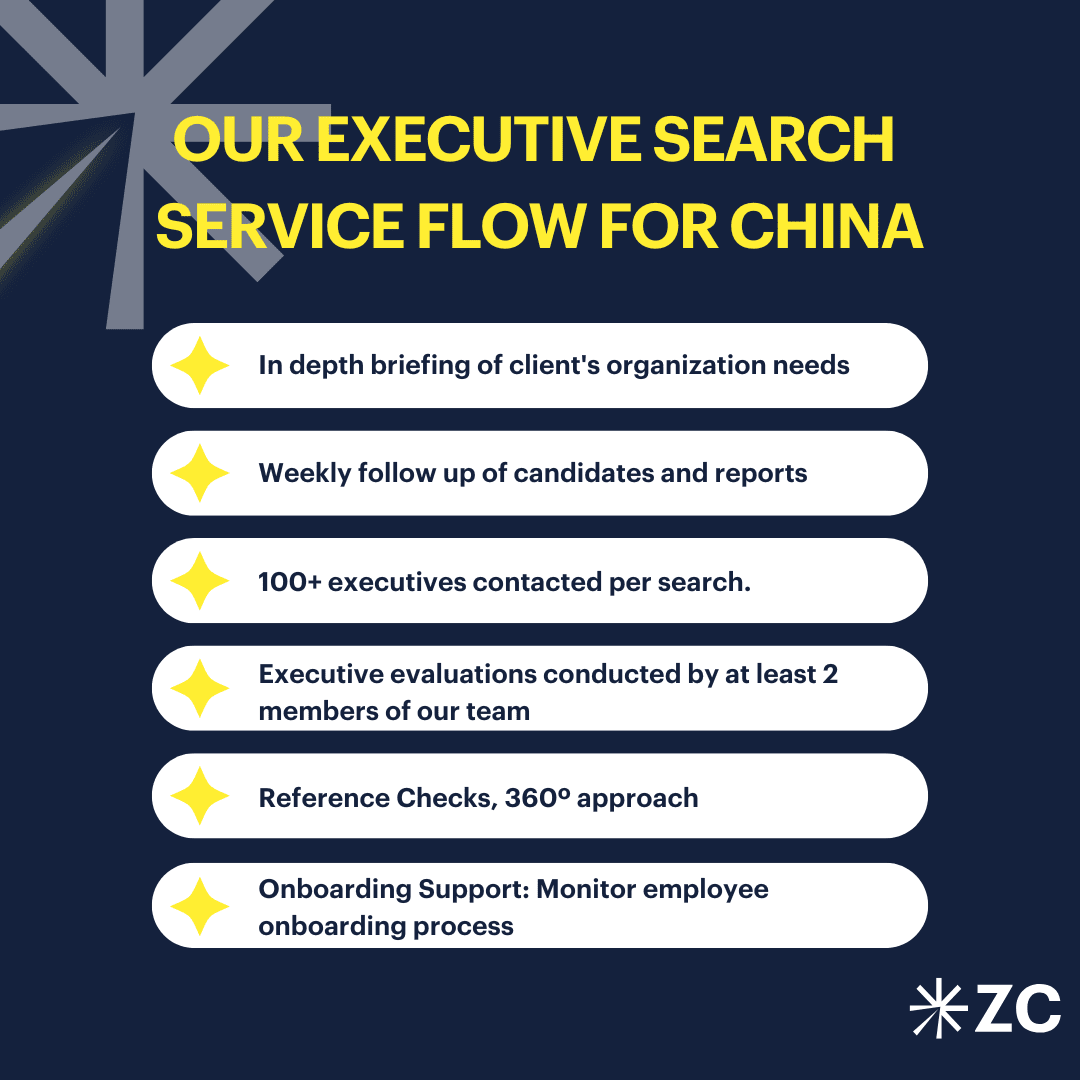
From our experience at Zavala Civitas, we believe executive search in China in 2025 must move beyond transactional recruitment. It should serve as a bridge — connecting business strategy to real leadership capability. With the right partnerships and approach, companies can strengthen their resilience and lead with confidence in the world’s second-largest economy.
Click here to learn about our executive search methodology: Executive Search | Zavala Civitas Executive Search