
Last updated: August 20, 2026
The role of the Chief Financial Officer in China has become broader and more strategic. Finance leaders are still responsible for reporting, treasury, tax, controls and financial planning, but they are increasingly expected to contribute directly to investment decisions, organisational resilience, technology transformation and business strategy.
This is particularly relevant for multinational companies. A CFO operating in China may need to reconcile local financial and regulatory requirements with regional governance, international reporting standards and the expectations of global headquarters.
For Executive Search, the question is therefore not simply whether a candidate has managed a finance function before. It is whether that executive has operated within a comparable financial and organisational mandate.
Executive Search for CFOs in China: The Financial Context Has Changed
Foreign business activity in China illustrates why CFO leadership increasingly requires judgement rather than a single growth playbook.
The Ministry of Commerce reported that 70,392 new foreign-invested enterprises were established in 2025, an increase of 19.1%.
During the same period, actual foreign direct investment used reached RMB 747.69 billion, down 9.5%.
These indicators measure different aspects of investment activity, but together they show why CFOs need to operate in an environment where new market entry can coexist with greater selectivity around capital deployment.
Key Figures at a Glance
| China Finance Context | Latest Data | Source | CFO Implication |
|---|---|---|---|
| New foreign-invested enterprises | 70,392, +19.1% | Ministry of Commerce | New entrants may require CFOs capable of building financial governance and connecting China operations with international headquarters. |
| Actual foreign direct investment used | RMB 747.69bn, -9.5% | Ministry of Commerce | Capital allocation, return discipline and scenario planning become increasingly important finance capabilities. |
| Chinese enterprises reporting revenue growth from AI | 52% | PwC China | CFOs increasingly need to evaluate technology investment through measurable financial value rather than technology adoption alone. |
| Capital contribution requirement for new limited liability companies | Subscribed capital generally payable within 5 years | National People’s Congress | Capital structure and legal-financial coordination need to be incorporated into treasury and governance planning. |
Financial Governance Is Central to the CFO Role in China
A CFO in China needs to operate confidently across financial reporting, treasury, tax, internal controls and corporate governance while understanding when specialist legal, tax or regulatory advice is required.
China’s revised Company Law, effective from 1 July 2024, introduced significant changes to corporate governance and capital rules.
For limited liability companies, the law provides that shareholders’ subscribed capital should generally be fully contributed within five years of establishment, subject to specific rules or exceptions.
A CFO does not replace legal counsel, but these changes illustrate why senior finance leadership requires close coordination with shareholders, boards, Legal and corporate governance functions.
The Ideal CFO Needs Capital Allocation Discipline
Not every company operating in China is pursuing unrestricted growth.
Some organisations are entering the market, others are expanding capacity, while established businesses may be prioritising profitability, localisation, restructuring or more selective investment.
This changes what boards should look for in a CFO.
Relevant candidates should be able to demonstrate how they have prioritised capital, challenged investment assumptions, modelled scenarios and connected financial decisions with the strategic objectives of the business.
A CFO who has only operated during aggressive expansion may therefore be less relevant to a mandate focused on cash generation or restructuring than an executive with experience managing capital under tighter constraints.
AI Is Changing What Companies Need from CFOs in China
Artificial intelligence is becoming another finance leadership issue.
PwC’s China CEO research found that 52% of Chinese enterprises reported revenue growth associated with AI applications.
More significantly from a CFO perspective, 17% reported achieving both cost reductions and revenue growth through AI.
This does not mean that the CFO needs to become a technology specialist. It does mean that finance leaders increasingly need to challenge the economics of AI investments, define expected returns, monitor realised benefits and determine whether technology programmes are improving productivity or simply adding another layer of cost.
This creates a useful distinction in assessment: exposure to digital transformation is not the same as having personally governed its investment case and financial outcomes.
Read the related Shanghai CFO Executive Search case study.
What Executive Search Should Assess in a CFO Candidate in China
Financial Control and Governance
The CFO should demonstrate strong command of financial reporting, controls, treasury and governance while recognising where local specialists are needed for technical regulatory or tax issues.
Capital Allocation
Candidates should be able to explain how they evaluated investment proposals, prioritised resources, challenged assumptions and balanced growth with return requirements.
Commercial Understanding
The strongest CFOs understand how revenue, customers, operations and pricing create financial outcomes rather than remaining focused exclusively on accounting.
Cross-Border Stakeholder Management
For multinational companies, CFOs may need to explain Chinese business realities to global headquarters while translating group governance requirements into workable local processes.
Technology and Data Judgement
Finance leaders increasingly need to understand the economics of digital and AI investments, the quality of the data supporting decisions and whether promised efficiencies are actually being realised.
Transformation Experience
Executive Search should identify whether the candidate has personally led a comparable transformation, such as market entry, restructuring, finance-function professionalisation, systems implementation, integration or rapid expansion.
Cultural Fit Should Mean Organisational Effectiveness, Not Similarity
Cultural fit is often used too broadly in CFO recruitment.
The objective should not be to identify an executive who behaves like the existing management team. It is to determine whether the candidate can operate effectively within the organisation’s governance, communication and decision-making environment.
For a multinational company in China, this may require a CFO capable of challenging local management when necessary while maintaining trust, communicating clearly with headquarters and understanding where local operating realities require adaptation.
That capability needs to be assessed through behavioural evidence rather than assumptions based on nationality or previous employer.
How to Executive Search for the Ideal CFO in China
A CFO search should begin with the financial mandate rather than a generic job description.
Before mapping the market, boards and CEOs should clarify:
- Is the business entering China, scaling, restructuring or improving profitability?
- What level of capital allocation authority will the CFO hold?
- Which finance capabilities are currently weak or fragmented?
- How important are treasury, tax, digital finance, M&A or operational transformation to the mandate?
- What relationship will the CFO have with local management, the board and international headquarters?
- Which changes must the executive deliver rather than simply maintain?
Once these questions are defined, market mapping can focus on executives who have operated in comparable situations rather than simply candidates with the correct title.
Zavala Civitas CFO Executive Search in China
Zavala Civitas has direct experience supporting CFO appointments in China, including confidential finance leadership searches for international organisations operating in Shanghai.
Our Finance Executive Search practice focuses on executives capable of combining technical financial expertise with strategic judgement, risk management, commercial understanding and cross-functional influence.
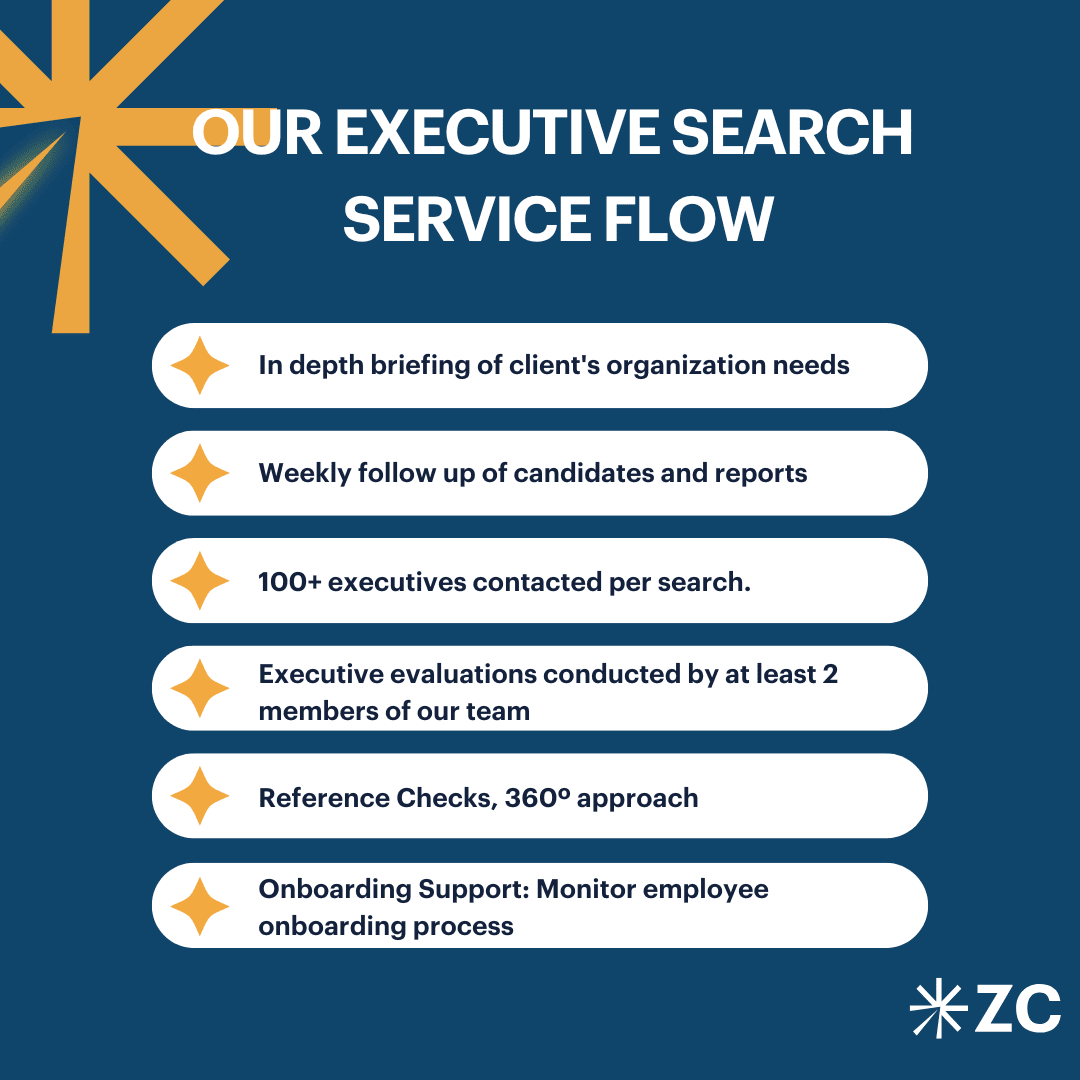
The broader Executive Search methodology begins by defining responsibilities and critical success factors, mapping the relevant market, directly identifying candidates, conducting structured assessment and validating finalists through formal references.
Frequently Asked Questions: CFO Executive Search in China
The ideal CFO is not simply the strongest accountant. It is the finance leader equipped for the company’s next strategic mandate.
Zavala Civitas supports organisations in identifying and assessing CFOs capable of combining financial governance, capital discipline and strategic leadership in China.
Executive Search → Finance → Contact Us →