
The importance of age when hiring in China: Executive Search Insights

The age of a candidate is often a decisive filter that we receive as an executive search partner from many companies when hiring high executives.

The C-suits position are of great importance for the organization. In these positions every aspect of the profile most be granted especial attention. Including age which according to several investigations can influence performance one way or another.

Cultural nuances in China

Eastern culture has a more positive view associated with elderly than Western culture.

In Easter cultures were old age appreciated for their wisdom, knowledge and experience it is common to consider them as the ones giving advice and not taking them. Elderly should be respected because the assumption of intellect this is even reflected in their language.

As an executive search partner specialized in China, we wanted to share with you some insights about the effects of the age in the C-Suit and power positions in China.

In China there is a more market differences between ages and generations, even in their speak.

Some studies point out that the generation to which the CEO belongs can have an effect on the age of the rest of the board, and many times the differences of generations between the CEO and the chairmen is directly proportional with the pay gap which can be reduce by the skills, and abilities.

When you are working with your executive search partner looking for a candidate in China it is important to know the age of the board members, a generational fit it is more likely to be hire and generate lesser payment gap in Chinese culture.

But even if in China there is a positive tendency of respecting their elders and preferring them for higher positions. There is a contrasting phenomenon: ageism. Ageism is defined as the stereotyping, prejudice, and discrimination against people based on age, by the World Health Organization. In China starts as early as 35, provably cause because older workers may cost a seniority wage premium on top of their true value.

The process of any executive search firm when recruiting in China must give great importance to the age of the candidates and of the company employees and board members. These factors can affect the way you conduct or present them, can influence cultural fit and helps you understand the context to a better negotiation.

Zavala Civitas Executive Serch in China

We are Zavala Civitas, we have walked alongside our clients, supporting them in matters ranging from Executive Search to broader Organizational Consulting. We are ready to be your talent and Organizational partner in China & East Asia. We are ready to tackle new challenges and risks with your firm. Click here to get in contact with us.
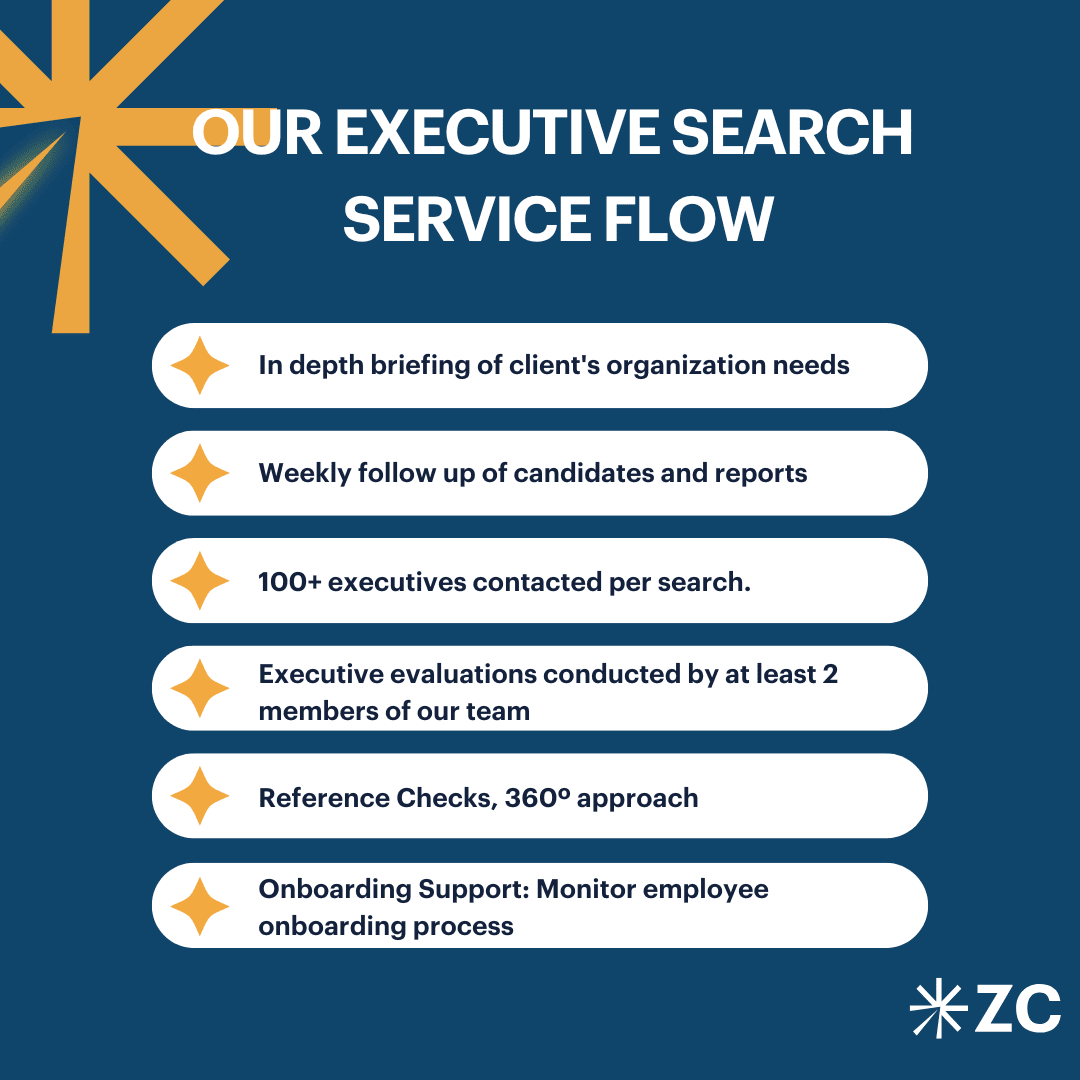

Zavala Civitas executive search methodology for China country

Executive Development and Assessment in Portugal for Senior talent

In Portugal, the market is relatively small, executive mobility is limited, and reputations travel quickly. Many companies already have solid senior leaders in place.It’s not about whether these leaders are competent. The question is how to assist them in improving performance as they take on greater roles.  Most people have an area that they can

Read More

Executive Search in Mexico: Leadership Demand Shaped by Nearshoring 

Over the past few years, Mexico has moved to the center of many global expansion strategies. Nearshoring has accelerated investment decisions, operational scale, and organizational complexity across the country. As a result, leadership hiring has shifted from being opportunistic to becoming a critical risk factor.  In this environment, Executive Search in Mexico is

Read More

Executive Search in Portugal: Competing for Leadership in a Small Talent Market 

Portugal has become an increasingly attractive location for international businesses. While stability, talent quality, and quality of life are strong advantages, the senior talent pool is small, highly visible, and intensely competitive.   Because of this hiring in Portugal is about strategy. It involves managing scarcity, confidentiality, and long-term sustainability of

Read More

Related posts

Leadership and Decision-Making in Asia-Pacific’s Age of AI 

From Technology Adoption to Strategic Accountability  Across the Asia-Pacific (APAC) region, artificial intelligence has moved beyond experimentation. What only a few years ago sat within innovation labs or IT functions has now reached the center of executive and board-level decision-making.  This shift is already measurable. Nearly 48% of companies in Asia now

Read More

Tomás Grimaldi becomes Partner at Zavala Civitas Executive Search 

Madrid, Spain – January 2026  Zavala Civitas Executive Search announces the promotion of Tomás Grimaldi to Partner, reinforcing the firm’s long-term commitment to leadership, growth, and equity partnership continuity.  Tomás joined Zavala Civitas initially as Finance Manager and has progressively taken on broader responsibilities across business development, executive search, and

Read More

Executive Development and Assessment in Portugal for Senior talent

In Portugal, the market is relatively small, executive mobility is limited, and reputations travel quickly. Many companies already have solid senior leaders in place.It’s not about whether these leaders are competent. The question is how to assist them in improving performance as they take on greater roles.  Most people have an area that they can

Read More

The Insider Paradox: Why APAC Boards Are Choosing Continuity Over Disruption 

In H1 2025, 83% of all new CEOs in APAC were internal promotions the highest ratio ever recorded and dramatically higher than Western markets.  This surge is not accidental, nor is it a sign of risk-aversion. It reflects a deeper leadership strategy shaped by the geopolitical uncertainty of the region, operational complexity, and the rising value

Read More
china business landscape

Executive Search in China: Local Leadership vs Global Executives 

Over the past ten years, many multinational companies in China have quietly changed how they think about leadership. The model of relying primarily on expatriate executives is no longer taken for granted.   Boards and CEOs are increasingly weighing the trade-offs between local Chinese executives and global leaders sent from headquarters.

Read More

Executive Search in Mexico: Leadership Demand Shaped by Nearshoring 

Over the past few years, Mexico has moved to the center of many global expansion strategies. Nearshoring has accelerated investment decisions, operational scale, and organizational complexity across the country. As a result, leadership hiring has shifted from being opportunistic to becoming a critical risk factor.  In this environment, Executive Search in Mexico is

Read More