
Last updated: August 20, 2026
China’s demographic structure is changing, but describing the country’s talent market simply as a shrinking pool can be misleading.
At the end of 2025, China’s total population stood at 1.40489 billion, down 3.39 million from the previous year. At the same time, the population aged 16 to 59 still numbered 851.36 million.
China also expects approximately 12.7 million college graduates in 2026.
The strategic issue for employers is therefore not simply how many people are available. It is whether the market contains enough executives with the specific technology, transformation, international and leadership capabilities required by the next stage of the business.
China’s Talent Pool Is Ageing, but It Is Still Enormous
Demographic ageing is clearly becoming more significant.
The National Bureau of Statistics reported that China’s population aged 60 and over reached 323.38 million in 2025, representing 23.0% of the population.
The population aged 16 to 59 represented 60.6% of the total population.
These figures point to a gradual shift in workforce structure, but they do not imply an immediate shortage of labour across every role or industry.
For Executive Search, demographic change is more relevant when it intersects with succession, specialised expertise and the availability of leaders who have already operated through specific transformations.
Key Figures at a Glance
| China Talent Indicator | Latest Data | Source | Executive Search Implication |
|---|---|---|---|
| Population aged 16-59 | 851.36 million, 60.6% | National Bureau of Statistics | China still has an exceptionally large working-age population, so leadership scarcity should be analysed by capability rather than national labour volume. |
| Population aged 60 and over | 323.38 million, 23.0% | National Bureau of Statistics | Ageing reinforces the importance of succession planning, but should not be treated as direct evidence of executive retirement. |
| College graduates expected in 2026 | 12.7 million | Ministry of Education | The challenge is increasingly matching education and skills with changing employer demand rather than a simple shortage of people. |
| Major manufacturing enterprises using AI | More than 30% by end-2025 | Ministry of Industry and Information Technology | Technology adoption changes the capabilities demanded from both executives and the wider workforce. |
The Real Talent Challenge in China Is Increasingly About Skills
China’s economy is becoming more technologically intensive.
By the end of 2025, more than 30% of manufacturing enterprises with annual main business turnover of at least RMB20 million had adopted AI technologies.
The broader manufacturing transformation is even more advanced. By December 2025, 89.6% of major industrial enterprises had undertaken digital retrofitting.
These changes do not necessarily reduce the need for people uniformly.
They change the mix of capabilities companies require.
Routine activities may become increasingly automated while demand grows for executives capable of leading AI implementation, digital operations, engineering, data strategy, cybersecurity, organisational transformation and new business models.
Automation Does Not Simply Replace Talent
Earlier discussions of China’s demographic challenge often framed automation primarily as a substitute for a shrinking workforce.
The reality is more complex.
Automation can reduce labour intensity in some activities, but it can simultaneously increase demand for engineers, technology managers, transformation leaders and executives capable of redesigning the organisation around new technology.
China’s manufacturing sector illustrates this shift. Digital transformation has expanded rapidly while high-tech manufacturing value added grew by 9.4% in 2025.
For employers, this means workforce planning needs to distinguish between headcount needs and capability needs.
China’s Graduate Pipeline Is Large, but Skills Matching Still Matters
China’s education system continues to generate an enormous number of graduates.
The Ministry of Education expects approximately 12.7 million college graduates in 2026, 480,000 more than in 2025.
China is also adapting its university system to changing economic needs. During the 2021-2025 period, universities added 10,200 undergraduate programmes while cancelling or suspending 12,200, with more than 30% of programmes adjusted overall.
This illustrates a wider point: a large supply of graduates does not guarantee that capabilities align immediately with employer demand.
For senior leadership, the gap can be even more pronounced because executives need not only technical knowledge but evidence of having applied that knowledge at organisational scale.
Why Specialist Executive Talent Can Still Be Scarce in China
Executive talent pools are fundamentally different from population-level labour pools.
A company looking for a Country Manager with experience entering China, a CFO who has managed local operations within an international governance structure or a technology leader who has scaled AI across industrial operations may find that the realistic candidate universe is very small.
Several filters can narrow that market:
- specific transformation experience;
- sector knowledge;
- geographic exposure;
- international stakeholder management;
- language requirements;
- scale of previous responsibility;
- and motivation to move from the current organisation.
This explains why an economy with hundreds of millions of working-age people can still produce intense competition for particular executives.
Demographic Change Makes Succession Planning More Important
Ageing also increases the strategic importance of succession planning.
China had 323.38 million people aged 60 and over in 2025.
This figure should not be used as a proxy for executive retirement because it describes the national population, not corporate leadership positions.
However, demographic ageing reinforces the value of understanding whether critical positions have credible successors before leadership transitions become urgent.
External market mapping can complement internal succession by showing HR leaders whether internal candidates compare favourably with the wider leadership market.
Where internal successors show strong potential but specific capability gaps, Executive Assessment and Leadership Development can support a more informed development decision.
Executive Search Becomes More Valuable as Skills Become More Specialised
Executive Search is particularly useful when the strongest candidates are unlikely to be actively applying for roles.
A specialist leader may already hold a strong position in another organisation and have little incentive to enter a conventional recruitment process.
Direct market mapping allows organisations to identify these executives regardless of whether they are actively seeking a move.
It also allows the search to extend beyond exact-sector competitors where adjacent industries contain executives with more relevant transformation experience.
For example, a company undergoing industrial AI transformation may find stronger candidates among technology-enabled manufacturers or industrial software businesses than among executives whose experience matches the sector label but not the transformation.
Executive Search Should Focus on Capability Scarcity, Not Population Scarcity
The most useful way to frame China’s changing talent market is therefore to distinguish between three different questions.
Is the Overall Workforce Shrinking?
China’s population is declining and ageing, but its working-age population remains extremely large.
Are the Required Skills Changing?
Yes. AI, digitalisation, automation and industrial upgrading are changing capability requirements rapidly.
Is the Relevant Executive Pool Scarce?
Potentially. Once the organisation adds requirements around transformation ownership, sector experience, geographic knowledge and international leadership, the viable candidate universe can become narrow.
That third question is where Executive Search provides the clearest value.
How Zavala Civitas Approaches Executive Search in China’s Changing Talent Market
Zavala Civitas begins by defining the leadership mandate and the transformation the executive is expected to deliver.
The relevant market is then mapped across target companies, adjacent sectors and geographic talent pools rather than relying only on executives who are actively available.
Candidates are approached directly and evaluated against the specific critical success factors of the appointment.
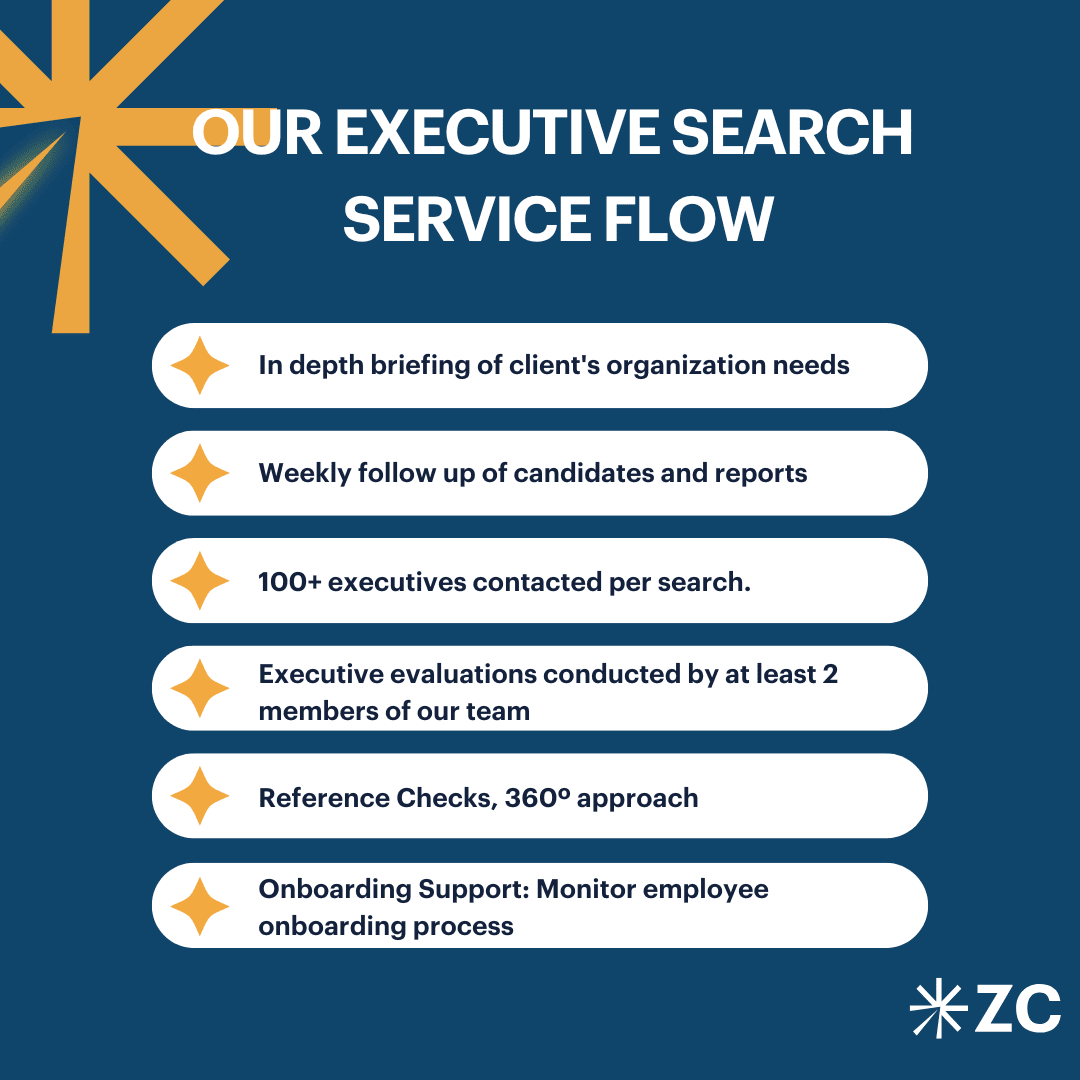
Our Executive Search methodology combines market mapping, direct candidate identification, structured evaluation and reference validation to understand what each executive has personally delivered.
For additional market context, see our Executive Search services in China.
Frequently Asked Questions: China’s Talent Pools and Executive Search
A large labour market can still contain very small pools of relevant executive talent.
Zavala Civitas helps organisations identify where specialised leadership capability sits in China’s changing talent market.
Executive Search → Executive Search in China → Contact Us →