
Last updated: August 13, 2026
Over the past ten years, many multinational companies in China have quietly changed how they think about leadership. The model of relying primarily on expatriate executives is no longer taken for granted.
Boards and CEOs are increasingly weighing the trade-offs between local Chinese executives and global leaders sent from headquarters. In this article we will discuss about several aspects on the topic to choose the right decision.
Companies can no longer think about China as a simple growth opportunity. The country has developed into a highly competitive and closely regulated market difficult to enter.
On one side the OECD points out that China’s economic output has changed to focus on domestic consumption. Heavily regulated markets coupled with domestic consumption means a more complicated situation for all leaders, and even more so for leaders of cross-border multinational enterprises.
Also, Reuters has noted that multinational enterprises losing their market position due to geopolitics, the evolving regulatory environment, and data and compliance frameworks, are being driven to rethink the governance frameworks and the decision-making authority they will retain.
Consequently, there is a growing need for leadership without considerable direct expatriate involvement.
Key Figures at a Glance
| Data point | Finding | Source |
|---|---|---|
| China’s position in global AI investment | ~30% of global AI investment | McKinsey Global Institute |
| When local executives outperform expatriates in China | Regulatory navigation, stakeholder engagement, rapid policy adaptation | McKinsey China Leadership Research |
| Key regulatory frameworks redefining executive requirements | PIPL, CSL, DSL — all in force since 2021-2022 | National People’s Congress, China |
| When executive search becomes essential in China | High-stakes mandates, complex governance, need for assessment quality and confidentiality | AESC — Association of Executive Search Consultants |
The case for local Chinese executives
Local leadership has gained relevance for several reasons.
According to McKinsey research on China leadership, local Chinese executives tend to outperform expatriates in roles that require:
- deep regulatory navigation
- close engagement with stakeholders
- rapid adaptation to policy and market shifts
Local leaders are often better positioned to interpret informal signals from regulators, partners, and the market, which rarely appear in official guidance but strongly influence outcomes.
In executive search in China, this has led to a growing preference for local CEOs, GMs, and functional heads, particularly in consumer, industrial, and technology-driven sectors.
Executive Search in China: The limits of localization
Despite this shift, localization is not a universal solution.
According to Harvard Business Review, local executives can face challenges when operating within global organisations if governance, trust, and decision rights are not clearly defined. Tension often arises when headquarters retains control but expects local leaders to deliver independently.
Common risks include:
- limited strategic autonomy
- slow decision escalation
- misalignment between global and local priorities
Executive search in China must therefore assess not only the candidate, but also whether the organisation is structurally ready to empower local leadership.
Executive Search in China: Where global executives still add value
Global or expatriate executives continue to play an important role in certain contexts.
According to BCG leadership analysis, international executives tend to add the most value in China when roles involve:
- major organisational transformation
- integration after mergers or carve-outs
- global product or technology alignment
- restructuring or turnaround situations
In these cases, familiarity with global governance standards and internal networks can outweigh the lack of present market intuition, provided the executive is supported by a strong local team.
The trust and control dilemma
One of the most persistent challenges in China leadership hiring is trust.
According to INSEAD research on cross-border leadership, multinational companies often struggle to fully trust local leadership in markets perceived as strategically sensitive. This leads to partial delegation and blurred accountability.
In China, this dynamic can undermine both local and expatriate executives. Leaders feel constrained, while global executives become bottlenecks.
Effective executive search in the region increasingly involves advising Boards on governance design, not just candidate selection.
What assessment needs to focus on today
Past success in China is no longer a reliable predictor of future performance.
According to McKinsey, leadership effectiveness in China now depends heavily on judgement, adaptability, and political awareness rather than tenure or brand-name experience alone.
Modern executive assessment in China should focus on:
- decision-making under uncertainty
- ability to operate with incomplete information
- stakeholder influence without formal authority
- resilience under regulatory and market pressure
This applies equally to local and global candidates.
Executive Search in China: Choosing the right leadership model
The most successful companies no longer frame the decision as local versus global. They focus on fit with the mandate.
Local executives tend to succeed when:
- autonomy is real and explicit
- the mandate is long-term
- stakeholder navigation is critical
Global executives tend to succeed when:
- the role is transitional or transformational
- alignment with global systems is essential
- authority and support are clearly defined
According to global executive search benchmarks, failure rates rise sharply when leadership models are chosen by default rather than by design.
Executive Search in China: When executive search becomes essential
China’s leadership market is no longer forgiving.
According to industry data from the Association of Executive Search and Leadership Consultants, executive search becomes particularly valuable in China when:
- leadership stakes are high
- the environment is politically and operationally complex
- confidentiality and assessment quality are critical
- Boards need an external perspective on governance and talent
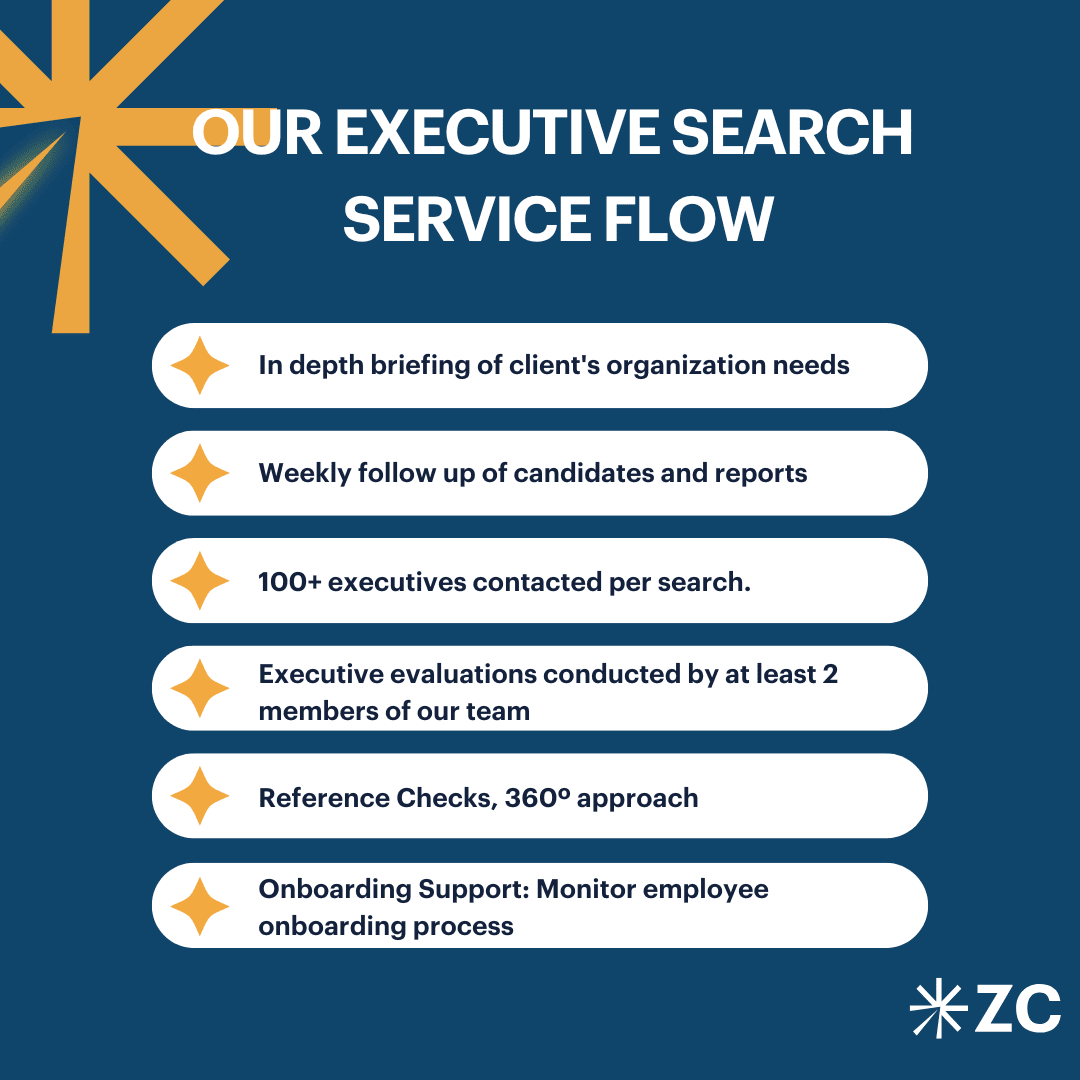
Executive search in China increasingly weighs local leadership against global executives as companies rethink control and governance. Click here to get in contact with us.
Frequently Asked Questions: Executive Search in China — Local vs. Global
Navigating local vs. global leadership in China?
Zavala Civitas advises Boards on governance design and executive selection from its Shanghai office. 92% closing rate across completed mandates.