
Executive Search in China’s Finance Sector

China’s financial industry, while relatively new compared to established Western economies such as the United States, has seen significant growth since the country began moving towards a market economy in the 1980s. This evolution has been crucial in shaping a dynamic financial landscape and positioning the country as the second top economies in the world, making the role of executive search in this sector crucial for sustaining innovation and competitiveness. 

Stock Exchanges and Financial Hubs 

Key to this development are the financial centers of Shanghai and Shenzhen. These markets have become significant global trading centers, competing with long-established markets despite being younger. The Shanghai and Shenzhen Stock Exchanges, along with the National Equities Exchange and Quotations (NEEQ) in Beijing and the recently established Beijing Stock Exchange, are critical components of China’s financial framework. These exchanges, each with their specialized trading boards, cater to a diverse range of enterprises, from mature, large-scale firms to emerging tech startups. 

The Push for an Independent Financial Market 

China’s ambition to create an independent financial market has been a driving force behind these developments. The establishment of platforms like the ChiNext and STAR Market, with more relaxed entry standards, is a strategic move to encourage domestic listings, particularly for tech startups that might otherwise look to foreign exchanges. 

The Importance of Executive Search in China’s Finance Sector 

Given this dynamic backdrop, the importance of executive search in China’s finance sector cannot be overstated. The rapid changes and growth in the industry needs leaders who are not only adept in finance but also possess a deep understanding of China’s unique market dynamics. Effective executive search is key to identifying such leaders. 

Key aspects of executive search: 

  • Strategic Vision and Innovation: Fining leaders who can foresee future trends and drive innovation is crucial for staying ahead in the competitive financial market. 
  • Adaptability to Regulatory Changes: Executives must navigate China’s evolving regulatory environment, balancing compliance with business growth. 
  • Global Outlook with Local Insights: Leaders need a global perspective coupled with an in-depth understanding of the local market to effectively manage globalization efforts. 
  • Digital Transformation Expertise: As the finance sector shifts towards digitalization, executives with a strong background in digital finance and fintech are increasingly valuable. 
  • Risk Management and Resilience: In a volatile market, leaders must possess robust risk management skills and resilience to steer organizations through economic fluctuations. 

The role of executive search in China’s finance sector is crucial for identifying and placing leaders who can navigate the complexities of this fast-moving market.

The right executive leadership is essential for firms to capitalize on growth opportunities, adapt to regulatory changes, lead digital transformation, and manage risks effectively. As the sector continues to expand and compete on a global stage, the strategic importance of executive search in the finance sector will only intensify, making it a critical element for the continued success and innovation in China’s financial industry. 
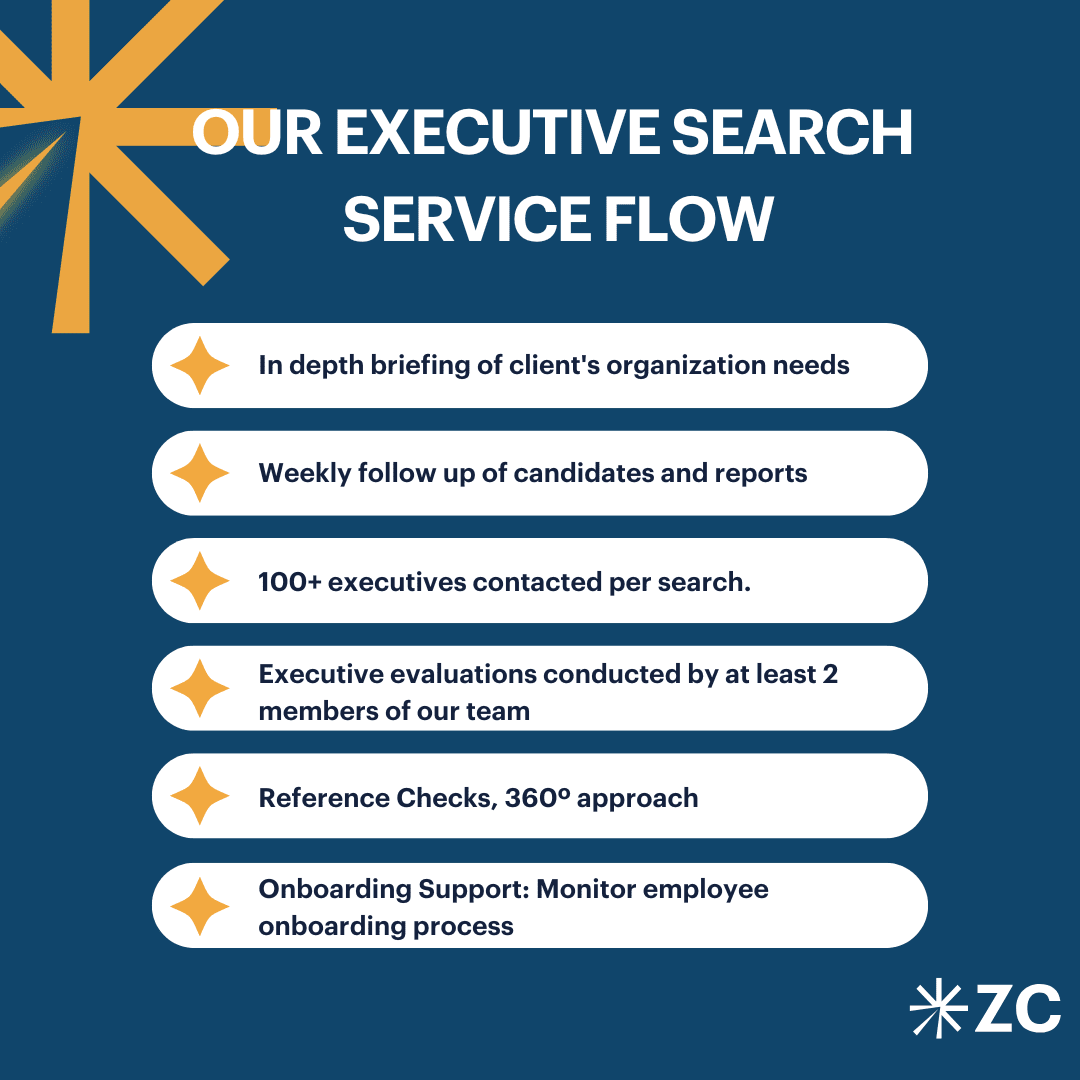
Our executive search methodology for the financial sector in china

Other interesting article you might like:

Click here to get in contact with us.

Executive Development and Assessment in Portugal for Senior talent

In Portugal, the market is relatively small, executive mobility is limited, and reputations travel quickly. Many companies already have solid senior leaders in place.It’s not about whether these leaders are competent. The question is how to assist them in improving performance as they take on greater roles.  Most people have an area that they can

Read More

Executive Search in Mexico: Leadership Demand Shaped by Nearshoring 

Over the past few years, Mexico has moved to the center of many global expansion strategies. Nearshoring has accelerated investment decisions, operational scale, and organizational complexity across the country. As a result, leadership hiring has shifted from being opportunistic to becoming a critical risk factor.  In this environment, Executive Search in Mexico is

Read More

Executive Search in Portugal: Competing for Leadership in a Small Talent Market 

Portugal has become an increasingly attractive location for international businesses. While stability, talent quality, and quality of life are strong advantages, the senior talent pool is small, highly visible, and intensely competitive.   Because of this hiring in Portugal is about strategy. It involves managing scarcity, confidentiality, and long-term sustainability of

Read More

Related posts

Leadership and Decision-Making in Asia-Pacific’s Age of AI 

From Technology Adoption to Strategic Accountability  Across the Asia-Pacific (APAC) region, artificial intelligence has moved beyond experimentation. What only a few years ago sat within innovation labs or IT functions has now reached the center of executive and board-level decision-making.  This shift is already measurable. Nearly 48% of companies in Asia now

Read More

Tomás Grimaldi becomes Partner at Zavala Civitas Executive Search 

Madrid, Spain – January 2026  Zavala Civitas Executive Search announces the promotion of Tomás Grimaldi to Partner, reinforcing the firm’s long-term commitment to leadership, growth, and equity partnership continuity.  Tomás joined Zavala Civitas initially as Finance Manager and has progressively taken on broader responsibilities across business development, executive search, and

Read More

Executive Development and Assessment in Portugal for Senior talent

In Portugal, the market is relatively small, executive mobility is limited, and reputations travel quickly. Many companies already have solid senior leaders in place.It’s not about whether these leaders are competent. The question is how to assist them in improving performance as they take on greater roles.  Most people have an area that they can

Read More

The Insider Paradox: Why APAC Boards Are Choosing Continuity Over Disruption 

In H1 2025, 83% of all new CEOs in APAC were internal promotions the highest ratio ever recorded and dramatically higher than Western markets.  This surge is not accidental, nor is it a sign of risk-aversion. It reflects a deeper leadership strategy shaped by the geopolitical uncertainty of the region, operational complexity, and the rising value

Read More
china business landscape

Executive Search in China: Local Leadership vs Global Executives 

Over the past ten years, many multinational companies in China have quietly changed how they think about leadership. The model of relying primarily on expatriate executives is no longer taken for granted.   Boards and CEOs are increasingly weighing the trade-offs between local Chinese executives and global leaders sent from headquarters.

Read More

Executive Search in Mexico: Leadership Demand Shaped by Nearshoring 

Over the past few years, Mexico has moved to the center of many global expansion strategies. Nearshoring has accelerated investment decisions, operational scale, and organizational complexity across the country. As a result, leadership hiring has shifted from being opportunistic to becoming a critical risk factor.  In this environment, Executive Search in Mexico is

Read More