
Executive Leadership in Mexico’s Logistics Sector

Key Takeaway: Mexico’s logistics sector handles over 80% of bilateral trade with the U.S. by road — the most trade-intensive bilateral logistics relationship in the world under USMCA. The nearshoring investment wave is adding industrial park logistics demand in Monterrey, Guadalajara, and the Bajío at a pace that domestic logistics leadership supply cannot match. Inflation at 4.64% in 2023, supply chain disruptions, and accelerating digital transformation requirements make the COO, CTO, and CSO appointments in Mexican logistics the most strategically consequential executive placements in the sector today.

Last updated: August 13, 2026

Mexico’s logistics sector is growing rapidly, but it faces many challenges. High costs, trade uncertainties, and the need for digital change are putting pressure on companies. In this environment, strong executive leadership is key. Leaders need to guide companies through these issues while finding new opportunities for growth. Executive search is a critical ally in this process — not just finding candidates, but identifying the specific profile that each logistics challenge requires.

Key Figures at a Glance

Data point Finding Source
Mexico-U.S. bilateral trade handled by road logistics >80% of total bilateral trade — most intensive road trade relationship globally BTS / USMCA trade data
Mexico inflation rate (2023) 4.64% — squeezing logistics operating margins INEGI, 2023
Mexico logistics sector market size ~$65 billion — growing with nearshoring industrial park demand Mexico logistics market analysis, 2023
Nearshoring logistics demand — expected additional investment $46 billion over 5 years — creating new industrial corridors requiring logistics leadership AIG / SE Mexico nearshoring data, 2024

Current State of Mexico’s Logistics Industry

Mexico’s position as a trade hub — especially with USMCA, which makes over 80% of bilateral U.S.-Mexico trade move by road — makes logistics a vital part of its economy. Rising costs are hurting profit margins: inflation at 4.64% in 2023 made operations more expensive, and global supply chains are struggling with disruptions that make efficiency harder to maintain. Simultaneously, the logistics industry is transforming through digital tools like AI, automation, and real-time tracking — requiring leaders who can adopt these tools while managing the cost pressures and operational complexity that digital transformation in a high-volume, road-dominated logistics environment produces.

The nearshoring investment wave — $46 billion in expected additional investment over five years — is creating a qualitatively different logistics leadership requirement than the Mexican market has experienced before. The industrial parks being built in Monterrey, Guadalajara, and the Bajío to accommodate U.S. and Asian nearshoring clients require logistics executives who can design and manage supply chains that meet the quality, traceability, and on-time delivery standards that U.S. just-in-time manufacturing clients specify contractually. Those standards are materially more demanding than the standards that Mexican domestic logistics operations have historically operated to. The logistics executive who has managed U.S. manufacturing supply chains — who understands what “on-time delivery” means when the client is measuring it to the hour, not the day — is the profile that nearshoring demand specifically requires. Finding that profile in the Mexican logistics market requires active search that extends beyond the domestic executive pool.

Challenges for Executives in Logistics

  • Rising costs and supply chain disruptions: Costs are going up due to fuel prices, inflation, and global supply chain disruptions. Executives must find ways to cut costs without losing efficiency — specifically in Mexico’s road-dominant logistics environment where fuel cost management, driver availability, and customs clearance delays are the primary operational cost variables.
  • Technology adoption: Digital transformation is reshaping logistics. Many companies are investing in AI, automation, and data analytics to improve efficiency. Executives need to understand how to use technology to improve operations and make better decisions — evaluating which technology investments actually reduce cost and which ones add complexity without proportional benefit in Mexico’s specific infrastructure environment.
  • Sustainability and regulation: Consumers and regulators are pushing for greener supply chains. Executives must focus on cutting emissions and adopting eco-friendly transport options while balancing sustainability with profitability — in a Mexican market where electric vehicle infrastructure for heavy freight is still nascent and green logistics solutions require both genuine commitment and practical sequencing.

How Executive Search Helps Companies

  • Driving digital innovation: Leaders skilled in using technology can help companies cut costs, improve delivery times, and enhance customer service. Digital transformation in logistics is not just about tools — it is about leading people through change in an industry where the workforce at the operational level has deep resistance to process change and where technology that is not embedded in operations training fails regardless of its technical quality.
  • Building supply chain resilience: Leaders who can develop flexible strategies and quickly respond to disruptions will be crucial. Diversifying suppliers, improving risk management, and ensuring the process can adapt will keep companies running — specifically in Mexico’s logistics environment where the border crossing at Laredo and Ciudad Juárez handles a disproportionate share of bilateral trade, creating concentration risk that resilient logistics design must manage.
  • Sustainability leadership: Leaders who can drive greener practices — electric vehicles, reduced warehouse waste — will help companies meet environmental regulations and win consumers who care about sustainability.
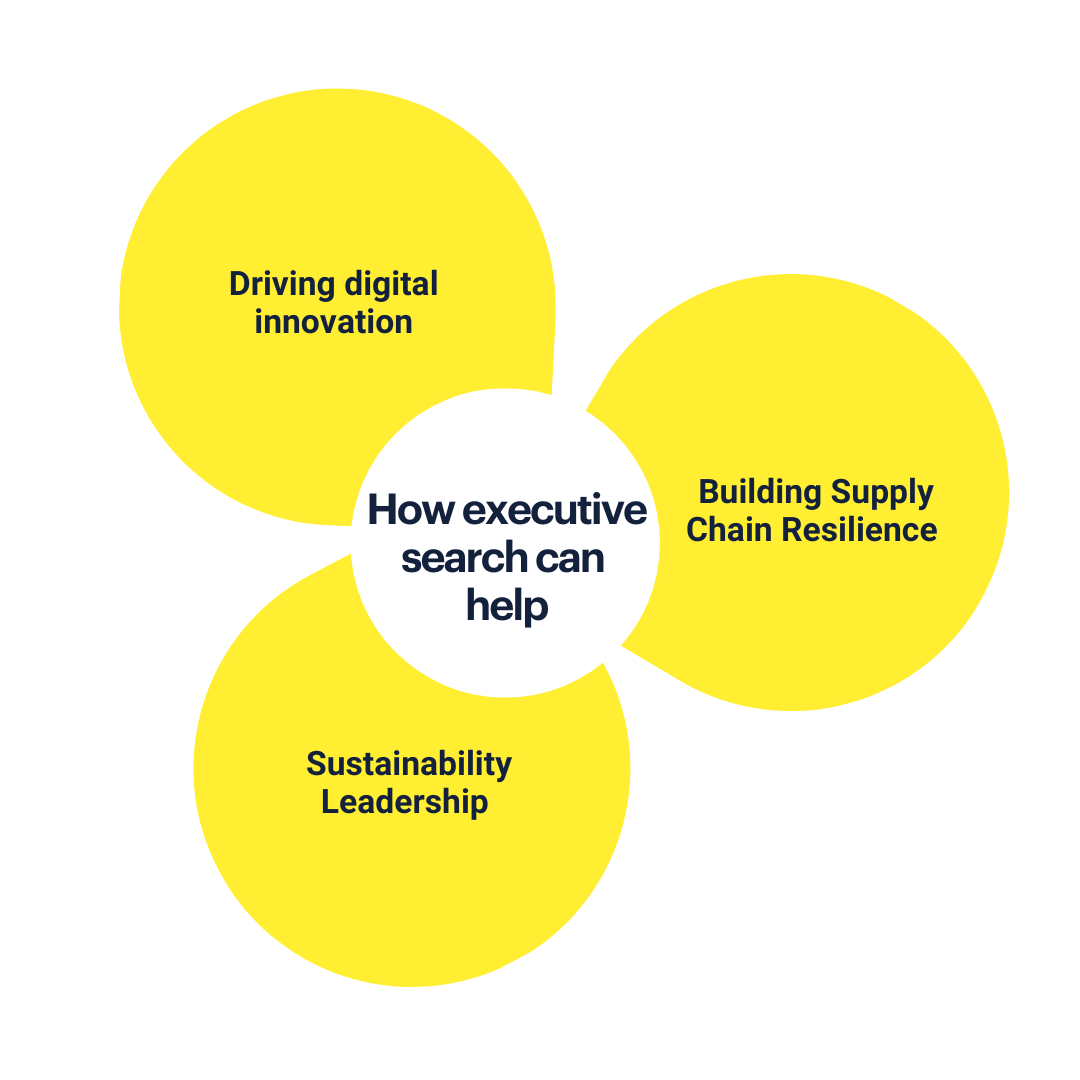
How executive search can help firms in Mexico's logistics sector — Zavala Civitas

Executive Search: Key Roles

  • Chief Operations Officer (COO): COOs ensure logistics operations run smoothly — optimising costs, managing teams, and staying flexible to handle sudden changes in demand. In Mexico’s nearshoring context, the COO who has managed both domestic logistics operations and U.S. manufacturing supply chain standards simultaneously is the most consequential appointment.
  • Chief Technology Officer (CTO): CTOs lead technology adoption — ensuring the right tools are in place to improve performance. In Mexican logistics, the CTO who understands which automation and AI tools are deployable in Mexico’s specific infrastructure environment, not just which tools are technically superior in theory, is the one who generates ROI from the investment.
  • Chief Sustainability Officer (CSO): The CSO leads the company’s efforts to cut emissions and adopt green practices — balancing environmental goals with profitability in a market where the supply of practical green freight solutions is growing but not yet at commercial scale for heavy logistics.

Mexico’s logistics sector faces high costs, supply chain disruptions, and the need for digital transformation. With strong leadership, companies can turn these challenges into opportunities. Executive search can guide organisations to find the executives who can embrace technology, build resilient supply chains, and prioritise sustainability in the specific context that Mexico’s logistics market requires.

Click here to get in contact with us.

Frequently Asked Questions: Executive Search in Mexico’s Logistics Sector

What specific executive profile does Mexico’s nearshoring logistics demand require that domestic logistics search cannot produce?
The executive who understands what “on-time delivery” means when the client is a U.S. just-in-time manufacturer measuring it to the hour — and who has managed supply chains that meet those contractual standards. The industrial parks being built for nearshoring clients in Monterrey and the Bajío require logistics executives who have managed U.S. manufacturing supply chains before, because the quality and traceability standards those clients impose contractually are materially more demanding than the standards that Mexican domestic logistics operations have historically operated to.
How does the concentration of bilateral trade through specific border crossings create a specific executive search requirement?
Because the Laredo and Ciudad Juárez crossings handle a disproportionate share of U.S.-Mexico bilateral road trade — creating a single-point-of-failure risk in supply chain architecture that resilient logistics design must specifically address. The COO who has managed supply chain disruption at those crossings before — who knows how to reroute cargo, negotiate customs processing prioritisation, and communicate delays to U.S. just-in-time clients in real time — is the executive profile that border concentration risk specifically demands.
Why does digital transformation in Mexican logistics require change management capability above technology expertise?
Because the operational workforce in Mexican logistics — drivers, warehouse operators, customs brokers — has deep experience in manual process management and significant resistance to digital process change. The CTO who can implement AI routing optimisation at a technical level but cannot manage the driver workforce transition from manual dispatch to algorithm-guided routing will find the technology adoption failing at the human change management layer, not the technical layer. Change management capability is the primary assessment criterion for logistics technology leadership in Mexico.
What specific sustainability leadership challenge is unique to Mexico’s logistics sector?
The practical sequencing challenge: electric vehicle charging infrastructure for heavy freight in Mexico’s main logistics corridors is growing but not yet at commercial scale, and green diesel and biofuel alternatives are not uniformly available across Mexico’s road network. The CSO who designs a sustainability roadmap that commits the organisation to specific emission reduction targets without accounting for Mexico’s actual infrastructure availability will create a compliance liability, not a competitive advantage. Practical sustainability sequencing knowledge in Mexico’s specific infrastructure context is the criterion that distinguishes the effective logistics CSO from the aspirational one.
How does Zavala Civitas approach executive search in Mexico’s logistics sector?
Through sector-specific talent mapping assessing U.S. manufacturing supply chain management experience, USMCA logistics compliance knowledge, border crossing disruption management, digital transformation change management capability, and practical sustainability sequencing in Mexico’s infrastructure context. We access both domestic Mexican logistics executives and internationally located Mexicans who have built supply chain management experience in U.S. and European logistics operations. With a 92% closing rate.

Finding executive leadership for Mexico’s logistics sector?

Zavala Civitas provides sector-specific executive search for Mexico’s logistics and supply chain sector — nearshoring supply chain standards, border disruption management, and digital transformation leadership. 92% closing rate.


Executive Search →
Operations & Supply Chain →
Contact Us →

Related posts

Trabajo en remoto en los despachos de abogados

Autora: Beatriz Baker Araujo Senior Advisor, Zavala Civitas El debate sobre el trabajo presencial y remoto en los despachos de abogados lleva años activo, pero no ha madurado. Las posiciones se han endurecido desde 2020, y las conversaciones suelen discurrir entre dos polos: socios que invocan la cultura, el mentoring

Read More

Executive Search China: Industrial Sector

Key Takeaway: Beijing has launched a nationwide “anti-involution” (反内卷) campaign to address destructive price wars and overcapacity across multiple industrial sectors at once, not just renewables. Electrical machinery and equipment, communications equipment, and medical products all show 29% to 34% of firms losing money in 2024-25. Goldman Sachs estimates Chinese

Read More
Financial services building in Germany

Executive Search in Brazil for Financial Services

Key Takeaway: The White House targeted Brazil’s Pix payment system in April 2026, calling it a barrier to US payment companies. Brazil’s Central Bank fired back, defending Pix as a matter of payments sovereignty. At the same time, the collapse of Banco Master, the largest banking fraud in Brazilian history,

Read More
law leaders working

Executive Search in Mexico for Legal and Professional Services

Key Takeaway: Mexico’s 2024 judicial reform introduced popular election of judges and magistrates, with implementation beginning in 2025. This has accelerated a shift toward arbitration as the preferred dispute-resolution method in commercial contracts, as companies seek predictability an elected judiciary cannot yet guarantee. Combined with nearshoring-driven M&A activity and the

Read More

Executive Search in Italy for Industrial

Key Takeaway: Turin’s automotive cluster invested roughly €2.8 billion in electrification between 2024 and 2026. Over the same period, regional automotive employment fell by more than 3,200 positions. Fewer than 20% of local engineering graduates hold the specific battery, power electronics, and embedded software skills employers are actually hiring for.

Read More

Executive Search in Portugal for Financial Services

Key Takeaway: French banking group BPCE is investing €6.4 billion to acquire Novo Banco and building a 20,000 square metre campus in Lisbon, alongside a 2,500-strong tech hub already operating in Porto. This single deal is creating demand for highly specialised roles in risk analytics, structured finance, and digital-asset compliance

Read More