
Last updated: August 13, 2026
Portugal’s life sciences and healthcare sector has witnessed significant growth in recent years, driven by both domestic and international investment. Portugal’s GDP grew by approximately 2.3% in 2024 — surpassing earlier forecasts — yet inflation continuing to strain household and business budgets has created specific cost management pressures in the healthcare sector that require executives capable of sustaining clinical quality under financial constraint. Lisbon has grown into a hub of medical sciences and pharmaceutical industry, with both fields contributing around 8% of the Portuguese economy and continuing to expand as market demand for new products increases. Executive search in life sciences is the mechanism through which that growth finds its leadership.
Key Figures at a Glance
| Data point | Finding | Source |
|---|---|---|
| Healthcare share of Portugal’s GDP / annual growth | ~8% of GDP — steady +3% annual growth | Portugal Global (AICEP) |
| Portuguese pharmaceutical R&D and innovation investment (2023) | €2 billion+ | Portugal pharmaceutical industry data, 2023 |
| Digital health sector annual growth in Portugal | +15% — driven by telemedicine, EHR, and AI diagnostics | Portugal digital health market analysis |
| Portugal actual GDP growth (2024) | ~2.3% — above earlier forecasts, though inflation pressures persisted | Banco de Portugal / IMF, 2024 |
Key Challenges in Executive Search for Life Sciences and Healthcare
- Talent shortages and specialised skills: A major challenge is the shortage of specialised talent. As the industry becomes more technology-driven, businesses are seeking leaders with expertise in biotechnology, medical devices, digital health, and pharmaceutical R&D. There is a limited pool of executives with the right technical knowledge and experience — and the 15% annual growth in digital health is creating leadership demand that is growing faster than the domestic talent pool can supply.
- Regulatory complexity: These sectors are heavily regulated at both national and EU levels — including EMA (European Medicines Agency) regulatory pathways, INFARMED (Portuguese medicines regulator) compliance, and the evolving EU Medical Device Regulation (MDR) framework that has materially increased the compliance burden for medical device companies operating in Portugal. Navigating this regulatory landscape requires executives with deep knowledge of local and global policies.
- Adapting to digital transformation: From telemedicine and AI-driven diagnostics to drug discovery and clinical trials, technology is reshaping every facet of the industry. This creates demand for executives who can lead these changes while maintaining a focus on patient care and scientific rigour — evaluating AI diagnostic tool proposals with genuine clinical credibility rather than just commercial assessment.
How Executive Search Can Address These Challenges
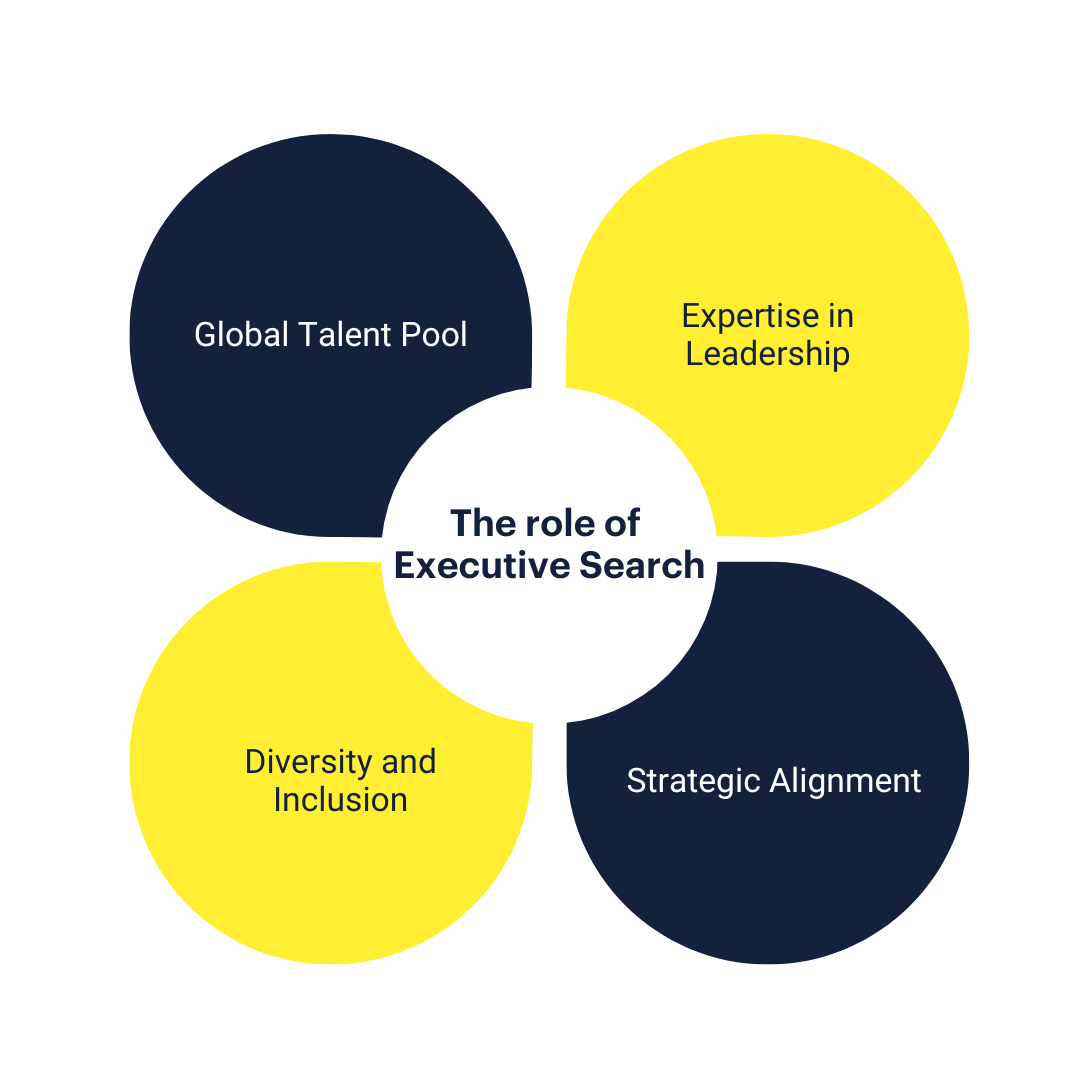
- Access to a global talent pool: Executive search firms have access to a global network of candidates, allowing them to source top talent from around the world — including the internationally located Portuguese life sciences executives who have built pharmaceutical regulatory, digital health, and medical device experience in Switzerland, Germany, and the UK that the domestic Portuguese market needs at the required depth.
- Expertise in leadership assessment: Selecting the right leaders for complex sectors requires more than just technical expertise. Executive search firms assess candidates’ leadership qualities, strategic vision, and ability to manage teams in high-pressure environments — including the specific ability to manage the interaction between clinical, regulatory, and commercial functions that defines senior life sciences leadership.
- Navigating digital transformation: As digitalisation continues to reshape the sector, the need for executives who understand both technology and healthcare delivery is growing. Executive search firms identify candidates who not only have experience with digital health technologies but possess the leadership skills to integrate these innovations into established clinical systems without compromising patient safety governance.
- Diversity and inclusion: With growing emphasis on diversity in the healthcare sector, executive search firms assist in identifying diverse candidates who bring new perspectives to leadership roles — particularly important in clinical research leadership, where diverse team composition has been shown to improve study design and participant recruitment outcomes.
Insights and Stats: Growth in Portugal’s Life Sciences and Healthcare Sector
- Healthcare represents around 8% of Portugal’s GDP, according to Portugal Global, with a steady annual growth rate of 3% — making the sector one of the most structurally stable and growing contributors to national economic output.
- The Portuguese pharmaceutical industry has seen substantial growth, with over €2 billion invested in R&D and innovation in 2023 — creating executive leadership demand for profiles who can govern that investment through the regulatory pathway from development to market approval.
- The digital health sector in Portugal is expected to grow by 15% annually, driven by investments in telemedicine, electronic health records, and AI solutions — creating a specific and sustained demand for executives who can govern digital health adoption with clinical credibility alongside technology literacy.
Executive search plays a pivotal role in helping businesses in Portugal’s life sciences and healthcare sectors secure the leadership talent they need to navigate challenges and capitalise on emerging opportunities. With a focus on specialised skills, digital transformation, and regulatory expertise, executive search firms ensure that organisations are equipped with visionary leaders who can drive innovation and success in this dynamic industry.
Frequently Asked Questions: Executive Search in Portugal’s Life Sciences Sector
Finding executive leadership for Portugal’s life sciences and healthcare sector?
Zavala Civitas provides sector-specific executive search for Portuguese pharmaceutical, medical device, and digital health organisations. 92% closing rate.