Last updated: August 20, 2026
When this article was originally published in January 2023, China’s exit from its Zero-Covid policy was an immediate business issue. Travel, candidate mobility, face-to-face meetings and organisational planning were all adjusting to a very different operating environment.
That period remains relevant as historical context, but it no longer explains the Chinese leadership market on its own.
By 2026, the more useful question for Executive Search is how organisations should recruit leaders in an economy where sectors, investment flows and technologies are evolving at different speeds.
In the first half of 2026, China’s GDP reached RMB 69.57 trillion and grew 4.7% year-on-year. Within that headline number, however, high-tech manufacturing expanded much faster, while some areas of investment and domestic demand remained under greater pressure.
Executive Search in China After Zero-Covid: What Has Actually Changed?
The immediate post-pandemic challenge was operational: companies needed to reconnect teams, restore mobility and adapt to new ways of interviewing and working.
The current challenge is more strategic.
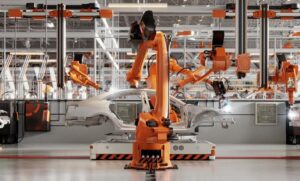
China’s National Bureau of Statistics reported that high-tech manufacturing value added increased by 13.3% in the first half of 2026, substantially faster than overall economic growth.
Information transmission, software and information technology services also grew by 10.7% in H1 2026.
This means organisations should be careful about describing China as one uniform talent market. Leadership demand in AI, advanced manufacturing, technology or international expansion can behave very differently from demand in slower-growth areas.
Key Figures at a Glance
| Indicator | Latest Data | Source | Executive Search Implication |
|---|---|---|---|
| China GDP, H1 2026 | RMB 69.57tn, +4.7% | National Bureau of Statistics | Leadership planning needs to account for a growing economy in which individual sectors are performing at significantly different speeds. |
| High-tech manufacturing, H1 2026 | +13.3% | National Bureau of Statistics | High-growth sectors can create more intense competition for executives with specialised technology, transformation and commercial capabilities. |
| New foreign-invested enterprises established in 2025 | 70,392, +19.1% | Ministry of Commerce | New market entrants can generate leadership mandates involving country management, local capability building and headquarters alignment. |
| Actual foreign direct investment used in 2025 | RMB 747.69bn, -9.5% | Ministry of Commerce | Companies may place greater emphasis on capital discipline, measurable returns and executives capable of executing selective investment strategies. |
Foreign Companies in China Need More Specific Leadership Mandates
The increase in new foreign-invested enterprises does not mean every international company is following the same China strategy.
Some organisations are entering the market. Others are expanding local manufacturing or technology capability. Some are increasing localisation, while others are redesigning their China operation within a broader Asia-Pacific structure.
These situations require different executives.
A Country Manager responsible for establishing a new operation needs strong market-entry capability. An executive hired to improve profitability in an established business needs evidence of operational transformation. A leader responsible for localisation may need to build stronger Chinese management teams while maintaining alignment with international headquarters.
This is why our analysis of global leadership and local execution in China focuses on the balance between local decision-making and international governance rather than simply years of China experience.
Executive Search Technology Has Moved Beyond the Pandemic
Virtual interviewing was initially accelerated by travel restrictions and lockdowns. It has since become part of a much broader digitalisation of recruitment.
China’s human resources services sector included 74,000 organisations and 1.093 million professionals at the end of 2024, according to the Ministry of Human Resources and Social Security.
Technology adoption has become part of that industry’s development. In 2026, Chinese authorities issued specific guidance encouraging artificial intelligence applications across employment and human resources services, including recruitment matching, remote recruitment and smart interviewing.
For Executive Search, this creates opportunities to research larger talent markets, organise information more efficiently and conduct confidential cross-border conversations earlier in the process.
It does not eliminate the need for human judgement. Senior appointments still require interpretation of career evidence, motivation, references, leadership behaviour and the candidate’s ability to deliver the specific mandate.
AI Is Changing the Leadership Brief as Well as the Search Process
AI is relevant to Executive Search in two different ways.
First, it changes how talent markets can be researched and analysed. AI-supported tools can help organise public information, identify potential talent pools and accelerate repetitive research.
Second, and more importantly, AI is changing the roles themselves.
High-tech manufacturing expanded by 13.3% in H1 2026, while information transmission, software and information technology services grew by 10.7%.
Executives increasingly need to understand how technology affects business models, operating structures, talent requirements and investment decisions. This means technology literacy is no longer relevant only to CIO or CTO appointments.
Executive Search in China Now Requires More Than Post-Pandemic Experience
The leadership capabilities that matter depend on the company’s current business problem.
Relevant questions can include:
- Is the organisation entering China, expanding or restructuring?
- Does the mandate require localisation or stronger headquarters integration?
- Which technologies are changing the company’s competitive position?
- Is the priority revenue growth, profitability, operational efficiency or organisational transformation?
- Which capabilities are genuinely scarce in the relevant leadership market?
- What decisions will the executive control locally and which remain global?
Answering these questions before candidate mapping prevents the search from relying on generic criteria such as nationality, previous China tenure or prestigious company names.
Zavala Civitas Executive Search in China
At Zavala Civitas, Executive Search begins with the business mandate rather than a predetermined candidate profile.
Our Executive Search methodology combines market mapping, direct candidate identification, structured assessment, reference validation and support throughout the appointment process.
For China assignments, this means assessing whether candidates can operate within the specific market conditions surrounding the role while also meeting the organisation’s broader strategic, governance and stakeholder requirements.
Frequently Asked Questions: Executive Search in China After Zero-Covid
Is China’s Zero-Covid policy still relevant to Executive Search in 2026?
What has changed in China’s leadership market since Zero-Covid?
Why did new foreign-invested companies increase while FDI declined?
How is AI changing Executive Search in China?
How does Zavala Civitas conduct Executive Search in China?
China has moved beyond the post-Zero-Covid transition. Leadership requirements have moved with it.
Zavala Civitas supports organisations in identifying and assessing senior executives for changing strategic and organisational mandates in China.
Executive Search → Executive Search in China → Contact Us →