
China’s professional services market is expanding, but it should not be treated as a single homogeneous sector.
Professional services in China can include financial services, legal and advisory firms, consulting, technology services, research activities and broader business services. Each of these markets has different economics, regulatory requirements, client models and leadership profiles.
Official Chinese statistics reflect that difference. In 2025, the overall service sector grew by 5.4% and represented 57.7% of China’s GDP. Within services, information transmission, software and IT services grew by 11.1%, leasing and business services by 10.3%, and financial services by 4.5%.
| 2025 China Service-Sector Signal | Executive Search Implication |
|---|---|
| Services = 57.7% of GDP | Professional-services leadership operates inside a large and increasingly important part of the Chinese economy. |
| IT and software services +11.1% | Technology fluency and digital business models are becoming more relevant to leadership searches. |
| Business services +10.3% | Growth can increase demand for executives capable of scaling teams, client delivery and commercial operations. |
| Finance +4.5% | Financial-services mandates continue to require strong regulatory, governance and market expertise. |
Source: National Bureau of Statistics of China, Preliminary GDP Results for 2025.
Professional Services Is Not One Executive Talent Market
One of the main risks in Executive Search for professional services is defining the candidate pool too broadly.
A senior executive in consulting may be evaluated primarily on client ownership, commercial origination, team leadership and sector expertise. A law-firm leader may require partner-management credibility, legal-market knowledge and governance experience. A technology-services executive may need to combine commercial leadership with digital transformation and delivery capability.
The title alone therefore provides limited information. Executive Search should identify the business model, client structure and responsibilities behind the role before determining which candidate market is relevant.
Technology Is Changing Professional Services Leadership
Technology is increasingly changing how professional-services firms deliver work, manage knowledge and interact with clients.
The World Economic Forum reports that more than 90% of employers in China expect AI to transform their organizations. It also identifies professional services among the industries where AI and big-data skills are expected to grow in importance through 2030.
Source: World Economic Forum, The Future of Jobs in China, 2025.
For Executive Search, this does not mean every partner or managing director needs to be an AI specialist.
It does mean that senior leaders increasingly need to understand how technology affects client delivery, productivity, pricing, knowledge management and the skills required across their teams.
Talent Shortages Are a Capability Problem, Not Just a Headcount Problem
China has a large professional workforce, but employers still report challenges finding the capabilities required for transformation.
The World Economic Forum’s Future of Jobs Report 2025 found that 38% of employers operating in China identify talent shortages as a barrier to business transformation.
Source: World Economic Forum, 2025.
For professional-services firms, scarcity can be particularly specific. The challenge may not be finding an experienced consultant, lawyer or financial-services executive in general, but finding someone who combines sector expertise, client relationships, digital capability, leadership maturity and international exposure.
This is where Executive Search becomes more relevant than broad recruitment.
Client Ownership Is Often a Critical Leadership Capability
Many professional-services businesses depend heavily on senior executives who can originate, develop and retain client relationships.
A candidate can be an excellent technical professional without being equally strong at commercial development. Conversely, a strong rainmaker may lack the people-management or operational capability required to lead a larger organization.
Executive Search should therefore distinguish between:
- Technical or functional authority.
- Client origination and commercial ownership.
- Leadership of senior professional teams.
- Operational and financial management.
- Cross-selling and collaboration across practices.
- Sector or industry specialization.
The relevant combination depends on the economics of the firm and the mandate itself.
Confidentiality Matters in Senior Professional-Services Hiring
Confidentiality remains particularly relevant in senior professional-services appointments because leadership changes can affect clients, partners, internal teams and market perception.
A Partner, Managing Director, General Counsel or senior advisory leader may also manage sensitive client relationships that make public recruitment impractical.
Executive Search enables direct and discreet market engagement while limiting unnecessary public exposure during the early stages of a mandate.
Professional Services Executive Search Requires More Than a Network
Professional networks are useful when recruiting senior professionals, but they should not define the entire candidate market.
A research-led Executive Search should begin by mapping the organizations most likely to contain relevant capability and then identifying executives within those companies.
This approach can include:
- Direct competitors.
- Adjacent professional-services firms.
- In-house executives with transferable experience.
- Regional or international firms.
- Professionals who have previously moved between advisory and corporate roles.
- Chinese executives currently working in regional or global positions.
International Experience Can Be Critical for China Leadership Roles
Professional-services firms operating between China and international markets may require executives capable of working across several organizational and cultural environments.
In 2025, China’s total trade in services reached RMB 8.08 trillion, increasing 7.4% year on year, while service exports grew by 14.2%.
Source: National Bureau of Statistics of China, 2025 Statistical Communiqué.
For multinational firms, this can increase the importance of executives who understand the Chinese market while also operating effectively within regional or global governance structures.
For Chinese firms expanding internationally, the requirement may be reversed: the business may need leaders capable of translating domestic expertise into overseas markets, client relationships and regulatory environments.
What Executive Search Should Assess in Professional Services Leaders
Professional-services leadership requires more than a strong individual track record.
Depending on the role, assessment can examine:
- Commercial ownership: evidence of building and retaining client relationships.
- Technical credibility: depth of expertise relevant to the firm’s proposition.
- Leadership: experience managing senior professionals rather than only individual contributors.
- Economics: understanding of utilization, pricing, margins and professional-services delivery models.
- Technology: ability to understand how AI, data and digital tools affect the firm’s model.
- Cross-border capability: experience working between China and international stakeholders.
- Governance and regulation: where relevant to legal, financial or other regulated professional services.
How Zavala Civitas Approaches Professional Services Executive Search
Zavala Civitas conducts Executive Search across Legal & Professional Services as part of its global sector coverage.
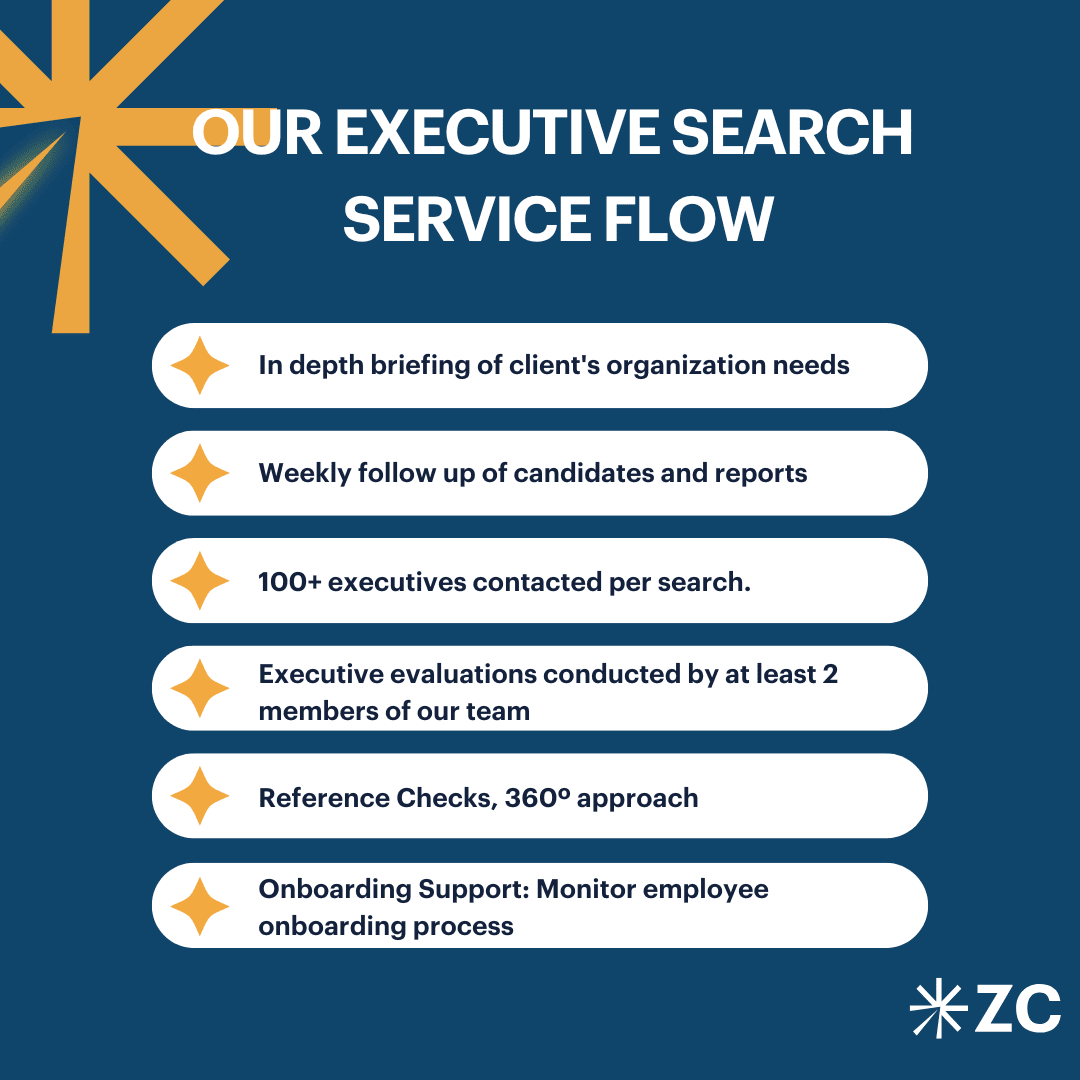
The firm’s Executive Search methodology begins with an in-depth briefing to define the organization, business environment, responsibilities and critical success factors of the position.
The process includes:
- Target-company research and market mapping.
- Direct contact with more than 100 candidates per search.
- Candidate and market reporting every 7–10 days.
- Interviews conducted by at least two consultants.
- Quantitative and qualitative assessment.
- 360º professional reference checks.
- Support during appointment and onboarding.
For professional-services mandates, the candidate market can include direct competitors, adjacent advisory firms and relevant in-house executives depending on the capabilities required.
Learn more about Zavala Civitas’ Legal & Professional Services Executive Search practice.
Source: Zavala Civitas Executive Search Methodology.
Frequently Asked Questions About Executive Search in China’s Professional Services Sector
What industries are included in professional services in China?
Professional services can include legal, consulting, financial, technology, research and broader business services. These activities are not reported as one single official statistical category in China, so leadership markets should be analysed separately rather than treated as identical.
Why is Executive Search useful for professional-services firms?
Executive Search can be useful when senior roles require a specific combination of technical expertise, client relationships, commercial ownership, leadership capability or regulatory knowledge that may not be accessible through conventional applicant-led recruitment.
Is China facing a professional-services talent shortage?
There is no single authoritative statistic showing a uniform shortage across all professional services. The World Economic Forum reports that 38% of employers operating in China identify industry talent shortages as a barrier to transformation, but scarcity varies substantially by function, sector and required capability.
How is AI changing professional-services leadership in China?
AI is changing service delivery, productivity and knowledge-intensive work. Senior executives increasingly need to understand where technology can improve the business model while maintaining quality, professional judgment and client trust.
What should companies assess when hiring a professional-services leader?
Relevant criteria can include commercial origination, client ownership, technical credibility, leadership of senior professionals, financial understanding, technology fluency, international experience and regulatory or governance capability where relevant.
How does Zavala Civitas conduct Professional Services Executive Search?
Zavala Civitas defines the mandate and critical success factors before mapping the relevant talent market. The process includes direct contact with more than 100 candidates per search, interviews by at least two consultants, quantitative and qualitative assessment, 360º references and support during executive integration.
Learn more about our Legal & Professional Services Executive Search practice, review our Executive Search methodology or contact us to discuss a professional-services leadership requirement in China.