
Last updated: August 20, 2026
For international companies entering or expanding in China, appointing local leadership can significantly improve the organisation’s understanding of customers, employees, suppliers, regulators and business practices.
However, “local executive” can be an overly broad category.
A candidate may have spent an entire career in China without having managed an international organisation, while another executive may combine deep local experience with responsibility for regional teams, international headquarters and global governance frameworks.
The objective of Executive Search should therefore be to define which type of local experience the mandate actually requires before identifying candidates.
Why Local Executive Search Matters for Companies Operating in China
China already has a substantial ecosystem of international businesses and executives operating across local and global organisational structures.
By May 2026, the number of overseas-invested enterprises operating in China had risen to more than 530,000.
The pipeline also remains active. China registered 70,392 new foreign-invested enterprises in 2025, an increase of 19.1%.
For companies entering the market, this means the leadership universe is broader than a simple choice between an expatriate executive and a purely domestic candidate.
There are executives who have built their careers inside Chinese companies, leaders who have managed China subsidiaries for multinational groups, returning Chinese executives with international experience and professionals whose careers span both local and global organisations.
Key Figures at a Glance
| China Market Indicator | Latest Data | Source | Executive Search Implication |
|---|---|---|---|
| Overseas-invested enterprises operating in China | 530,000+ | Ministry of Commerce | China has a significant pool of executives with potential exposure to international operating models and foreign-invested organisations. |
| New foreign-invested enterprises | 70,392, +19.1% | Ministry of Commerce | Market-entry and localisation leadership remain relevant mandates for multinational organisations. |
| New job postings concentrated in major urban markets | 76.9% across 19 major cities | 51job / Shanghai Government | A national search can hide significant geographic concentration in relevant talent pools. |
| Chinese clusters among world’s leading innovation ecosystems | 24 of the global top 100 | WIPO | Different cities and regions contain different concentrations of technological, industrial and leadership expertise. |
Local Leadership Does Not Mean Nationality Alone
Nationality can be an unreliable proxy for local leadership capability.
The relevant question is what the executive actually understands and has previously managed.
A local leadership mandate may require knowledge of customer behaviour, employment practices, supplier ecosystems, regulatory stakeholders, distribution channels or local decision-making processes.
At the same time, an international organisation may require the executive to report into a regional structure, explain Chinese market realities to headquarters, follow group governance standards and influence global stakeholders.
The strongest candidate therefore often combines local institutional fluency with international organisational fluency.
Local Executives Can Accelerate Market Understanding
One of the most significant advantages of local leadership is the ability to interpret information that may be difficult to understand from headquarters.
This can include how customers actually make purchasing decisions, which suppliers are credible, how competitors are evolving, where particular talent pools are concentrated and how commercial relationships are developed.
However, Executive Search should distinguish between having access to a network and knowing how to use market intelligence strategically.
An extensive contact list cannot compensate for poor judgement, and relationships should not replace clear governance, due diligence or commercial analysis.
The Best Local Executive May Sit Outside the Client’s City
China’s talent market is geographically concentrated.
Analysis of recruitment following the Spring Festival found that 76.9% of new job postings were concentrated across the four traditional first-tier cities and 15 new first-tier cities.
Innovation capability is also clustered geographically. WIPO identified 24 Chinese clusters among the world’s top 100 innovation clusters, including Shenzhen-Hong Kong-Guangzhou at the top of the global ranking and Beijing among the leading ecosystems.
For Executive Search, this means geography should follow the capability map rather than automatically follow the location of the client’s office.
A company headquartered in Shanghai may find stronger technology leadership in Shenzhen or Beijing. An industrial mandate may require mapping entirely different regional ecosystems.
Executives with International Experience Can Bridge China and Headquarters
For multinational companies, one valuable profile is a locally experienced executive who has also worked across international organisations or markets.
These executives may understand both the logic of local execution and the expectations of regional or global headquarters.
However, international experience should not become another automatic filter.
A candidate who studied or worked abroad is not necessarily better at cross-cultural leadership. Executive Search should examine how the person actually handled competing stakeholder expectations, translated local realities for international decision-makers and implemented global standards within the Chinese business.
Our article on cultural fit in Executive Search in China explores why behavioural adaptability is a stronger criterion than nationality or similarity alone.
Local Executive Search Should Start with the Transformation
The strongest local Executive Search strategy does not begin with the instruction “find us a Chinese executive”.
It begins with a business problem.
For example:
- Does the organisation need to enter China and build the business from zero?
- Does an established subsidiary need stronger localisation?
- Is the company replacing an expatriate management structure with local leadership?
- Does the business need to repair relationships with customers or partners?
- Is a local executive expected to professionalise governance or reporting?
- Does the organisation need to connect China with a wider Asia-Pacific structure?
- Is the mandate focused on growth, restructuring or operational efficiency?
Each of these situations requires a different executive profile.
How to Build an Executive Search Strategy for Local Talent in China
Define the Leadership Mandate Before the Candidate Profile
Before deciding which companies to target, define what the executive needs to deliver during the next stage of the organisation.
This reduces the risk of building the search around a generic description of an ideal China executive.
Map Relevant Companies and Ecosystems
Target companies should include direct competitors, but also organisations where executives may have solved the same business problem in an adjacent sector.
Geographic mapping should reflect where relevant industry capability is concentrated.
Identify Passive Local Executives
Many high-performing executives will not be actively applying for opportunities.
Direct research and confidential approach allow the company to evaluate a broader leadership universe than candidates responding to public vacancies.
Assess Local and International Capability Separately
The assessment should determine how deeply the executive understands the Chinese market and, separately, whether they can operate effectively within the client’s international governance structure.
Validate What the Candidate Personally Owned
A candidate may have been present during rapid growth, localisation or transformation without personally leading it.
Structured interviews and references should determine the executive’s actual decision rights, contribution and measurable responsibilities.
Local Leadership Can Also Support Multinational Localisation
Localisation is not simply replacing foreign executives with Chinese executives.
A stronger localisation strategy determines which decisions should move closer to the Chinese market, which governance requirements should remain global and what leadership capabilities are necessary to connect those two systems.
This can involve developing stronger local succession pipelines, increasing local decision authority or appointing executives who can influence regional and global stakeholders rather than merely execute instructions from headquarters.
For further context on this balance, see our analysis of Executive Search in China and global leadership.
How Zavala Civitas Searches for Local Executives in China
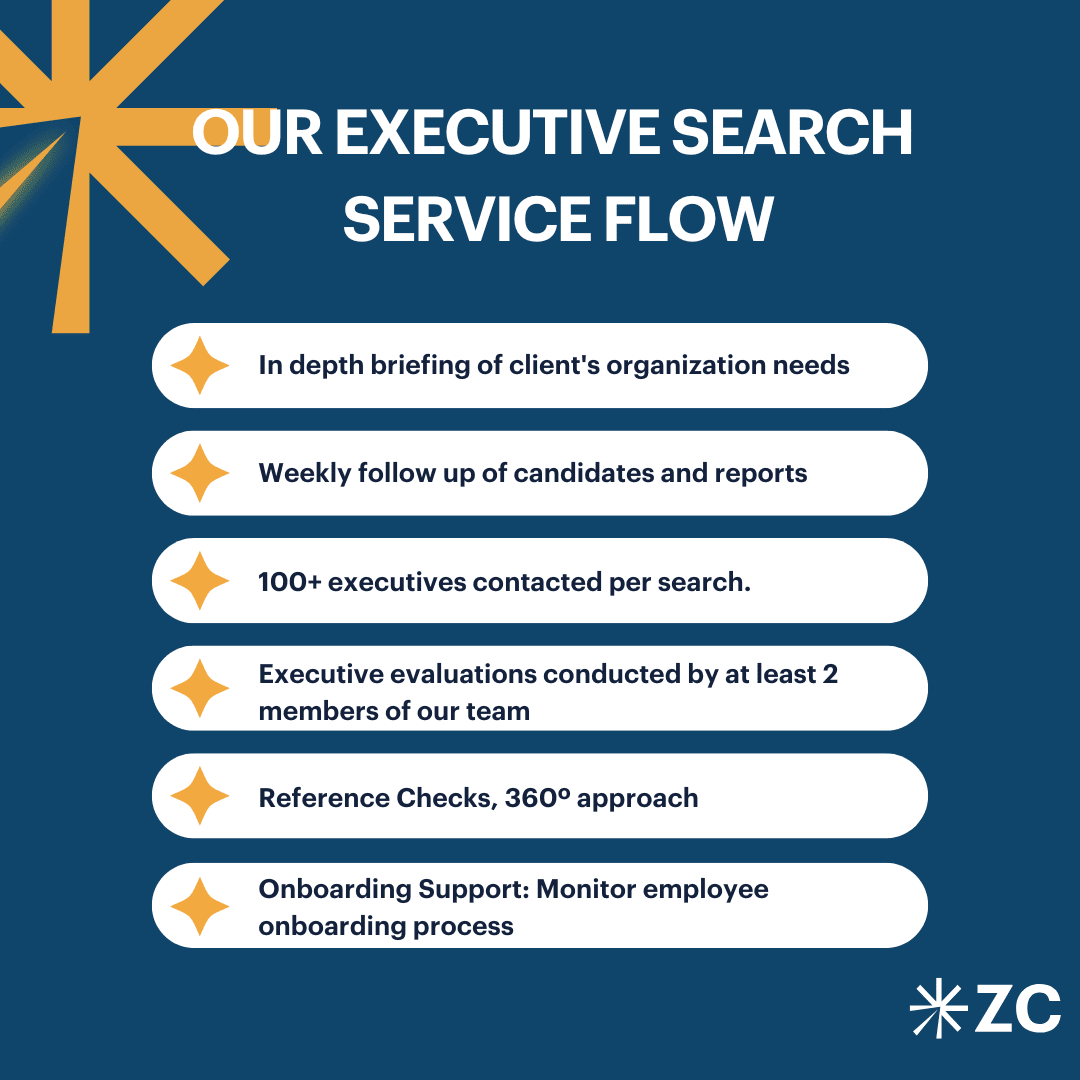
Zavala Civitas begins by understanding the business context, organisational structure and critical success factors for the leadership mandate.
The relevant market is then mapped across companies, adjacent sectors and geographic ecosystems rather than relying only on executives who are actively available.
Candidates are approached directly and assessed against the specific transformation required by the organisation, with references used to validate their actual contribution and leadership behaviour.
For international organisations, particular attention can be given to the executive’s ability to combine Chinese market execution with regional or global governance.
See our Executive Search services in China for additional market context.
Frequently Asked Questions: Local Executive Search in China
The best local executive is not simply the most local candidate. It is the leader whose market knowledge fits the transformation ahead.
Zavala Civitas supports international organisations in identifying executives who combine Chinese market fluency with the leadership capabilities required by global organisations.
Executive Search → Executive Search in China → Contact Us →