
Board appointments in China are becoming increasingly connected to governance, succession, risk oversight and the strategic capabilities companies need at the highest level.
Executive Search can support this process, but board recruitment should not begin with a generic request for a well-known CEO or senior industry executive. The first question should be what capability, independence or perspective the existing board is missing and what responsibilities the new director will actually need to fulfil.
This distinction has become particularly relevant as China’s corporate-governance framework continues to evolve. A revised Code of Corporate Governance for Listed Companies, issued by the China Securities Regulatory Commission in October 2025, entered into force on 1 January 2026.
| Governance Development | Board Talent Implication |
|---|---|
| New governance code effective in 2026 | Director duties, accountability and board processes need to be considered alongside professional reputation. |
| Independent directors ≥ one-third for listed companies | Independence and suitability must be assessed explicitly, not assumed from seniority. |
| Audit committee responsibilities strengthened | Financial, risk, control and audit expertise can become critical board-search requirements. |
| Greater committee specialization | Boards may need directors capable of contributing specifically to audit, nomination, remuneration or strategic oversight. |
Sources: China Securities Regulatory Commission, 2025 Governance Code and CSRC, Measures for the Administration of Independent Directors of Listed Companies.
Board Executive Search in China’s Changing Governance Environment
China does not have one uniform board model applying identically to every organization. Governance requirements differ depending on factors such as whether the company is listed, privately held, state-owned or subject to sector-specific rules.
For listed companies in particular, regulatory reforms have increased attention on director responsibilities, independence, committee structures and accountability.
The revised Company Law also allows companies limited by shares, subject to their articles of association and applicable rules, to establish an audit committee within the board that can exercise supervisory functions instead of maintaining a separate supervisory board or supervisors.
Source: State Administration for Market Regulation, Company Law of the People’s Republic of China.
These developments make board composition increasingly important as an organizational-design question, not simply a recruitment exercise.
Independent Directors Are More Than External Names
Independent directors have a specific governance role and should not be treated simply as prestigious external executives added to strengthen the appearance of the board.
China’s framework for listed companies requires independent directors to represent at least one-third of board membership. The CSRC describes their responsibilities around participation in decision-making, supervision of potential major conflicts of interest and providing professional advice on company development.
Source: China Securities Regulatory Commission, Independent Director Rules.
For Executive Search, this means independence needs to be tested alongside capability.
A candidate may have excellent sector credentials but still be unsuitable if business relationships, shareholder connections or other interests interfere with the independence required for the position.
Board Committees Are Increasing the Need for Specific Expertise
Boards increasingly need to distribute oversight through specialised committees rather than expecting every director to contribute equally to every governance area.
For listed companies, audit committees occupy a particularly important position. Chinese independent-director reforms require audit committees to be composed of directors who are not senior managers of the company, with independent directors forming the majority and an independent director with accounting expertise chairing the committee.
Nomination and remuneration committees also have requirements designed to strengthen independent oversight.
Source: China Securities Regulatory Commission, Reform of the Independent Director System.
This changes the Executive Search brief. Instead of asking simply for “a board director from financial services” or “a former CEO”, companies can define which committee or oversight responsibility the appointment is expected to strengthen.
What Should Board Executive Search Assess?
Board assessment should differ from executive management assessment because directors contribute through oversight, challenge, judgment and governance rather than direct operational control.
| Board Search Dimension | Evidence to Assess |
|---|---|
| Governance judgment | Has the candidate challenged management appropriately and understood the boundary between oversight and execution? |
| Independence | Can the director form and defend an objective judgment without inappropriate influence from management, shareholders or other interests? |
| Functional expertise | Does the board need financial, technology, risk, regulatory, commercial or another specialist capability? |
| Strategic relevance | Has the candidate worked through challenges similar to those the company expects to face next? |
| Board behaviour | Can the candidate challenge constructively, listen to opposing views and contribute without dominating operational management? |
| Time and commitment | Does the candidate have sufficient capacity to prepare, attend and contribute meaningfully to the board and its committees? |
Board Search Should Begin With a Skills Gap Analysis
A board can contain several highly accomplished individuals and still lack an important capability.
For example, a company may have deep operational and financial knowledge but limited experience in international expansion. Another may have strong sector expertise but insufficient technology, succession or risk-governance capability.
Before launching an Executive Search, the company can examine:
- The strategic priorities for the next three to five years.
- The experience already represented on the board.
- Expected committee responsibilities.
- Upcoming CEO or senior leadership succession.
- Technology or business-model transformation.
- International expansion or cross-border operations.
- Regulatory, financial or risk-management complexity.
- Areas in which existing directors need additional external perspective.
CEO Succession Is Also a Board Capability
One of the board’s most consequential responsibilities is leadership continuity.
CEO succession should therefore not begin only when the incumbent announces a departure. Boards need visibility into internal successors, external market alternatives and the capabilities the next CEO will require under the company’s future strategy.
External Executive Search can support this process by benchmarking internal candidates against the market and identifying potential successors before an urgent vacancy exists.
This also creates a connection between Executive Search and CEO & Board Advisory: the board may need both market intelligence about possible executives and an objective assessment of whether the current leadership pipeline is ready.
Technology Is Becoming a Board-Level Capability
Technology expertise should not automatically mean adding a CIO or software executive to every board.
The relevant question is whether technology materially affects the company’s strategy, risk profile, operating model or capital allocation.
Where AI, cybersecurity, automation, digital platforms or data governance are material to the business, boards may need enough expertise to challenge management and understand the implications of major technology decisions.
This does not require every director to be a technical specialist. It does require the board collectively to have sufficient knowledge to fulfil its oversight responsibilities.
International Experience Can Matter for China Boards
Companies operating between China and international markets can face a different board-composition challenge.
Relevant directors may need to understand local Chinese operating realities while also contributing experience in global governance, international expansion, foreign regulation or cross-cultural leadership.
For multinational organizations, a board or advisory appointment can also help bridge information gaps between global headquarters and the local business.
For Chinese companies expanding internationally, the opposite requirement may arise: directors with experience entering and governing businesses in overseas markets.
Board Diversity Should Be Connected to the Business Requirement
Board diversity can include gender and demographic diversity, but also professional background, geography, functional expertise, international experience and different perspectives on strategic problems.
Executive Search can support broader candidate-market research rather than repeatedly sourcing directors from identical career paths or existing board networks.
However, diversity should not be presented as a guaranteed route to specific financial outcomes. The more defensible objective is to ensure that the board candidate universe is broad enough to test whether different executives can satisfy the governance and strategic requirements of the appointment.
Executive Search and Board Advisory Solve Different Parts of the Problem
A board problem does not always require a new director.
Sometimes the issue is missing expertise and Executive Search is appropriate. In other situations, the board may already contain the required talent but need clearer governance, stronger alignment with management, succession planning or development.
| Board Challenge | Potential Response |
|---|---|
| Missing expertise or independent perspective | Board Executive Search |
| Unclear future board capability requirements | Board skills-gap assessment |
| CEO succession uncertainty | Succession planning + Executive Search market mapping |
| Weak alignment between board and management | Board Advisory / assessment |
| Current directors need capabilities for a new strategy | Assessment and targeted development |
Zavala Civitas CEO & Board Advisory
Zavala Civitas supports boards through a combination of CEO & Board Advisory, Executive Search and leadership assessment.
Its current Board Advisory offering includes work around governance, board and CEO performance, culture alignment, technology onboarding and succession planning.
A current Zavala Civitas case study illustrates this combined approach: the firm assessed the Board of Directors and Management Committee of a mid-sized company preparing for international expansion, identified capability gaps, proposed targeted development and recommended an external board advisor with relevant internationalization experience.
Source: Zavala Civitas CEO & Board Advisory.
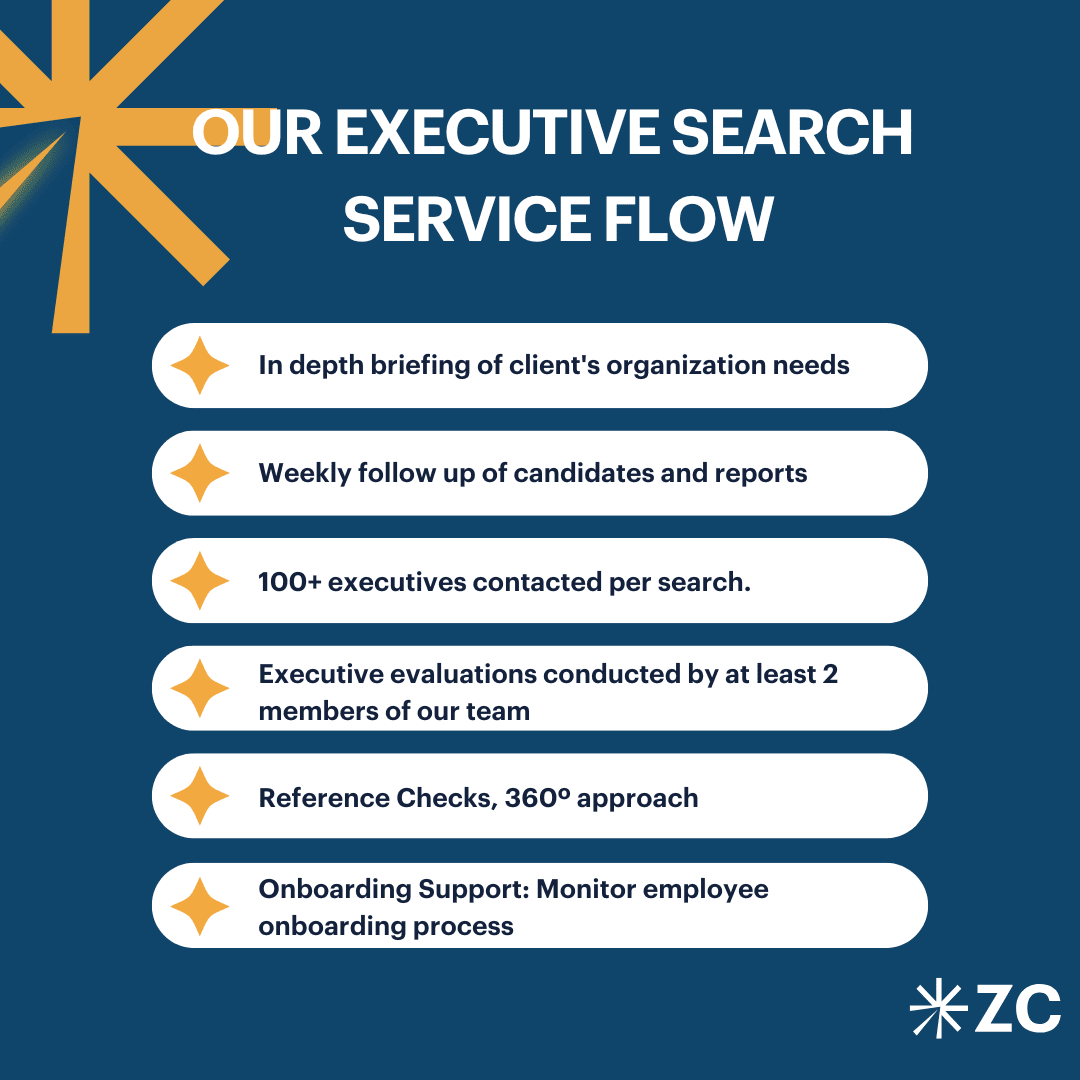
Where a new director or executive is required, Zavala Civitas’ Executive Search methodology combines market mapping, direct candidate engagement, executive assessment and professional reference checks.
Frequently Asked Questions About Board Executive Search in China
What is Board Executive Search?
Board Executive Search is a research and assessment process used to identify directors, independent directors or advisors who provide capabilities or perspectives missing from the existing board. The search should begin by defining the governance and strategic contribution required from the appointment.
How has corporate governance changed for listed companies in China?
China has recently revised its Company Law and corporate-governance framework. A revised Code of Corporate Governance for Listed Companies entered into force on 1 January 2026, strengthening requirements around directors, senior management, governance processes and accountability.
How many independent directors should a Chinese listed company have?
Under China’s independent-director framework, independent directors should account for at least one-third of the board of a listed company. Additional requirements apply to the composition and leadership of audit, nomination and remuneration committees.
What should companies assess when recruiting a board director?
Relevant criteria can include governance judgment, independence, strategic relevance, functional expertise, board behaviour, international experience and sufficient time to fulfil board and committee responsibilities. The required combination depends on the company’s strategy and governance model.
What is the difference between Board Executive Search and Board Advisory?
Board Executive Search identifies and assesses external directors or advisors when new capability is required. Board Advisory can address broader issues such as governance, board effectiveness, CEO succession, alignment and development without necessarily adding a new board member.
How does Zavala Civitas support boards in China?
Zavala Civitas combines CEO & Board Advisory with Executive Search and leadership assessment. Depending on the mandate, the firm can assess board capability, identify governance or succession gaps, recommend development actions and conduct external searches for directors or senior executives.
Learn more about our CEO & Board Advisory services, explore our Board & CEO Executive Search practice or contact us to discuss a board or succession requirement in China.