China has moved from being an emerging artificial-intelligence market to becoming one of the world’s most important AI ecosystems. Its strength now extends across research, patents, model development, industrial applications and rapidly growing consumer adoption.
Stanford University’s AI Index 2026 reports that China leads globally in AI publication volume, citations and patent grants. Chinese institutions also produced 35 notable AI models in 2025, while the performance gap between leading Chinese and U.S. models has narrowed substantially.
Source: Stanford University, AI Index Report 2026 – Research and Development.
Adoption is also accelerating. According to China’s Cyberspace Administration, the country reached 602 million generative-AI users by December 2025, representing a penetration rate of 42.8%.
Source: Cyberspace Administration of China, 2026.
| China AI Signal | Executive Talent Implication |
|---|---|
| 35 notable AI models in 2025 | China is developing increasingly competitive frontier AI capabilities. |
| 602 million GenAI users | AI adoption is moving rapidly from experimentation into mainstream products and workflows. |
| 748 GenAI services registered | The commercial AI ecosystem is expanding while operating within a formal regulatory framework. |
| 38% cite talent shortages | Chinese employers still identify talent availability as an important barrier to business transformation. |
China’s AI Market Is Moving From Research to Large-Scale Adoption
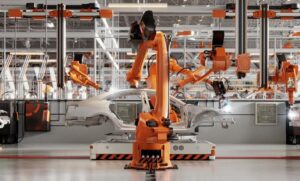
China’s position in artificial intelligence is no longer defined only by research output. AI capabilities are increasingly being integrated into consumer services, enterprise workflows, advanced manufacturing, robotics and other commercial applications.
The Cyberspace Administration of China reported that 748 generative-AI services had completed official filing by the end of 2025, alongside 435 AI applications or functions registered for the direct use of existing model capabilities.
Source: Cyberspace Administration of China, Generative AI Service Registration Update – 2025.
This commercialisation changes the leadership requirement. Building an AI model and creating a scalable AI-enabled business capability are not the same challenge. Companies need leaders who can connect technical teams with product development, operations, customers, risk management and wider business strategy.
The AI Talent Gap in China
Demand for AI-related capabilities continues to increase as Chinese companies accelerate digitalisation, automation and intelligent manufacturing.
According to the World Economic Forum’s Future of Jobs Report 2025, more than 90% of employers operating in China identify AI and robotics as technologies that will transform their organizations. At the same time, 38% identify industry talent shortages as a barrier to transformation.
Source: World Economic Forum, The Future of Jobs in China, 2025.
The talent issue therefore needs to be understood at several levels. Some companies may need advanced AI engineering capabilities, while others require stronger product leadership, data strategy, AI governance or executives capable of integrating AI into established business models.
Upskilling Existing AI and Digital Talent
External recruitment is only one part of the response to AI capability gaps. Upskilling existing employees remains important when critical knowledge already exists inside the organization.
This is particularly relevant for capabilities that depend on company-specific knowledge, such as legacy systems, proprietary data, existing products, customer workflows or internal decision-making processes.
The World Economic Forum identifies large-scale reskilling and upskilling as a central workforce response in China as businesses prepare for increased adoption of AI, robotics and other advanced technologies.
For leadership teams, the key question is which capabilities can realistically be developed internally and which require external experience that does not currently exist in the organization.
Executive Search for AI Leadership in China
Executive Search becomes relevant when the organization needs leadership experience that cannot be developed quickly enough internally.
Depending on the company’s maturity and strategy, the mandate may require executives capable of:
- Building and scaling AI or data teams.
- Translating AI capabilities into commercial products or operational improvements.
- Managing AI-related investment and prioritisation.
- Connecting data, engineering, product and business functions.
- Establishing governance around AI development and deployment.
- Leading transformation across established business units.
- Operating effectively between Chinese teams and international headquarters.
The candidate universe may therefore extend beyond executives carrying a specific “AI” title. Relevant leaders can come from technology, data, product, digital transformation or businesses where artificial intelligence has already been successfully industrialised.
AI Leadership Requirements Change With Digital Maturity
Not every company in China is at the same stage of AI adoption. An organization beginning its AI journey requires different leadership from a company already operating mature data infrastructure and deploying AI products at scale.
Earlier-stage organizations may require leaders capable of establishing data foundations, identifying viable use cases and building teams. More mature companies may instead prioritise model industrialisation, product scalability, AI governance, cybersecurity or integration across complex technology environments.
As a result, Executive Search should begin with the business problem rather than with a generic list of AI skills.
Multinational Companies Need Local and Global AI Leadership
Multinational companies operating in China face an additional layer of complexity. Their AI leaders may need to work within global technology, cybersecurity and governance standards while also adapting products and data strategies to the realities of the Chinese market.
This requires more than technical expertise. Senior leaders need the stakeholder-management capability to align local business requirements with international technology teams and global leadership.
China’s AI ecosystem also operates within a formal regulatory environment. Generative-AI services subject to China’s filing requirements must follow the registration framework administered by the Cyberspace Administration of China.
Source: Cyberspace Administration of China, Generative AI Service Filing Requirements.
For multinational Executive Search assignments, candidates should therefore be evaluated on their ability to manage the interface between local innovation, regulatory requirements and global standards rather than simply on their technical credentials.
How Zavala Civitas Approaches Executive Search for AI Leadership in China
Zavala Civitas established its Shanghai office in 2014 and currently operates its APAC head office in Shanghai, supporting Executive Search assignments across China and the wider region.
For specialised technology and AI leadership searches, the process begins by defining the organization’s maturity, strategic objectives and the specific capabilities the executive will be expected to build or transform.
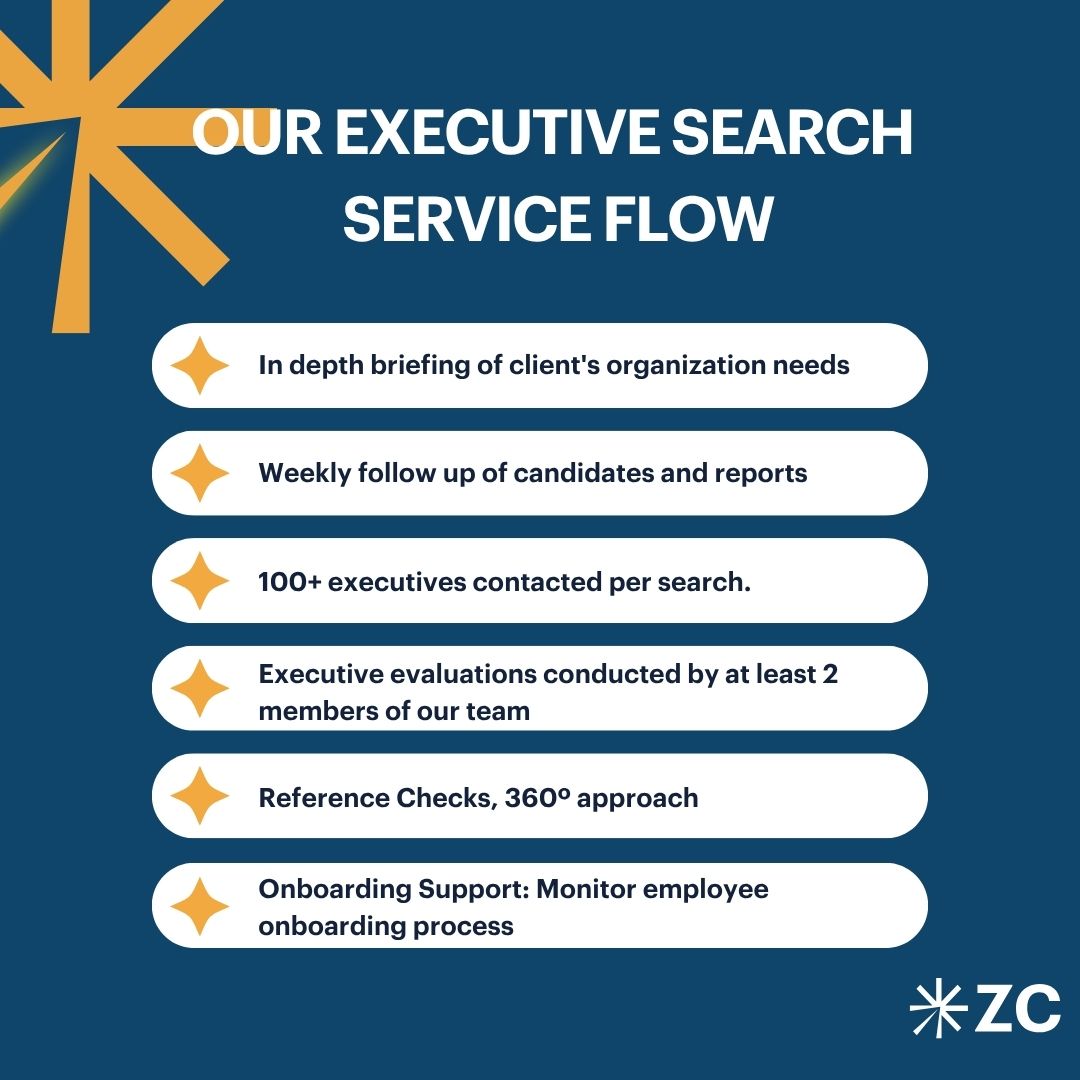
Our Executive Search methodology includes:
- An in-depth briefing to understand the organization, business context and search requirements.
- Definition of responsibilities and critical success factors.
- Market mapping and direct contact with more than 100 candidates per search.
- Candidate interviews conducted by at least two consultants.
- Quantitative and qualitative executive evaluation.
- 360º professional reference checks.
- Follow-up during the executive’s integration period.
For AI assignments, this structure helps distinguish candidates with genuine experience building or scaling AI capabilities from executives whose exposure has been primarily observational or advisory.
Frequently Asked Questions About Executive Search in China’s AI Market
Why is AI talent difficult to recruit in China?
China has a large and increasingly sophisticated AI ecosystem, but employers are simultaneously expanding AI, robotics and digital capabilities. The World Economic Forum reports that 38% of employers operating in China identify industry talent shortages as a barrier to transformation. Scarcity can be particularly significant for profiles combining technical expertise with product, business and leadership experience.
What capabilities should an AI executive in China have?
Requirements depend on the company’s maturity, but relevant capabilities can include AI and data strategy, product development, technology leadership, governance, stakeholder management, team building and the ability to translate AI investment into measurable business outcomes.
Should companies hire AI talent or upskill existing employees?
Most organizations require a combination of both. Internal development is valuable when employees already possess important company-specific knowledge, while external Executive Search becomes more relevant when the organization lacks leadership experience or capabilities that would take too long to develop internally.
What makes AI leadership in China different for multinational companies?
Multinational AI leaders often need to balance local products, teams and regulatory requirements with global technology architecture, cybersecurity standards, governance and headquarters expectations. This makes cross-cultural stakeholder management particularly important.
How does Zavala Civitas conduct Executive Search for AI leaders in China?
Zavala Civitas defines the mandate and critical success factors before mapping the relevant AI, technology and adjacent talent markets. The process includes direct contact with more than 100 candidates per search, interviews by at least two consultants, structured executive assessment, 360º reference checks and onboarding follow-up.
Learn more about our Executive Search methodology or contact us to discuss an AI leadership requirement in China.