
Executive Leadership Development in Canada

Organizations have increasingly been focusing on Executive Leadership Development in Canada, as they seek to remain competitive amid a rapidly changing global market. As companies realize the importance of grooming effective leaders, the sector for Executive Leadership Development in Canada has experienced significant growth. This market in Canada is worth approximately CAD 1.5 billion, as revealed by recent industry reports, which underscores its central role in driving economic growth and organizational performance.

According to Forbes Magazine, Canada invests $1,014 per employee annually in training and development. However, only an estimated $507 of this amount is dedicated to leadership training. 

In contrast, American companies invest $1,057 per employee annually on leadership development alone, amounting to a staggering $166 billion. This disparity underscores the urgent need for Canadian companies to boost their commitment to leadership development to remain competitive on the world stage. 

Executive Leadership Development Demand

Executive coaching, training programs, and organizational development initiatives are part of Canada’s this sector which encompasses diverse services within it. These services are aimed at improving the skills and abilities of present and future leaders so that they can surmount complex challenges and move their organizations ahead.

Several factors have contributed to this growth. First, there is an improved understanding among Canadian organizations about the significance of strong leadership towards sustainable growth. This has seen increased investments in programs as companies are aware that well-trained leaders significantly influence staff engagement, innovation and overall effectiveness.

Secondly, expansion of sector has been facilitated by partnerships between the Canadian government and educational institutions. Various government initiatives and funding programmed support Executive Leadership Development while universities and colleges offer specialized courses and degrees in leadership and management. By doing this public-private partnership ensures that today’s leader does not lack necessary skill for success given their dynamic business environment.

Essential Skills for Canada Executives Nowadays

Certain skills are particularly crucial for executive leaders. These also drive individual performance as well as organizational success. Some of them are:

  • Strategic Thinking: Executive leaders must be able to think strategically by anticipating trends ahead of time while aligning their goals with a long-term vision. This involves evaluating market dynamics, identifying areas of growth, making sound decisions, thereby putting an organization on a winning path.
  • Emotional Intelligence: Emotional intelligence helps build strong relationships among employees, promote teamwork and deal with conflicts. Leaders with high emotional intelligence can understand and empathize with their team members, creating a positive work environment and enhancing overall productivity.
  • Adaptability: In an era of fast changing business landscape adaptability is key for executive leaders. They need to be flexible to new ideas, embrace change as well as guide teams through transitions in a resilient and agile manner. This is a significant skill in Canada where diverse industries and markets expose leaders to various challenges.
  • Communication: Effective communication is the bedrock of successful leadership. Executive leaders must be able to articulate their vision, motivate and inspire their teams; create open lines of communication within the organization that are transparent.
  • Decision Making: Executive leaders often face difficult choices which can determine the future of the entire organization. Building robust decision-making skills backed by data analysis and critical thinking gives room for informed decision making aimed at realizing favorable results.

The Importance of Executive Leadership Development Services

There are several reasons why it is important for Canadian organizations to invest in these services. First, it improves the leader’s overall performance enabling them to steer their teams effectively towards achieving organizational objectives. Well-developed leaders have ability to motivate their staff leading increased productivity levels coupled with job satisfaction among workers.

Secondly, Executive Leadership Development programs can be seen as a way of succession planning. This is because when future leaders of the business are identified and developed accordingly, it ensures a smooth progression from one leader to another as well as avoids disruptions that can affect the company.

Moreover, advisory roles in organizations help to facilitate innovation and adaptability. Leaders who have up-to-date skills will drive change by introducing innovative approaches and proactively addressing market forces. In Canada this has great significance since industries such as technology, health care and financial markets are forever changing.

Finally, leadership advancement services influence an organization’s culture positively. Development-oriented leaders create environments of learning for improvement to promote continued growth. A high-performing organizational culture does not only help to keep top talent but also long-term organizational success.

Canadian firms should invest into Executive Leadership Development to develop leaders who can drive innovation, adaptive behavior and general performance. The concentration on developing vital aptitudes like strategic thinking emotional intelligence adoptability remains paramount so that Canadian leaders become ready for coping with diverse challenges of future times. 
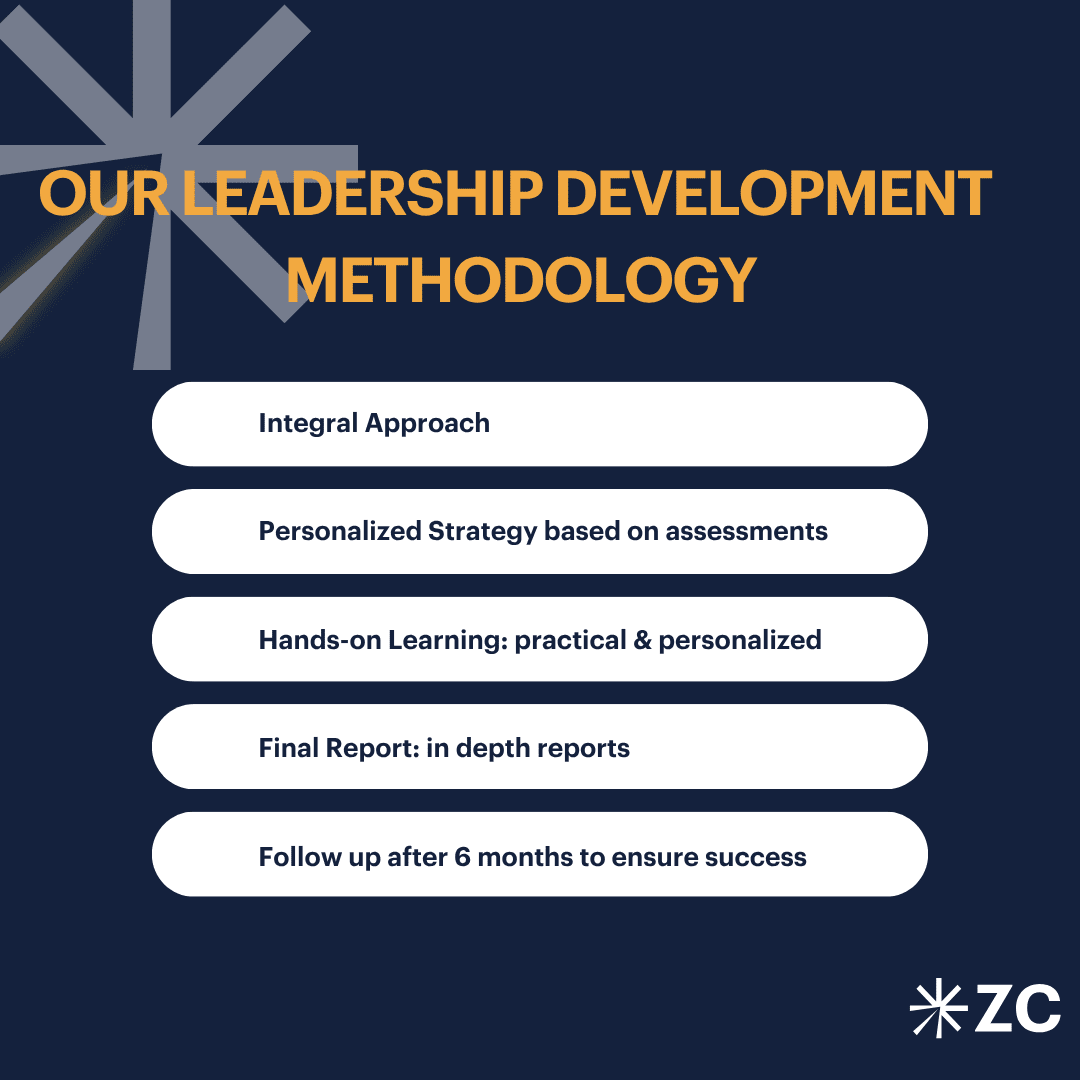
Our executive leadership methodology service-Zavala Civitas

Click here to contact with us if you are in need of this service.

executive team working on a business case

Executive Development and Assessment in Portugal: How Companies Improve Leadership Quality 

Executive assessment and leadership development are rapidly gaining relevance in Portugal as organizations face digital transformation, talent shortages, and increasing competitive pressure. Portuguese companies are recognizing that strong leadership is not a by-product of experience alone—it requires structured evaluation, targeted development, and continuous support.  According to Ken Research, Portugal’s corporate

Read More

Executive Development and Assessment in the U.S: From Evaluation to Strategic Growth

The new approach to executive growth in the U.S.  Across the U.S., organizations are moving away from traditional performance reviews and investing in data-driven development. Rather than evaluating results retrospectively, American companies now focus on predicting potential — using analytics and behavioral insights to identify executives capable of steering transformation. 

Read More

Related posts

Executive Search en México: Líderes en EPC y Energías Renovables 

México se ha convertido en uno de los países más destacados de América Latina para el desarrollo de proyectos EPC (Ingeniería, Adquisiciones y Construcción) y energías renovables. Sin embargo, el financiamiento y la tecnología ya no son las mayores barreras.  Es el talento ejecutivo.  El crecimiento de este sector está

Read More

Leadership in the Middle East: Why Fit Matters More Than Origin 

As companies in the Middle East scale and institutionalize, the long-standing debate around local versus international leadership in the Middle East is largely outdated. The real issue today is alignment: whether the leadership profile fits the business challenge the organization is facing.  Too often, leadership appointments are driven by assumptions: that international executives

Read More

The Role of Compliance Officers in Strategic Decision-Making

Over the past decade, the role of compliance functions within organizations has progressed significantly. Traditionally, compliance was responsible primarily for ensuring the company’s compliance with regulation, particularly that Relations to bribery and corruption.  They developed codes of conduct, supplier due diligence process and the like and were responsible for ensuring compliance with these by employees of

Read More

Executive Search in Mexico: Leading Sectors Shaping Demand 

Over the last few years, Mexico swiftly garnered international investment, earning it the title of one of the fastest-growing countries in capturing global foreign direct investments.   This scenario creates new talent opportunities.  Most Executive Search firms in Mexico have modified their approach from simply filling highest roles in an organization to competing for the extremely limited pool of qualified executive talent for all roles in all sectors.  The demand isn’t even  It is very much concentrated.  Where Demand is Actually Growing  Mexico’s hiring executive pressure is unequal across all sectors. Some sectors are faster and are pulling talent from other sectors. Manufacturing is the clearest example.  With nearshoring, Mexico is becoming a strategically important center for the supply chain for North America. This is due to the fact that international companies are relocating and/or expanding their operations in Mexico. This is supported by McKinsey & Company.  The growth of a business is dependent on its leadership. Companies are in need of quickly scalable plant directors, operations managers, and supply chain executives. Such profiles are deficit.  Executive Search Energy and Infrastructure: Complexity at Scale  There is the highest demand for executive talent within the energy and infrastructure sectors.  Major projects and regulatory complexities, as well as lengthy investments, require leaders who are comfortable with uncertainty in all the essential domains, not just the technical. This includes stakeholder

Read More

Executive Search in Spain: Talent Gaps and Leadership Trends 

The Spanish talent market is perceived to be mature and easy to operate in. This makes some sense from afar. There is a solid network of business centers, a developing international business presence, and a considerable pool of experienced talent.  Problems arise when businesses attempt to recruit senior executives.  In Spain, executive search is shifting from talent arbitrage to understanding the true gaps and the reasons behind their expansion.  Where the Talent Gaps Are Actually Emerging  Spain may appear to have many senior professionals, but the issues here are more complex.  The problem is not the experience, but the type of experience that is most required by the different companies.  As per McKinsey & Company, the nature of change of senior leadership roles in Europe is at a much quicker pace than the nature of change in the senior leadership roles in the talent pool. Executives are required who are able to be strategic, also have the ability to execute, and be the change agent.  That blend is still too little. This is especially the case in Spain in the industries that are shifting the fastest—energy transition, infrastructure, and technology. There are many executives who have strong functional experience, but far fewer who have held positions to manage large, complex transformations, or to operate internationally in complex situations.  This results in the mismatch between the hopes of the companies and the actual situation in the labor market.  The Shift from Stability to Transformation Leadership  For many years, leadership in Spain emphasized operational stability and incremental change.  This is not enough anymore.  At present, companies expect executives to manage change and uncertainty, and lead in multiple dimensions simultaneously, including at the same time digital transformation, new business models, and the increased need for operational efficiency. 

Read More

Executive Search in China: The Complexity of Hiring Executives

China is one of those markets where opportunities are easy to find but the right leaders are not.  many international firms, executive recruitment in China becomes challenging for one simple reason: the market does not act as they expect. What works for Europe or the US, tends to break down here.  Recruiting

Read More