Last updated: August 13, 2026
Executive assessment and leadership development are rapidly gaining relevance in Portugal as organisations face digital transformation, talent shortages, and increasing competitive pressure. Portuguese companies are recognising that strong leadership is not a by-product of experience alone — it requires structured evaluation, targeted development, and continuous support.
According to Ken Research, Portugal’s corporate education and training market is valued at over USD 1.2 billion, reflecting strong demand for executive development, reskilling, and capability-building programmes. 62% of organisations in Portugal increased investment in leadership development and employee training between 2022 and 2023, according to Randstad.
This article explains how firms in Portugal are using structured tools to elevate executive capabilities and strengthen organisational performance.
Key Figures at a Glance
| Data point | Figure | Source |
|---|---|---|
| Portugal corporate education and training market value | +USD 1.2 billion | Ken Research |
| Portuguese organisations that increased leadership development investment (2022–2023) | 62% | Randstad Portugal |
| Portuguese professionals feeling underprepared for strategic role demands | ~40% | Ken Research / Market analysis |
| Multinational companies with operations in Portugal | +2,700 (creating sustained demand for internationally benchmarked leadership) | AICEP Portugal Global |
A Growing Focus on Executive Capability in Portugal
The corporate training and executive development market in Portugal has expanded considerably, with recent estimates placing its value at over USD 1.2 billion. Demand is fuelled by the need for upskilling, digital adaptation, and stronger management pipelines. Surveys indicate that around 40% of Portuguese professionals feel underprepared for the strategic demands of today’s roles, highlighting a clear capability gap and a strong motivation for structured leadership development.
What Executive Assessment Really Means in Portugal
Executive assessment in Portugal goes far beyond a performance review. It is a deep, structured evaluation that examines:
- Leadership behaviours and soft skills
- Technical and strategic competencies
- Personality traits and decision-making style
- Strengths that drive performance
- Growth areas that limit impact
- Readiness for increased responsibility or succession
Assessment tools — psychometrics, behavioural interviews, simulations, and 360° feedback — help organisations uncover how a leader truly operates: how they communicate, how they respond under pressure, how they collaborate, and how they influence teams.
The goal is clarity. Portuguese firms use assessment to gain a data-driven understanding of their leaders and to identify what genuinely needs to improve.
How Leadership Development Converts Diagnosis Into Real Change
If executive assessment offers a complete diagnosis, leadership development is the treatment plan that transforms it into measurable progress.
In Portugal, effective programmes often combine:
- Executive coaching
- Skills-based training linked to assessment insights
- Mentoring from senior leaders
- Quarterly action plans
- Continuous follow-up and feedback loops
- Behavioural change measurement
- Alignment with business goals and performance expectations
This approach generates three key outcomes:
- Accelerated growth for leaders. Development programmes give leaders the tools, structure, and accountability needed to enhance their strengths and address their limitations.
- Greater commitment and retention. When organisations invest in programmes, leaders feel supported and valued. This increases engagement, loyalty, and long-term retention — critical in the Portuguese market, where strong senior talent is scarce.
- Stronger team performance. Developed leaders communicate better, manage conflict more effectively, make clearer decisions, and create healthier team environments. Leadership development directly boosts overall organisational performance.
Why Portuguese Firms Combine Assessment and Development
The combination of executive assessment and leadership development is becoming the preferred model for Portuguese companies because:
- Assessment identifies the real capability gaps
- Development provides solutions targeted to those gaps
- Both processes create accountability, clarity, and management maturity
- Leaders become more aligned with strategy and culture
- Organisations build stronger pipelines for succession
- Teams experience more stability and better decision-making
This integration is especially valuable in Portugal’s evolving business landscape, where companies must scale, adapt, and innovate faster than before.
Best Practices for Executive Assessment and Leadership Development in Portugal
- Define a clear competency model: strategic thinking, communication, resilience, team management, digital mindset.
- Use rigorous executive assessment methods: psychometrics, structured interviews, 360° feedback, role simulations.
- Create personalised development plans: aligned with both the leader’s needs and the company’s priorities.
- Ensure continuous support: coaching and mentoring with measurable milestones.
- Track behavioural change: using qualitative and quantitative indicators.
These practices help Portuguese firms create successful cultures rooted in clarity, capability, and long-term growth.
Portugal is entering a period where executive quality will differentiate the most resilient and competitive organisations. Companies that invest in executive assessment and leadership development are already seeing stronger leaders, better decision-making, more cohesive teams, and higher retention.
In a rapidly changing environment, developing leaders is not simply an HR initiative — it is a strategic advantage for the future of Portuguese businesses.
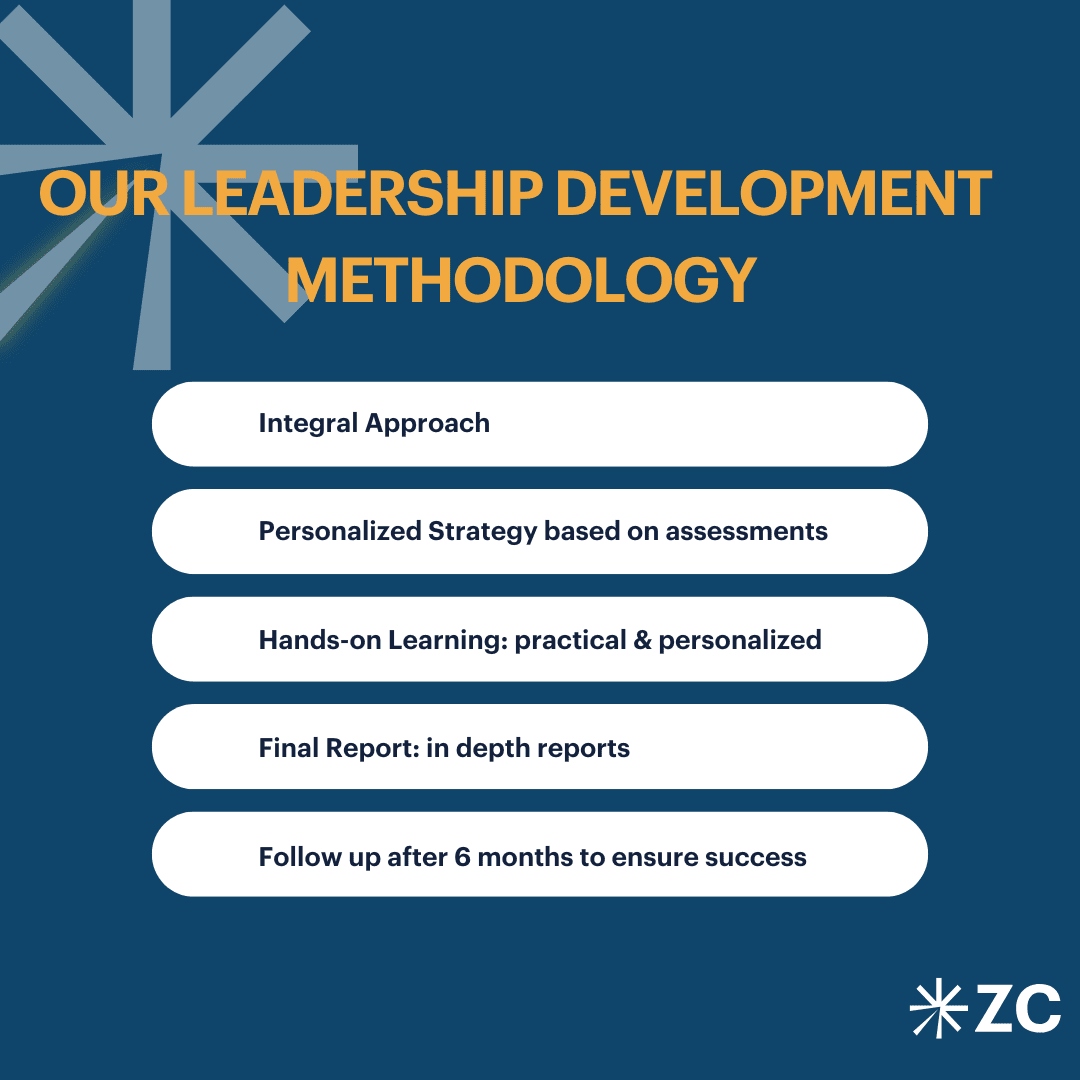
If your organisation in Portugal is exploring how executive assessment and leadership development can strengthen your leadership teams, we would be glad to support you. Contact us to learn more about our methodology and how we help companies elevate leadership quality.
Frequently Asked Questions: Executive Assessment and Development in Portugal
Strengthening executive leadership in Portugal?
Zavala Civitas provides executive assessment and development programmes tailored to Portugal’s compact, competitive leadership market.
Executive Assessment →
Executive Search Portugal →
Contact Us →