
Last updated: August 17, 2026
In law firms, partnership has long been the reward for technical mastery. High billable hours, legal expertise, and client loyalty were historically the core indicators of readiness. But the demands of the partner’s role and the expectations of clients and colleagues have become increasingly competitive.
Key Figures at a Glance
| Data point | Finding | Source |
|---|---|---|
| Cost of a failed promotion to partner (lost productivity + replacement) | Up to 2.5× the lawyer’s annual compensation | Gartner |
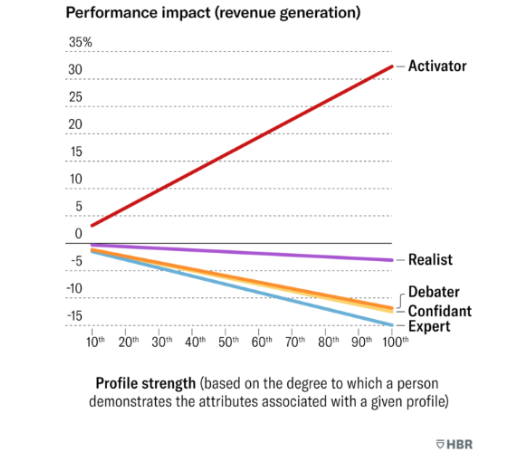
| Revenue advantage of Activator partners vs. peers (HBR study of 1,800+ partners) | Up to 32% more revenue | Harvard Business Review |
| Activators who reserve weekly time for client outreach | ~90% (vs. one-third of non-Activators) | Harvard Business Review |
| Activators who proactively engage clients with new opportunities | 73% (vs. 36% of non-Activators) | Harvard Business Review |
From Legal Expert to Business Leader
Stepping into partnership means taking on a broader, more complex role. New partners are expected to:
- Lead and inspire diverse teams and personalities.
- Support and mentor junior lawyers while embodying the firm’s values.
- Build strong and lasting client relationships.
- Understand the firm’s internal workings and contribute to its governance.
- Represent the firm with credibility and develop a personal brand in the market.
- Demonstrate financial acumen — including the financial implications of project bidding and running operations within the firm.
According to Gartner, the cost of a failed promotion to partner can reach up to 2.5 times the lawyer’s annual compensation once lost productivity and replacement expenses are included. Partner assessment centres are therefore one of the most important tools available to reduce that risk for the firm.
Partner Assessment Centre: The Leadership Traits That Matter Most
While legal skill remains essential, it is no longer what differentiates high-impact partners. Drawing on frameworks from Hogan Assessments and Harvard Business Review, successful leaders in law firms consistently demonstrate:
- Emotional intelligence — self-awareness, empathy, and interpersonal agility.
- Strategic thinking — aligning legal advice with business priorities.
- Resilience — staying composed under pressure.
- Collaboration — enabling cross-practice performance and client integration.
- Influential communication — earning trusted advisor status and navigating complexity.
These capabilities are not tracked on timesheets — but they drive long-term client success, team engagement, and firm growth.
Rainmakers Think Differently: The Activator Advantage
A Harvard Business Review study of over 1,800 partners across professional services firms identified one profile — the Activator — as consistently linked to above-average revenue and client growth. Partners who demonstrated strong Activator behaviours generated up to 32% more revenue than those who did not.
What Sets Activators Apart?
It is disciplined behaviour — not personality type.
1. They Commit. Activators protect time for business development — consistently.
- Nearly 90% reserve time each week for client outreach (vs. one-third of others).
- They balance their time evenly between growing existing clients and cultivating new ones.
- They follow up rigorously, track interactions, and stay organised via CRM tools.
2. They Connect. They build strong networks — inside and outside the firm.
- They engage with all levels of a client organisation, not just top decision-makers.
- 73% of Activators introduce clients to colleagues to expand value (vs. just 29% of non-Activators).
3. They Create Value. Activators bring insights proactively.
- They monitor legal, regulatory, and market trends.
- They reach out with timely, relevant perspectives, often before a client expresses a need.
- 73% of Activators engage clients with new opportunities proactively, compared to just 36% of others.
Their approach is deliberate and measurable — and it works.
Tools for Smarter Promotion Decisions
When evaluating potential partners, relying on internal advocacy or financial metrics alone can create blind spots. Firms are increasingly turning to structured evaluation tools to ensure accuracy, objectivity, and alignment with future needs:
- Partner Assessment Centres: Simulated scenarios that test how candidates lead through ambiguity, manage client dilemmas, or collaborate across functions — helping surface Activator behaviours like initiative, trust-building, and commercial judgement.
- Behavioural Interviews: Instead of reviewing output, these interviews explore method and mindset: “How do you prioritise business development when delivery pressures are high?” and “Can you share a time you introduced a colleague into a client relationship?”
- 360° Feedback: Feedback from peers, direct reports, and clients can reveal whether a candidate is seen as a connector, collaborator, or contributor to firm growth — or someone who operates in silos.
- Psychometric Assessments: Tools that measure traits like business drive, resilience, and influence — critical attributes for modern partners and strong predictors of Activator potential.
Conclusion: Technical Skill Opens the Door. Leadership Potential Secures the Future.
As the partner role evolves, law firms must shift from rewarding past contributions to enabling future impact. That means identifying professionals who do not just deliver excellent work — but who can lead teams, build client relationships, grow the business, and shape the firm’s future.
If your organisation is seeking a fully confidential, professional, and objective Partner Assessment Centre, we would be pleased to support you. Please do not hesitate to contact us for more information.
Frequently Asked Questions: Partner Assessment Centres in Law Firms
Looking for a confidential, objective Partner Assessment Centre?
Zavala Civitas designs and delivers Partner Assessment Centres for law firms, with Senior Advisor Beatriz Baker Araujo.
Assessment & Development →
Legal & Professional Services →
Contact Us →