
Executive Search in Brazil: Finding the Right Leaders for Life Sciences and Healthcare 

Key Takeaway: Brazil spends 9.47% of its GDP on healthcare — totalling $161 billion annually — with 7,191 hospitals, 546,000 physicians, and 402,000 dentists. It is the largest life sciences and healthcare market in Latin America. Yet the transition to value-based care, the 2024 regulatory reforms, and the accelerating integration of AI diagnostics are all creating the same gap: executives who understand both the clinical and commercial dimensions of healthcare leadership simultaneously are structurally scarce in the Brazilian market.

Last updated: August 13, 2026

Brazil’s life sciences and healthcare industry is the largest in Latin America, making up 9.47% of the country’s GDP and totalling an annual expenditure of $161 billion. The country has more than 214 million citizens, which drives a continuous increase in demand for healthcare services. However, this demand brings numerous challenges — rising costs, regulatory changes, and digital transformation. As companies in pharmaceuticals, medical devices, and services try to keep up, the need for strong leadership has never been greater. That is where executive search firms come in.

Key Figures at a Glance

Data point Finding Source
Brazil annual healthcare expenditure (% of GDP) $161 billion USD — 9.47% of GDP Brazil Ministry of Health / WHO data
Hospitals in Brazil / share that are private 7,191 hospitals — 62% private Brazil healthcare infrastructure data
Brazil physicians and dentists 546,000 physicians / 402,000 dentists Brazil Federal Council of Medicine / CFO
Key regulatory change creating leadership demand 2024: new legal framework for clinical research + public-private partnership incentives Brazil Federal Government, 2024

Key Challenges in Brazil’s Healthcare and Life Sciences Sector

1. Rising Healthcare Costs and Industry Pressures

Over the last few years, the cost of this industry in Brazil has been consistently rising, impacting hospitals, insurers, and service providers. Companies are struggling to find the balance between patient care quality and related expenses. Businesses require skilled executives who can optimise cost management and operational efficiency while utilising technology — without compromising the clinical standards that define the sector’s social mission.

2. Regulatory Shifts and Compliance Challenges

In 2024, Brazil introduced major regulatory changes impacting pharmaceuticals, medical devices, and healthcare providers. A new legal framework for clinical research was passed, along with incentives for public-private partnerships in life sciences. Companies now need leaders who understand compliance, market access, and government relations — executives who can ensure their business stays ahead of new regulations while continuing to innovate.

3. The Shift to Value-Based Healthcare

Brazil is moving from a volume-driven model (providers paid per service) to a value-based system (where quality and outcomes determine revenue). While this is a step in the right direction, many companies struggle to collect and use data effectively to measure patient outcomes. Hiring leaders with expertise in data analytics, patient-centric care, and innovative reimbursement models will be key to making this transition successful.

Brazil’s transition to value-based healthcare is creating the most consequential leadership gap in the sector: the gap between the executive who understands clinical quality metrics and the executive who understands the commercial model that makes those metrics financially sustainable. A healthcare CEO who can design a value-based care model that improves patient outcomes AND generates the financial margin to fund continuous improvement — in Brazil’s specific regulatory and reimbursement context — is not a profile that standard healthcare executive search consistently produces. That profile requires finding executives who have navigated both sides of the quality-cost equation simultaneously, in a Brazilian context, at a scale that tests both dimensions. Active, sector-specific executive search is the only approach that reliably surfaces that combination.

How Executive Search Firms Can Help

1. Sourcing strategic leaders: Whether it is a CEO for a healthcare company, a Chief Regulatory Officer for a pharmaceutical firm, or a digital transformation leader, executive search firms have access to high-level professionals who are ready to take on these roles — including internationally located Brazilian healthcare executives who bring global sector best practices combined with local regulatory and relationship context.

2. Cross-industry talent placement: More and more, leaders from technology, finance, and consumer sectors are being hired into healthcare roles. Bringing in executives with a fresh perspective can drive innovation and efficiency. Search firms identify leaders who are adaptable, strategic, and capable of making a real impact — assessing healthcare domain learning speed alongside functional competency.

3. Finding the right fit for digital health and AI: AI and automation are transforming healthcare, from digital patient records to AI-driven diagnostics. Companies need leaders who understand both technology and the sector — a combination that requires executive search to assess domain knowledge and technology governance capability simultaneously rather than treating them as separate profiles.

4. Promoting diversity and inclusion: Diversity in leadership improves business performance. Executive search firms help organisations build diverse leadership teams, ensuring that different perspectives and experiences contribute to strategic decisions — which in Brazil’s healthcare context includes the regional market diversity that determines whether a national strategy actually reaches the populations it is designed to serve.
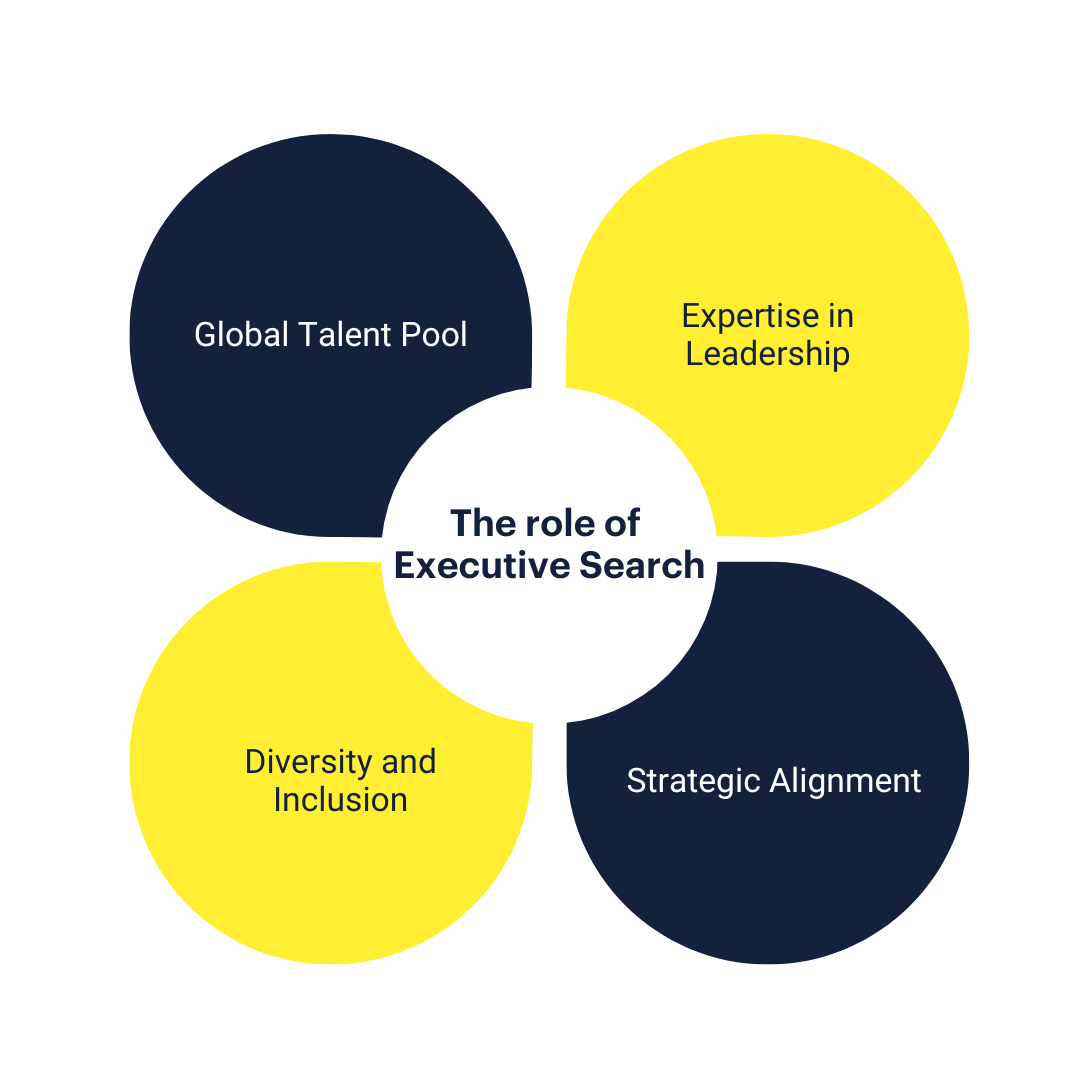
Zavala Civitas: the role of executive search in Brazil's healthcare and life sciences sector

Key Statistics on Brazil’s Healthcare and Life Sciences Market

  • Brazil spends 9.47% of its GDP on healthcare, totalling $161 billion annually — the largest healthcare market in Latin America by expenditure.
  • Hospital infrastructure: The country has 7,191 hospitals, 62% of which are private, with 427,097 hospital beds — a private sector dominance that creates a specific leadership demand for executives who understand both clinical quality governance and commercial performance management.
  • Brazil has 546,000 physicians and 402,000 dentists, highlighting the demand for skilled leadership to manage these professionals and the complex relationships between clinical and administrative authority that healthcare organisations require.
The 62% private hospital share in Brazil is the most important structural fact about the sector’s leadership demand. Private hospitals in Brazil are not simply competing for patients — they are competing for the physicians, insurers, and corporate health plans that determine patient flow. The CEO of a private hospital network is managing a multi-stakeholder commercial model that requires clinical credibility with the medical community, commercial negotiation capability with insurers, and operational performance accountability to the ownership structure simultaneously. That three-dimensional leadership requirement is the executive search challenge that most generic healthcare recruitment processes do not assess at the depth required.

Brazil’s life sciences and healthcare sector is at a turning point. Companies that embrace innovation, invest in leadership, and adapt to new regulations will stay ahead. For companies looking to secure top talent, working with a specialised executive search partner makes all the difference in finding leaders who will shape the future of healthcare in Brazil.

Contact us by clicking here.

Frequently Asked Questions: Executive Search in Brazil’s Life Sciences and Healthcare Sector

What specific leadership profile does Brazil’s value-based healthcare transition demand?
The executive who can design a value-based care model that improves patient outcomes AND generates the financial margin to fund continuous improvement — in Brazil’s specific regulatory and reimbursement context. That profile requires having navigated both sides of the quality-cost equation simultaneously, in a Brazilian context, at scale. It is not produced by standard healthcare executive search that assesses either clinical or commercial capability in isolation.
Why does the 62% private hospital share create a specific executive search challenge?
Because the CEO of a private hospital network is managing a multi-stakeholder commercial model simultaneously: clinical credibility with the medical community, commercial negotiation capability with insurers and corporate health plans, and operational performance accountability to the ownership structure. That three-dimensional requirement is assessed in depth by sector-specific executive search — and systematically underweighted in generic healthcare recruitment processes.
How does Brazil’s 2024 regulatory reform specifically affect executive search in life sciences?
By creating demand for Chief Regulatory Officers and Market Access Directors who can navigate the new clinical research legal framework and the public-private partnership incentives simultaneously. These executives must understand both the regulatory pathway (which is more complex than most international comparables) and the commercial opportunity the new framework creates — a combination that is specifically Brazilian in its regulatory complexity and requires locally-informed search.
What is the right profile for AI and digital health leadership in Brazil’s healthcare sector?
An executive who understands both the technology and the sector — not as adjacent competencies but as integrated capability. The ability to evaluate an AI diagnostics platform commercially and clinically; to manage the change process that digital health adoption requires in an organisation with physician resistance; and to ensure that the regulatory compliance dimension of digital health data governance in Brazil is properly addressed. That integration is the assessment challenge, and it requires sector-specific search to surface it.
How does Zavala Civitas approach executive search in Brazil’s life sciences and healthcare sector?
Through sector-specific talent mapping that assesses clinical-commercial integration, regulatory fluency specific to Brazil’s pharmaceutical and medical device frameworks, data analytics capability for value-based care models, and CLT labour law knowledge for managing large clinical workforces. We access both domestic Brazilian healthcare executives and internationally located Brazilians bringing global life sciences best practices. From our São Paulo office, with a 92% closing rate across completed executive search mandates.

Finding the right leaders for Brazil’s life sciences and healthcare sector?

Zavala Civitas provides sector-specific executive search for Brazil’s healthcare and life sciences organisations. 92% closing rate.


Executive Search →
Life Sciences →
Contact Us →

Executive Search in Portugal’s Lifesciences and Healthcare Sector

Key Takeaway: Healthcare represents approximately 8% of Portugal’s GDP with a steady 3% annual growth rate. Lisbon has become a hub for medical sciences and pharmaceuticals, with over €2 billion invested in pharma R&D and innovation in 2023, and Portugal’s digital health sector growing at 15% annually. Despite the macroeconomic

Read More

Executive Search in Mexico’s Life Sciences and Healthcare Sectors

Key Takeaway: Mexico’s healthcare sector represents approximately 6% of GDP and is home to a growing pharmaceutical and medical device manufacturing cluster that makes it a strategic production location for the U.S. market under USMCA. Rising healthtech investment, multinational R&D expansion, and nearshoring-driven demand for pharmaceutical manufacturing leadership are the

Read More
Life science and healthcare sector

Executive Search in Canada’s Life Sciences and Healthcare: Navigating Challenges and Seizing Opportunities 

Key Takeaway: Canada’s life sciences and healthcare sector stands at a critical juncture — with an aging population driving sustained healthcare demand, digital health investment accelerating, and Health Canada regulatory requirements becoming increasingly complex. The executives who can simultaneously manage Health Canada regulatory navigation, clinical change management in adopting digital

Read More

Related posts

Trabajo en remoto en los despachos de abogados

Autora: Beatriz Baker Araujo Senior Advisor, Zavala Civitas El debate sobre el trabajo presencial y remoto en los despachos de abogados lleva años activo, pero no ha madurado. Las posiciones se han endurecido desde 2020, y las conversaciones suelen discurrir entre dos polos: socios que invocan la cultura, el mentoring

Read More

Executive Search China: Industrial Sector

Key Takeaway: Beijing has launched a nationwide “anti-involution” (反内卷) campaign to address destructive price wars and overcapacity across multiple industrial sectors at once, not just renewables. Electrical machinery and equipment, communications equipment, and medical products all show 29% to 34% of firms losing money in 2024-25. Goldman Sachs estimates Chinese

Read More
Financial services building in Germany

Executive Search in Brazil for Financial Services

Key Takeaway: The White House targeted Brazil’s Pix payment system in April 2026, calling it a barrier to US payment companies. Brazil’s Central Bank fired back, defending Pix as a matter of payments sovereignty. At the same time, the collapse of Banco Master, the largest banking fraud in Brazilian history,

Read More
law leaders working

Executive Search in Mexico for Legal and Professional Services

Key Takeaway: Mexico’s 2024 judicial reform introduced popular election of judges and magistrates, with implementation beginning in 2025. This has accelerated a shift toward arbitration as the preferred dispute-resolution method in commercial contracts, as companies seek predictability an elected judiciary cannot yet guarantee. Combined with nearshoring-driven M&A activity and the

Read More

Executive Search in Italy for Industrial

Key Takeaway: Turin’s automotive cluster invested roughly €2.8 billion in electrification between 2024 and 2026. Over the same period, regional automotive employment fell by more than 3,200 positions. Fewer than 20% of local engineering graduates hold the specific battery, power electronics, and embedded software skills employers are actually hiring for.

Read More

Executive Search in Portugal for Financial Services

Key Takeaway: French banking group BPCE is investing €6.4 billion to acquire Novo Banco and building a 20,000 square metre campus in Lisbon, alongside a 2,500-strong tech hub already operating in Porto. This single deal is creating demand for highly specialised roles in risk analytics, structured finance, and digital-asset compliance

Read More