
Strategic Executive Search in Mexico’s Logistics and Supply Chain Sectors

Key Takeaway: Between January and November 2023, Mexican goods made up 15% of US imports — surpassing Chinese goods at 13.9%. Manufacturing exports from Mexico are projected to grow from $455 billion in 2023 to $609 billion by 2028. USMCA sectors are expected to grow by $38 billion over the next five years from nearshoring. The executives who can manage Mexico’s complex logistics environment — multi-modal infrastructure gaps, cross-border regulatory compliance, security-affected route management, and the nearshoring-driven industrial park logistics demand in Monterrey, Guadalajara, and the Bajío — are the most urgently needed and least easily found profiles in Mexico’s logistics market.

Last updated: August 13, 2026

Mexico is a major player in North America’s logistics and supply chain industry — strategically positioned to bridge South and North America with access to both the Atlantic and Pacific Oceans. Its strategic positioning as an export hub for automotive manufacturing, electronics, and agriculture — alongside trade agreements like USMCA — makes its logistics leadership capability a direct driver of North American supply chain competitiveness. Executive search in this sector is how organisations identify the leaders who can navigate this multi-faceted environment.

Key Figures at a Glance

Data point Finding Source
Mexico’s share of US imports (Jan–Nov 2023) 15% — surpassing China (13.9%) as the largest US import source US Census Bureau / USTR
Mexico manufacturing export projection by 2028 $609 billion — up from $455 billion in 2023 ProMéxico / INEGI
USMCA sector growth expected from nearshoring (5-year) $38 billion — concentrated in manufacturing, automotive, electronics, and logistics Nearshoring market analysis
US nearshoring impact on Mexico’s economy (government projection) +3.5% GDP boost anticipated from nearshoring operations Mexican federal government

The Crucial Role of Executive Search

Getting the right leadership in Mexico’s logistics and supply chain is fundamental. Organisations need to engage executive search firms that understand not only the intricacies of the Mexican market but also the global aspects impacting on supply chains — particularly the nearshoring-driven transformation that is adding industrial park logistics demand in Monterrey, Guadalajara, and the Bajío at a pace that domestic logistics executive pipelines cannot meet through organic development alone.

Mexico’s emergence as the largest US import source in 2023 — surpassing China at 15% vs. 13.9% — is the most consequential single data point for understanding why Mexico’s logistics executive leadership demand is growing faster than any other country in the Americas. That 15% share doesn’t represent stable, slow-growing trade flows. It represents the first wave of nearshoring-driven manufacturing relocation, with the $609 billion export projection for 2028 and the $38 billion USMCA nearshoring growth representing the volumes that are still to come. Each billion dollars in new manufacturing capacity creates proportional demand for warehouse, distribution, customs brokerage, intermodal transport, and last-mile delivery leadership at the industrial park and regional hub level. The executives who can design and manage the logistics networks that serve those industrial parks — understanding both the specific physical infrastructure constraints of the Mexico logistics market and the bilateral compliance requirements that cross-border USMCA trade imposes — are the bottleneck that could slow the nearshoring wave’s logistics infrastructure from keeping pace with the manufacturing capacity it needs to support.

Challenges and Opportunities in Mexico’s Supply Chain

Among the challenges that affect Mexican supply chains are infrastructure gaps — particularly in the road network connecting industrial parks in secondary cities to major highway and rail corridors — security considerations affecting route planning in specific regions, and political instability affecting long-term logistics infrastructure investment planning. However, these challenges offer opportunities for executives who can adapt their operations using technological advancements coupled with strategic thinking — reducing costs while enhancing efficiency within the constraints the market imposes.

Essential Skills for Supply Chain Executives
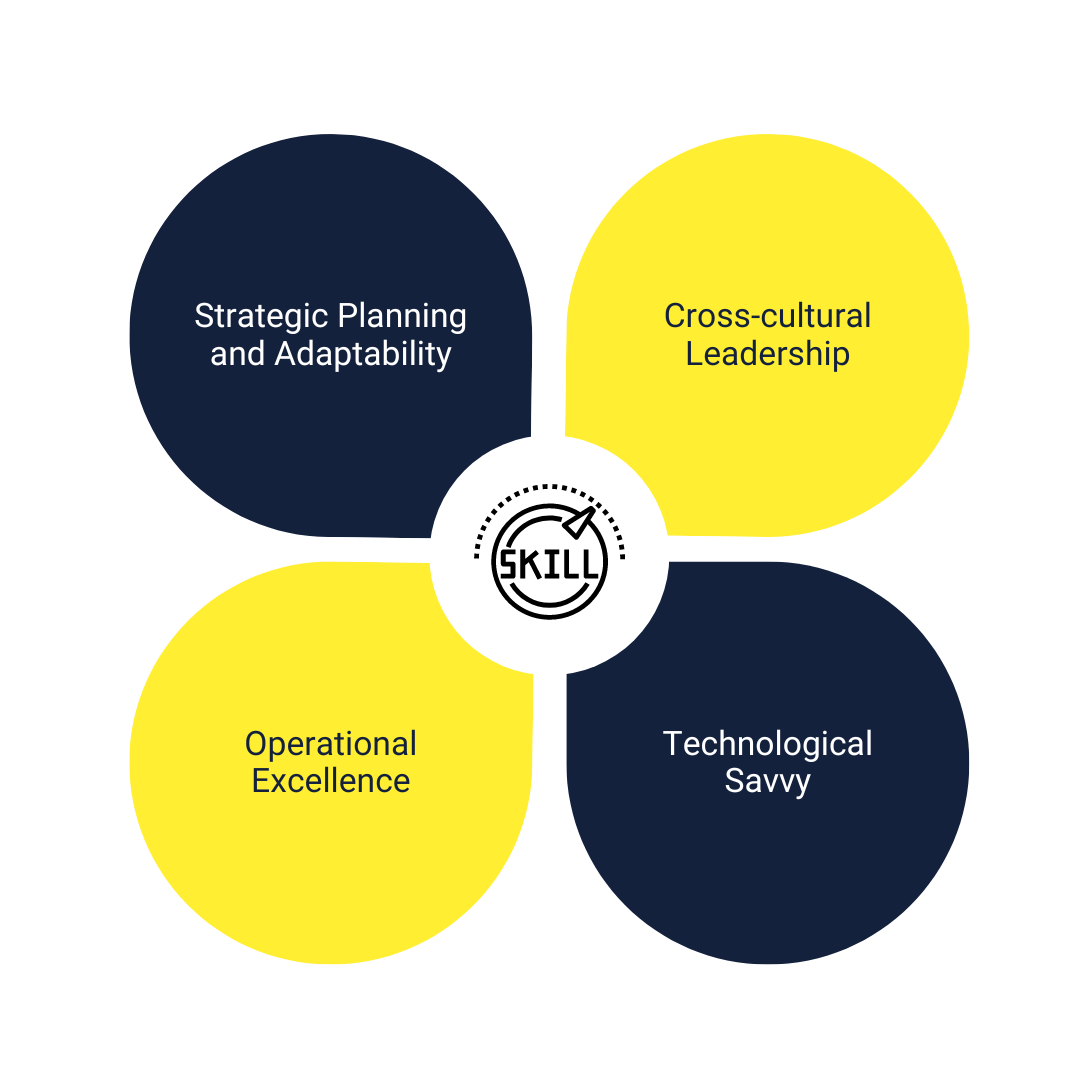
Essential skills for supply chain executives in Mexico — Zavala Civitas

  • Strategic planning and adaptability: Ensuring long-term direction-setting amidst fluctuating trade laws and changing market dynamics — particularly in a market where USMCA rule-of-origin requirements, customs regulatory changes, and security-driven route adjustments can alter the logistics network configuration faster than capital-intensive infrastructure investments can respond.
  • Technological savvy: Incorporating advanced analytics, IoT, and blockchain to enhance transparency and improve operational efficiency at various points along the supply chain — for executives who can evaluate which technology investments create genuine operational improvement in Mexico’s specific infrastructure context and which ones are designed for more mature logistics markets than Mexico’s current state.
  • Operational excellence: Knowledge of lean management approaches and ability to effectively supervise large-scale logistics operations — including the last-mile delivery complexity in Mexico’s major metropolitan areas where traffic, regulatory restrictions, and security considerations create operational challenges that differ materially from the US logistics executive’s operating experience.
  • Cross-cultural leadership: Ability to manage teams from different nationalities and cultural backgrounds — particularly relevant in the nearshoring context, where Mexican logistics operations serve international manufacturing companies whose corporate culture, reporting requirements, and operational standards may differ significantly from the domestic logistics culture.

As Mexico continues to assert its significance in global transportation and logistics, it is important for organisations to deploy strategic executive search services. By focusing on strategic executive search, firms in Mexico may turn supply chain challenges into steppingstones towards advancement and success globally — setting standards for operational excellence in these vital areas.

Click here to get in contact with us.

Frequently Asked Questions: Executive Search in Mexico’s Logistics and Supply Chain Sectors

Why does Mexico’s emergence as the largest US import source in 2023 make logistics executive leadership the nearshoring wave’s most critical infrastructure constraint?
Because each billion dollars in new nearshoring manufacturing capacity creates proportional demand for warehouse, distribution, customs brokerage, intermodal transport, and last-mile delivery leadership at the industrial park and regional hub level. The executives who can design and manage logistics networks serving those industrial parks — understanding Mexico’s specific physical infrastructure constraints and bilateral USMCA compliance requirements — are the bottleneck that could slow the nearshoring wave’s logistics infrastructure from keeping pace with the manufacturing capacity it needs to support.
What specific USMCA compliance capability does Mexico logistics executive search require that general trade compliance experience doesn’t provide?
Detailed knowledge of USMCA rule-of-origin requirements for the specific product categories manufactured in Mexico’s nearshoring industrial parks — particularly automotive (which has among the most complex regional content requirements), electronics, and textiles. The logistics executive who understands which supply chain configurations qualify USMCA products for zero-tariff treatment and which do not is protecting the financial model behind the client’s nearshoring investment. The one who does not is creating tariff exposure that the manufacturing economics did not account for.
How does the security environment in specific Mexican regions specifically affect logistics executive leadership requirements?
By making security-aware route planning, carrier vetting, cargo protection protocols, and law enforcement and security authority relationship management a primary operational responsibility of senior logistics executives — not a specialised security team function. The logistics executive who does not integrate security into the network design and operational management framework will face cargo loss, route disruptions, and carrier relationship failures that their competitors with security-integrated operations are avoiding. Executive search must assess security management track record as a core logistics operational competency, not a supplementary risk consideration.
What cross-cultural leadership capability does the nearshoring context specifically require from Mexico logistics executives?
The ability to manage the relationship between the international manufacturing company’s operational and reporting requirements — in the communication style, performance metric framework, and governance standard that the corporate parent in the US, Germany, Japan, or South Korea expects — and the Mexican logistics team and regulatory environment that produces the operational outcomes. That bilateral management capability — translating between the international corporate framework and the Mexican operational context — is the specific cross-cultural requirement that the nearshoring logistics context creates and that domestic Mexican logistics management experience alone does not develop.
How does Zavala Civitas approach executive search in Mexico’s logistics and supply chain sector?
Through sector-specific talent mapping assessing nearshoring industrial park logistics network design capability, USMCA rule-of-origin compliance expertise, security-aware route and carrier management, bilateral corporate reporting and operational management, and AI/IoT technology governance in Mexico’s specific infrastructure context. We access both domestic Mexican logistics executives and internationally located Mexican logistics professionals who have built equivalent cross-border supply chain management experience. From our Mexico City office, with a 92% closing rate.

Finding executive leadership for Mexico’s logistics and supply chain sector?

Zavala Civitas provides sector-specific executive search for Mexico’s logistics organisations — nearshoring network design, USMCA compliance, and security-integrated operations management. 92% closing rate.

Executive Search →
Operations & Supply Chain →
Contact Us →

Executive Leadership in Mexico’s Logistics Sector

Key Takeaway: Mexico’s logistics sector handles over 80% of bilateral trade with the U.S. by road — the most trade-intensive bilateral logistics relationship in the world under USMCA. The nearshoring investment wave is adding industrial park logistics demand in Monterrey, Guadalajara, and the Bajío at a pace that domestic logistics

Read More

Related posts

Trabajo en remoto en los despachos de abogados

Autora: Beatriz Baker Araujo Senior Advisor, Zavala Civitas El debate sobre el trabajo presencial y remoto en los despachos de abogados lleva años activo, pero no ha madurado. Las posiciones se han endurecido desde 2020, y las conversaciones suelen discurrir entre dos polos: socios que invocan la cultura, el mentoring

Read More

Executive Search China: Industrial Sector

Key Takeaway: Beijing has launched a nationwide “anti-involution” (反内卷) campaign to address destructive price wars and overcapacity across multiple industrial sectors at once, not just renewables. Electrical machinery and equipment, communications equipment, and medical products all show 29% to 34% of firms losing money in 2024-25. Goldman Sachs estimates Chinese

Read More
Financial services building in Germany

Executive Search in Brazil for Financial Services

Key Takeaway: The White House targeted Brazil’s Pix payment system in April 2026, calling it a barrier to US payment companies. Brazil’s Central Bank fired back, defending Pix as a matter of payments sovereignty. At the same time, the collapse of Banco Master, the largest banking fraud in Brazilian history,

Read More
law leaders working

Executive Search in Mexico for Legal and Professional Services

Key Takeaway: Mexico’s 2024 judicial reform introduced popular election of judges and magistrates, with implementation beginning in 2025. This has accelerated a shift toward arbitration as the preferred dispute-resolution method in commercial contracts, as companies seek predictability an elected judiciary cannot yet guarantee. Combined with nearshoring-driven M&A activity and the

Read More

Executive Search in Italy for Industrial

Key Takeaway: Turin’s automotive cluster invested roughly €2.8 billion in electrification between 2024 and 2026. Over the same period, regional automotive employment fell by more than 3,200 positions. Fewer than 20% of local engineering graduates hold the specific battery, power electronics, and embedded software skills employers are actually hiring for.

Read More

Executive Search in Portugal for Financial Services

Key Takeaway: French banking group BPCE is investing €6.4 billion to acquire Novo Banco and building a 20,000 square metre campus in Lisbon, alongside a 2,500-strong tech hub already operating in Porto. This single deal is creating demand for highly specialised roles in risk analytics, structured finance, and digital-asset compliance

Read More