
“Anybody can become angry, that is easy; but to be angry with the right person, and to the right degree, and at the right time, and for the right purpose, and in the right way, that is not within everybody’s power, that is not easy.”
Aristotle
Anger is a normal human emotion. In leadership, the issue is not whether executives ever feel frustrated, challenged or angry, but how they respond when those emotions arise.
When emotional reactions repeatedly become disproportionate, defensive or aggressive, they can interfere with communication, decision-making, feedback and relationships with teams and stakeholders. Leadership development can help executives recognise these patterns and develop more deliberate responses under pressure.
Why Emotional Intelligence Matters in Leadership Development
Leadership increasingly requires a combination of strategic judgment and human-centred capabilities. Executives need to make difficult decisions while maintaining relationships, giving feedback, managing disagreement and leading teams through uncertainty.
The World Economic Forum’s Future of Jobs Report 2025 identifies resilience, flexibility and agility as core skills for 67% of employers, followed by leadership and social influence at 61%. Motivation and self-awareness are considered core by 52%, while empathy and active listening are cited by 50%.
Source: World Economic Forum, Future of Jobs Report 2025.
Research into emotional intelligence and leadership also generally finds positive relationships with leadership behaviours and outcomes, although the strength of those relationships depends on how emotional intelligence is defined and measured.
How Poor Emotional Regulation Can Affect Leadership
Repeatedly unmanaged anger can create leadership problems even when the executive is technically strong or commercially successful.
| Observable Behaviour | Possible Leadership Impact | Development Focus |
|---|---|---|
| Frequent outbursts or disproportionate reactions | Reduced psychological safety and more cautious communication | Self-awareness and response regulation |
| Defensiveness when challenged | Less honest feedback and weaker decision-making information | Active listening and reflective practice |
| Impulsive decisions during conflict | Inconsistent judgment and avoidable escalation | Pause, analysis and deliberate decision-making |
| Avoidance after difficult conversations | Unresolved conflict and unclear accountability | Constructive conflict management |
| Difficulty separating disagreement from personal criticism | Damaged relationships and reduced collaboration | Perspective-taking and emotional awareness |
Signs an Executive May Need Leadership Development in Emotional Intelligence
1. Communication Breakdowns
When leaders react aggressively or defensively, employees may begin filtering the information they share. Over time, the executive can lose access to the candid feedback and operational information required to make good decisions.
2. Team Members Become Reluctant to Challenge the Leader
A team does not need to agree with its leader constantly. If employees avoid disagreement because they anticipate an emotional reaction, the executive may receive less diverse information and fewer alternative perspectives.
3. Decisions Change Under Emotional Pressure
Strong emotional responses can narrow attention toward the immediate conflict. Leadership development can help executives create enough distance between the emotional reaction and the decision to consider consequences, alternatives and relevant evidence.
4. Conflict Remains Unresolved
Some executives respond to conflict through confrontation, while others withdraw after an emotional episode. Both patterns can leave underlying disagreements unresolved and make future collaboration more difficult.
5. Relationships With Key Stakeholders Deteriorate
Senior leadership depends heavily on influence. Repeatedly damaging relationships with peers, direct reports, boards, customers or other stakeholders can therefore become a business issue rather than simply an interpersonal one.
6. Constructive Feedback Is Difficult to Receive
Leadership development becomes difficult when feedback itself triggers defensiveness. Executives need to distinguish between criticism of a decision or behaviour and criticism of their personal value or authority.
7. The Same Behaviour Appears Across Different Situations
A single difficult interaction does not define a leader. Development becomes more relevant when similar patterns recur across different teams, stakeholders or situations despite previous feedback.
Understanding Triggers Before Trying to Control Reactions
Effective development begins by identifying the situations that consistently create strong emotional reactions.
For one executive, the trigger may be loss of control over a project. For another, it may be public disagreement, missed deadlines, ambiguity or the perception that a team member has ignored an instruction.
The purpose is not to decide that these situations should never create frustration. Instead, identifying the pattern helps the executive recognise the reaction earlier and develop alternative responses before behaviour becomes counterproductive.
Leadership Development for Emotional Intelligence
Emotional intelligence is commonly associated with capabilities such as self-awareness, emotional regulation, awareness of others and effective relationship management.
Within leadership development, these concepts become more useful when they are translated into observable behaviour. Rather than asking whether someone is “emotionally intelligent”, an organization can assess how that executive:
- Responds when challenged or contradicted.
- Receives difficult feedback.
- Manages disagreement between team members.
- Communicates under pressure.
- Recognises how their behaviour affects others.
- Adjusts after receiving evidence that their approach is not working.
- Maintains judgment when emotions are elevated.
This also reduces the risk of relying too heavily on self-perception. Emotional intelligence research has shown that results can vary depending on whether capabilities are assessed through self-report, ability measures or ratings from other people.
Practical Ways to Develop Emotional Regulation in Leaders
1. Build Awareness of Repeating Patterns
Executives can review situations in which their reaction created an outcome they did not intend. The important questions are what triggered the reaction, what assumptions were made and what alternative response could have produced a better result.
2. Create Space Between Emotion and Action
Not every difficult conversation requires an immediate response. Pausing before answering, requesting additional information or revisiting a decision after the initial emotional intensity has decreased can improve judgment without avoiding accountability.
3. Practise Difficult Leadership Situations
Role-playing and business cases can allow executives to rehearse challenging conversations, feedback discussions and conflicts before applying new behaviours in real organizational situations.
4. Use Feedback From Multiple Perspectives
Feedback from superiors, peers and direct reports can reveal gaps between the way an executive intends to communicate and the way that behaviour is actually experienced by others.
5. Apply Development to Real Business Situations
Development is more useful when new behaviours are applied to actual leadership challenges rather than discussed only in theory. Executives can test different approaches, observe the consequences and adjust based on feedback.
6. Know When Leadership Coaching Is Not Enough
Leadership development is designed to improve professional capabilities and workplace behaviour. It is not a substitute for mental-health treatment. When anger or emotional difficulties extend beyond leadership situations or require clinical support, the appropriate professional intervention may sit outside an executive-development programme.
Zavala Civitas Assessment & Leadership Development Program
At Zavala Civitas, leadership development can begin with an Executive Assessment to understand the leader’s current profile, strengths and development areas relative to a specific role and organizational context.
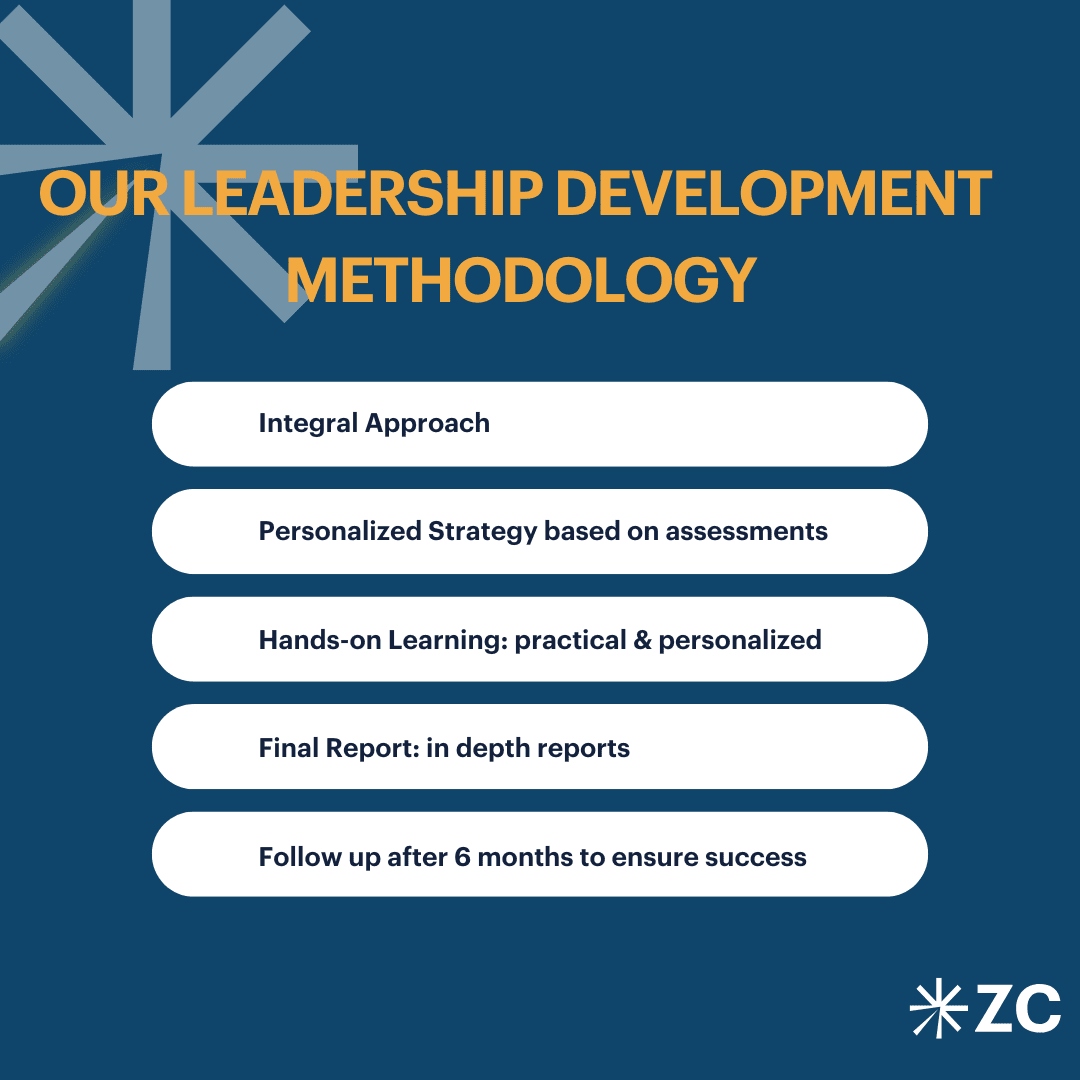
The current methodology combines:
- Individual Assessment & Development Plan: psychometric assessment and structured evaluation to identify strengths and development priorities.
- Training & Implementation: business cases, academic material and role-playing exercises tailored to the executive’s actual development areas.
- Coaching & Follow-Up: a structured period in which the executive applies the development plan, reflects on results and adjusts behaviour using real-world feedback.
This structure is particularly relevant for emotional-intelligence development because the goal is not merely to understand a concept. The executive needs opportunities to practise different behaviours, observe their impact and make those behaviours more consistent over time.
Frequently Asked Questions About Emotional Intelligence and Leadership Development
Why is emotional intelligence important for leaders?
Leadership requires executives to make decisions and influence others while managing disagreement, feedback and pressure. Emotional intelligence can support self-awareness, active listening, relationship management and more deliberate responses in difficult situations.
Does good leadership mean never becoming angry?
No. Anger is a normal emotion and can signal that an important expectation, value or boundary has been challenged. The leadership issue is whether the executive can recognise the emotion and respond proportionately rather than allowing anger to produce impulsive or damaging behaviour.
Can emotional intelligence be developed?
Leadership behaviours associated with emotional intelligence can be developed through structured feedback, reflection, practice, coaching and application to real business situations. Development should focus on specific behaviours and leadership requirements rather than treating emotional intelligence as a generic score.
How can companies assess emotional intelligence in executives?
Companies can combine psychometric assessment, structured competency interviews, observed behaviour and feedback from multiple professional stakeholders. Using several sources provides a broader perspective than relying solely on an executive’s self-assessment.
Is leadership development the same as anger-management therapy?
No. Leadership development focuses on professional behaviour, leadership capabilities and performance in organizational situations. Clinical or therapeutic treatment addresses different needs and should be delivered by appropriately qualified health professionals when required.
How does Zavala Civitas develop emotional-intelligence-related leadership skills?
Zavala Civitas can begin with executive assessment to identify the leader’s profile and development priorities. The development programme then combines tailored business cases, academic material, role-playing, coaching and follow-up so that new behaviours can be applied to real leadership situations.
If your organization needs a tailored Leadership Development or Executive Assessment programme, learn more about our methodology or contact us directly.