
5 leadership trends that are a must for 2022 in China. An Executive Search firm insight.

Key Takeaway: The leadership priorities first highlighted in this article in 2022 have evolved into broader structural trends in China. Flexible working models, changing skill requirements, employee well-being and organisational adaptability remain relevant, but leadership teams now also face accelerated digitalisation, artificial intelligence adoption and workforce transformation. China had 725.04 million employed people at the end of 2025, while more than 200 million people participate in flexible employment. For executive hiring, companies increasingly need leaders who can combine operational accountability with digital capability, workforce development and organisational adaptability.

Last updated: August 13, 2026

As an Executive Search firm, we have specialists in various sectors. At Zavala Civitas we specialize in China´s market and today we want to share with you an update on 4 leadership trends that will be essential for 2022.

Over the past two years, leaders have faced many challenges when it comes to talent management and leadership due to the Covid 19 pandemic. These challenges have become guides for their organizations by allowing them to operate remotely, guaranteeing their security and maintaining their commitment. China is not an exception to this rule and its workforce is rapidly adapting to these new situations.

This year will be filled with more changes, as the effects of the pandemic and rising inflation still hit the corporate sector. In China, the lockdown has been difficult for businesses and employees and the later are also reevaluating their situation and prioritizing different values, such as labor flexibility.

As an executive search firm, Zavala Civitas is aware of the top leadership trends in companies and these are some of the most used in China that we recommend to embrace:

Key Figures at a Glance

Data point Finding Source
People employed in China, 2025 725.04 million National Bureau of Statistics of China
Flexible employment in China More than 200 million people State Council report to the National People’s Congress
Digital economy core industries, 2025 More than 10.5% of GDP National Data Administration
Subsidised vocational training target, 2026-2030 More than 50 million training opportunities Ministry of Human Resources and Social Security / State Council
2026 context: Flexibility in China’s labour market now extends beyond the remote-working response that characterised the pandemic period. A 2025 State Council report estimates that more than 200 million people participate in flexible employment. For leadership teams, the practical issue is therefore broader than office attendance: organisations increasingly need to define where flexibility improves talent access while maintaining accountability, collaboration and operational performance.
  • Strengthen hybrid work:

Companies in China have amazingly evolved to new forms of work. Even though in some sectors physical presence is still required in executive positions, hybrid work is a must as many people have decided not to come back to the office and prefer to work abroad in fear of another lockdown.

  • Change skillset requirements:

We have seen too often, based on extensive experience in executive search, that many job openings are known to be an enumerated list of detailed skill requirements or specific years of experience. This can hurt a candidate’s hiring, as they can often be intimidated or put off by the long list of requirements and not apply. This is how companies and leaders will be losing potential workers who have the talent, mentality and ability to be successful.

The shift from fixed experience requirements towards capability-based assessment has become more relevant as technology changes job content. According to China’s National Data Administration, core digital economy industries represented more than 10.5% of GDP in 2025. China is also expanding skills development, with its 2026-2030 human resources plan targeting more than 50 million subsidised vocational training opportunities. Executive assessment therefore increasingly needs to distinguish durable leadership capabilities from technical requirements that may change quickly.
  • Present wellness programs for employees:

In China, the pandemic has increased the importance of employee wellness.The leaders who develop these programs, promote a less stressful work environment, show that their interest goes beyond the final results and, when the workers know that they can receive adequate support, they will probably see their leaders as allies and their level of trust towards them will increase, as well as their engagement and productivity.

  • Going forward:

The new leadership trends reflect some uncertainties facing the business world. Managers cannot ignore the changes that occur, such as the offer of job options, support for the welfare of workers, etc. A clear example is China, as with its great strength it was able to face the challenges of the changes that occurred in the last two years and continues to adapt and take action on the challenges of 2022.

Zavala Civitas Executive Search in China

We are Zavala Civitas, we have walked alongside our clients, supporting them in issues ranging from Executive Search to broader Organizational Consulting. We are ready to be your talent and organizational partner in China and East Asia. We are ready to face new challenges and work hand to hand. Click here to get in contact with us.
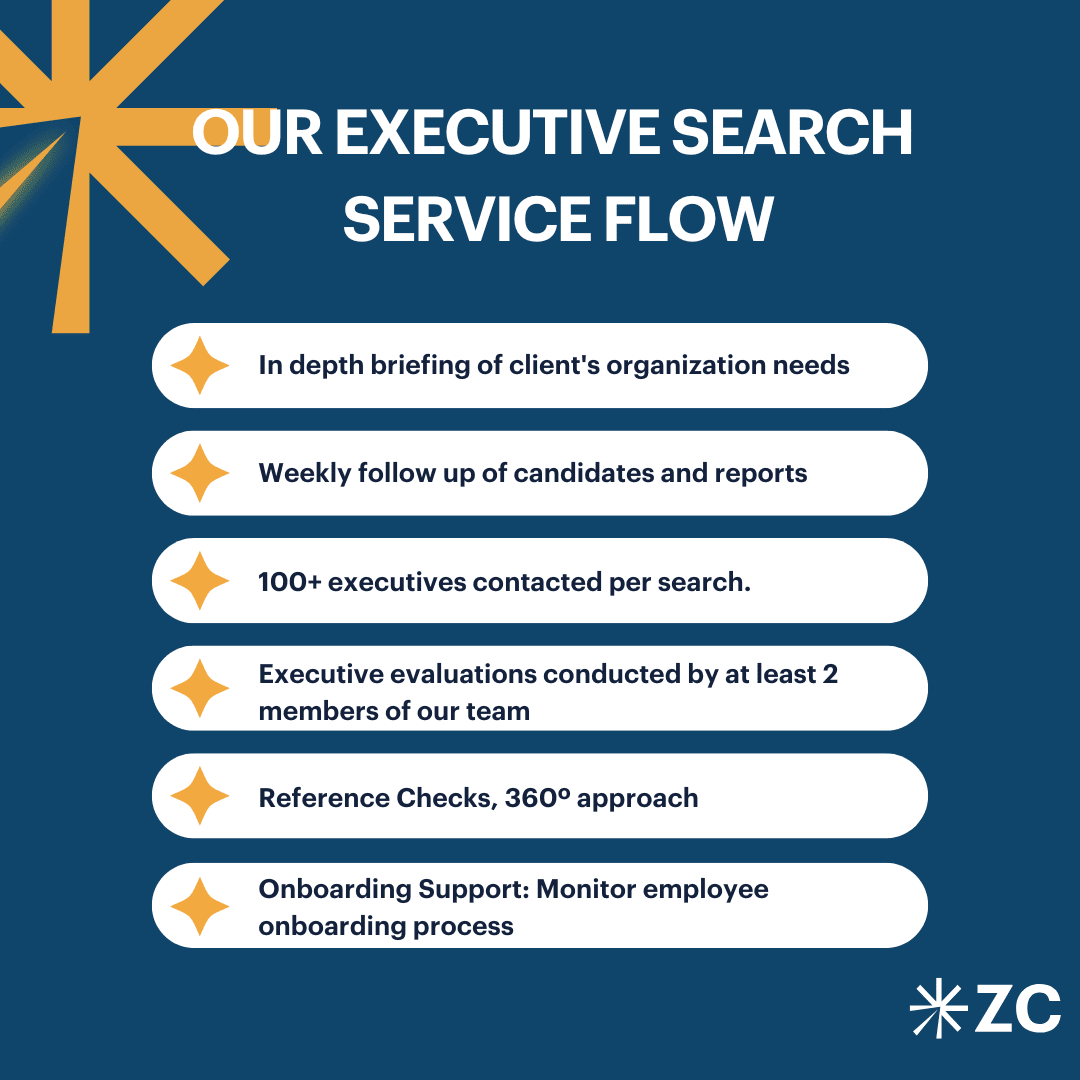
Zavala Civitas executive search methodology for China country

Frequently Asked Questions: Leadership Trends and Executive Search in China

What leadership trends are shaping companies in China in 2026?
Leadership priorities in China increasingly include organisational flexibility, digital and AI capability, workforce development, employee well-being and the ability to adapt operating models as technology and labour-market conditions change. These trends build on the hybrid working and talent-management challenges that emerged during the pandemic period.
How important is flexible employment in China?
A 2025 State Council report estimated that more than 200 million people participate in flexible employment in China. Although flexible employment is broader than corporate hybrid work, its scale illustrates how employment models are becoming more diverse and why leadership teams need to think carefully about flexibility, accountability and workforce engagement.
Why are executive skill requirements changing in China?
Digitalisation, artificial intelligence and industrial transformation are changing the capabilities companies require from leaders. Core digital economy industries represented more than 10.5% of China’s GDP in 2025. Executive searches therefore increasingly need to assess adaptability, digital judgement, learning capacity and transformation leadership alongside traditional sector experience.
Why is leadership development becoming more important in China?
China’s 2026-2030 human resources and social security plan targets more than 50 million subsidised vocational training opportunities. At executive level, the same underlying challenge applies: organisations need leaders who can continue developing their capabilities as technologies, customer expectations and business models evolve.
How does Zavala Civitas assess leaders for companies in China?
Zavala Civitas combines executive market mapping, direct candidate outreach, structured leadership assessment, reference checks and onboarding support. Searches evaluate the experience required for the position together with leadership capability, organisational fit, adaptability and the ability to operate effectively in the Chinese market. Zavala Civitas has a 92% executive search closing rate.

Building leadership capability in China?

Zavala Civitas helps organisations identify and assess executives with the leadership capabilities required to navigate changing talent, technology and organisational environments in China. 92% closing rate.

Executive Search → Talent in China → Contact Us →

Executive Search China: Industrial Sector

Key Takeaway: Beijing has launched a nationwide “anti-involution” (反内卷) campaign to address destructive price wars and overcapacity across multiple industrial sectors at once, not just renewables. Electrical machinery and equipment, communications equipment, and medical products all show 29% to 34% of firms losing money in 2024-25. Goldman Sachs estimates Chinese

Read More

Executive Search in Italy for Industrial

Key Takeaway: Turin’s automotive cluster invested roughly €2.8 billion in electrification between 2024 and 2026. Over the same period, regional automotive employment fell by more than 3,200 positions. Fewer than 20% of local engineering graduates hold the specific battery, power electronics, and embedded software skills employers are actually hiring for.

Read More

Executive Search in Portugal for Financial Services

Key Takeaway: French banking group BPCE is investing €6.4 billion to acquire Novo Banco and building a 20,000 square metre campus in Lisbon, alongside a 2,500-strong tech hub already operating in Porto. This single deal is creating demand for highly specialised roles in risk analytics, structured finance, and digital-asset compliance

Read More

Related posts

Trabajo en remoto en los despachos de abogados

Autora: Beatriz Baker Araujo Senior Advisor, Zavala Civitas El debate sobre el trabajo presencial y remoto en los despachos de abogados lleva años activo, pero no ha madurado. Las posiciones se han endurecido desde 2020, y las conversaciones suelen discurrir entre dos polos: socios que invocan la cultura, el mentoring

Read More

Executive Search China: Industrial Sector

Key Takeaway: Beijing has launched a nationwide “anti-involution” (反内卷) campaign to address destructive price wars and overcapacity across multiple industrial sectors at once, not just renewables. Electrical machinery and equipment, communications equipment, and medical products all show 29% to 34% of firms losing money in 2024-25. Goldman Sachs estimates Chinese

Read More
Financial services building in Germany

Executive Search in Brazil for Financial Services

Key Takeaway: The White House targeted Brazil’s Pix payment system in April 2026, calling it a barrier to US payment companies. Brazil’s Central Bank fired back, defending Pix as a matter of payments sovereignty. At the same time, the collapse of Banco Master, the largest banking fraud in Brazilian history,

Read More
law leaders working

Executive Search in Mexico for Legal and Professional Services

Key Takeaway: Mexico’s 2024 judicial reform introduced popular election of judges and magistrates, with implementation beginning in 2025. This has accelerated a shift toward arbitration as the preferred dispute-resolution method in commercial contracts, as companies seek predictability an elected judiciary cannot yet guarantee. Combined with nearshoring-driven M&A activity and the

Read More

Executive Search in Italy for Industrial

Key Takeaway: Turin’s automotive cluster invested roughly €2.8 billion in electrification between 2024 and 2026. Over the same period, regional automotive employment fell by more than 3,200 positions. Fewer than 20% of local engineering graduates hold the specific battery, power electronics, and embedded software skills employers are actually hiring for.

Read More

Executive Search in Portugal for Financial Services

Key Takeaway: French banking group BPCE is investing €6.4 billion to acquire Novo Banco and building a 20,000 square metre campus in Lisbon, alongside a 2,500-strong tech hub already operating in Porto. This single deal is creating demand for highly specialised roles in risk analytics, structured finance, and digital-asset compliance

Read More