
From “Made” to “Invented” in China: Executive Search View

Alibaba, Huawei and Tencent are 3 Chinese companies that have a strong presence in the Global market. As much as they still rely on their powerful manufacturing force, these companies are different from the rest by leaning towards being more innovative. Therefore, executives need to learn how to lead these companies, this change means headhunters also need to adapt their search for a new type of executive.

From 1980 to 2014, there was an intense increase of 8.7% on China GDP. At the time, the increase was in fact built on its abundant cheap labor and technology introduced from other countries. “Made in China” is a term gradually known to the world during these years which represents good quality and a cheap price. More and more companies came to China to work with local companies, build their own branches, representative offices and plants.

Executive search in China

CEOs in China therefore were sourced by executive search based on their abilities to organise their work force being quick and efficient, almost robot like. Executive search consultants were looking more for executives who were skilled in optimising these benefits for companies, candidates who were able to see things very logically and strictly. Yet, as China shifts to a different economic strategy, executive search must shift with it.

China landscape

As the years progressed, even if “Made in China” is still very present, there has been a change. China wanted to start opting towards becoming more than just an impressive work force, knowing that they would still have this spectacular work ethic, what better than to have labour work on their own creations and not only those of the rest of the world. China Firm Registry Database provided statistics that showed that in 1995 there were over 4.5 million firms with 71% of these being privately owned, yet, in 2014 there were over 18 million firms with 94% privately owned.

These numbers show the rise of not only the number of firms but also the rise of private companies. The rise of privately owned companies leaves more flexibility for innovation as well for executive search who can therefore look for CEOs who differ from state owned companies. During the same dates, there was a rise in granted patents from 45 thousand in 1995 to over 1 million in 2014.

We have therefore maintained that Chinese businesses have shown the ability to innovate more in response to competitive wage markets and global prospects. Headhunters must recognise China’s prospects for a successful shift to a more innovation-based growth model given the data on Chinese patents, both from a number and quality viewpoint. Especially from a tech stand point, China has begun creating not just making, innovating not just building.

Executive search must move and adapt in unison with the market and the changes to the economy, if an economy’s mentality shifts, executives must change with it in order to guide their team. Yet, this is orchestrated by headhunters, who must evaluate the market, recognise impending change and choose the right person to lead a company to success in an ever evolving environment.

Executive search is not only to find a candidate who fits the job description. Headhunters need to deeply analyse executives’ profiles, follow their career development , evaluate organisational alignment, important as China moves from “made in China” to “invented in China”. Zavala Civitas offers these services as well as CEO and board advisory, talent mapping and a deep understanding of China’s market and its rapid evolution.
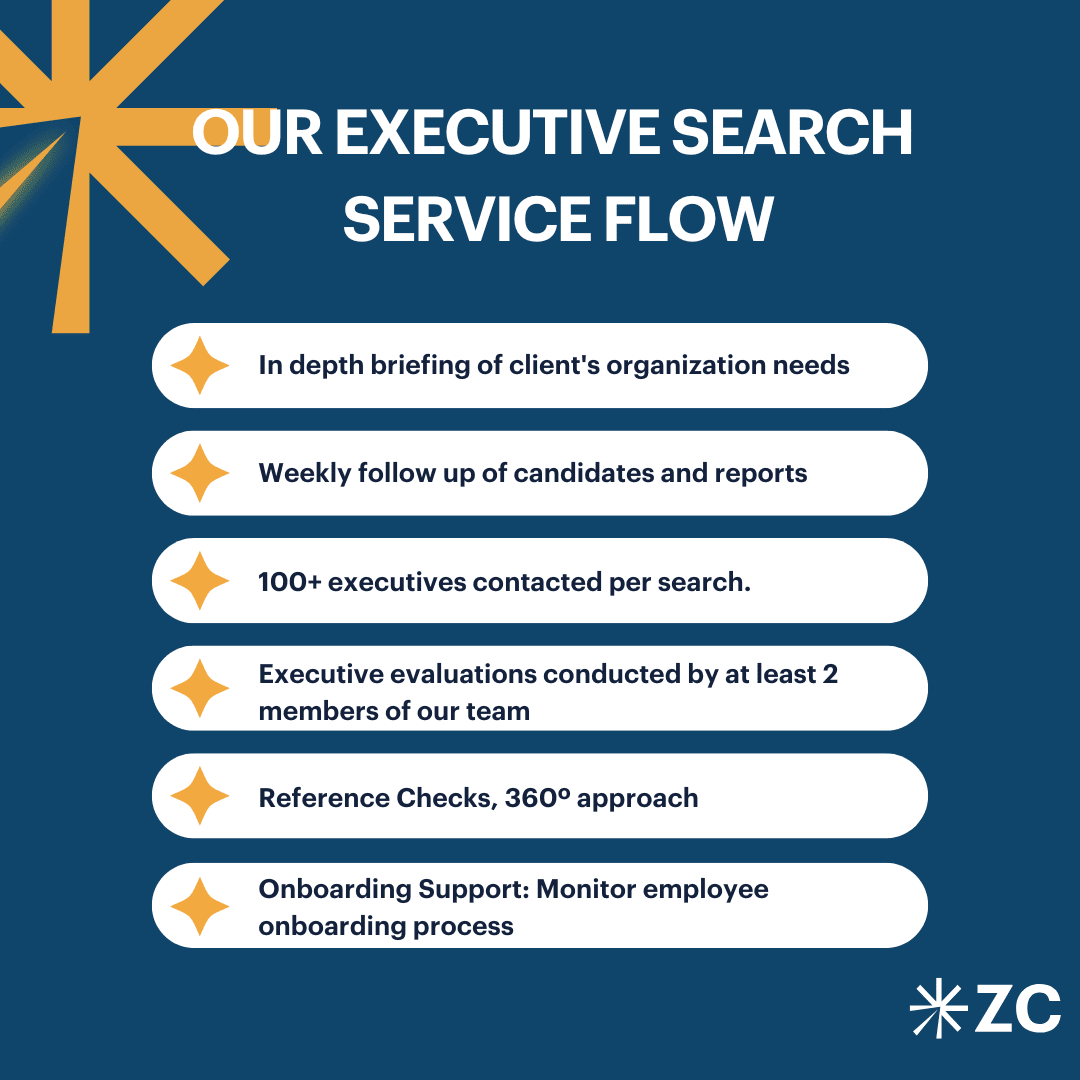

Zavala Civitas executive search methodology in China

Click here to get in contact with us.

China global market and local focus needed

Executive Search in China: Global Leadership, Local Focus 

A Competitive Market Redefining Global Talent China has entered a new phase of globalization — one where economic resilience and geopolitical rebalancing are rewriting the rules of leadership. After two decades of serving as the world’s factory, China is now positioning itself as a center of innovation, digital transformation, and green technology.

Read More
Executive buildings in China

Why Companies Choose Executive Search in China 

China’s Current Business Landscape Slower Growth: GDP is projected to grow 4.5% in 2025, down from 4.9% in 2024. Domestic Weakness: A European Chamber survey revealed 71% of companies cite the domestic slowdown as a bigger concern than tariffs. Labor & Welfare Pressures: New welfare enforcement may hit small firms,

Read More

Executive Leadership Development: Its Importance and Challenges in China

China, which is among the world’s leading economies today, shows how significant executive leadership development has become within its organizations. As it is the second largest economy and a major player in global markets, China has unique issues and prospects in relation to effective leader formation. This article explains why

Read More

Related posts

Leadership and Decision-Making in Asia-Pacific’s Age of AI 

From Technology Adoption to Strategic Accountability  Across the Asia-Pacific (APAC) region, artificial intelligence has moved beyond experimentation. What only a few years ago sat within innovation labs or IT functions has now reached the center of executive and board-level decision-making.  This shift is already measurable. Nearly 48% of companies in Asia now

Read More

Tomás Grimaldi becomes Partner at Zavala Civitas Executive Search 

Madrid, Spain – January 2026  Zavala Civitas Executive Search announces the promotion of Tomás Grimaldi to Partner, reinforcing the firm’s long-term commitment to leadership, growth, and equity partnership continuity.  Tomás joined Zavala Civitas initially as Finance Manager and has progressively taken on broader responsibilities across business development, executive search, and

Read More

Executive Development and Assessment in Portugal for Senior talent

In Portugal, the market is relatively small, executive mobility is limited, and reputations travel quickly. Many companies already have solid senior leaders in place.It’s not about whether these leaders are competent. The question is how to assist them in improving performance as they take on greater roles.  Most people have an area that they can

Read More

The Insider Paradox: Why APAC Boards Are Choosing Continuity Over Disruption 

In H1 2025, 83% of all new CEOs in APAC were internal promotions the highest ratio ever recorded and dramatically higher than Western markets.  This surge is not accidental, nor is it a sign of risk-aversion. It reflects a deeper leadership strategy shaped by the geopolitical uncertainty of the region, operational complexity, and the rising value

Read More
china business landscape

Executive Search in China: Local Leadership vs Global Executives 

Over the past ten years, many multinational companies in China have quietly changed how they think about leadership. The model of relying primarily on expatriate executives is no longer taken for granted.   Boards and CEOs are increasingly weighing the trade-offs between local Chinese executives and global leaders sent from headquarters.

Read More

Executive Search in Mexico: Leadership Demand Shaped by Nearshoring 

Over the past few years, Mexico has moved to the center of many global expansion strategies. Nearshoring has accelerated investment decisions, operational scale, and organizational complexity across the country. As a result, leadership hiring has shifted from being opportunistic to becoming a critical risk factor.  In this environment, Executive Search in Mexico is

Read More