Key Takeaway: The Conference Board reports CEO turnover in the U.S. reached a 20-year high in 2024 — yet only 28% of U.S. companies say they have a strong executive talent pipeline (Deloitte, 2024), and 62% of HR leaders cite readiness gaps as the primary reason for stalled promotions. The development investment is not keeping pace with the succession need.
Last updated: August 13, 2026
According to The Conference Board, CEO turnover in the U.S. reached a 20-year high in 2024, as boards struggled to find internal successors amid burnout, digital disruption, and shifting workforce expectations.
Key Figures at a Glance
| Data point |
Figure |
Source |
| CEO turnover in the U.S. in 2024 |
20-year high |
The Conference Board, 2024 |
| U.S. companies with a strong executive talent pipeline |
Only 28% |
Deloitte, 2024 |
| HR leaders citing readiness gaps as main reason for stalled promotions |
62% |
Deloitte Global Human Capital Trends, 2024 |
| U.S. companies integrating formal assessment tools into VP/C-suite development |
60%+ |
Korn Ferry, 2024 |
Why Executive Development Needs a Change in the U.S.
For decades, leadership development focused on tenure, performance reviews, and classroom training. In today’s environment, that model is no longer sufficient. What organisations now require from their senior leaders is fundamentally different:
- Strategic thinking under uncertainty
- Cross-cultural and hybrid team management
- Tech-savviness, especially around AI and cybersecurity
- Resilience and empathy in crisis situations
- Capability to lead multicultural, distributed teams
These capabilities do not emerge by accident — they must be intentionally developed.
The gap between the 20-year high in CEO turnover and the 28% of companies that say they have a strong executive talent pipeline is not a hiring failure — it is a development failure that surfaces at the succession moment. When a CEO role opens and the internal candidates are not ready, the organisation pays twice: once for the external search and once in the form of the 18–24 month performance discount that external CEOs carry on average compared to well-prepared internal successors. The organisations that will break this cycle in the U.S. are the ones that began the development investment three to five years before the vacancy existed.
The Role of Executive Assessment in U.S. Leadership Development
Development programmes start with structured executive assessment — a shift that enables companies to build talent with purpose, not just promote based on past results.
Executive assessment helps organisations:
- Identify high-potential individuals beyond top performers.
- Uncover blind spots in communication, decision-making, or strategy.
- Support diversity by removing bias from succession conversations.
- Provide tailored feedback to accelerate growth in the specific capabilities each leader needs.
This is especially valuable in the U.S. market, where decentralised corporate structures and regional operating models make objective evaluation critical. According to a 2024 Korn Ferry survey, over 60% of U.S. companies now integrate formal assessment tools into leadership development for VP and C-suite successors.
The shift from subjective to structured assessment in U.S. succession decisions is not primarily about removing bias — though it does that too. It is about producing information that leaders can actually act on. When a VP-level executive understands specifically what behavioural patterns limit their effectiveness under pressure, what their actual risk appetite looks like in decision-making scenarios, and how their communication style lands with the types of stakeholders they will manage at C-suite level, they have a development roadmap. Without that specificity, development programmes produce activity rather than growth.
A Framework for Future-Ready Executive Leadership
To compete and lead in the coming decade, U.S. organisations need a fresh approach to executive leadership development — one built on data, personalisation, and strategic alignment. Key pillars:
- Assess potential, not just performance. Use psychometric, 360° feedback, and behavioural tools to measure what actually predicts C-suite effectiveness — not what produced VP-level success.
- Develop with business context. Embed leaders in real transformation projects, not just classroom training. The capability gap closes faster when the development challenge is the actual challenge the organisation is facing.
- Expose emerging leaders to enterprise strategy. Rotational roles, board mentorships, and cross-border initiatives accelerate readiness in ways that internal coaching programmes cannot.
- Track growth continuously. Move from static leadership pipelines to dynamic talent intelligence systems — with quarterly milestones rather than annual reviews.
Development Is the New Retention Strategy
In an environment of high executive turnover, generational change, and constant disruption, executive leadership development in the U.S. must become a board-level priority. Investing early in executive assessment and development is not about fixing weaknesses — it is about building strategic readiness for the future. It empowers companies to make better decisions, grow internal talent, and adapt to what the business and the market truly demand.
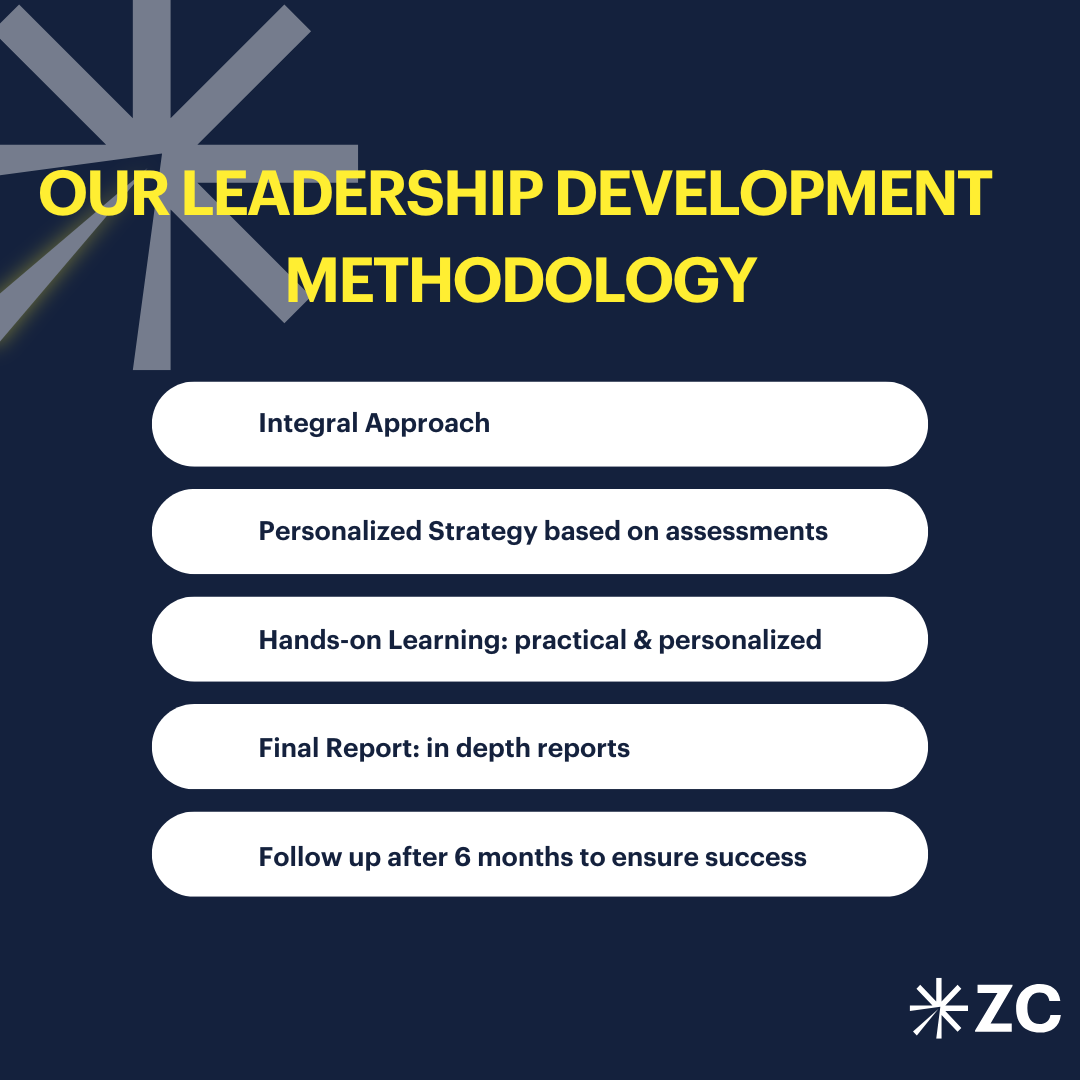
If your organisation is rethinking its approach to leadership development, we can help. At Zavala Civitas, we combine rigorous executive assessment tools with tailored development strategies to help U.S. firms identify, grow, and retain the leaders of tomorrow.
Frequently Asked Questions: Executive Leadership Development in the U.S.
Why is the gap between CEO turnover rates and internal pipeline strength so persistent in U.S. companies?
Because most organisations treat development as an HR function and succession as a board function — and the two rarely operate on the same timeline. Development investments are made based on near-term performance and current role requirements. Succession decisions are made based on what the organisation will need in the next role, two to three years from now. When those two timelines do not align, the organisation is always catching up at the moment of transition rather than preparing ahead of it.
What does “readiness gap” actually mean in practice for VP and C-suite succession?
It means that the competencies that made someone successful at VP level — functional expertise, operational execution, team management within a defined scope — are not the same competencies that determine success at C-suite level: strategic ambiguity navigation, enterprise-wide stakeholder management, board communication, and the ability to make consequential decisions with incomplete information. Most companies discover the gap at the promotion decision, not before it — because the assessment was never done.
Why is structured assessment specifically valuable in U.S. decentralised corporate structures?
Because in decentralised structures, the people making succession recommendations are often the same people who have most invested in the candidate’s success in the current role — which creates a systematic upward bias in informal evaluations. Structured assessment introduces data from outside the immediate reporting relationship, making it possible to evaluate cross-functional leadership and enterprise-level thinking that a direct manager rarely observes.
What makes executive development in the U.S. different from leadership training programmes?
The design principle. Leadership training programmes start with content — frameworks, models, techniques — and deliver them to a cohort. Executive development starts with the individual: their specific assessment results, the actual mandate they are preparing for, and the organisational context they will operate in. The difference in outcome is substantial: training programmes produce participants; development programmes produce readiness for a specific next challenge.
How does Zavala Civitas approach executive development for U.S. organisations?
Through an integrated process that begins with structured assessment — psychometric evaluation, behavioural interviews focused on the target role, and 360° references — and produces a personalised development plan anchored to the specific mandate the leader is preparing for. Development milestones are tracked quarterly, not annually. For PE-backed organisations, we structure the assessment and development timeline against the value creation plan. With a 92% closing rate across completed executive search mandates.