
Last updated: August 20, 2026
Empathy is increasingly relevant to leadership in China, particularly as organisations combine rapid technology adoption with more collaborative and decentralised ways of working.
However, Executive Search should avoid treating empathy as a personality label or assuming that empathetic leaders are simply more agreeable.
At executive level, empathy is more useful when understood as the ability to recognise how other people perceive a situation, understand the pressures affecting them and use that information to communicate, influence and make stronger decisions.
For organisations operating in China, this capability can become particularly important when leaders need to manage transformation, international stakeholders, changing organisational structures or teams whose responsibilities are being reshaped by AI.
Is Empathy Essential in Executive Search for Leaders in China?
Recent China-specific leadership research suggests that empathy is becoming an important part of a broader shift in what organisations expect from senior executives.
BCG surveyed 160 senior executives across 13 industries in China. More than 80% of the participating companies operated internationally.
The research found growing support for a leadership model based less on direct control and more on strategic vision, delegation, collaboration and human connection.
Key Figures at a Glance
| Leadership Attribute | Executives Identifying It as Important | Source | Executive Search Implication |
|---|---|---|---|
| Empathy | 58% | BCG China, 2025 | Candidate assessment should examine perspective-taking and the ability to understand how change affects teams and stakeholders. |
| Humanistic care | 64% | BCG China, 2025 | Leaders increasingly need to understand human consequences alongside operational or technological decisions. |
| Providing inspiration | 65% | BCG China, 2025 | Empathy becomes more valuable when combined with the ability to create direction and motivate teams around change. |
| Delegation and empowerment | 75% | BCG China, 2025 | Empathetic leadership should enable autonomy and better decisions rather than produce greater dependency on the executive. |
What Empathy Means at Executive Level
Empathy is sometimes interpreted too narrowly as emotional sensitivity.
For senior leaders, cognitive empathy can be particularly useful: understanding how another person sees a situation even when the executive does not necessarily agree with that perspective.
This distinction matters because executive leadership frequently requires decisions that some stakeholders will dislike.
A CEO can understand why employees fear a restructuring and still conclude that the restructuring is necessary. A Country Manager can recognise why headquarters wants greater control while still explaining where localisation is required. A CHRO can understand why a senior executive resists a new operating model while still holding that person accountable for adopting it.
Empathy therefore does not remove difficult decisions. It can improve how those decisions are understood, communicated and implemented.
Why Empathy Matters More as AI Changes Leadership in China
The increasing adoption of AI makes this leadership capability more relevant.
In BCG’s China survey, 60% of respondents said their companies had already adopted AI in some departments or use cases.
As technology assumes more analytical, repetitive or process-oriented work, leaders increasingly need to decide how responsibilities should be divided between people and technology.
That requires understanding how employees experience the change, where legitimate concerns exist and which capabilities need to be developed rather than simply communicating that AI transformation is inevitable.
BCG’s China research specifically argues that growing AI adoption is increasing the importance of leaders who understand what motivates people and can combine technological change with a more human leadership model.
Empathy and Cross-Cultural Leadership in China
Empathy can also be particularly important in multinational organisations because leadership behaviour does not have exactly the same meaning in every cultural and organisational context.
Research published in the International Business Review in 2025 examined leadership development within multinational organisations in China and found that different cultural perceptions of care and leadership can shape global talent-management and working practices.
This does not mean that Executive Search should rely on stereotypes about how “Chinese leaders” or “Western leaders” behave.
The stronger assessment question is whether an executive can recognise that stakeholders interpret authority, feedback, disagreement, autonomy and relationship-building differently and adapt their leadership without losing authenticity or clarity.
This capability can be particularly important for executives who need to connect a China organisation with international headquarters, regional teams or global boards.
Empathy Without Accountability Is Not Effective Leadership
One risk in assessing empathy is assuming that highly empathetic leaders will avoid conflict or difficult decisions.
The opposite capability is often more valuable: understanding how another person experiences a decision while remaining clear about expectations, standards and consequences.
This becomes especially important during restructuring, performance management, succession decisions or organisational transformation.
Executives need to listen without allowing every concern to become a veto. They need to acknowledge uncertainty without removing direction. And they need to understand resistance without automatically concluding that the change itself is wrong.
Empathy and accountability are therefore complementary rather than competing leadership capabilities.
How to Assess Empathy During Executive Search in China
Empathy is difficult to assess reliably through direct questions such as “Are you an empathetic leader?”
Behavioural evidence is more useful.
Ask About Resistance to Change
Candidates can be asked to describe a transformation that encountered significant employee or stakeholder resistance. The relevant evidence is how they understood the source of that resistance and whether it changed their implementation approach.
Explore Difficult Performance Conversations
An executive should be able to show that they can understand individual circumstances while still addressing underperformance clearly.
Test Cross-Cultural Stakeholder Situations
For China leadership roles, examples involving local teams, international headquarters, regional stakeholders or joint-venture partners can reveal whether the executive genuinely adapts or simply expects others to adapt to them.
Use References to Validate Leadership Behaviour
Former managers, peers and direct reports can provide useful evidence about how the executive behaves when under pressure, manages disagreement and communicates difficult decisions.
A structured Executive Assessment can add further behavioural and psychometric evidence when interpersonal leadership capabilities are particularly important to the mandate.
Can Executive Empathy Be Developed?
Empathy is not necessarily fixed.
Executives can improve perspective-taking, listening, feedback, communication and awareness of how their behaviour affects others.
This can be especially relevant when a technically or commercially strong executive is moving into a broader leadership mandate where success depends increasingly on influencing others rather than personally controlling outcomes.
In these situations, Leadership Development can target specific behavioural gaps rather than requiring the organisation to replace an otherwise strong leader.
Executive Search for Empathetic Leaders in China
Empathy should not become another generic competency added to every leadership specification.
The organisation should first determine why the capability matters for the specific mandate.
A CEO leading restructuring may require empathy to understand resistance while maintaining difficult decisions. A Country Manager may need it to bridge local and global perspectives. A technology executive may need it to redesign work around AI without losing critical human capability.
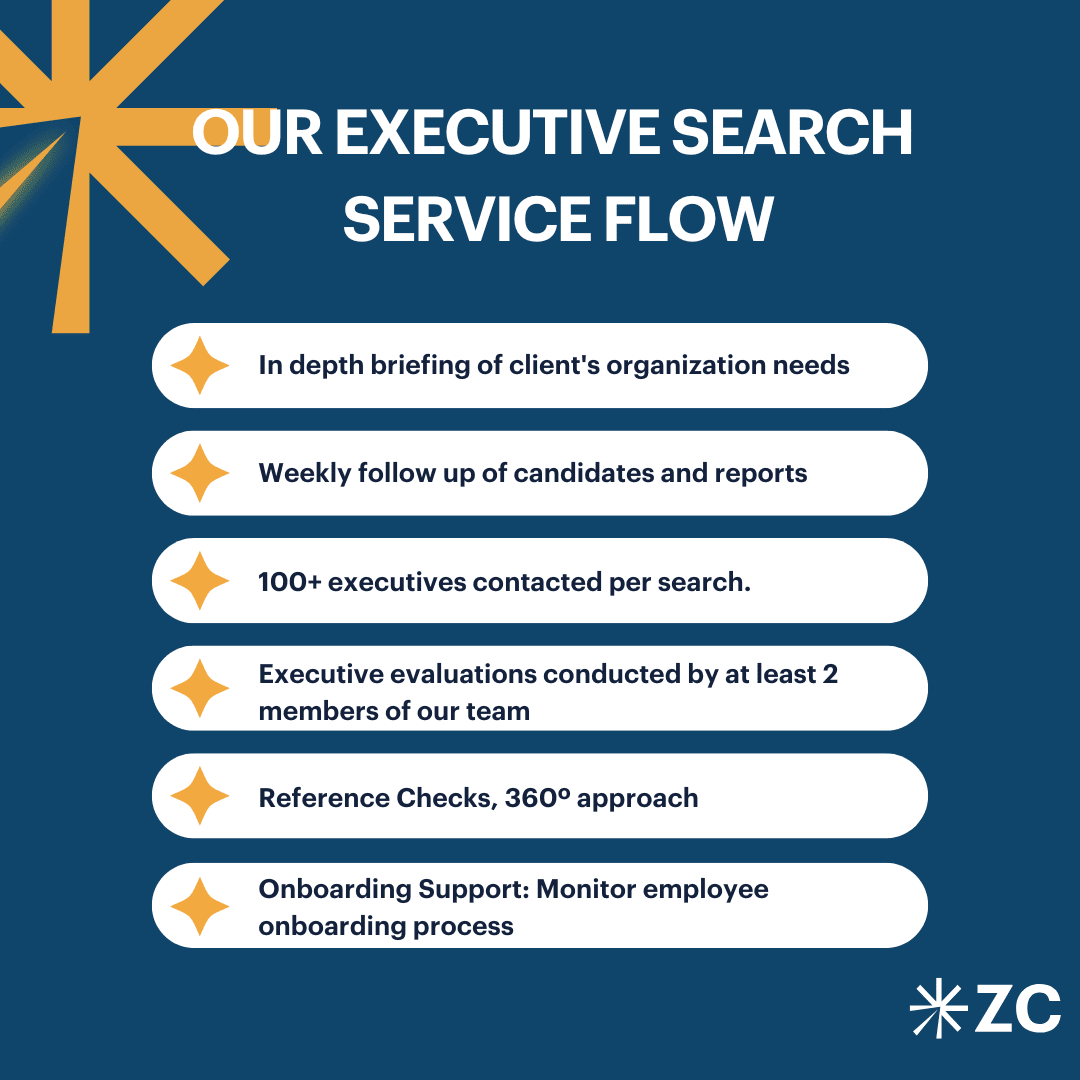
Zavala Civitas’ Executive Search methodology begins by defining responsibilities and critical success factors before the candidate market is mapped. This allows behavioural capabilities such as empathy to be assessed against the real leadership challenge rather than as abstract personality preferences.
For further market context, see our Executive Search services in China.
Frequently Asked Questions: Empathy and Executive Search in China
Empathy becomes valuable when it improves judgement, communication and execution.
Zavala Civitas helps organisations identify and assess leaders capable of combining human understanding with accountability and strategic execution in China.
Executive Search → Executive Assessment → Contact Us →