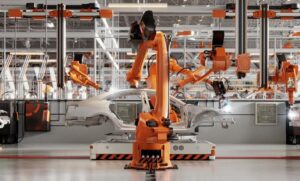
An Executive Search firm overview of the Automotive Industry in China

“China is the world’s largest automobile producer and consumer. It has a complete industrial system, diversified market demand and the capacity for self-recycling and strong economic recovery. China’s auto industry will overcome difficulties and achieve steady and healthy development.”

Xin Guobin, Chinese vice minister of industry and information technology.

Zavala Civitas has specialists in various industries and verticals, this allows our consultants to fully understand the needs of the company in question and provide quality services.

Executive Search Overview of the Automotive Industry in China

As of 2009, China is the world’s largest producer of automobiles and the automotive market. More than 80% of the world’s automotive supply chain is connected to China. The country produces, in a year, more vehicles annually than the European Union, the United States and Japan combined, more than 32% of all vehicles produced globally. China’s domestic automobile production is expected to reach 35 million cars by 2025, according to data from the Ministry of Industry and Information Technology.

The importance of this market makes it highly competitive in terms of talent as well. An executive search firm, when looking for senior management positions for this sector, must look for not only strong soft skills, but also very specific hard skills and experience, which makes it difficult to find talent for this sector and is the reason why most companies choose to hire executive search firms.

As an executive search firm with over 20 years of experience, we identify that the automotive sector is undergoing a rapid and radical change due to intense global competition. Consumers are demanding increasingly stringent quality and safety standards, complex technology and design elements, as well as products with strong environmental credentials, in addition to the need for profitability, high volume and high production speed.

This industry must adapt to a rapidly changing environment and the COVID-19 pandemic is an extreme example of how fast things may go.

Pandemic and automotive sector in China

During the pandemic, the automotive sector in China was one of the hardest hits due to supply chain disruptions and led to changes in purchasing habits and a disruption of the mobility playing field. The Chinese government has taken actions to support the automotive industry. These actions include delaying the implementation of China’s Six Emission Standard until January 2021, offering tax and fiscal support, accelerating the phase-out of obsolete diesel trucks, and improving marketing channels for second-hand vehicles.

According to data from the China Association of Automobile Manufacturers (CAAM), the effects of the COVID-19 pandemic caused a 47.6% year-on-year decline in Chinese auto sales in April. However, the country’s new-energy vehicle market bucked the trend and continued its rapid expansion, with sales up 44.6% year-on-year.

At this point, the most important quality to look for in the upper management of this sector is the ability to transform crisis into opportunity. China’s automotive industry continues to face unprecedented pressure, and the industry must continue to take active measures to secure supply and boost consumption. Companies that can take advantage of these can develop a clear competitive advantage and lead the recovery. 

Automotive companies require adaptable leaders with the necessary management skills, an international and entrepreneurial mindset, and the ability to lead strategy and change if they are to meet the complex challenges ahead. We are Zavala Civitas an organizational consulting and executive search firm specialized in the Chinese market; you can contact us for any further information.
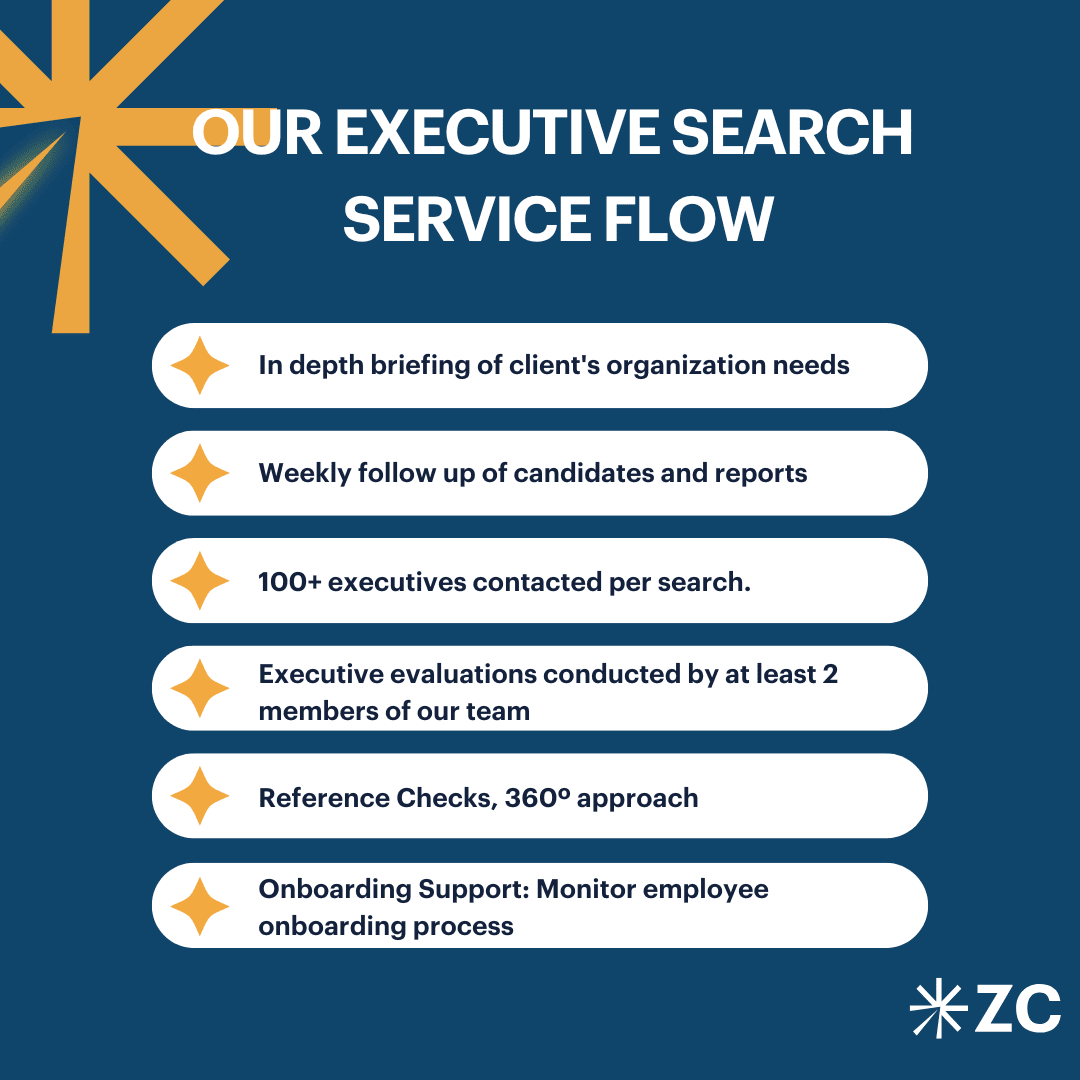
Zavala Civitas executive search methodology for automotive in China

If your organisation operates in China’s automotive or mobility sector and requires leadership capable of navigating electrification, transformation and industrial scale, our Executive Search team can support you. Contact us to discuss executive hiring with discretion, sector insight and strategic depth.

Executive Search en México: Líderes en EPC y Energías Renovables 

México se ha convertido en uno de los países más destacados de América Latina para el desarrollo de proyectos EPC (Ingeniería, Adquisiciones y Construcción) y energías renovables. Sin embargo, el financiamiento y la tecnología ya no son las mayores barreras.  Es el talento ejecutivo.  El crecimiento de este sector está

Read More

Executive Search in Mexico: Leading Sectors Shaping Demand 

Over the last few years, Mexico swiftly garnered international investment, earning it the title of one of the fastest-growing countries in capturing global foreign direct investments.   This scenario creates new talent opportunities.  Most Executive Search firms in Mexico have modified their approach from simply filling highest roles in an organization to competing for the extremely limited pool of qualified executive talent for all roles in all sectors.  The demand isn’t even  It is very much concentrated.  Where Demand is Actually Growing  Mexico’s hiring executive pressure is unequal across all sectors. Some sectors are faster and are pulling talent from other sectors. Manufacturing is the clearest example.  With nearshoring, Mexico is becoming a strategically important center for the supply chain for North America. This is due to the fact that international companies are relocating and/or expanding their operations in Mexico. This is supported by McKinsey & Company.  The growth of a business is dependent on its leadership. Companies are in need of quickly scalable plant directors, operations managers, and supply chain executives. Such profiles are deficit.  Executive Search Energy and Infrastructure: Complexity at Scale  There is the highest demand for executive talent within the energy and infrastructure sectors.  Major projects and regulatory complexities, as well as lengthy investments, require leaders who are comfortable with uncertainty in all the essential domains, not just the technical. This includes stakeholder

Read More

Executive Search in Spain: Talent Gaps and Leadership Trends 

The Spanish talent market is perceived to be mature and easy to operate in. This makes some sense from afar. There is a solid network of business centers, a developing international business presence, and a considerable pool of experienced talent.  Problems arise when businesses attempt to recruit senior executives.  In Spain, executive search is shifting from talent arbitrage to understanding the true gaps and the reasons behind their expansion.  Where the Talent Gaps Are Actually Emerging  Spain may appear to have many senior professionals, but the issues here are more complex.  The problem is not the experience, but the type of experience that is most required by the different companies.  As per McKinsey & Company, the nature of change of senior leadership roles in Europe is at a much quicker pace than the nature of change in the senior leadership roles in the talent pool. Executives are required who are able to be strategic, also have the ability to execute, and be the change agent.  That blend is still too little. This is especially the case in Spain in the industries that are shifting the fastest—energy transition, infrastructure, and technology. There are many executives who have strong functional experience, but far fewer who have held positions to manage large, complex transformations, or to operate internationally in complex situations.  This results in the mismatch between the hopes of the companies and the actual situation in the labor market.  The Shift from Stability to Transformation Leadership  For many years, leadership in Spain emphasized operational stability and incremental change.  This is not enough anymore.  At present, companies expect executives to manage change and uncertainty, and lead in multiple dimensions simultaneously, including at the same time digital transformation, new business models, and the increased need for operational efficiency. 

Read More

Related posts

Executive Search en México: Líderes en EPC y Energías Renovables 

México se ha convertido en uno de los países más destacados de América Latina para el desarrollo de proyectos EPC (Ingeniería, Adquisiciones y Construcción) y energías renovables. Sin embargo, el financiamiento y la tecnología ya no son las mayores barreras.  Es el talento ejecutivo.  El crecimiento de este sector está

Read More

Leadership in the Middle East: Why Fit Matters More Than Origin 

As companies in the Middle East scale and institutionalize, the long-standing debate around local versus international leadership in the Middle East is largely outdated. The real issue today is alignment: whether the leadership profile fits the business challenge the organization is facing.  Too often, leadership appointments are driven by assumptions: that international executives

Read More

The Role of Compliance Officers in Strategic Decision-Making

Over the past decade, the role of compliance functions within organizations has progressed significantly. Traditionally, compliance was responsible primarily for ensuring the company’s compliance with regulation, particularly that Relations to bribery and corruption.  They developed codes of conduct, supplier due diligence process and the like and were responsible for ensuring compliance with these by employees of

Read More

Executive Search in Mexico: Leading Sectors Shaping Demand 

Over the last few years, Mexico swiftly garnered international investment, earning it the title of one of the fastest-growing countries in capturing global foreign direct investments.   This scenario creates new talent opportunities.  Most Executive Search firms in Mexico have modified their approach from simply filling highest roles in an organization to competing for the extremely limited pool of qualified executive talent for all roles in all sectors.  The demand isn’t even  It is very much concentrated.  Where Demand is Actually Growing  Mexico’s hiring executive pressure is unequal across all sectors. Some sectors are faster and are pulling talent from other sectors. Manufacturing is the clearest example.  With nearshoring, Mexico is becoming a strategically important center for the supply chain for North America. This is due to the fact that international companies are relocating and/or expanding their operations in Mexico. This is supported by McKinsey & Company.  The growth of a business is dependent on its leadership. Companies are in need of quickly scalable plant directors, operations managers, and supply chain executives. Such profiles are deficit.  Executive Search Energy and Infrastructure: Complexity at Scale  There is the highest demand for executive talent within the energy and infrastructure sectors.  Major projects and regulatory complexities, as well as lengthy investments, require leaders who are comfortable with uncertainty in all the essential domains, not just the technical. This includes stakeholder

Read More

Executive Search in Spain: Talent Gaps and Leadership Trends 

The Spanish talent market is perceived to be mature and easy to operate in. This makes some sense from afar. There is a solid network of business centers, a developing international business presence, and a considerable pool of experienced talent.  Problems arise when businesses attempt to recruit senior executives.  In Spain, executive search is shifting from talent arbitrage to understanding the true gaps and the reasons behind their expansion.  Where the Talent Gaps Are Actually Emerging  Spain may appear to have many senior professionals, but the issues here are more complex.  The problem is not the experience, but the type of experience that is most required by the different companies.  As per McKinsey & Company, the nature of change of senior leadership roles in Europe is at a much quicker pace than the nature of change in the senior leadership roles in the talent pool. Executives are required who are able to be strategic, also have the ability to execute, and be the change agent.  That blend is still too little. This is especially the case in Spain in the industries that are shifting the fastest—energy transition, infrastructure, and technology. There are many executives who have strong functional experience, but far fewer who have held positions to manage large, complex transformations, or to operate internationally in complex situations.  This results in the mismatch between the hopes of the companies and the actual situation in the labor market.  The Shift from Stability to Transformation Leadership  For many years, leadership in Spain emphasized operational stability and incremental change.  This is not enough anymore.  At present, companies expect executives to manage change and uncertainty, and lead in multiple dimensions simultaneously, including at the same time digital transformation, new business models, and the increased need for operational efficiency. 

Read More

Executive Search in China: The Complexity of Hiring Executives

China is one of those markets where opportunities are easy to find but the right leaders are not.  many international firms, executive recruitment in China becomes challenging for one simple reason: the market does not act as they expect. What works for Europe or the US, tends to break down here.  Recruiting

Read More