
Last updated: August 20, 2026
Canada’s Financial Services sector remains a major contributor to the national economy and a central part of the country’s business infrastructure.
The sector includes large domestic and international banks, insurers, asset managers, pension organisations, fintech companies and an expanding ecosystem of technology and payment providers.
However, leadership requirements are evolving. Financial institutions now need to manage geopolitical and trade uncertainty, credit risk, artificial intelligence, cyber threats, third-party technology dependencies and changing expectations around consumer access to financial data.
For Executive Search, this means assessing what candidates have personally managed within these transformations rather than relying on regulated-sector tenure alone.
Executive Search in Canada’s Financial Services Sector: Growth with Increasing Complexity
Canada’s Finance and Insurance sector continued to expand in 2025.
Statistics Canada reported that real GDP generated by Finance and Insurance increased by 4.0% in 2025, its strongest annual growth since 2021.
This growth is taking place while the financial system continues to operate through elevated geopolitical uncertainty, changing credit conditions and rapid technological development.
The Bank of Canada’s 2026 Financial Stability Report concludes that Canada’s financial system remains resilient, while also identifying vulnerabilities associated with asset valuations, household indebtedness, global market disruption and the increasingly interconnected financial system.
Key Figures at a Glance
| Canadian Financial Services Indicator | Latest Data | Source | Executive Search Implication |
|---|---|---|---|
| Finance and Insurance real GDP growth | +4.0% in 2025 | Statistics Canada | Sector growth continues, but leadership increasingly needs to combine growth with risk, technology and regulatory execution. |
| Domestic Stability Buffer and major-bank capital | 3.0% DSB; 13.5% average CET1 | OSFI, June 2026 | Capital resilience remains strong, while executives still need to make disciplined decisions about risk and capital deployment. |
| Financial consumers currently using screen scraping | Approx. 9 million | Department of Finance Canada | Consumer-driven banking can materially change data sharing, partnerships and competitive dynamics across banking and fintech. |
| Outstanding mortgages in a major renewal cohort | Approx. 12%, with payments expected to rise about 15% on average | Bank of Canada, 2026 | Credit, customer and risk leaders need to understand how household balance-sheet pressure can translate into portfolio and servicing decisions. |
Capital Resilience Does Not Remove the Need for Strategic Risk Leadership
Canada’s largest banks continue to operate with substantial capital buffers.
In June 2026, OSFI lowered the Domestic Stability Buffer to 3.0% of risk-weighted assets.
OSFI’s supervisory expectation for Common Equity Tier 1 capital consequently moved to 11.0%, while Canada’s largest banks reported an average capital level of 13.5%.
The decision reflects the strength of the banking system, but also creates an important leadership question: how should institutions use balance-sheet capacity when technology, trade and geopolitical conditions are changing?
CEOs, CFOs, CROs and business leaders need to balance resilience with lending, investment, acquisitions and new business opportunities.
Credit Leadership Remains Important as Mortgage Renewals Continue
Canadian household finances remain an important part of the financial-sector risk environment.
The Bank of Canada’s 2026 Financial Stability Report found that most mortgage holders who renewed at higher rates had so far been able to manage the increase.
However, a remaining cohort representing approximately 12% of outstanding Canadian mortgages is expected to renew over the following year with average payments increasing by about 15%.
This does not imply a broad deterioration in credit quality. It does reinforce the need for executives who can interpret portfolio data, customer stress, provisioning and macroeconomic uncertainty before risk becomes visible through headline losses.
OSFI’s 2026 Priorities Are Expanding the Senior Leadership Mandate
OSFI’s 2026-2027 Annual Risk Outlook identifies a broad set of interconnected financial and operational risks.
Alongside traditional capital, liquidity and credit concerns, the regulator continues substantial work on AI, cyber and technology risk, integrity and security, and third-party risk.
For banking supervision specifically, OSFI plans to assess institutions’ resilience to economic and trade-related shocks, capital and liquidity, credit risk, governance and operational resilience.
Insurance supervision similarly places attention on market volatility, investment and liquidity risks, cyber preparedness, outsourced operations and board oversight.
This means Financial Services Executive Search increasingly needs to assess how candidates connect their functional responsibilities with the wider risk architecture of the organisation.
AI Is Becoming a Governance and Operational Resilience Issue
Artificial intelligence can create significant opportunities for Canadian financial institutions across productivity, fraud detection, customer service, underwriting, analytics and risk management.
It can also create new vulnerabilities.
OSFI’s 2026 technology-risk bulletin on frontier AI warns that advanced AI can compress the timeframe available for organisations to respond to cyber vulnerabilities and increase the importance of governance, operational agility and resilience-focused controls.
For senior hiring, the relevant question is therefore not whether a candidate is enthusiastic about AI.
Executive Search should establish whether the candidate has personally made decisions around AI governance, model risk, investment, data, fraud exposure or technology resilience.
Cyber and Third-Party Risk Are No Longer Technology-Only Mandates
Canadian institutions increasingly depend on cloud providers, specialised technology platforms and other third parties to improve scale, efficiency and innovation.
OSFI warns that concentration and complexity among external service providers can also create vulnerabilities in technology infrastructure, operating platforms and data security.
The regulator plans targeted cyber and technology reviews and assessment of third-party dependencies during its current supervisory cycle.
For COOs, CIOs, CROs and other senior executives, outsourcing decisions therefore need to be understood in terms of strategic dependency and resilience rather than procurement cost alone.
Consumer-Driven Banking Could Reshape Competition in Canadian Finance
Canada is also moving closer to implementing consumer-driven banking, commonly referred to as open banking.
In June 2026, the federal government pre-published proposed Consumer-Driven Banking Regulations covering issues including accreditation, data scope, liability, technical standards and security.
The government estimates that approximately 9 million Canadians currently share financial data through screen scraping, a process the new framework is intended to replace with secure API-based data sharing.
The framework is not simply a technical infrastructure project.
Banks and fintech companies may need to reconsider partnerships, customer propositions, data strategy, product development, fraud prevention and competitive positioning.
Leadership experience in digital banking should therefore be assessed through evidence of business-model change rather than digital-channel exposure alone.
Climate Risk Is Becoming Part of Financial Risk Management
Sustainable Finance should also be assessed more precisely than asking whether an executive has ESG experience.
OSFI’s current supervisory programme includes assessment of climate-related exposures and forward-looking capabilities to quantify physical risks, including risks affecting Canadian real-estate portfolios.
For executives in Finance, Risk, Insurance and Lending, climate considerations increasingly intersect with credit, asset valuation, underwriting and capital decisions.
The stronger Executive Search question is therefore what the executive has actually changed in risk management or capital allocation as environmental risks became financially relevant.
What Executive Search Should Assess in Canada’s Financial Services Leaders
Regulatory Judgement
Candidates should demonstrate the ability to translate regulatory expectations into workable business and governance decisions rather than treating regulation as a separate compliance exercise.
Capital and Risk Discipline
Senior executives should understand how capital, credit, liquidity and commercial objectives interact, particularly when economic conditions become less predictable.
Technology and AI Governance
Financial leaders increasingly need enough technological understanding to challenge AI, cloud, outsourcing and digital-transformation decisions even when they do not directly manage the technology function.
Operational Resilience
Relevant experience can include cyber incidents, business continuity, critical third-party dependencies and ensuring that essential services can recover rapidly from disruption.
Business-Model Transformation
Consumer-driven banking, fintech competition and changing customer expectations increase the value of executives who have redesigned products, distribution or operating models rather than simply managed established businesses.
Board and Stakeholder Influence
Senior Financial Services roles often require executives to explain complex risk and investment choices to boards, regulators, shareholders and international stakeholders.
The Candidate Market Should Extend Across Canada’s Financial Ecosystem
Canada’s Financial Services market includes more than traditional banking.
Depending on the mandate, relevant candidates may sit within insurers, pension organisations, asset managers, fintech companies, payment providers or adjacent regulated businesses.
A bank seeking consumer-driven banking expertise may find stronger product leadership in fintech or payments. A financial institution undergoing AI transformation may find relevant executives in another regulated sector where the underlying governance challenge is more comparable.
Executive Search should therefore determine which sector knowledge is genuinely indispensable and which capabilities can transfer from adjacent institutions.
Local Canadian Knowledge and International Financial Experience Can Both Matter
Canadian financial institutions operate within domestic federal and provincial frameworks while remaining closely connected to global capital and financial markets.
International organisations entering Canada may therefore require executives who can combine local regulatory and customer understanding with experience working across international governance structures.
Zavala Civitas’ Canadian operations are led from Toronto by José Carlos Hassan, Partner for Canada & the United States, whose professional background includes both Executive Search and Private Banking experience at BNP Paribas and JP Morgan.
This combination is particularly relevant when a Financial Services mandate requires both local market access and an understanding of international financial institutions.
How Zavala Civitas Approaches Financial Services Executive Search in Canada
The search begins by defining the financial, regulatory and transformation mandate the incoming executive is expected to lead.
Relevant questions can include:
- Which financial or organisational transformation must the executive deliver?
- What regulatory and governance environment will the role operate within?
- How significant are credit, capital and liquidity responsibilities?
- Does the mandate involve AI, cyber, cloud or third-party risk?
- Will consumer-driven banking or digital payments alter the business model?
- Which Canadian and international stakeholders must the executive influence?
- What did candidates personally own in previous transformations?
The candidate universe can then be mapped across banking, insurance, asset management, fintech and other relevant parts of the financial ecosystem.
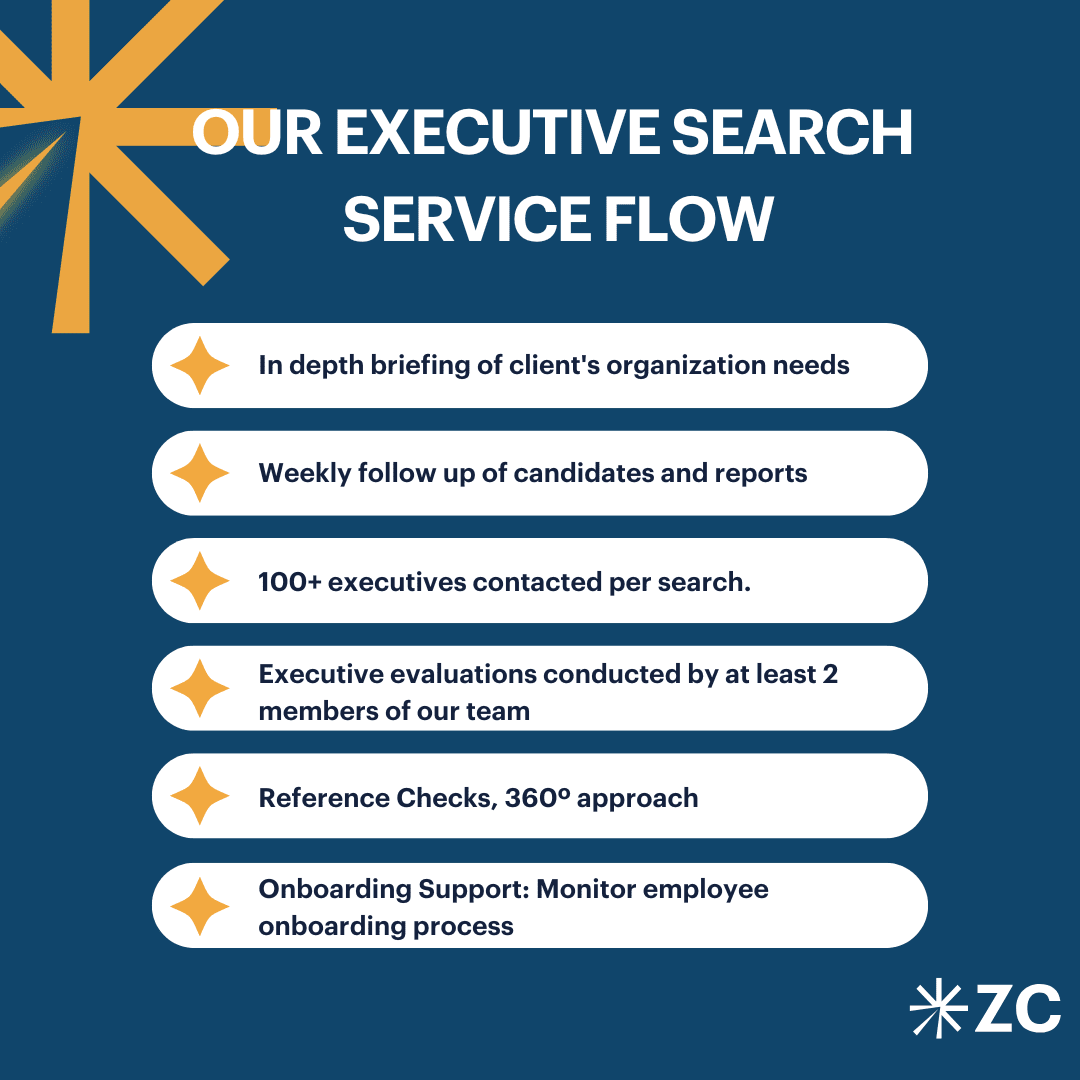
Zavala Civitas’ Executive Search methodology combines market mapping, direct candidate identification, structured assessment and reference validation to understand whether candidates have personally managed comparable leadership challenges.
Our Financial Services Executive Search practice supports senior appointments across banking, insurance and other financial organisations.
Frequently Asked Questions: Financial Services Executive Search in Canada
Financial-sector stability does not eliminate transformation. It changes what strong leadership needs to protect and build.
Zavala Civitas supports financial institutions in Canada in identifying senior leaders capable of combining financial performance, regulation, technology and organisational resilience.
Executive Search → Financial Services → Contact Us →