Key Takeaway: Only 30% of Brazilian family-owned businesses successfully transition leadership to the second generation (PwC Brazil) — and AI-related roles in Brazil are growing 75% faster than the overall job market. In Latin America’s largest economy, executive development and assessment are not HR investments. They are the mechanism through which leadership capability keeps pace with economic transformation — and the gap closes before it becomes an operational crisis.
Last updated: August 13, 2026
Brazil, Latin America’s largest economy, is currently facing significant socio-economic challenges. The Brazilian business environment has been affected by inflationary pressures, high political risks, global market volatility, and elevated interest rates. The World Economic Forum’s Global Competitiveness Report consistently points to Brazil’s need to improve business sophistication and institutional capacity. Local businesses are finding it increasingly challenging to recruit leaders able to manage complexity and deliver growth over longer time horizons — which is precisely where executive development and assessment provides its highest return.
Key Figures at a Glance
| Data point |
Finding |
Source |
| Brazilian family businesses that successfully transition to second generation |
Only 30% |
PwC Brazil |
| AI role growth rate in Brazil vs. overall job market |
+75% faster |
Brazil tech labour market analysis, 2024 |
| Profitability advantage of effective governance in Brazil |
30% more likely to outperform |
IBGC, 2023 |
| Brazil’s FDI inflows — intensifying leadership quality demand |
+$60 billion USD annually |
UNCTAD, 2025 |
Executive Development and Assessment in Brazil’s Business Landscape
In today’s world of complexity, executive development and assessment services have emerged as vital for organisations seeking to develop strong leadership pipelines. Beyond simple recruitment processes, these services evaluate an executive’s capabilities, leadership potential, cultural acculturation, and change management ability — the dimensions that determine whether a leader will succeed in a role that does not yet resemble the role they were hired for 18 months ago.
One key challenge in Brazil is the succession gap. Many family-owned businesses dominate the market, and only 30% successfully transition leadership to the second generation, according to PwC Brazil. An effective executive assessment strategy fosters skilled leadership transitions by locating and nurturing talent internally for future organisational roles — building readiness before the vacancy creates the urgency that makes all decisions worse.
Moreover, with Brazil’s push toward digital innovation, leaders need to demonstrate not only strategic thinking but also adaptability and digital fluency. According to LinkedIn’s Workforce Report, Brazil has one of the highest demands for digital skills in Latin America, yet faces a significant skills gap. Executive assessment helps bridge this divide, providing data-driven insights into which leaders possess the necessary competencies to lead in a digital economy — and which need structured development investment before they are ready.
The 70% failure rate in Brazilian family business succession is not primarily a talent problem. It is an assessment problem. The successor who is talented enough for the role exists in 70% of the cases where succession fails — they simply were not assessed, developed, or prepared in the structured way that the transition requires. The family conversation about succession was avoided until the transition was forced by circumstances. The informal development was replaced by exposure to the predecessor’s shadow rather than to the challenges of the actual mandate. Executive assessment that runs 24–36 months before the transition — identifying the successor, mapping the capability gap, and building the development plan against a defined transition timeline — converts a 70% failure rate into a governance-managed transition. That is not a guarantee. It is a material improvement in the odds.
Opportunities for Businesses Investing in Executive Development
Despite economic headwinds, forward-thinking organisations see a clear opportunity: investing in leadership excellence as a differentiator. Companies that prioritise executive development are more likely to attract and retain top talent, improve decision-making quality, and foster a strong organisational culture capable of withstanding Brazil’s macroeconomic volatility.
By integrating executive assessment tools such as 360-degree feedback, psychometric evaluations, and behavioural interviews, businesses in Brazil can:
- Identify high-potential leaders early — before vacancies create urgency that compresses the decision-making quality
- Reduce turnover by ensuring cultural alignment — the primary driver of executive attrition in Brazil’s competitive senior talent market
- Strengthen succession planning strategies — converting the family governance conversation from an avoided topic into a structured governance process
- Equip executives to handle market disruptions — developing the specific resilience and adaptability capabilities that Brazil’s macroeconomic environment demands of all C-level leaders
Additionally, global investors and multinationals are increasingly focusing on ESG initiatives. Leaders who excel in managing these priorities offer a competitive advantage — and as Brazil’s AI role growth accelerates 75% faster than the overall job market, the specific capability gap between what the organisation needs and what the traditional executive pool offers is widening faster than organic leadership development can close it.
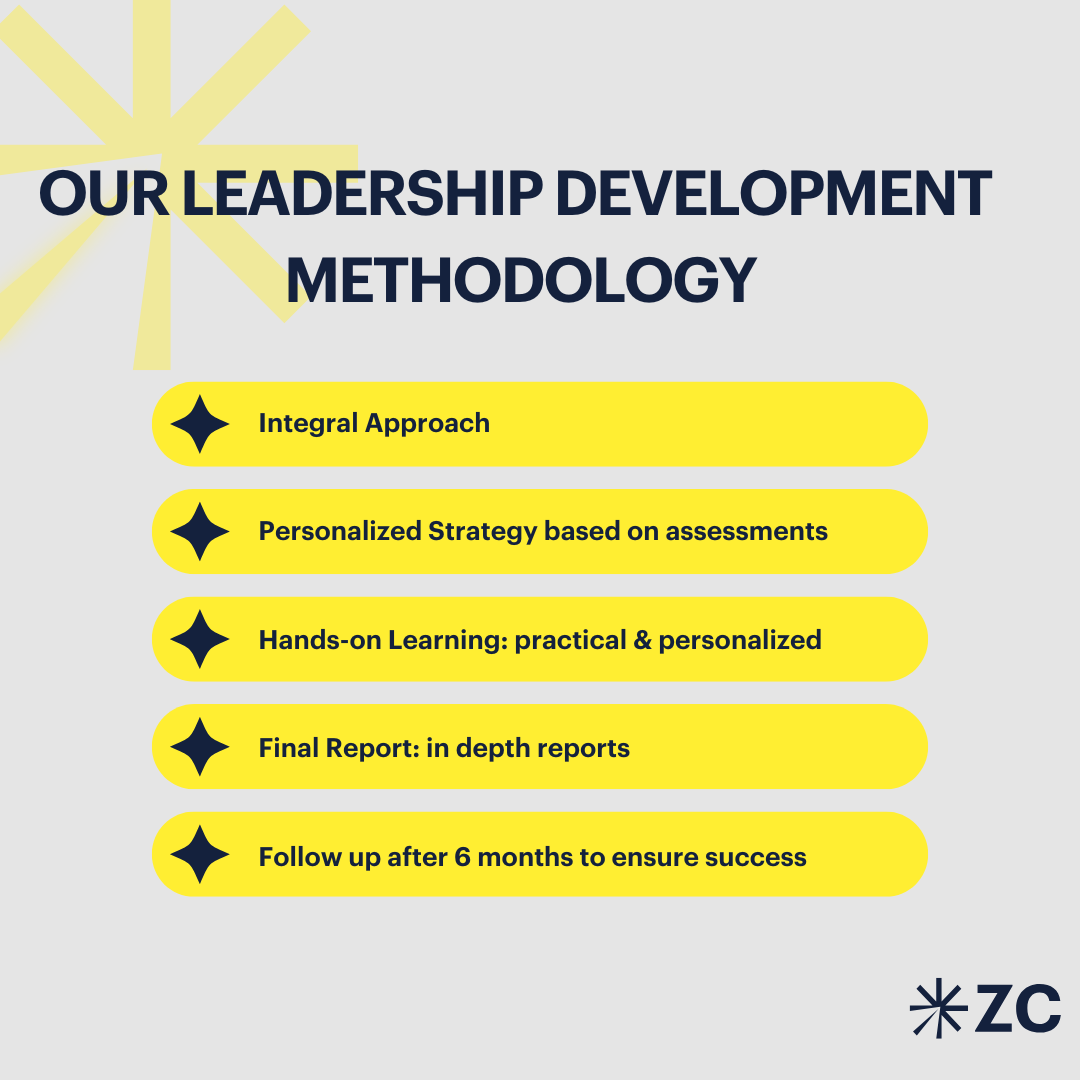
Brazil’s digital skills gap has a specific executive development dimension that standard leadership programmes do not address. The AI role growth rate — 75% faster than the overall market — is not primarily creating demand for AI practitioners. It is creating demand for executives who can govern AI deployment, manage the organisational change that AI adoption produces, and make capital allocation decisions about AI investment that they understand at the level required to challenge vendor proposals and management recommendations. The executive development investment that closes that governance gap is not AI training. It is structured exposure to AI-driven decision environments, external perspective from executives who have already navigated these transitions, and assessment that evaluates AI governance capability as a core leadership competency.
Executive Excellence as Brazil’s Competitive Edge
Executive development and assessment services are not a luxury — they are a necessity in today’s Brazilian market. Amid economic turbulence, businesses that invest in their leaders are better positioned to survive and thrive. The companies that will shape Brazil’s future are those that understand that strong, adaptable leadership is the key to unlocking sustainable growth.
To learn more about our executive assessment and leadership development services, click here.
Frequently Asked Questions: Executive Development and Assessment in Brazil
Why does the 70% family business succession failure rate in Brazil reflect an assessment problem rather than a talent problem?
Because the successor who is talented enough for the role exists in the majority of cases where succession fails — they simply were not assessed, developed, or prepared in the structured way the transition requires. The family conversation was avoided until the transition was forced. Executive assessment 24–36 months before the transition — identifying the successor, mapping the capability gap, and building the development plan — converts a 70% failure rate into a governance-managed transition with materially better odds.
What is the specific executive development challenge that Brazil’s AI role growth creates?
The 75% faster AI role growth is creating demand for executives who can govern AI deployment and make capital allocation decisions about AI investment at the level required to challenge vendor proposals. The development investment that closes that gap is not AI training. It is structured exposure to AI-driven decision environments, external perspective from executives who have already navigated these transitions, and assessment that evaluates AI governance capability as a core leadership competency.
How does Brazil’s macroeconomic volatility create specific executive development requirements?
Because the executives who create value in Brazil are those who maintain team engagement, supplier relationships, and operational performance through inflation, currency volatility, and political uncertainty simultaneously. Those capabilities — resilience under ambiguity, stakeholder management in crisis, financial discipline under margin pressure — are identifiable through executive assessment and developable through structured exposure programmes anchored to the specific market cycles Brazil produces.
How does executive assessment reduce executive turnover in Brazil’s competitive senior talent market?
By identifying cultural misalignment before placement rather than after. The most common driver of executive attrition in Brazil is not performance failure — it is cultural mismatch between the executive’s leadership style and the organisation’s decision-making norms. 360-degree feedback anchored to the specific cultural expectations of the Brazilian operating environment, combined with psychometric assessment of cultural adaptability, surfaces those mismatches in the assessment process rather than in the first year of the appointment.
How does Zavala Civitas approach executive development and assessment in Brazil?
Through structured assessment calibrated to Brazil’s operating context — psychometric evaluation, behavioural interviews focused on the target mandate, and 360° references from both international and Brazilian-side stakeholders. For family business succession, structured against the transition horizon. For digital transformation mandates, assessing AI governance capability as a core competency. Development milestones tracked quarterly. From our São Paulo office, with a 92% closing rate across completed executive search mandates.