
January 22, 2024
Executive turnover can occur for many reasons. Senior leaders may pursue new career opportunities, broader responsibilities or more attractive compensation packages. However, turnover can also result from misalignment with the company’s strategy, unclear decision-making authority, organizational change or a role that evolves differently from what was originally discussed.
For companies operating in Spain, retaining executive talent is important for continuity in strategy, relationships and organizational knowledge. Losing an experienced leader can slow projects, affect teams and force the organization to restart a leadership transition earlier than expected.
Spain nevertheless remains a relatively long-tenure employment market overall. According to OECD data, average job tenure in Spain was 10.15 years in 2025, compared with 10.30 years in 2024 and 10.61 years across the EU-27. This is not an executive-turnover measure, but it provides useful context: leadership retention challenges should be assessed at the level of the specific company, role and talent market rather than assumed from broad labour-market narratives.
Source: OECD Data Explorer, Employment by Job Tenure.
Executive Retention in Spain: How to Ensure Long-Term Commitment
1. Professional Development
Providing executives with opportunities for growth and development remains important. Development programs, mentoring and exposure to challenging strategic projects can help leaders expand their capabilities while demonstrating that the organization continues to invest in their progression.
For senior talent, development should be connected to the actual responsibilities of the executive rather than treated as generic training. Executive Assessment and Leadership Development can help identify specific strengths, development areas and capabilities required for future responsibilities.
2. Organizational Culture
Executives need to understand how decisions are made, how disagreement is handled and whether the organization’s values are reflected in everyday leadership behaviour. A cultural mismatch can become particularly visible after a senior leader joins and begins making decisions that affect teams, budgets and strategic priorities.
For companies in Spain competing for experienced leadership talent, cultural alignment should therefore be assessed during the hiring process rather than left until onboarding.
3. Competitive Compensation
Executives need to believe that their compensation reflects the responsibilities of the position, the Spanish market and the value they are expected to create. The complete package may include fixed salary, variable compensation, long-term incentives and other benefits depending on the role and organization.
Compensation alignment is particularly important before the appointment. A package that does not reflect the market or the candidate’s expectations can create retention risk even when the professional fit is otherwise strong.
4. Open Communication
Executives should have clarity about expectations, business priorities and the authority attached to their position. They also need channels through which they can raise concerns, challenge assumptions and discuss changes affecting their mandate.
This becomes especially important during growth, restructuring, acquisitions or leadership transitions, when the role originally accepted by an executive can change rapidly.
5. Performance Evaluation
Structured performance assessment gives both the organization and the executive an opportunity to understand what is working, where expectations differ and which capabilities require further development.
When assessment is connected to a personalized development plan, it can also provide a clearer path for the executive’s continued progression within the organization.
Executive Search as a Strategic Tool in Spain
Executive retention begins before the executive joins the organization.
A specialised Executive Search process can reduce avoidable retention risk by defining the mandate clearly, understanding the market and assessing whether the candidate’s experience, expectations and leadership approach correspond to what the organization actually needs.
For companies recruiting leadership talent in Spain, Executive Search can help organizations:
- Define the responsibilities and critical success factors of the role before approaching candidates.
- Identify executives whose experience corresponds to the organization’s business objectives.
- Assess leadership capability and organizational fit beyond the CV.
- Understand candidate expectations and potential points of misalignment early in the process.
- Benchmark the available executive talent market before finalising the appointment.
- Support the transition and onboarding period after the executive joins.
This distinction is important. Executive Search can improve the quality of the appointment and reduce avoidable mismatches, but long-term retention ultimately depends on what happens after the hire: leadership relationships, organizational culture, compensation, development, performance expectations and the evolution of the role.
Zavala Civitas: Executive Search in Spain
At Zavala Civitas, we support companies recruiting senior and C-suite leaders in Spain through a structured Executive Search methodology.
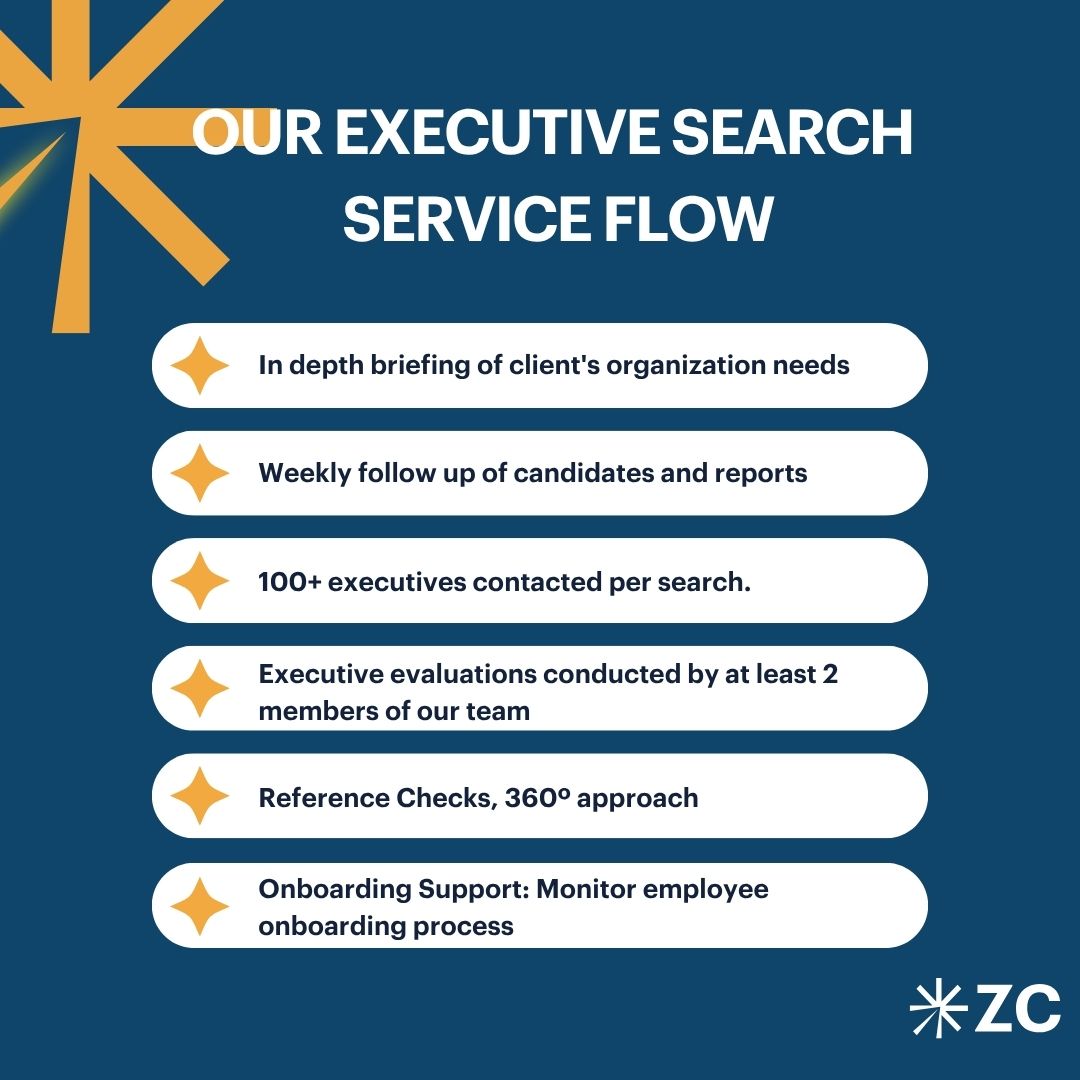
Our current process includes:
- An in-depth briefing to understand the organization, environment and search requirements.
- Follow-up with clients every 7–10 days, including candidate and market reports.
- Market mapping and direct contact with more than 100 candidates per search.
- Candidate interviews conducted by at least two consultants, combining quantitative and qualitative evaluation.
- 360º reference checks with professional contacts.
- Follow-up of the client and candidate adaptation process during the following six months.
This process is designed to provide a broader understanding of the candidate market before an appointment is made and to maintain continuity during the early stages of the executive’s transition.
Frequently Asked Questions About Executive Retention in Spain
Why do executives leave companies?
Executives may leave for broader career opportunities or compensation, but departures can also result from unclear responsibilities, changes in strategy, cultural misalignment, limited development opportunities or differences between the role originally presented and the position experienced after joining.
Can Executive Search improve executive retention?
Executive Search cannot guarantee retention, but it can reduce avoidable hiring risk. A structured search helps clarify the mandate, understand the available talent market, assess candidates in greater depth and identify potential misalignment before an appointment is made.
What should companies assess before hiring an executive in Spain?
Companies should assess the executive’s relevant experience, leadership capabilities and alignment with the organization’s objectives, while also clarifying compensation, reporting lines, decision-making authority, expectations and the future evolution of the role.
Why is onboarding important for executive retention?
The first months allow both parties to confirm whether expectations established during the search match the reality of the position. Structured onboarding and regular follow-up can identify problems with role clarity, stakeholder relationships or organizational integration before they become larger retention risks.
How does Zavala Civitas support Executive Search in Spain?
Zavala Civitas combines detailed client briefing, market mapping, direct contact with more than 100 candidates per search, executive evaluation, 360º reference checks and onboarding follow-up. The objective is to assess both the executive and the context in which the executive will be expected to perform.
Learn more about our Executive Search methodology, explore our insights on Executive Search in Spain or contact us directly.